Peace

Various aspects of and approaches to this “essentially contested” concept.

And various ways of thinking across cultures.

Stuff here is both theoretical and practical – with an emphasis on the former.

We thought that a slightly blurred image of a sunset – the far horizon – could illustrate these endeavours.

The moment we think we know exactly what peace is, it isn’t.

It’s a never-ending process … exploration.

But peace is not just the absence of war and other types of violence.

It is something essential and substantial in and of itself.

Category

Year

Author / Contributor

Region

Sort by

Showing 1-10 of 889 stories

0-1-4
Gordon Dumoulin July 27, 2020 While most people all over the world are debating the current health, geopolitical, and economic developments in the COVID19-era, the history train has already left the station quite some time ago for a drastic new destination as this era is a transformative time for humanity and earth; whether we like it or not, the train is already moving and shall not stop for a while – hopefully as that would not be good, to say the least. Although each cultural and geopolitical region having their own wagon and nations having their compartments, we are all onboard the same train. While people are discussing if tea or coffee should be served on the train, whether the train should run electrically or on fuel or if and how WIFI should be allowed, few people talk about the train’s destination. However, the destination will be the historical event...
2014-10-29-Peace
60 years of peace theory and peace practice can be summarized in:                                                 EQUITY x HARMONY                              PEACE =   ——————————-                                                 TRAUMA x CONFLICT Four theory foci, four policy tasks, and four education topics. Any true education should prepare for practice, guided by general theory. Moving from denominator right to numerator left, this means: Mediation is verbal, based on dialogues with the parties, but the four tasks are very concrete, practical.  For doers not only talkers; for practical people like officers.  Hence the Big Question: Is peace theory-practice-education compatible with the military mind – however defined, and there are many military cultures in the world – or not? Originally published at TRANSCEND Thinkers so diverse as Nietzsche and Gandhi saw the military as exemplary because of the ésprit de corps and willingness to sacrifice, even their own lives. For Gandhi the kshatriya (military) caste was a model: he wanted non-violent warriors, with the same perseverance, also indispensable...
MLKAmericalearnednothing
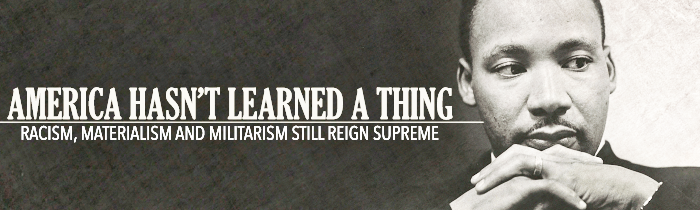
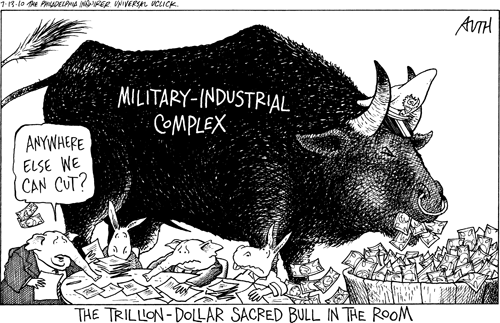
June 29, 2020 Intro by Tom Engelhart to article by Andrew Bacevich Today, in the context of the Black Lives Matter protests, TomDispatch regular Andrew Bacevich considers the all-American version of “extreme materialism” that Martin Luther King called out more than half a century ago. And when it comes to the overwhelming urge to get one’s hands on the goods, among the looters of this moment two groups are almost never mentioned: the Pentagon and the police. Yet, in 1997, the Department of Defense set up the 1033 program as part of the National Defense Authorization Act to provide thousands of domestic police forces with “surplus” equipment of almost every imaginable militarized kind. Since then, thanks to your tax dollars, it has given away $7.4 billion of such equipment, some of it directly off the battlefields of this country’s forlorn “forever wars.” For items like grenade launchers, mine-resistant armored vehicles,...
Slave-Trade-paper-George-Morland-John-Raphael-1812
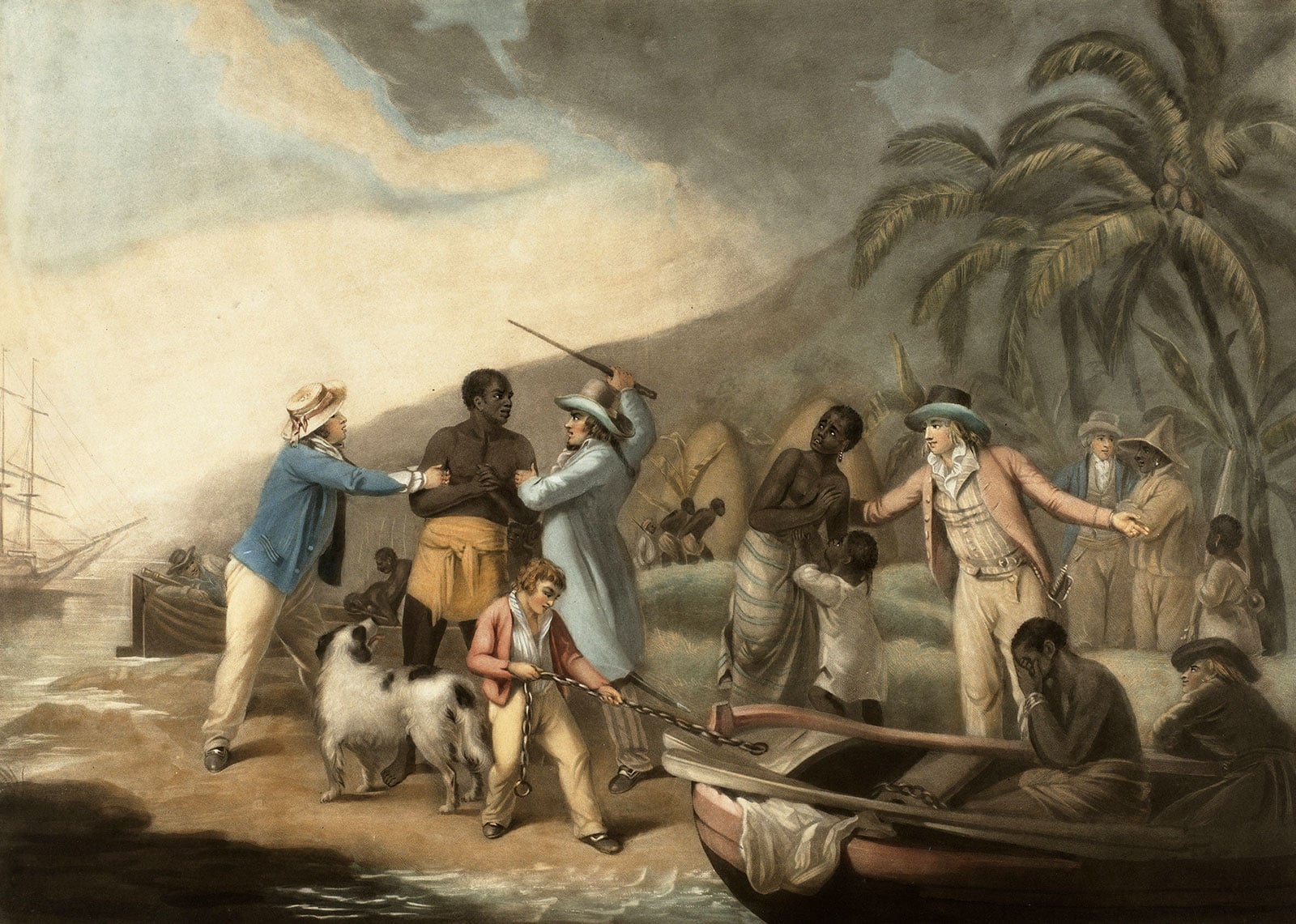
Pulling down statues may make us feel good but will not eliminate the root causes of racism and discrimination Farhang JahanpourTFF Associate June 23, 2020 Part Two – Part 1 here The protests to the cruel killing of George Floyd and many others before him and even some after him have not remained confined to the United States or among black people alone, but have given rise to a global movement for change and an end to racism and discrimination. Many protestors in the United States have called for the toppling of the statues of Confederate generals and for the names of places and institutions named after them to be changed, while in many European countries demonstrators have called for the toppling of statues of those who are symbols of racism, imperialism and white supremacy. Clearly, toppling a few statues may give temporary satisfaction to those who have been the...
Slave-Trade-paper-George-Morland-John-Raphael-1812
Part One – Part 2 here The gruesome killing of George Floyd in Minneapolis, Minnesota, on 25 May 2020 has given rise to an unprecedented campaign against police brutality in the United States, and in turn has acted as a fuse for a worldwide uprising against racism and inequality. Floyd’s killing triggered massive demonstrations in more than 350 cities in the United States and around the world, and has probably started a movement that goes well beyond the civil rights movement of the 1960’s and may prove to be a turning point in human history. What is remarkable is that those who have taken part in those massive demonstrations are not all black and ethnic people, but they have been joined by millions of white people who are ashamed of the legacy of slavery and are determined to help their fellow human beings to achieve the dignity and equality that...
Vimeo
Världen efter Corona – konstruktivt Hur kommer världen att se ut de närmaste årtiondena?Vilka val har vi? Hur kan fred och rättvisa fortfarande bli möjliga? 11:e juni 2020 Jan Öberg I maj höll jag en internationell föreläsning i två delar om förändringarna i världsordningen och om hur framtiden kan bli bättre för oss alla. Den var på engelska. Jag har nu spelat in en svensk version, dock med viss anpassning här och där till svenska förhållanden och en svensk publik. Det är en föreläsning som var tänkt att hållas i Henåns Kulturhus för Fredsrörelsen på Orust, Nordens bästa. Men den fick ställas in med anledning av Coronan. Här har du den i två delar – som den också finns på på TFF:s Vimeo-kanal: Del 1 Del 2 Stort tack om du kan hjälpa sprida budskapet eller återanvända föreläsningen i dina sammanhang – t ex i seminarer, undervisningsförlopp eller på din...
Gandhi-Writing-1100x1098-1
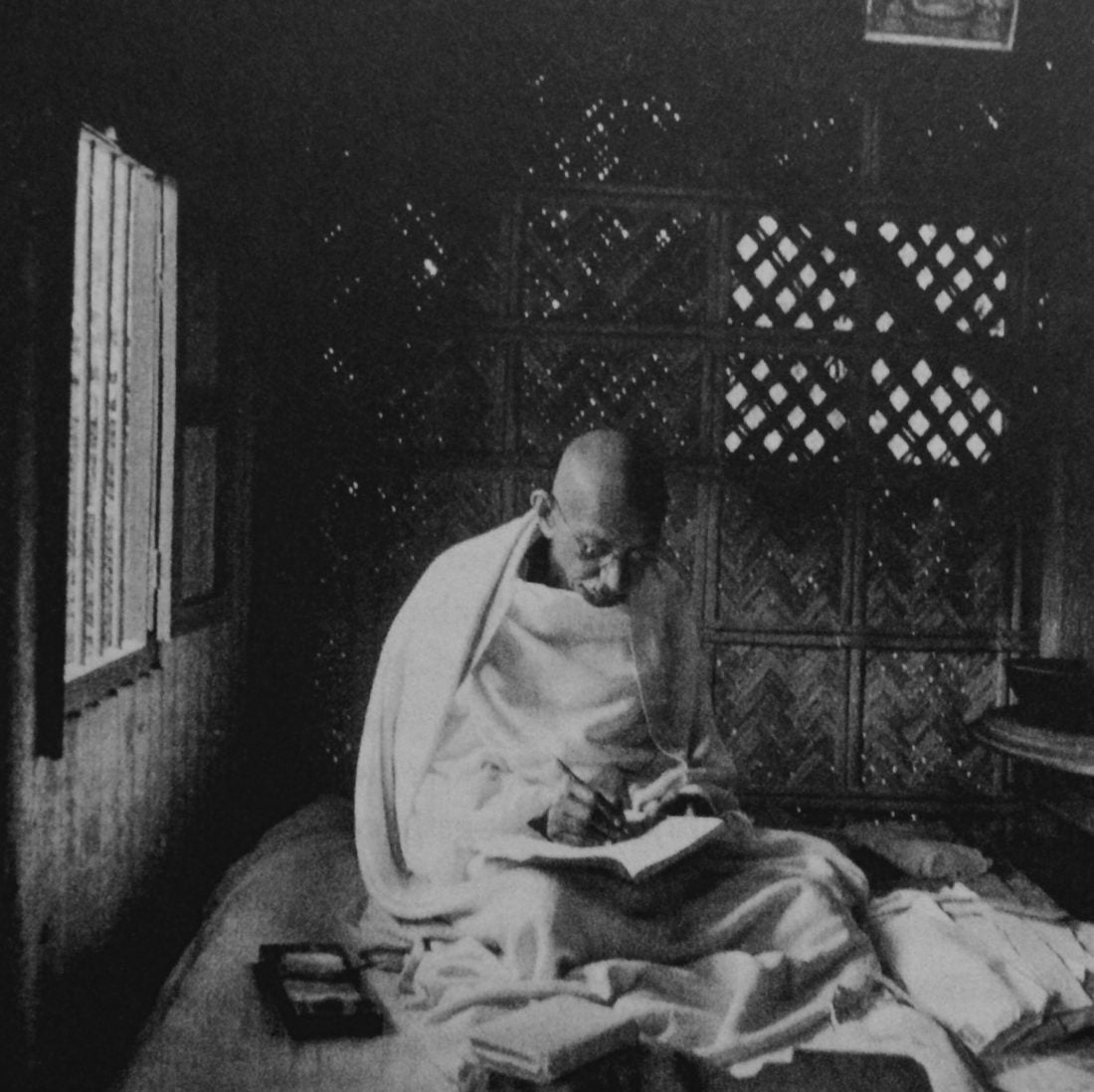
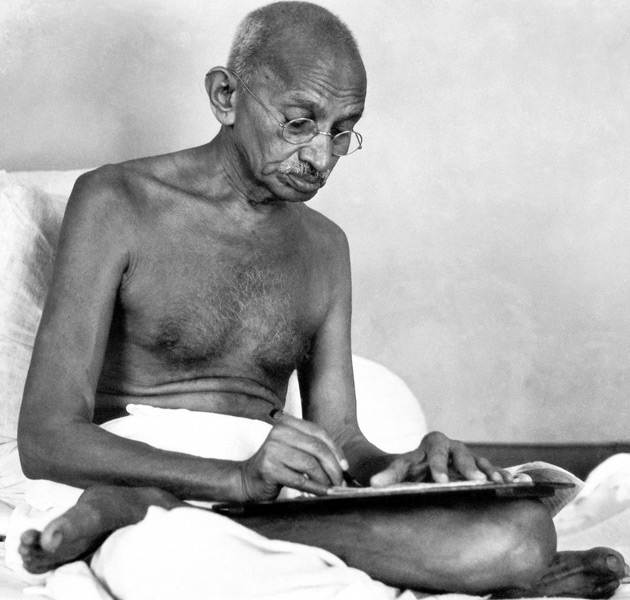
June 5, 2020 By Lynn Burnett Mahatma Gandhi’s teachings of nonviolent resistance had a famous and profound impact on the civil rights movement in the United States. That impact was facilitated in part by the journeys of two of Martin Luther King’s future mentors – Howard Thurman and Benjamin Mays, who were good friends with King’s father – to meet with Gandhi in 1936. However, the Black American interest in Gandhi goes all the way back to 1919, when the Indian freedom struggle exploded in the wake of World War I after the British Empire failed to extend greater autonomy to India despite the Indian participation in the war. Gandhi’s interests in the Black American freedom struggle date back even further – to the 1890s – when he first studied the abolitionist movement that destroyed slavery. This article traces those earlier connections between Gandhi and Black Americans, in the decades...
2YEPkRGC4cYnuGuU07RawU3kSrD17K9Qdeh3kG6CwV8
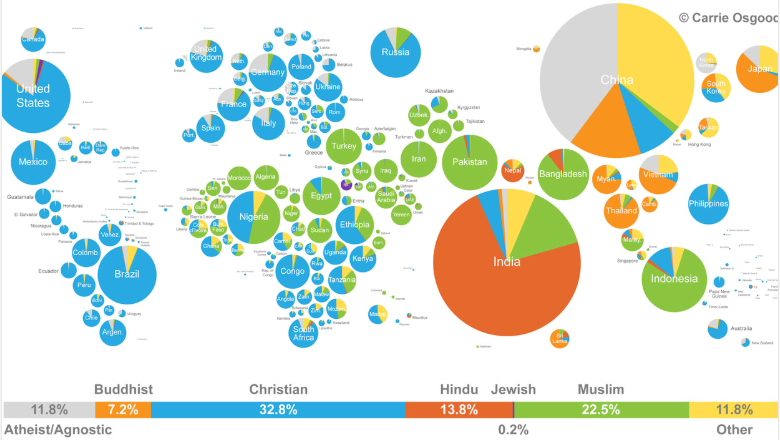
Johan Galtung June 02, 2020 Here is a Table with fifteen faiths organized according to mono-poly-pan-atheism; some might find the table somewhat controversial: Originally posted on Transcend Media Service’s website February 3rd, 2020 here Table 1.  Figures of thought, faiths, and beliefs of true believers Figures Faiths Beliefs Mono Judaism Israel, Zion; as Chosen People Mono Catholicism Pope (infallible), Vatican Mono Evangelism Dualism-Manicheism-Armageddon, DMA Mono Islam Togetherness under Alla’h, sharing Poly Hinduism Creation-Preservation-Destruction Pan Buddhism dukkha-sukha, sentient life networks Pan Daoism Holism-Dialectics-Transcendence, HDT Pan Confucianism Authority-Harmony; educated old men Pan Shintoism Japan; as Chosen People Pan Polynesism lokahi, ‘ohana, alo’ha, mana A Humanism Humans; as Chosen species with rights A Liberalism Individuals-Choice-Equilibrium;Markets A Marxism Classes-Struggle-History;Plans A Nature Diversity, Symbiosis The focus of this table is on concrete, this world, implications. Abrahamism, mono-centric, indicative of a centrism that could serve Occident I.  Jesus Christ universalized tribal Judaism to global Christianity, expressed institutionally...
Buddha-3
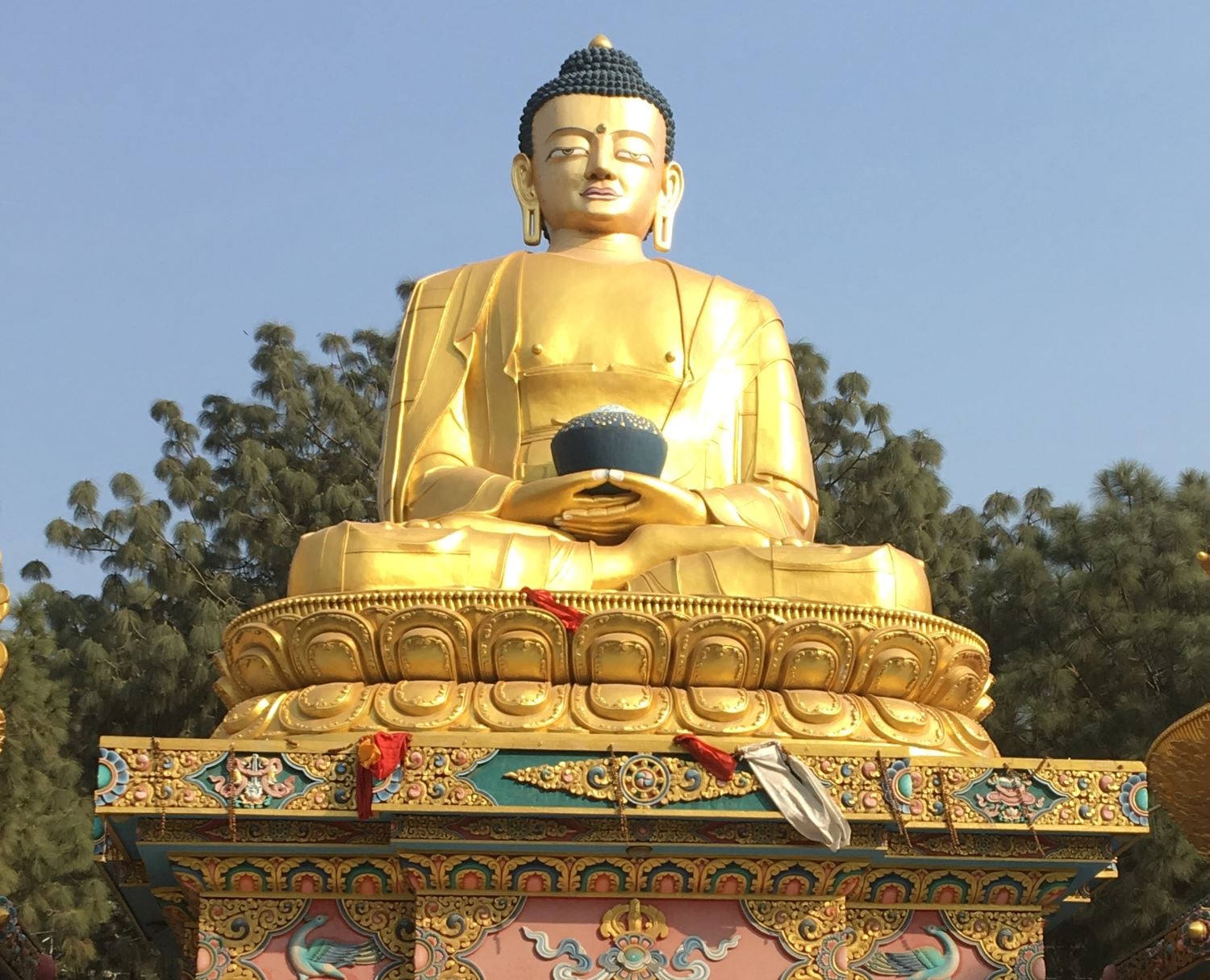
May 26, 2020 By David Loy Maybe every modern generation feels confronted by some crisis that will affect the fate of the world, but unless your head is buried in the sand (or some Buddhist equivalent) it’s impossible to be ignorant of the extraordinary planetary emergency that confronts us today. The recent IPCC report states clearly that ecological collapse no longer merely threatens — we are well into it. It’s become apparent that civilization as we know it is about to be transformed in some very uncomfortable ways by climate breakdown, mass extinction of species, resource depletion and various types of pollution — perhaps including some kinds we don’t even know about yet. Originally published at Huffington Post Although our globalizing economic system is a wholly-owned subsidiary of the biosphere, most of the CEOs who supervise it (as much as anyone controls it) can’t seem to plan much further than...
96f258eb81837d6ccb7088f100f6aebd
May 25, 2020 Dr. Lawrence Wittner Decades ago, when I began teaching international history, I used to ask students if they thought it was possible for nations to end their fighting of wars against one another. Their responses varied. But the more pessimistic conclusions were sometimes tempered by the contention that, if the world’s nations faced a common foe, such as an invasion from another planet, this would finally pull them together. Originally published on Counterpunch on April 14, 2020 here I was reminded of this on March 23, when the UN Secretary-General, António Guterres, called for “an immediate global ceasefire.” The time had come, he said, to “end the sickness of war and fight the disease that is ravaging our world.” A UN summary noted that the Secretary-General had “urged warring parties across the world to lay down their weapons in support of the bigger battle against COVID-19: the...
gandhi-writing-letter
May 18, 2020 Steven Youngblood When asked to describe Mahatma Gandhi, most would say he was an Indian independence leader, human rights defender, and spiritual guide. However, “People don’t think of him as a journalist” even though “he was a journalist from an early age, and died as a journalist.” Originally posted on The Peace Journalist magazine, published by the Center for Global Peace Journalism on February 6, 2020, here This is according to professor, historian, and author Rajmohan Gandhi, the grandson of Mahatma Gandhi. Professor Gandhi was the featured speaker at a program titled “Gandhi: The First Peace Journalist,” held at Park University on Aug. 26. The evening began with a presentation by Gandhi documentarian, Cynthia Lukas, about Gandhi’s background as a journalist. Gandhi was a prolific journalist and editor who was well-known in India for his articles stressing social justice in such publications as Indian Opinion, Young India,...
JOAtInstallation_1000_72dpi
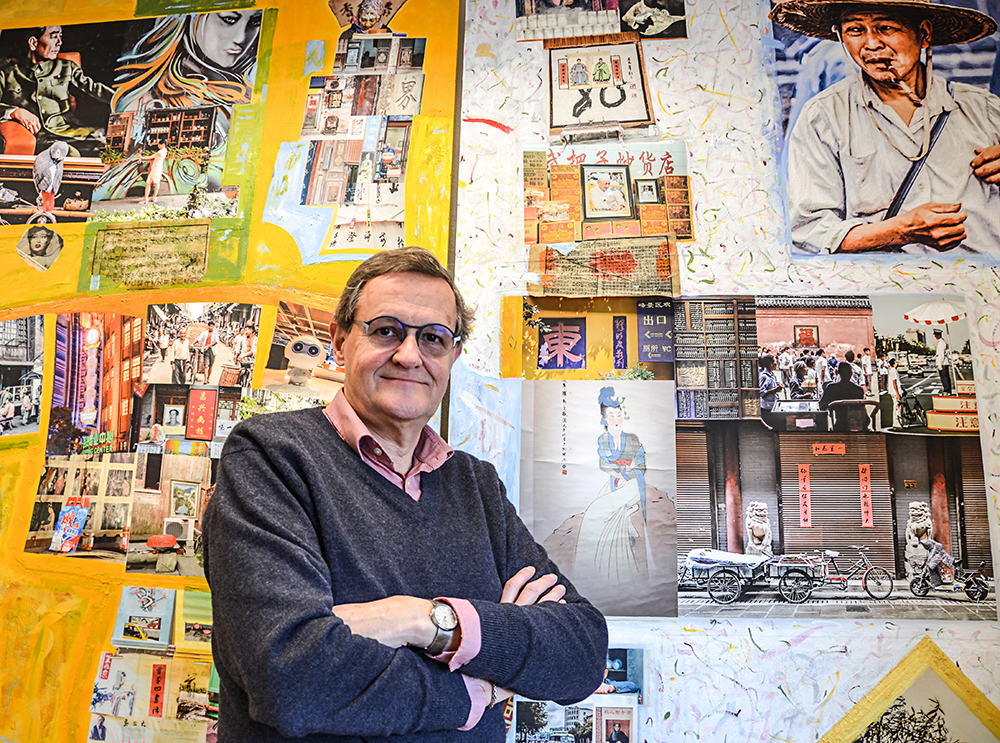
The author in front of a part of his photo-based, multi-media installation, “Silk Peace Art Road – SPAR” which was exhibited at the Venice Biennale 2019 and will be shown in China 2020. Yesterday, The Necessary Teacher Training College, DNS, in Denmark held its annual conference on peace and justice. As a couple of times before, I had the honour of being invited to be the keynote speaker. Because of the Coronavirus, it was online and not onsite – and I had produced the lecture in advance and then there was a Q&A session in the afternoon via Zoom. The two-part lecture is now on TFF’s Vimeo Channel here: Part 1 Part 2 The discussion that followed after group work If you found this lecture interesting or useful, please help us do more in the future. Remember, TFF is 100% people-financed and therefore completely independent of the government and corporate...
Categories

Year

Author / Contributor

Region