Author Archive
Rethinking ‘Red lines”
 May 20th, 2013 |
  Author:
 By Richard Falk
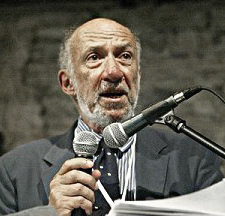
There are widespread reports circulating in the media that President Obama had not fully appreciated the political consequences of responding to a question at an August press conference that asked about the consequences of a possible future use of chemical weapons by the Assad regime. Obama replied that such a use, should it occur, would be to cross ‘a red line.’ Such an assertion was widely understood to be a threat by Obama either to launch air strikes or to provide rebel forces with major direct military assistance, including weaponry.
There have been sketchy reports that Syria did make some use chemical weapons, as well as allegations that the reported use was ‘a false flag’ operation, designed to call Obama’s bluff. As the New York Times notes in a front page story on May 7th, Obama “finds himself in a geopolitical box, his credibility at stake with frustratingly few good options.” Such a policy dilemma raised tactical issues for the U.S. Government about how to intervene in the Syrian civil war without risking a costly and uncertain involvement in yet another Middle Eastern war. Not responding also raises delicate questions of presidential leadership in a highly polarized domestic political atmosphere, already shamelessly exploited by belligerent Republican lawmakers backed by a feverish media that always seem to be pushing Obama to pursue a more muscular foreign policy in support of alleged America’s global interests, as if hard power geopolitics still is the key to global security.
What is missing from the debate on Syria, and generally from the challenge to American foreign policy, is a more fundamental red line that the United States at another time and place took the lead in formulating – namely, the unconditional prohibition of the use of international force by states other than in cases of self-defense against a prior armed attack. Read the rest of this entry »
The Iran threat delusion
TFF PressInfo
May 8, 2013
Contacts for interviews as well as analytical sources below the statement.
Summary
Scores of Western politicians state that Iran is a threat to its neighbours or even the world. But before we end up in yet another cruel war based on wrong assumptions and delusion, somebody should ask them the simple question: How do you know?
– There is little, in fact, to back up these claims. Each time Iran spends 7 US$ on its military, the U.S. spends 700 US$, Israel 15,60 US$, Saudi-Arabia 44 US$ and the Arab Emirates 16 US$. Therefore, if Iran were to start a war, it would have to ignore the “balance of forces” of 1:110 with its basic opponents!
– “To construct Iran as a threat, one must assume that its leaders are lunatics or suicidal. There’s no evidence they are,” says Jan Oberg, director of TFF, The Transnational Foundation in Sweden*.
Argument
– False or exaggerated threat assertions are necessary to build up legitimacy among citizens before wars are started. Experts call it “fearology”: Instill fear in peoples’ minds and they accept, from left to right, their own governments’ taxpayer-funded wars. Read the rest of this entry »
An octogonal world
By Johan Galtung

Let us try a look at the world from above, right now. There is so much drama unfolding. Is there a Big Picture? Of course there is, we all have one, so here is one effort, imgaine it as The Octagon, consisting of these eight big states or regions:
1) USA, 2) Russia, 3) India, 4) China, 5) OIC (the Organization of Islamic Conference, the 57 Muslim countries), 6) EU (27), 7) Africa (AU, African Union, 54 countries) and 8 ) CELAC, Latin America and the Caribbean, 33 countries). We might add Israel and Japan to the USA if the criterion is willingness to go to war with and for the USA – but Israel wants the USA to fight its wars, and Japan, even with Japanese hawks more than willing to join the nuclear club, is still bound by the constitution depriving Japan of the right to war. So they work for a new constitution with an emergency article that could justify a military take-over. Ominous. Hopefully Germany does not follow suit. Read the rest of this entry »
China’s under-reported positive behaviour
By Jonathan Power
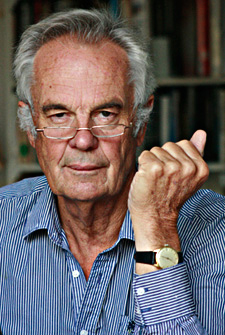
China is a sitting duck. Not that long ago, as far as most of the rest of the world was concerned, it was almost a closed, mysterious, society. Now it is wide open. The bad is there for all to see. Last year the New York Times published an in-depth investigative series of long articles on the secret wealth of the family of Prime Minister Wen Jiabao. It proved that it is possible to peel off the layers and look beneath.
China’s new found relative openness has allowed an open season on the shooting range. The targets are legion – corruption, nepotism, nationalism, maladministration, growing inequality, environmental degradation, over assertive foreign policy and the military build up. Western critics enjoy popping off at them.
Much of what the critics say is true. But much is exaggerated. And much is ignored, in particular what is positive. Read the rest of this entry »
Syria: U.S. involvement could make things even worse
By Stephen Zunes
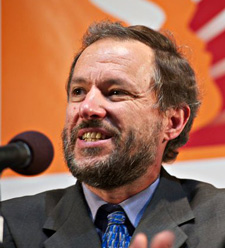
A comprehensive analysis by Zunes of chemical weapons in the Middle East and U.S. policies in this regard can be found here
The worsening violence and repression in Syria has left policymakers scrambling to think of ways our governments could help end the bloodshed and support those seeking to dislodge the Assad regime. The desperate desire to “do something” has led to increasing calls for the United States to provide military aid to armed insurgents or even engage in direct military intervention, especially in light of the possible use of chemical weapons by the Syrian regime.
The question on the mind of almost everyone who has followed the horror as it has unfolded over the past two years is, “What we can do?”
The short answer, unfortunately, is not much.
This is hard for many Americans to accept. Read the rest of this entry »
Is it immigration versus the working class?
By Jonathan Power
Every developed country is importing cheap labour, although much less so during this time of the Great Recession, yet all too rarely are the pro and con arguments discussed with real profundity.
A new, incisive, book “The British Dream” by David Goodhart, the founder of the magazine, “Prospect”, dares to deal with the shibboleths. There are many commonalities in Britain that apply to countries as varied as France, the US, Thailand and Qatar.
Goodhart’s conclusion about immigration is that what we might generalize and call the “working class” point of view is essentially correct: “We have had too much of it, too quickly, and much of it, especially for the least well off, has not produced self-evident economic benefit.”
This viewpoint is anathema to the liberal intelligentsia, businesses and many governments. In Britain, after years of gate-closing under Prime Minister Margaret Thatcher, Tony Blair, a well trodden liberal, opened the gates wide. Businesses could smooth the wheels of the economic motor with workers prepared to work for lower wages, work night shifts, do the unpleasant jobs and thus grease the wheels of the economy. Liberals focused on the argument about giving a helping hand to some of the world’s poor and led to a welcome broadening of the culture with new foods, restaurants and music. Read the rest of this entry »
Syria – toward a Swiss solution?
By Johan Galtung
We all feel desperate watching the horrible killing, feeling the suffering of the bereaved, the whole people. But, what to do?
Could it be that the UN, and governments in general, have a tendency to make the same mistake, again and again, of putting the cart before the horse? The formula they use is generally:
1. Get rid of No. 1 as key responsible, using sanctions; then
2. Cease-fire, appealing to the parties, or intervening, imposing;
3. Negotiation among all legitimate parties; and from that
4. A political solution as a compromise between the positions.
It looks so logical. There is a key responsible, President Assad, ordering the killing; get rid of him by all means. Then the cease-fire, the fire ceasing; then negotiation, and then the solution emerges. Logical, yes; but maybe not very wise. Read the rest of this entry »
The Chemical Weapons Charade in Syria
By Sharmine Narwani

Let us be clear. The United States can verify absolutely nothing about the use of chemical weapons (CWs) in Syria. Any suggestion to the contrary is entirely false.
Don’t take it from me – here is what US officials have to say about the subject:
A mere 24 hours after Washington heavyweights from the White House, Pentagon, and State Department brushed aside Israeli allegations of chemical weapons use in Syria, US Secretary of Defense Chuck Hagel and the White House changed their minds. They now believe “with varying degrees of confidence” that CWs have been used “on a small scale” inside Syria.
For the uninitiated, “varying degrees of confidence” can mean anything from “no confidence whatsoever” to “the Israelis told us” – which, translated, also means “no confidence whatsoever.”
Too cavalier? I don’t think so. The White House introduced another important caveat in its detailed briefing on Thursday:
“This assessment is based in part on physiological samples. Our standard of evidence must build on these intelligence assessments as we seek to establish credible and corroborated facts. For example the chain of custody is not clear so we cannot confirm how the exposure occurred and under what conditions.”
“The chain of custody is not clear.” That is the single most important phrase in this whole exercise. It is the only phrase that journalists need consider – everything else is conjecture of WMDs-in-Iraq proportions.
I asked a State Department spokesperson the following: “Does it mean you don’t know who has had access to the sample before it reached you? Or that the sample has not been contaminated along the way?”
He responded: “It could mean both.” Read the rest of this entry »
Nationalism is a dangerous thing
By Jonathan Power
Former British prime minister, Margaret Thatcher, would never have agreed with her French counterpart, the late President Francois Mitterand, who said “Nationalism is war”. To her nationalism was necessary and good and she felt much as Mitterand’s predecessor, Charles de Gaulle, who said of the French nation,“it comprises a past, a present and a future that are indissoluble.”
But the nationalism that Thatcher fought for was a largely negative force. It antagonized the other members of the European Union. She did not believe her country could learn from them how to carry out economic reform without severe social disruption. She went to war with Argentina without trying to enlist the US as a mediator because it lent towards Argentina’s side.
One can date European nationalism from the Treaty of Westphalia in 1648 Read the rest of this entry »
 Posted in EU peace, European Union, Jonathan Power, New books, World order/governance |
  No Comments »
Abenomics and the State of Japan
By Johan Galtung
From Kyoto, Japan
When Prime Minister Shinzo Abe was forced out of office on September 2007 his focus had been on a strong foreign policy, against the peace Article 9 in the constitution, rewriting history and patriotic education, but not on economic improvement. This time Abe has added strong economics, dubbed abenomics; including the hyper-capitalist TPP, Trans-Pacific Partnership. Not to irritate the US, Abe-LDP (Liberal Democratic Party) sees itself as the guardian of Japan’s security against China and North Korea.
On April 4 the Bank of Japan announced a policy of QE, “quantitative easing” – Orwellian for printing money–doubling the circulating money to 270 trillion yen in two years to turn Japan’s 0.3% deflation to 2% inflation. With so much yen around devaluation follows, making Japan more competitive. With the Bank of Japan buying state bonds, public works could follow, for employment. With both, economic growth.
As a consequence the dollar soared, from 76 yen some years ago to 100; the Nikkei market index soared to above 13,000 for the first time since August 2008, and Abe’s approval rating to 70%. So far so good.
And then, what happens? The hope is to regenerate the golden 1960-70-80s Japan. But both the world and Japan have changed. Read the rest of this entry »
Posted in Asia, China, India, Japan, Johan Galtung, North and South Korea, US Empire |
No Comments »