Author Archive
Cambodia leaves the darkness behind
 March 5th, 2013 |
  Author:
 By Jonathan Power
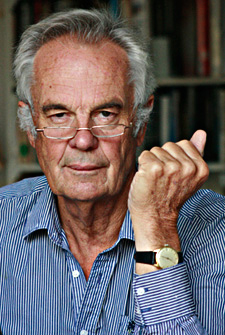
Dateline: Phnom Penh, Cambodia, March 5th 2013
Cambodia has lain for too long under the black umbrella of its past. But Cambodia is waking up, has looked the evil one in its eye and, re-born, found its strength.
Cambodia has been to hell and back – 2 million of its people killed out of population of 8 million, with 500,000 of them executed, the consequence of a fanatical communist movement, the Khmer Rouge, led by Pol Pot and a group of henchmen now being tried in the UN War Crimes Court. (Pol Pot himself is dead.)
The Khmer Rouge violently took power in 1975 and fell in 1979. They wanted a classless society. They abolished money, property and religious practices. Family relationships were criticised and people were forbidden from even showing the slightest affection. The work day in the fields was 12 hours long without pause. Torture and the bullet were the instant punishment for deviance. Anybody educated was singled out for death. Read the rest of this entry »
 Posted in
The deep crisis of democracy
By Johan Galtung
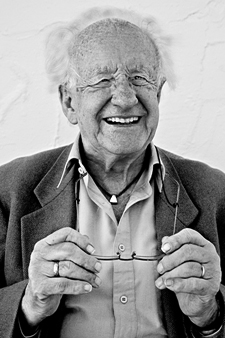
Partyocracy-Technocracy-Autocracy-Bankocracy…?
There is a crisis in the Western or more particularly the Indo-European political system – for reasons to be made clear. The system is referred to as “democracy”, meaning rule with the consent of the ruled; of, by and for the people. In practice this is interpreted as multi-party national elections for a national assembly, and majority rule in its two major forms, presidential and parliamentary democracy. The minority is given the role as “loyal opposition”.
The sovereign, people, are given choices not between positions on issues, but “platforms”, issue-bundles; and not between candidates, but candidate-bundles, “lists”, designed not by the parties, but by executive committees, officers, even by one officer, the boss. And this choice the sovereign can make only once every four years when a power window opens one or two days, 8-10 hours, called elections.
The system is better referred to as partyocracy than democracy, a reason that we often talk about “political class”, “political elites”, etc. Read the rest of this entry »
What’s The Problem With Iran?
TFF PressInfo 1-2013
On Tuesday February 26, in Kazakhstan, a new round of negotiations are due between Iran and the Five Permanent UN Security Council members + Germany. We’d like to bring the following expert statement to your attention.
Contacts for interviews as well as analytical sources below the statement.
Summary
The problem is not nuclear weapons, essentially. It’s strategic interests such as control of oil and gas and that requires a change of Iran’s ‘obstinate’ and ‘defiant’ regime.
The present US/NATO/EU policy is based on escalating threats without an exit strategy. This increases the risk of war, whether intended or not. If that is not the deliberate purpose, an entirely new Western policy vis-a-vis Iran must be developed.
The Transnational Foundation in Sweden – an independent think tank with 27 years of experience – provides you with the diagnosis, the prognosis and the proposals for improved relations built on trust. (See below.) Read the rest of this entry »
The West needs a new Iran policy (2)
By Farhang Jahanpour
In the second part, Dr Jahanpour lists 20 steps that can be taken if the West switches to a conflict-resolution and trust-building perspective instead of war-mongering. Please share this as widely as you can, thanks.
Iran (2) Build Trust – 21 proposals from TFF on Vimeo.
The West needs a new Iran policy (1)
By Farhang Jahanpour
TFF is proud to present this video with one of the world’s leading experts on Iran. Dr. Jahanpour here talks about why war on Iran cannot be an option on the table. In part 2, he lists 2o steps that can be taken if the West switches to a conflict-resolution and trust-building perspective. Please share this as widely as you can, thanks.
Iran (1) War Is Not An Option from TFF on Vimeo.
Envisioning a world without nuclear weapons
By Richard Falk
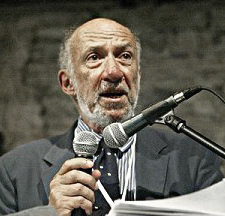
Book Review
ZERO: THE CASE FOR NUCLEAR WEAPONS ABOLITION
By David Krieger (published in 2013 by the Nuclear Age Peace Foundation); $14.95
I have known David Krieger for the past twenty-five years, and he has never wavered, even for a day, from his lifelong journey dedicated to ridding the world of nuclear weapons and the threat of nuclear war. If I were given to categorization, I would label such an extraordinary engagement with a cause as an instance of ‘benign fanaticism.’
Unfortunately, from the perspective of the human future, it is a rather rare condition, posing the puzzle as to why Krieger should be so intensely inclined, given his seemingly untraumatized background. He traces his own obsession back to his mother’s principled refusal to install a bomb shelter in the backyard of their Los Angeles home when he was 12 years old. He comments in the Preface to ZERO that even at the time he “hadn’t expected” her to take such a stand, which he experienced as “a powerful lesson in compassion,” was especially moved by her unwillingness “to buy into saving herself at the expense of humanity.” (xiv).
Nine years later after Krieger graduated from college his mother was again an instrumental force, giving him as a graduation present a trip to Japan to witness first-hand “what two nuclear weapons had done to the cities of Hiroshima and Nagasaki.” (xiv) The rest is, as they say, ‘history.’ Or as Krieger puts it in characteristic understatement, “[t]hose visits changed my life.” (xiv) Read the rest of this entry »
Cambodia’s War Crimes Court at snail pace
By Jonathan Power
Dateline: Phnom Penh, Cambodia.
At the end of World War 2, when the three allies, Britain, the US and the Soviet Union, were considering what to do with the top German political and military leaders, Winston Churchill had no compunction in saying they should be taken out of their cells and shot. Franklin Roosevelt persuaded him that a trial was more in order. Stalin went along with this.
A trial it was with judges from the three powers – the first war crimes’ trial in history. It tried 23 of the German hierarchy and it took only 13 months to complete the trial.
The trial in Cambodia, organised jointly by the UN and the Cambodian government, has had only five people in the dock but has taken 7 years and is not likely to finish before the end of the summer or even early next year. (One was convicted in 2010 and one, the only woman, has been released on health grounds.) I asked senior Western diplomats and two of the judges on the court why so long and they all found it difficult to answer. Some talked about the investigation part of the trial taking too long, yet the evidence was growing on trees. Read the rest of this entry »
The world as seen from Mount Everest
By Johan Galtung
The Weekly Mirror published Mondays in Kathmandu is a remarkable mirror of the world seen from above. Prem Kumari Pant, the editor, is a Nepali in the country where Buddha was born in Lumbini. Buddhism, now 9% as against hinduism-brahmanism 80%, migrated to India, and was forced south to Sri Lanka where 5th century buddhist monks invented the Mahawamsa doctrine. They were the “chosen people”, by the Buddha, to make Sri Lanka a home for buddhism. They had not only the right but the duty to eliminate Tamil claims on a part of the land: Go home to where you came from; Sri Lanka is our homeland, language, religion; no buddhist nonviolence and compassion.
Prem Kumari Pant is also chairperson of the Nepal-China society. Read the rest of this entry »
Pope Benedict, good or bad?
By Jonathan Power
Dean Acheson, the distinguished US Secretary of State who coined such phrases as “Britain has lost an empire but not yet found a role” also once said: “Moral talk is fine preaching for the Final Day of Judgement, but it was not a view I could entertain as a public servant.” No wonder he could justify the use of the nuclear bomb on Japan.
The last four Popes, including Benedict who has just announced his retirement, would never have supported the Hiroshima bombing. Neither did they support the wars in Vietnam, Iraq and Afghanistan. They believed in moral talk here and now.
“Moral talk” led Pope John Paul to wage a long and successful fight against communism in his homeland, Poland. Indeed, many say that victory was the catalyst for the fall of communism in the rest of Eastern Europe and the Soviet Union itself.
“Moral talk” led to Pope John, the great reformer, to use his position to tell President Lyndon Johnson to his face that the Vietnam war was immoral.
Benedict is cut of the same cloth, with some interesting shades of emphasis. Read the rest of this entry »
Room for optimism in Iran and the P5-plus-1 talks
By Farhang Jahanpour*
Iran and the P5-plus-1, which includes the United States, will meet again on 26 February in Kazakhstan. This is the first time that the two sides will meet in an atmosphere of continuing mutual suspicion since the third round of talks held in Moscow on 18-19 June 2012 ended in stalemate.
Iran believes that the West, particularly the United States, is using the talks as a pretext to increase the sanctions until Tehran bends to its will; whereas Washington holds that Iran is prolonging the talks in order to continue its uranium enrichment with the aim of producing a nuclear weapon. The fact of the matter is that neither side is sincere in their remarks and both sides are engaged in a cat and mouse game trying to use the talks for domestic purposes and for pursuing other goals, rather than finding a mutually acceptable solution to Iran’s nuclear program. Read the rest of this entry »