Author Archive
Heela Najibullah’s CV
 December 13th, 2012 |
  Author:
 Heela Najibullah
Became TFF Associate in December 2012

 Posted in
Hamas, Khaled Mashaal and prospects for a sustainable Israel/Palestine peace
By Richard Falk
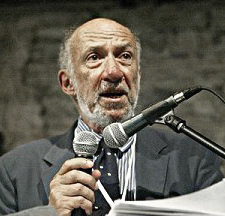
In the aftermath of Khaled Mashaal’s emotional visit to Gaza in celebration of Hamas’ 25th anniversary, commentary in Israel and the West has focused on his remarks at a rally as ‘defiant’ and disclosing ‘the true face’ of Hamas. Emphasis was particularly placed on his dramatic pledge to recover the whole of historic Palestine, from the Mediterranean to Jordan, “inch by inch,” no matter how long such a process might take.
Mashaal also challenged the legitimacy of the Zionist project, and justified Palestinian resistance in whatever form it might assume, although disavowing the intention to attack civilians as such, and denying any complicity by Hamas in the November 21, 2012 incident in Israel when a bomb exploded in a Jerusalem bus.
These remarks certainly raise concerns for moderate Israelis who continue to advocate a two-state solution in accordance with UN Security Council Resolution 242, but at the same time, it is important to listen to Hamas fully before reaching any firm conclusions.
What Mashaal said in Gaza was at a rally dedicated to reaffirming its fundamental struggle in the immediate aftermath of the recent 8 day Israeli attack (code-named Pillar of Defense), and by a leader who for the first time in 45 years had openly dared to set foot in his occupied and oppressed homeland.
Mashaal is a leader who has lived in exile in several countries of the region since he was 11 years old, having been born in the Selwad neighborhood of Ramallah, then under Jordanian control. He is someone who in 1997 Israel had tried to murder in a notorious incident in Jordan in which only the capture of the Mossad perpetrators induced Israel to supply a life-saving antidote for the poison that had been sprayed into Mashaal’s ear in exchange for their release from Jordanian captivity. In Mashaal’s imagery, this return to Gaza was his ‘third birth,’ the first being in 1956 when he was born, the second when he survived the Israeli assassination attempt, and the third when he was able to kiss the ground upon entering Gaza. These biographical details seem relevant for an assessment of his public remarks. Read the rest of this entry »
The last opportunity for peace in Afghanistan
By Jonathan Power
In Afghanistan the coalition of Western armed forces has lost 3,000 soldiers during its 10 years of war. In comparison the Soviet Union lost 15,000 during its 9 year long war between 1979 and 89. The Soviet Union politically had not much to show for it and it is a safe bet to say that the US and their NATO allies, unless they pull their finger out, will not have much on the political front to show for it by the time they complete in 2014 the withdrawal that has already begun.
As did the Soviet Union the US and NATO will leave behind better roads, schools, health clinics and the rest. In fact the last few years there has been a remarkable increase in Afghanistan’s growth rate with infant mortality falling fast and the number of children being educated rising rapidly but politics has a habit in Afghanistan of short-changing humanitarian gains.
But does this have to be so? Read the rest of this entry »
Fighting anti-semitism constructively
By Johan Galtung
From Grenzach-Wyhlen, Germany
Anti-Semitism, AS, is to be against Jews as such; pre-judging all based on some, pars pro toto. Being anti any category humans are born into – woman-man, black-white – is a fatal disease, with prejudice escalating to hatred, leading to discrimination, escalating to war, even genocide. There is linearity; perpetrators to victims.
To prevent and cure this disease we must understand its causes, roots, and learn what, and what not, to do. To be against disease is not good enough. With the open mind provided by academic freedom, and freedom of speech as a basic human right, we have explored diseases like cancer to identify the roots, the carcinogens. Smoking, active and passive, is among them; saying so is not “blaming the victim”. Diseases are systems with feedbacks, as is prejudice-discrimination. Rooted in relations between Jews and others, in traumas of the past, conflicts in the present, and the victim feedback. There are loops. Read the rest of this entry »
Egypt: Between a rock and a hard place
By Richard Falk
I have had the opportunity to be in Cairo three times for brief visits in the last 20 months, the first a few weeks after the departure of Hosni Mubarak on February 11, 2011, the second in February of 2012 when the revolutionary process was treading water, and this third one over the course of the previous ten days.
What is striking is how drastically the prevailing mood and expectations have changed from visit to visit, how fears, hopes, and perceptions have altered over time, and why they are likely to continue to do so.
I. The Overthrow of Mubarak
On the first visit, shortly after the extraordinary exploits in Tahrir Square that started on January 18, 2011, there was a spirit of stunned amazement that made it seem as though the ‘Arab Spring’ was a genuine historical phenomenon of epic proportions and that Egypt had become the core site of a new post-Marxist radical politics that relied on militant nonviolence and a radical ethos of transformation, but avoided ideology and hard power tactics.
Gandhi and Gene Sharp were most often invoked as the inspirational influences, not Lenin, Mao, Castro. Read the rest of this entry »
Complaint about the Nobel Peace Prize Committee to the Swedish Foundation Inspection Board
By Jan Oberg
Open Letter
Dear Mikael Wiman
May I permit myself to join Mr. Fredrik Heffermehl – one of the world’s leading experts on peace as well as the Nobel Peace Prize – in his letter to you.
There is very substantial arguments that Nobel’s will has been ignored in a series of cases, no matter how much one can and should of course argue that times have changed since he wrote his will.
One of the fundamental features of those changes is that nuclear and other weapons of mass destruction have entered the world and that the world’s governments (with a few exceptions such as Costa Rica and Iceland) have incrementally decided to squander more and more scarce resources on armament and warfare – and preparations for it. The sum total of it amounts to about US$ 1700 billion – in a world where the UN for all its activities has a budget of about 30, development aid stands on 160 and peace-building about 0,5 billion – all according to the latest report by the U.N. Secretary General. Indeed, therefore, the problem Mr. Nobel intended to combat is many times bigger and more threatening to humankind than he could ever foresee.
To award the European Union the prize is to poke fun of Alfred Nobel’s intentions Read the rest of this entry »
Visit to Gaza – UN Press release
By Richard Falk
I recently completed a mission to the Gaza Strip, entering by way of Egypt at the Rafah Crossing; as I am now in Doha attending the final days of the UN Climate Change negotiations, I have had no chance to write a post describing the moving and difficult circumstances that confront the people of Gaza, and the hopes and disappointments that followed the ceasefire that followed the Israeli onslaught; there are concerns about whether it will be fully implemented in accordance with expectations, and if not, whether events will move toward renewed cross-border violence. There are new hopes and complexities on two further fronts: the aftermath of Palestinian success in being confirmed as a non-member state by the General Assembly on November 29, and the new priority being accorded to reconciliation between the Palestinian Authority and Hamas. More than ever since Hamas assumed governing authority in June 2007, foreign leaders have been visiting Gaza, according Hamas an upgraded diplomatic status
U.S. encirclement of China
By Jonathan Power
Not since early Cold War days when the US and NATO effectively
encircled the Soviet Union, feeding Stalin’s paranoia, has America
moved to be so profoundly counterproductive. It is now beginning to
encircle China- at least that is how China is seeing it.
Of course “encircling” is a bit of an exaggerated notion since the
Soviet Union was too large ever to be totally encircled. Likewise
today China is content with the state of affairs on its long Russian,
Mongolian and North Korean borders. But “encircling” does suggest a
process.
Why of all people is President Barack Obama initiating this? We may
not know the answer to that but we do know what he is doing. Read the rest of this entry »
At the UN – Two empires crumbling: U.S. and Israel
By Johan Galtung
There is History in the UN 29 November 2012 vote: 138 YES to giving Palestine the UN status as “nonmember observer state”, only 9 NO, and 41 abstentions. Beyond Middle East politics the vote also mirrors the limits to the US global, and the Israeli regional, empires: 138 defy their grip and favor change, 41+9=50 do not, for various reasons. A crucial vote on a crucial issue is a crucial test. Who wants what? Read the rest of this entry »
Observing the International Day of Solidarity with the Palestinian People in Cairo
By Richard Falk
Text of my remarks delivered in Cairo at joint UN/Arab League ceremony marking the observance of the 2012 International Day of Solidarity with the Palestinian People, 29 Nov 2012, some 10 hours prior to the historic vote in the UN General Assembly.
Your Excellency, Dr. Nabil Elaraby, Secretary General of the League of Arab States, H.E. Barakat Al Fara, H.E. Amre Dou Al Atta, Dr. Mohammad Gimi’a, Bishop Macos – Excellencies, Distinguished Guests, Ladies and Gentlemen:
It is an exceptional honor and challenge to speak on such an occasion. We meet at a tense historical moment with heavy potential consequences for the Palestinian people and for the peoples and governments of the region. I along with many others throughout the world share Nelson Mandela’s view that the denial of Palestinian rights remains the “the greatest moral issue of our time.” This 2012 International Day of Solidarity with the People of Palestine possesses a special significance. A ceasefire ending the latest orgy of violence afflicting the two societies, but especially affecting the people of Gaza, has been agreed upon just over a week ago, and appears to be holding. And in a few hours the Chairman of the Palestinian Liberation Organization and President of the Palestinian Authority, Mahmoud Abbas, is scheduled to ask the UN General Assembly to recognize Palestine as a non-member observer State within the UN, a status similar to that of the Vatican. When this initiative is approved later today it means an upgraded status for Palestine within the UN System, including probable access to other organs of the UN.
Meeting here in Cairo on this occasion has an added resonance. It was the Egyptian government that played such an instrumental role in producing the ceasefire in Gaza, and it is the democratization of Egypt that has done more to improve Palestinian prospects than any other recent regional or international development. It also raises expectations that Egypt will in the future exert its influence to bring this conflict that has lingered far too long to a just end by working toward a peaceful solution based on the recognition of Palestinian rights under international law. Nothing would better convey to the world that the Arab Spring represents a regional declaration of independence from the dominion of external influence. In doing so it would enlarge upon the earlier historic achievement of unexpectedly bringing about the downfall of a series of dictatorial regimes reigning throughout the Middle East. Read the rest of this entry »