Author Archive
Peace mathematics – does it exist?
 March 12th, 2012 |
  Author:
 By Johan Galtung

It does, even in print; pardon some publicity! You may start at the end with the table of contents, then, here is the book epilogue:
Epilogue: Enthusiast E and Skeptic S: Dialogue at a Higher Level
E: Well, where are we now? How do you feel?
S: A little exhausted. But greatly relieved at one major point.
E: Any particular chapter, branch, part of peace theory?
S: No, the whole thing. I worried that you would put something belonging to all of us, peace, into a big machine with parameters and then the machine would produce outputs about what to do. Like economists do with something belonging to us, our own livelihood. I liked your distinction between equations and formulas, between mathematics and mathematese.
E: Is your worry that reality is so complex that no set of equations can ever mirror it? Like linear equations being inadequate, non-linear equations being more promising? Read the rest of this entry »
Hana Shalabi: A brave act of Palestinian nonviolence
By Richard Falk
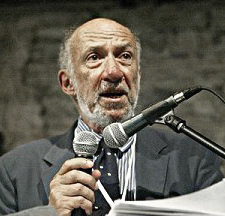
No sooner had Khader Adnan ended his 66 day life threatening hunger strike than new urgent concerns are being voiced for Hana Shalabi, another West Bank hunger striker now without food for more than 24 days. Both strikes were directed by Palestinian activists against the abusive use of administrative detention by Israeli West Bank occupying military forces, protesting both the practice of internment without charges or trial and the degrading and physically harsh treatment administered during the arrest, interrogation, and detention process.
The case of Hana Shalabi should move even the most hardhearted. She seems a young tender and normal woman who is a member of Islamic Jihad, and is dedicated to her family, hopes for marriage, and simple pleasures of shopping. Read the rest of this entry »
Koran burning in Afghanistan: Mistake, crime, and metaphor
By Richard Falk
On February 20, 2012 several American soldiers, five having been identified as responsible at this point, took some Islamic writings including several copies of the Koran to a landfill on Bagram Air Base in Afghanistan where they were burned. As soon as Afghan workers on the scene realized that Korans were being burned, they recognized what was happening as an act of desecration, and launched an immediate protest. The protest spread rapidly throughout the country, and turned violent, producing at least 30 Afghan deaths, as well as five dead American soldiers that also produced many non-lethal casualties. Read the rest of this entry »
Is Gambia a viable state?
By Gunnar Westberg
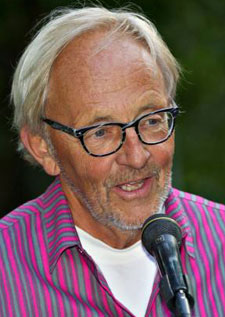
Gambia, or properly The Gambia, is a curious remnant of the British Empire, a crooked British finger poking from the Atlantic coast into Francophone Senegal. It is the smallest state in Africa, with about 1.6 million inhabitants.
Gambia was a hot spot for tourism 20 or 30 years ago, but is now largely bypassed by many other attractive subtropical or tropical countries and Gambia never discussed in international media. Read the rest of this entry »
Reciprocity, lawfare and self-defence: Targeted killing
By Richard Falk
This post is a modified and expanded text of a contribution to a Jadaliyya roundtable on targeted killing posted on March 5, 2012, and responding to the article by Lisa Hajjar referred to in the opening paragraph.
**********************
There is an emergent Israeli/American controversy on the lawfulness of targeted killing. Although the policy has not yet attained the status of being a national debate, there are signs that it may be about to happen, especially in light of the Attorney General, Eric Holder’s Northwestern Law School speech on March 5, 2012 outlining the Obama’s administration’s controversial approach to targeted killing in some detail. Lisa Hajjar convincingly narrates how the “legalization” of targeted killing has evolved over the course of the last twenty years. [Hajjar, “Lawfare and Targeted Killing Developments in the Israeli and U.S. Contexts,” Jadaliyya, Jan. 15, 2012] She there calls attention to the analogy to the torture debate that, in many ways, defined the political and moral identity of the Bush presidency in the aftermath of the 9/11 attacks, and even caused moral and legal fissures to develop that divided the American people unto this day.
Hajjar shows that it was Israel that first crossed the threshold of legality in response to a wave of suicide bombings that traumatized Israeli society in the 1990s. In other words, targeted killing became a tactic of choice for both the Israel and the United States as part of the preventive logic of counter-terrorism, that is, placing a premium on eliminating threats before harm is inflicted rather than the reactive logic of striking back and retaliating. The upsurge in targeted killing seems responsive to the belief that neither defensive strategies nor deterrence, nor massive retaliation are appropriate or effective against a terrorist adversary, especially if the violence might accompanied by the readiness of a perpetrator to die while carrying out a mission. Read the rest of this entry »
Democracy and economy buzzing in Nigeria
By Jonathan Power
Lagos – March 6th 2012
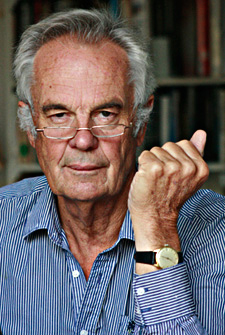
Politically Nigeria has been extraordinarily lucky in its political leadership the last thirteen years. Under dictator Sani Abacha opposition was routed and its leaders imprisoned, tortured and murdered, the press was neutered and the treasury looted for personal gain. It only ended when Abacha suffered a heart attack in bed in the company of three prostitutes.
Then one of his most vociferous opponents, Olusegun Obasanjo, who had spent three years in a primitive prison, won the first post-Abacha election. Read the rest of this entry »
The U.S. – from Empire to Global Fascism?
By Johan Galtung
In The Fall of the US Empire-And Then What?[i] a subtitle is US Fascism or US Blossoming? Of blossoming there seems to be none, with the Dow Jones crossing the 13,000 border, the real economy still mostly in bad shape, the Republican candidates embracing the economic system that produced the crisis, and Obama running the progressive rhetoric trick that brought him into power in 2008. By midterm 2010 the bluff was called, with a landslide. The OWS, Occupy Wall Street, is in the first three stages, consciousness-formation, mobilization and some confrontation; but not yet in the real struggle with massive nonviolent practice of alternatives.
Fascism? There is a domestic and a global variety and the latter is Obama’s foreign policy, with domestic elements. Read the rest of this entry »
Tonight I lost my last bit of sympathy for President Obama
By Jan Oberg
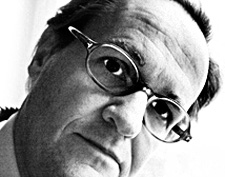
A man shall be judged more by his deeds than by his words, says President Obama. That is what I do to him here. On the basis of what he has done and says he will do.
This is President Obama’s most nasty, bellicose, one-sided and perversely power-arrogant speech ever. The Nobel Committee ought to revoke its Prize to him, but of course it won’t.
This cynical man speaks about the goodness of even more “crippling” sanctions on a country of 75 million people of which 25 % are children under 14.
At every single aspect he touches upon, he takes the wrong path: towards making war irreversible. There is no excuse that it was for AIPAC. In contrast to George W. Bush, he is neither ignorant, under-educated, or un-intelligent. That’s what makes it so serious, so tragic.
Among several remarkable things is that the President here also gives a carte blanche to Israel deciding alone what it will do in the future vis-a-vis Iran.
Under no circumstance can the U.S. under this man serve in a peaceful role, and it’s laughable to argue that it can be a mediator in the Middle East.
Pray that I am wrong but this speech, combined with everything else that goes on these months, makes me predict war on Iran within 4-6 months.
Addendum:
Of course this speech figures only on 2-3 front pages of the Western mainstream press the day after; they are more interested for a 2nd day in the likely, but so far undocumented, election fraud in Russia. Most editors probably don’t know what AIPAC is, or why Obama’s words in that forum are so important.
 Posted in Iran, Israel/Palestine, Jan Oberg, Nobel Peace Prize, US Empire, US politics & security |
  3 Comments »
Nigeria – I have seen the future and know it works
By Jonathan Power
Did you know that Nigeria, the most populated country in black Africa, is now one of the top five fastest growing big economies in the world? (The others are China, India, Turkey and Argentina.)
The image of Nigeria is of poverty, crime, corruption, election fiddling and maladministration. Africa, I find from my family and friends, is still a continent where death stalks – war, starving children and impoverished refugees.
But the tale of progress is unsung. This wretchedness is the only news that penetrates. Only one western newspaper, the Financial Times, has a full time correspondent in Nigeria where one third of all the black people in the world live. The rest get their news from the fickle eye of television and the rest of the newspaper pack. Read the rest of this entry »
Japan’s spiritual crisis
By Johan Galtung
From Kyoto, Japan: A grey, cold Sunday morning, fitting the sad theme.
The Japan Times, an excellent middle wing newspaper, came in the middle of the night, with four typical stories, for a starter.
We approach the 3/11 anniversary. The earthquake struck on 11 March 2011, followed by the tsunami and the near meltdown of Fukushima No. 1 nuke plant. On 11 March 2004, terrorism struck the Atocha train station in Madrid. A bad date; may inspire somebody.
We read: “Worker at No. 1 nuke plant died from ‘overwork’. He was dispatched by a subcontractor, a construction firm based in Shizuoka, and started working at Fukushima No. 1 on May 13. On his first day he engaged in piping and other work in a waste disposal facility at the complex, but complained of not feeling well the following morning. He was immediately taken to a hospital and died shortly afterwards–radiation still high around Fukushima No. 1–640 km off the coast of Fukushima.” A private construction firm. Read the rest of this entry »