Archive for the ‘Asia’ Category
Understanding the global threat against sacred spaces
 August 16th, 2012 |
  Author:
 Chaiwat Satha-Anand, TFF Associate
Chairperson, Strategic Nonviolence Commisssion, Thailand Research Fund
Senior Research Fellow, TODA Institute of Global Peace and Policy Research

On August 6, 2012, the neo-Nazi Wade Michael Page walked into the gurudwara (Sikh temple) of Wisconsin in Oak Creek and murdered 6 people including the temple president. He was killed by the police in the incident.
While the Sikhs in the US had suffered from discrimination since they started coming to the United States in the early 20th century: they were driven out of Bellingham, Washington, in 1907; and out of St. John, Oregon in 1910, this most recent Oak Creek killing sparked global outcries from Washington DC to New Delhi. In India, members of Sikh communities staged protest demonstrations in several cities including New Delhi and Jammu, Kashmir.
There are many ways to understand this abominable incident. Read the rest of this entry »
India-China cooperation in the Asian century
By Shastri Ramachandaran*
NEW DELHI – India had more than one message for China prior to Prime Minister Manmohan Singh’s three-day visit to Myanmar, the world’s newest darling of democracy being wooed with ardour by the two Asian giants and the US.
From New Delhi went the un-subtle message that the prime minister’s visit was actuated by the neighbourly intent of peace and prosperity; and, not by any expansionist design. Taking a dig at China comes naturally to some in New Delhi, even when it is inappropriate – as it was here, because it does not fit with Manmohan Singh’s style and persona. Read the rest of this entry »
 Posted in China, Future perspectives, India, India, Shastri Ramachandaran, World order/governance |
  No Comments »
Falling in line: An Indian editor works at Chinese media
By Shastri Ramachandaran
Working as a journalist in China’s newspapers can be an eye-opening and engaging experience, revealing unsuspected potential and unforeseen possibilities. Such work, more often than not, is with the state media. To make the most of the situation, it is necessary to leave behind a lifetime’s misconceptions and prejudices.
My life as an expatriate journalist in Beijing began with China Daily (CD) – the country’s oldest English daily brought out by a department of the Information Ministry. The Editor in Chief (EiC) is said to enjoy the rank of Vice Premier, with all the powers of that office, barring the one that allows issue of visas. Read the rest of this entry »
Pakistan’s schizophrenia
By Jonathan Power
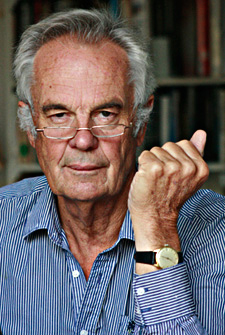
Pakistan is a country that seems sometimes to be on the verge of collapse- a scenario that frightens the US, Europe, India, Russia, China and the countries of the Middle East. All fear that Pakistan’s nuclear arsenal might fall into the hands of Taliban militants.
Pakistan’s political and religious problems are rather like a Russian doll. You open one doll and there is another inside and so it goes on until the smallest doll is revealed six dolls later. Moreover, in Pakistan each doll has its complications and contradictions. Sometimes this makes the country’s policies hard to read.
Self-interest is usually the aim of every state. Yet Pakistan seems to be continuously shooting itself in the foot. Read the rest of this entry »
A law of the sea?
By Jonathan Power
Last week as we watched Mitt Romney win the right to challenge Barack Obama in November’s general election the last thing that most people were thinking about were sea and oceans. Yet the last Republican president, George W. Bush, at this point in the electoral cycle announced that, if elected, he would move to ratify the UN’s Law of the Sea. He never did. But also last week Secretary of State Hillary Clinton flanked by the senior brass from the military announced that this Administration was immediately going to push Congress to vote for the long delayed ratification of the treaty.
All the road blocks of the last thirty years since President Reagan decided to torpedo the treaty have been removed and Congress is poised to give the White House the green light on ratification. Read the rest of this entry »
Third World poverty is falling fast
By Jonathan Power
We all know the clichés: Is the glass half full or half empty? Is the light in the tunnel the train coming towards you? But this time the new World Bank figures for the decrease in Third World poverty are absolutely clear. The glass is filling up. The train is not going to crash into us. The doomsayers from Malthus in 1798 to Ehrlich’s “The Population Bomb” to the Club of Rome to some of the activists at World Trade meetings and to the UN’s Food and Agriculture Organisation which in a quite recent mistake it now admits to, reported that the number of hungry people soared from 875 million in 2005 to one billion in 2009, have been proved to be wrong. Read the rest of this entry »
Is China grabbing the South China Sea?
By Jonathan Power
Napoleon warned us that China was a sleeping giant best left undisturbed. No longer. The giant is well awake and not only has the West disturbed it, many of the West’s elite appear to fear it. Nowhere is this more true than when it comes to the debate about China’s growing naval power and in particular its attitude towards China’s claim for sovereignty over the South China Sea, to which other bordering nations – the Philippines, Vietnam, Taiwan, Brunei, Indonesia and Malaysia – also claim rights. Read the rest of this entry »
US-Pakistan-Afghanistan – A global perspective
By Johan Galtung

Washington, Carnegie Endowment, 18 April 2012
Ladies and gentlemen,
First, thanks to the American Muslim Association Foundation for organizing a forum on this controversial topic in the heart of Washington!
You have given me the global perspective on this panel, taking into account much space and time; kind of einsteinian. Seeing the world from above, five trends are talking as backdrop, context, for the theme: the fall of the US empire; the de-development of the West; the decline of the state system in favor of nationalisms from below and regionalisms from above; the rise of the Rest; and the rise of China.
And then, spiraling down toward the ground, Read the rest of this entry »
One of the world’s leading peace advocates threatened to punch me in the face
By Stephen Zunes
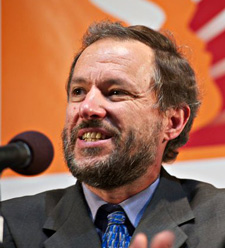
Gareth Evans, a former attorney-general and foreign minister in Australia, threatened me because I raised the issue of his support for the Suharto dictatorship in Indonesia.
I have rarely ever come face to face – only inches in fact – with such anger. Certainly not at an academic conference. And certainly not from such a prominent figure: chancellor of Australian National University, former attorney-general and foreign minister, former head of the International Crisis Group, and one of the world’s most prominent global thinkers.
Yet here I was with Gareth Evans, cursing at me, ripping my badge off, and threatening to punch me in the face. Read the rest of this entry »
India uphill or downhill?
By Jonathan Power
When the distinguished foreign policy expert, former US National Security Adviser, Zbigniew Brzezinski, told me a couple of years ago that he worried about the stability of India I thought he was way off track. Living in Calcutta at the time, democracy seemed to be thriving and both the state of West Bengal and most of the country were very clearly developing fast.
But that was before the crises of the last year. One major financial scandal has followed another. Read the rest of this entry »