Archive for the ‘European Union’ Category
A visit to NATO’s HQ in Brussels: Nuclear weapons, fear and blame
 February 24th, 2015 |
  Author:
 By Gunnar Westberg
A memory: Russia as a candidate for NATO membership
Members of International Physicians for the Prevention of Nuclear War, IPPNW, have for many years regularly visited the NATO Headquarters in Brussels. We also had good contacts with Russian military officers and Foreign Office politicians. In the middle of the nineties members of NATO’s commission on Nuclear Weapons asked if we could arrange a meeting in Moscow, “because we meet the Russians only under very formal circumstances”. Some open discussions over the vodka were hoped for.
We arranged the meeting and got a group of leading Russian military brass and politicians on the participant list. But NATO hesitated. We were told they could not afford the trip… Finally only one officer, a Canadian, came from Brussels. So there we were with a group of disappointed Russian officers. The NATO representative in Moscow showed up for a couple of hours. She assured the meeting that the relationship between NATO and the Russian military leaders was excellent. Actually, she was looking forward to the time, not too far away, when Russia would be a member of NATO.
That was the dream. But more and more countries from the dissolved Warsaw pact became NATO members. And the connections deteriorated step by step. Read the rest of this entry »
TFF PressInfo # 307: This is no time to ship lethal arms to Ukraine
By Jonathan Power
February 10th, 2015
Please put your hand up if you support giving lethal arms to the Ukrainian army and also supported the US going to war with Iraq in 2003 and with Libya in 2011, the former which unbalanced much of the Middle East and the latter which has left a country almost destroyed, semi-ruled by malicious militias.
Also raise your hand if you supported in 1998 the West going to war against Serbia in order to wrest away its province of Kosovo and give it independence- a move which ironically Russia (and Spain, worried about its Basques) opposed, arguing that this would set a precedent for territorial separation by force of arms.
If you supported all these three interventions don’t take offence if I question your judgment on the issue of arms for Ukraine.
I am trying to work out where President Barack Obama stands on all this. His vice-president, Joe Biden, seems to be running with the foxes while he himself is running with the hares. Take the president’s interview on CNN the weekend before last. Until then the official White House line had been that the crisis was instigated by President Vladimir Putin to block Ukraine from creating a democratic government.
But in that broadcast, as my esteemed fellow columnist, William Pfaff, has observed, “Obama conceded to an American TV audience that the official US narrative concerning the war in Ukraine isn’t true”. Read the rest of this entry »
 Posted in Conflict and war, EU politics, European Union, Jonathan Power, Russia, Sanctions, TFF PressInfo, Ukraine, US Empire |
  No Comments »
TFF PressInfo # 306: Islam is not the problem. But keep your own house in order
By Jonathan Power
February 3rd 2015
The beheading of a Japanese journalist does not represent Islam. Saddam Hussein did not represent Islam. Bashar al-Assad does not represent Islam. Muammar Gaddafi of Libya did not represent Islam. The regular beheadings in Saudi Arabia for “crimes” such as adultery don’t represent Islam.
Likewise, the US dropping nuclear bombs on Hiroshima and Nagasaki didn’t represent Christianity. Nor did the torture practiced in Northern Ireland. Nor did the Buddhist-led atrocities against the Tamils of Sri Lanka represent Buddhism.
Nevertheless, it is probably true that in the late twentieth century a high percentage of the world’s violent conflicts took place inside the Muslim world or against non-Muslims. But that does not mean they were supported by a majority of Muslims. Indeed, I would surmise that they were approved by less than 1% of Muslims. Read the rest of this entry »
TFF PressInfo # 299: 2014 no good! May all good forces unite in 2015!
By Johan Galtung
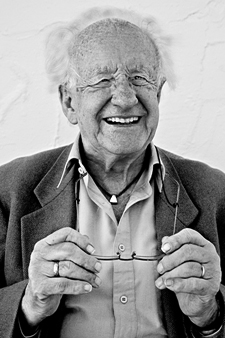
Johan Galtung
Here is a list of 15 current conflicts-violence relations, avoiding identifying conflicts with violent conflict arenas:
USA-Japan-South Korea vs North Korea vs China
USA-ASEAN vs China-Taiwan and Japan vs Korea over China Sea islands
USA-NATO-Japan vs China-Russia-SCO over encircling
USA-EU vs Russia over Ukraine-Georgia membership in NATO-EU
USA-led coalition/NATO vs Many, diverse parties in Afghanistan
USA-led coalition/NATO vs Many, diverse parties in Iraq
USA-Shia-Iran(?) vs Arabia-Sunni-caliphate/ISIS-Turkey(?)
Kurds vs Turkey-Syria-Iraq-Iran over autonomy
Israel vs Palestine over The Holy Land/Cana’an
USA-Israel vs Arab-Muslim countries over Israel vs Palestine
USA vs 134 states over terrorism using state torture-sniping-droning
USA-UK-Canada-Australia-New Zealand (“Five eyes”) vs the World, spying
USA vs China (USA-EU vs Eurasia) over the shape of geopolitics
USA-UK-France-Italy-Norway vs Libya-Mali-Sudan-Somalia etc. in Africa
USA vs Latin America/Caribbean over equality of the Americas
The most striking feature is, indeed, the presence of one country, USA, in almost all of them. Why? Read the rest of this entry »
Posted in Afghanistan, Asia, BRICS, Culture & religion, Democracy - local & global, European Union, Future perspectives, Global trends & events, Johan Galtung, Media perspectives, Middle East, Pro-peace & proposals, Russia, Sweden, Terrorism, TFF PressInfo, Theories and concepts, USA, Violence-prevention |
No Comments »
An Octagon world: Conflict or cooperation. What can we learn from each other?
By Johan Galtung
Johan Galtung
“They can choose to focus on the worst in others, criticizing, building on paranoia and worst case analysis, “security”. Or choose to focus on the best, with cooperation as dominant mode, conflict as recessive. They can cooperate for mutual and equal benefit like in good trade, exploring each others’ comparative political-cultural advantages. They can do it.”
Posted in Africa, Asia, BRICS, Buddhism, Culture, Democracy - local & global, EU politics, European Union, Future perspectives, Global economics, Global trends & events, India, Johan Galtung, Middle East, Military - technology, Nonviolence, Pro-peace & proposals, Reflections, essays & more, Theories and concepts, US Empire, USA, World order/governance |
No Comments »
TFF PressInfo # 294 – Change the Iran policy now
By Jan Oberg
TFF director
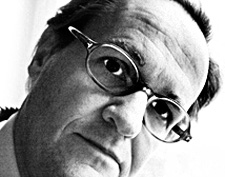
Jan Oberg
Tehran Dec 9, 2014
The First Conference on ”World Against Violence and Extremism” is inaugurated here in Tehran this morning by President Rouhani. His idea was endorsed unanimously by the UN General Assembly last year. This PressInfo was written before I came to Iran.
The last round of negotiations between Iran and the Five Permanent Members of the UN Security Council + Germany about the future possibility that Iran would acquire nuclear weapons should have resulted in no agreement but a 7 months postponement. It is a waste of everybody’s time in one of the most urgent issues on the international agenda.
An a-symmetric conflict
Here are 5 countries bristling with thousands of nuclear weapons themselves and planning to spend trillions of dollars on more and more sophisticated nukes – unanimous in telling a country that does not have nukes to not acquire them: ”What we can’t live without thou shall never have”.
Everybody knows but conveniently omit mention of the fact that Israel is a nuclear weapons power over 50 years with at least 200 nukes in contravention of UN resolutions that the whole region shall be free from such weapons. And it has not signed the Non-Proliferation Treaty.
In rough terms, Iran’s military expenditures is 2-3% of the United States’; with a population ten times that of Israel it spends about the same, and 4% of its GDP where Israel spends 6.
Israel is number 1 Read the rest of this entry »
Posted in Conflict and war, Disarmament, European Union, International law, Iraq, Israel/Palestine, Jan Oberg, Middle East, Negotiations, Nonviolence, Nuclear weapons, Peace, Pro-peace & proposals, Sanctions, TFF PressInfo, UN matters, US Empire, US politics & security, USA, Violence-prevention, World order/governance |
No Comments »
Obama’s report card
By Jonathan Power
Will the real Barack Obama be allowed to stand up? The New York Times’ columnist and Nobel Prize winner for economics, Paul Krugman, writes in “Rolling Stone, “Obama has emerged as one of the most consequential presidents in American history”.
You wouldn’t know this if you observed the swing towards the Republicans in the recent Congressional elections – the same Republican Party that has implemented a scorched-earth policy against many of Obama’s initiatives.
The truth is he’s made more of a go of it than much of the media has reported.
He came into power inheriting the worst financial crisis since the Great Depression of the 1930s. He has emerged as the only full-bloodied Keynesian Read the rest of this entry »
Is Russia on the warpath?
By Jonathan Power
Just before former Soviet president Mikhail Gorbachev on Saturday made his stunning criticism of the West that, since the fall of the Berlin Wall, it had engaged in “triumphalism”, I was in Moscow. Everyone I talked to said the West had set out to humiliate Russia (not to help rebuild it as it did in Germany after the Second World War).
Gorbachev has long been the West’s pet political darling, (although the New York Times didn’t report this speech) – for undoing the straitjacket that enveloped Soviet society, for allowing the reunification of Germany and for being the major contributor to ending the Cold War.
So the question is will the West listen to him now? Will it listen to his point that the expansion of NATO has made Russia feel threatened?
Will it understand that there is a good reason why he and an overwhelming majority of Russians support President Vladimir Putin’s foreign policy? Will it share his fear that “we are on the brink of a new Cold War”?
One of the people I talked to Read the rest of this entry »
Posted in Armament, Culture & religion, EU peace, EU politics, European Union, Future perspectives, General issues, Global trends & events, Jonathan Power, Media perspectives, Nuclear weapons, Pro-peace & proposals, Psychology - war & peace, Reflections, essays & more, Russia, Sanctions, Security and defence, Ukraine, US Empire, US politics & security, Violence-prevention, World order/governance |
No Comments »
TFF PressInfo # 288 – Where it all went wrong and lessons were never learnt
By Jan Oberg
Jan Oberg
On November 9, it is 25 years the Berlin Wall came down. Seventeen months later, Yugoslavia’s dissolution began and various concepts and policies were introduced that fundamentally changed international politics ever since – more so than the fall of the Wall.
These features can be seen in the conflict (mis)management in later conflicts.
By now we should have accumulated enough evidence of how effective the various ”teatments” of the ”patient” called Yugoslavia were. To put it crudely: A unique country was destroyed – yes from the inside too, but that doesn’t reduce the responsibility of the West/NATO in its role as ”peacemaker”.
Today, Croatia is ethnically much more clean; Kosovo remains a failed state; the constituencies of the Dayton Accords for Bosnia (1995) still won’t live together as one state, as elections have just shown us. Macedonia’s problems have only deepened. The split between Serbia and Montenegro was enigmatic. Today’s Slovenia is the only unit that can be said to be in a better situation now than when part of Yugoslavia.
It is high time we get a critical discussion going of what the international so-called community chose to actually do – no matter the stated intentions – to help bring about peace in former Yugoslavia.
All of it must be re-assessed and lessons must be learned for governments to introduce a little modesty and recognise that they are not born peacemakers but rather war makers. And we need such a debate to go down another road than the one we took since 1999.
TFF maintains that the crisis in and around Yugoslavia is much more significant for international affairs than hitherto assumed because e.g.:
• The international so-called community’s attempt at being self-appointed conflict analysers and peacemakers with no prior education or training right after being Cold War warriors led to miserable results on the ground.
• Closely related: the amateurish idea that conflicts could be understood and treated as two parties, one good and one bad. The bad guys were the Serbs, of course, and Slobodan Milosevic became the new ”Hitler of Europe” after the West had used him as an ally.
• During this crisis Russia was sidetracked and humiliated. But in the Soviet Union era no one would have dared touch the Yugoslav space. Now the West could do what it wanted and Russia could do nothing to oppose it.
• Violent humanitarian intervention was introduced and persuaded many, Read the rest of this entry »
Posted in EU politics, European Union, Ex Yugoslavia, Ex-Yugoslavia/Balkans, Human rights and justice, International law, Jan Oberg, Kosovo/a, Media perspectives, Negotiations, Nonviolence, Pro-peace & proposals, Psychology - war & peace, Reconciliation & forgiveness, Russia, TFF PressInfo, Theories and concepts, Ukraine, UN matters, US Empire, USA, Violence-prevention |
No Comments »
End Game in Ukraine?
By Jens Jorgen Nielsen
Written September 25, 2014
It should never have come to this horrible situation in Ukraine. The local population of Donetsk, Lugansk, Slavyansk and other eastern Ukrainian cities is living through a true nightmare. Residential areas are being bombed, shelled and burned. Non-combatants i.e. elder, women and children are lying dead in the streets. We’re talking about thousands of deaths. No water supply, no heating, no security – this is the grim reality for the population.
700.000 Eastern Ukrainians have already escaped from the war scene, most of them are living in refugee camps in Russia. It is worth noting that they have not fled to Kiev or elsewhere to the west.
Surprisingly the Western media hardly pay any attention to the horrors in Eastern Ukraine.
But that is not all. Ukraine is in total disruption socially, politically and not least economically and financially. Furthermore, the mental scars in Ukraine will continue for at least one generation ahead.
But again that is not all. The European Union suffers as well – in several ways. Read the rest of this entry »