Author Archive
U.S. military suicides and Palestinian hunger strikes
 July 7th, 2012 |
  Author:
 By Richard Falk
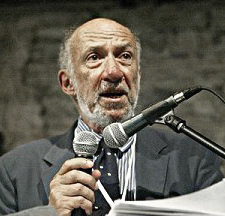
There is some awareness in the United States that suicides among American military personnel are at the highest level since the years of the Vietnam War. It is no wonder.
The sense of guilt and alienation associated with taking part in the Afghanistan War, especially multiple postings to a menacing war zone for a combat mission that is increasingly hard to justify and almost impossible to carry out successfully, seems sufficient to explain such a disturbing phenomenon.
These tragic losses of life, now outnumbering battlefield deaths, about one per day since the start of 2012, are not hidden from the American public but nor do they provoke an appropriate sense of concern, or better, outrage. Read the rest of this entry »
The violent dangers of “failed states”
By Jonathan Power
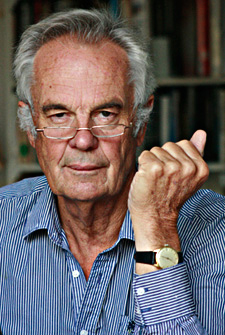
The current belief of the government of Barack Obama is that there are two major fault lines in the world – one in the Middle East and one in the so-called “failing states”. “From Africa to Central Asia to the Pacific rim nearly 60 countries stand on the brink of conflict or collapse. These failed states are the perfect incubators for extremism and terror”, President Obama has said.
But is this true? The evidence suggests it manifestly is not as a general case although obviously Al Qaeda’s operations in deeply troubled Afghanistan and Pakistan (which some say is heading towards becoming a failed state) suggest that there has been some truth in the assertion. Read the rest of this entry »
From Westphalia to World Domestic Policy
By Johan Galtung
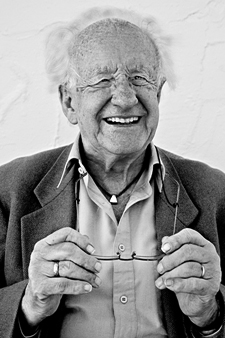
Talk at the Federation of German Scientists – Berlin, Germany
We honor a great German and world citizen, Carl Friedrich von Weizsäcker, born 100 years ago, and his path-breaking motto, World Domestic Policy, Weltinnenpolitik. What might it look like?
But before that, some words about CFvW in meetings around the world of WOMP, the World Order Models Project, brilliantly conceived and organized by Saul Mendlovitz, who sends warm greetings, and Richard Falk, the European representative with CfvW (and me as non-territorial). And as a board member of the Max Planck Institut; close to 20 years older, a father, brother and colleague. Read the rest of this entry »
Italy – A portrait
By Erica Degortes and Johan Galtung
For quite some time now reading Italian newspapers or listening to news and radio broadcasts turned into an insult not only to information itself but to all Italians. National television channels are literally monopolized by football and all kinds of weather apocalyptic scenarios.
And what about the wide space devoted to the Pope? We wonder what the nearly 1.580.000 Muslims (according to the Caritas-Migrantes 2011 Immigration Statistical Dossier – 1.200.000 according to the World Muslim League) may think about it, not to mention Jews and Buddhists, a large portion of the population about which one never hears. Read the rest of this entry »
The U.S. Congress pushes for war with Iran
By Stephen Zunes
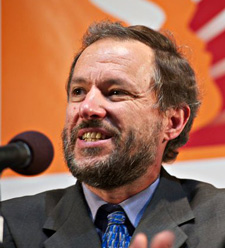
In another resolution apparently designed to prepare for war against Iran, the U.S. House of Representatives, in an overwhelmingly bipartisan 401–11 vote, has passed a resolution (HR 568) urging the president to oppose any policy toward Iran “that would rely on containment as an option in response to the Iranian nuclear threat.”
With its earlier decision to pass a bill that effectively sought to ban any negotiations between the United States and Iran, a huge bipartisan majority of Congress has essentially told the president that nothing short of war or the threat of war is an acceptable policy. Indeed, the rush to pass this bill appears to have been designed to undermine the ongoing international negotiations on Iran’s nuclear program. According to Iranian-American analyst Jamal Abdi, a prominent critic of both the Iranian regime and U.S. policy, the motivation for the resolution may be to “poison those talks by signaling to Iran that the President is weak, domestically isolated, and unable to deliver at the negotiating table because a hawkish Congress will overrule him.” Read the rest of this entry »
 Posted in Iran, Middle East, Nuclear weapons, Stephen Zunes, US Empire, Violence-prevention |
  2 Comments »
Breivik: Living in the historical present (Part II)
By Johan Galtung
The police explores concrete logistic collaborators and-or ideological support; like Peter Mangs in Sweden, the “laser man” who killed what looked like immigrants, wrote a rightwing manifesto and an autobiography; or “Fjordman” with 111 mentions.
Breivik was a member of a Norwegian rightwing anti-immigration party, Fremskrittspartiet – a legal stand in a democracy – but left. He also left the Free Masons, with the following Compendium comment:
“Being a Free Mason myself I know that /the Freemasons are a Zionist organization/ is not only a false claim but actually quite ridiculous. The Freemasons is not in any way political (I wish the organization was, believe me) and it is true that they have a positive view on Jews. However, this is from a Christian religious context where solidarity to Jews and Israel is important. The Freemasons is a Christian only organization and no Muslim or Jew could become a member even if they wanted to. There are no political bodies within the organization nationally or internationally” (p. 1369).
However, the Freemason lodges Gladio and P2 were behind the 2 August 1980 Bologna massacre, and oaths of loyalty among members may matter.
But Breivik seems to live so much in past history that it attains reality, competing with, even replacing contemporary reality. His references are numerous. There are errors; but more important is to understand his reading of the meaning of history, his history. Read the rest of this entry »
Posted in Culture & religion, Johan Galtung, Norway, Psychology - war & peace, Terrorism |
No Comments »
On human identity
By Richard Falk
Early in my blog life I wrote about Jewish identity. It was partly an exercise in self-discovery, and partly a response to those who alleged that I was a self-hating Jew, or worse, an anti-Semite. These attacks on my character were hurtful even as I felt their distance from my actual beliefs and worldview.
In my mind and heart criticisms of Israel and support for the Palestinian struggle for their rights under international law and in accord with fundamental ideas of justice had to do with taking suffering seriously, which for me is the most solid foundation of human identity. Read the rest of this entry »
Foreign policy in the U.S. presidential elections
By Jonathan Power
The US presidential election, if it goes according to Mitt Romney’s script, will not centre on foreign policy, although he is happy to suggest a tougher attitude to Iran, Russia, Palestine and China. But President Barack Obama will make it a key item in his script.
He will focus on his successful decision to kill Obama bin Laden and decapitate much of Al Qaeda’s leadership. He will make much of the US withdrawal from Iraq and his plan to be out of Afghanistan by the year after next. By election time he hopes to have an agreement with Iran on nuclear enrichment so as to head off the Iranians’ ability to make a nuclear bomb and an Israeli strike. He will emphasise the US’s good relationship with China, his substantial nuclear arms’ deal with Russia and his other work towards non-proliferation. Both countries have joined with the US effort to persuade nuclear North Korea to disarm and to limit Iran’s nuclear ambitions. Read the rest of this entry »
America’s imperialistic urge
By Jonathan Power
Woodrow Wilson, the president of the United States during the First World War, said that the U.S. world role came “by no plan of our conceiving, but by the hand of God that led us into this way”.
The Vietnam-induced pause in this historical march now seems to be a long time ago. The forward momentum of “the exceptional American spirit” continued with President Bill Clinton who expanded Nato’s frontiers right up to the Russian border. The US ignored its commitment conveyed personally to the Soviet president, Mikhail Gorbachev, not to do this.
Now, under President Barack Obama, the frontier has been stretched into Asia. A new base in Australia will allow forward deployments in this area to support those in Japan. At the same time the Administration has said that most of the US fleet will be moved to Asian seas. No wonder it makes China nervous. Read the rest of this entry »
The U.S. is in no position to condemn Russian helicopters to Syria
By Stephen Zunes
U.S. Secretary of State Hillary Rodham Clinton has claimed that “there are attack helicopters on the way from Russia to Syria,” though the Russian government denies the accusation. If true, it would be highly disturbing, given the Syrian regime’s widespread use of such weapons against unarmed civilians. Amnesty International and other human rights groups have called for an immediate end of arms transfers to the Syrian regime, particularly of weapons that have been used to target civilians.
However, the United States is hardly in a position to criticize arms transfers to governments which use them to attack innocent civilians, particularly helicopter gunships. Read the rest of this entry »