Author Archive
Third World poverty is falling fast
 May 10th, 2012 |
  Author:
 By Jonathan Power
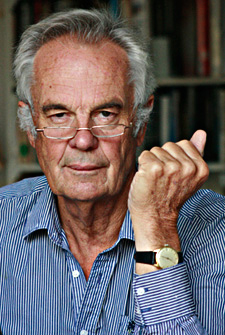
We all know the clichés: Is the glass half full or half empty? Is the light in the tunnel the train coming towards you? But this time the new World Bank figures for the decrease in Third World poverty are absolutely clear. The glass is filling up. The train is not going to crash into us. The doomsayers from Malthus in 1798 to Ehrlich’s “The Population Bomb” to the Club of Rome to some of the activists at World Trade meetings and to the UN’s Food and Agriculture Organisation which in a quite recent mistake it now admits to, reported that the number of hungry people soared from 875 million in 2005 to one billion in 2009, have been proved to be wrong. Read the rest of this entry »
 Posted in
The politics and benefits of equality
By Johan Galtung
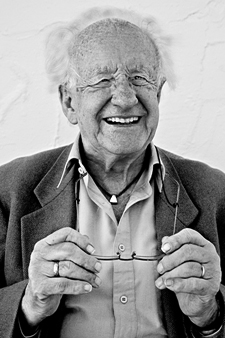
US politics has for a long time, since the 1970s, been the politics of inequality. Not only have the indicators of inequality, like the ratio in average income between the top and the bottom 20%, or the salary ratio between a CEO and the average employee in a corporation, increased (from 50 to 1100). But the top 10 or 1 or 0.1 percent, has acquired wealth so far unheard of. And the bottom 90, or 99 or 99.1 percent see the average family income in real terms decreasing; for the lowest down below the poverty line, way down into misery like worrying about where the next meal comes from (from the soup kitchen for very many). Read the rest of this entry »
The 1300 Palestinians on hunger strike in Israeli prisons: Where is the media attention?
By Richard Falk
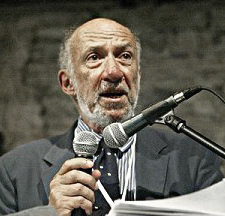
Can anyone doubt that if there were more than 1300 hunger strikers in any country in the world other than Palestine, the media in the West would be obsessed with the story? It would be featured day after day, and reported on from all angles, including the severe medical risks associated with such a lengthy refusal to take food.
At this time two Palestinians who were the first to start this current wave of resistance, Thaer Halaheh and Bilal Diab, entering their 64th day without food, are reported by the prisoner protection association, Addameer, and the NGO, Physician for Human Rights-Israel, to be in critical condition with their lives hanging in the balance. Despite this dramatic state of affairs there is scant attention in Europe, and literally none in North America. Read the rest of this entry »
Israel: UN human rights expert raises alarm over Palestinian prisoners on hunger strike in Israeli prisons
By Richard Falk
UN Press Release—HUMAN RIGHT COUNCIL–2 May 2012
GENEVA (30 April 2012) – UN Special Rapporteur on the situation of human rights in the Palestinian territories occupied since 1967, Richard Falk on Monday said he was appalled by the “continuing human rights violations in Israeli prisons,” amid a massive wave of hunger strikes by Palestinian prisoners. Read the rest of this entry »
Memories – conscious and subconscious
By Johan Galtung
Gernika-Basque Country, Spain, 28 April 2012
75 years ago Germany-Italy bombed this sacred Basque-Spanish town, adding state terrorism to the destruction of arms factories. Picasso made the atrocity enter world collective memory forever. As a testimony to the power of art, and memory, the painting was ordered covered when USA tried to make the case that Iraq was producing mass destruction weapons for the UN Security Council.
Two kinds of memories serve politics: glories and traumas. Read the rest of this entry »
Is China grabbing the South China Sea?
By Jonathan Power
Napoleon warned us that China was a sleeping giant best left undisturbed. No longer. The giant is well awake and not only has the West disturbed it, many of the West’s elite appear to fear it. Nowhere is this more true than when it comes to the debate about China’s growing naval power and in particular its attitude towards China’s claim for sovereignty over the South China Sea, to which other bordering nations – the Philippines, Vietnam, Taiwan, Brunei, Indonesia and Malaysia – also claim rights. Read the rest of this entry »
Opening the other eye: Charles Taylor and selective criminal accountability
By Richard Falk
From all that we know Charles Taylor deserves to be held criminally accountable for his role in the atrocities committed in Sierra Leone during the period 1998-2002. Taylor was then President of Liberia, and did his best to encourage violent uprisings against the governments in neighboring countries so as to finance his own bloody schemes and extend his regional influence.
It was in Sierra Leone that ‘blood diamonds,’ later more judiciously called ‘conflict diamonds’ were to be found in such abundance as to enter into the lucrative world trade, with many of these diamonds finding their way onto the shelves of such signature jewelry stores as Cartier, Bulgari, and Harry Winston, and thereby circumventing some rather weak international initiatives designed to prevent this outcome. Read the rest of this entry »
Climate warming lobby is lost in the cloud
By Jonathan Power
Forgive my cynicism about climate change. Thirty years ago I wrote a column for the Washington Post for which I had interviewed four of the world’s top climatologists. They all told me the problem was that the climate was cooling and that this would have devastating effects on agriculture and food supplies. When scientists a decade later turned around I wondered how it could be that for measuring things that changed only over ten thousands of years opinion could change so fast. Read the rest of this entry »
US-Pakistan-Afghanistan – A global perspective
By Johan Galtung
Washington, Carnegie Endowment, 18 April 2012
Ladies and gentlemen,
First, thanks to the American Muslim Association Foundation for organizing a forum on this controversial topic in the heart of Washington!
You have given me the global perspective on this panel, taking into account much space and time; kind of einsteinian. Seeing the world from above, five trends are talking as backdrop, context, for the theme: the fall of the US empire; the de-development of the West; the decline of the state system in favor of nationalisms from below and regionalisms from above; the rise of the Rest; and the rise of China.
And then, spiraling down toward the ground, Read the rest of this entry »
Iran & Israel: What the West should and can do
By Jan Oberg (951 words)
IPS COLUMNIST SERVICE, APRIL 2012 © IPS and the author
Editor’s note:
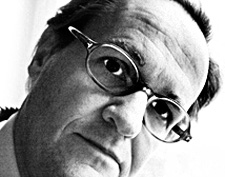
The overall picture has turned much worse over the last few months. In particular, the Western demands to Iran made public prior to the Istanbul consultations on April 14, bodes ill for the next round of talks in Baghdad. Everyone has stated views, used rhetoric and taken concrete steps that bring us all closer to the abyss called ‘War on Iran’. While it is easy and dangerous to escalate a conflict, it is difficult without losing face to de-escalate and make peace, writes Jan Oberg, director and co-founder of the Transnational Foundation (TFF) in Lund, Sweden.
Among these counterproductive steps are the Western halting of imports of oil from Iran on July 1, 2012 and the tightening of sanctions that already suffocate Iranian society. It is believed – falsely – that sanctions are somehow “soft weapons”. In Iraq, with one-third of the population of Iran, Western sanctions caused roughly one million Iraqi deaths.
What is indicative of a will to promote future peace among the parties? Well, the following are not: pre-negotiation demands, threats to destroy, an oil embargo, sanctions directed at citizens, condescending rhetoric to and about a nation with one of the oldest civilisations in the world, murdering its scientists, providing military training to its dissident terrorists abroad, telling it to abstain from what you have yourself done and requiring inspections there but not with the nuclear-armed “other side”. These are methods to make Tehran consider obtaining nukes although Iran’s highest leader has pronounced repeatedly that nuclear weapons are haram, i.e. strictly prohibited according to Islam (a fact never reported in Western media).
The world needs conflict-resolution capacity, knowledge and training. Those who run these matters steer their policies like unlicenced drivers. Under such conditions, accidents will happen and people will die. There is a huge spectrum of options between doing nothing and smashing up countries by military means.
This article offers plenty of constructive proposals. Read the rest of this entry »