Author Archive
Choosing a president for the World Bank: West centrism prevails over global democracy
 April 23rd, 2012 |
  Author:
 By Richard Falk
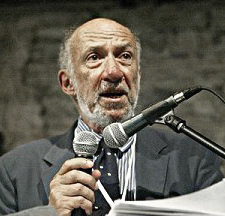
This post is a revised version of a text that appeared a few days ago in Al Jazeera English, and seeks to use the selection of an American as the new President of the World Bank both to expose the fraudulent claim of a merit-based selection process and to insist indirectly that the future peace and justice of the world requires a more democratic and legitimate structure of global governance that reflects the post-colonial rise of the non-West, a rise that is not reflected in antiquated structures that persist despite changed conditions.
******************************************
The unsurprising announcement that the Board of the World Bank had voted in favor of the American candidate, Jim Yong Kim, presents an opportune moment to reflect upon the soft power structures that shape global public policy in the early 21st Century inside the UN system and beyond.
It is necessary to draw a distinction between Mr. Kim’s substantive qualifications and the procedure by which he was selected. Substantively, although lacking in either financial or diplomatic experience, Dr. Kim is in certain respects an interesting choice because of his lifelong dedication to improving the health of the very poor in the global South, as well as his training in medicine and PhD in anthropology.
He has had extensive relevant experience on the ground, and in working with NGOs (he co-founded the widely admired Partners in Health) and in institutional settings (for some years he directed the HIV/AIDs program for the World Health Organization) and has been president of Dartmouth University for the past three years, although stirring controversy during his brief period of administrative tenure. It may be still wondered whether Dr. Kim understands sufficiently the economic dimensions of World Bank policy to enjoy the respect of the professional staff, and might have been more appropriately chosen to head an enhanced program of the Bank devoted to health and poverty.
Overall, still, the substantive case for the appointment is relatively strong, although the two opposing candidates, both former finance ministers of developing countries, certainly had equally impressive substantive résumés and ethical profiles, and were plausible choices for this position.
The procedural criticisms of the appointment process are far more serious… Read the rest of this entry »
Consequences of Annan’s questionable stalemate in Syria
By Jonathan Power
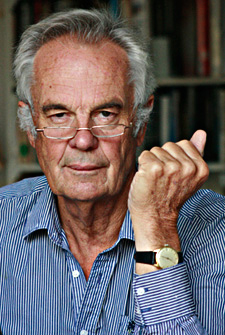
The Syrian cease-fire supports the status quo – the armed might of the government on one side and the armed opposition factions on the other. The government cannot eradicate the rebels although it can brutalise them. But neither can the armed opposition hope to topple the government which retains its popularity in the capital, Damascus, and in many other parts of the country where Shiite Islam and the Alawites are a majority.
Is this what the world wants? Are the members of the UN and its former secretary-general, Kofi Annan, who has negotiated this cease-fire, aware of the implications of this? Read the rest of this entry »
 Posted in Jonathan Power, Media perspectives, Nonviolence, Syria, Violence-prevention |
  No Comments »
Continuities in U.S. history
By Johan Galtung
From Appomattox, VA – USA
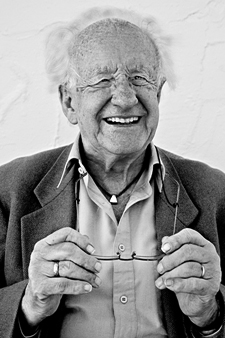
The Civil War ended 147 years ago with General Robert E. Lee of the CSA, Confederate States of America, capitulating to General Ulysses S. Grant of the USA, United States of America. Ended? Not quite. Grant accepted the capitulation of the Army of Northern Virginia; the others capitulated one by one (like Army of Tennessee 26 April, Trans-Mississippi June 2 and finally, November 6, Confederate cruiser Shenandoah surrendered).
The Washington Post (Apr 1, 2012) celebrated the opening of the Appomattox branch of the Museum of the Confederacy the day before, quoting the museum curator: “it is one of the great turning points, if not the great turning point, in American history–when we kind of decided once and for all exactly what it means when we say, ‘liberty and justice for all.’”
Turning point? Not quite. Grant could not accept surrender of the CSA as that would recognize the Confederacy. One rebel at the time. Soldiers within 20 miles of Appomattox, no actor!, were generously given US Army rations as they were starving, and free passage on federal means of transportation on their way home.
We sense a theme: no recognition of collective actors with a cause. Read the rest of this entry »
What do you want, USA? Go up or down?
By Johan Galtung
Washington, DC
One wonders what the US political leaders want. The incumbent lives in this world, playing an ultra-realist game: extra-judicial executions in maybe 70 countries, drone attacks; minimizing US losses, maximizing direct hits at what he sees as the problem, concrete identified individuals, not concrete unidentified conflicts. He has neither the moral nor the intellectual courage to do that.
The challengers, with one exception, are focusing on one issue: down with the welfare state. Ron Paul, the libertarian, adds: down with the warfare state. He has registered Vietnam-Afghanistan-Iraq and the next in line, Iran-Syria, as unwinnable and unaffordable for a bankrupt economy. Young Republicans and others flock to him, but his discourse is too unusual. Warfare, not welfare makes sense. This has to do with the relation to conflict, a three-headed problem: attitude, behavior, contradiction. The USA wants an attitude of love for the USA, military response to evil people who do not and act on that, and contradiction, incompatibility are outside the thinkable. The deep culture of good vs evil and Armageddon for the latter take over.
Well, does it? The reader is invited to look at the scheme below. Read the rest of this entry »
One of the world’s leading peace advocates threatened to punch me in the face
By Stephen Zunes
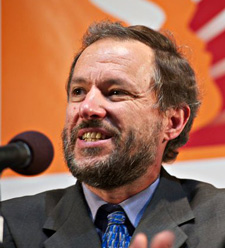
Gareth Evans, a former attorney-general and foreign minister in Australia, threatened me because I raised the issue of his support for the Suharto dictatorship in Indonesia.
I have rarely ever come face to face – only inches in fact – with such anger. Certainly not at an academic conference. And certainly not from such a prominent figure: chancellor of Australian National University, former attorney-general and foreign minister, former head of the International Crisis Group, and one of the world’s most prominent global thinkers.
Yet here I was with Gareth Evans, cursing at me, ripping my badge off, and threatening to punch me in the face. Read the rest of this entry »
Nuclear weapons are not instruments of peace!
By Richard Falk
A few days ago I was a participant in a well-attended academic panel on ‘the decline of violence and warfare’ at the International Studies Association’s Annual Meeting held this year in San Diego, California. The two-part panel featured appraisal of the common argument of two prominent recent publications: Steven Pinker’s best-selling The Better Angels of our Nature: Why Violence has Declined and Joshua Goldstein’s well-researched, informative, and provocative Winning the War on War: The Decline of Armed Conflict Worldwide.
Both books are disposed to rely upon quantitative data to back up their optimistic assessments of international and domestic political behavior, which if persuasive, offer humanity important reasons to be hopeful about the future. Much of their argument depends on an acceptance of their interpretation of battlefield deaths worldwide, which according to their assessments have declined dramatically in recent decades. But do battlefield deaths tell the whole story, or even the real story, about the role and dangers of political violence and war in our collective lives? Read the rest of this entry »
Ignore the markets – or how to really defeat the economic crisis
By Jonathan Power
What have these eleven countries in common – Finland, Norway, Canada, Japan, Poland, Turkey, Australia and, to a lesser extent, the US, Russia, Sweden and Denmark? They have not put themselves through the economic purge and their economies are growing at a reasonable rate. Not for them savage cuts in social services and public investment combined with lower wages. They have kept their economies purring. They are pro-Keynesian – a policy attributed to John Maynard Keynes, the most brilliant economist of the last century, in an age when there were many brilliant economists, both of the left, the middle and the right. Read the rest of this entry »
Why Europe is not yet a ‘Culture of Peace’
By Richard Falk
It is undoubtedly true that the greatest unacknowledged achievement of the European Union (EU) is to establish ‘a culture of peace’ within its regional enclosure for the 68 years since 1944. This has meant not only the absence of war in Europe, but also the absence of ‘war talk,’ threats, crises, and sanctions, with the single important exception of the NATO War of 1999 that was part of the fallout from the breakup of former Yugoslavia.
This was undertaken by the American-led alliance both to accomplish the de facto independence of Kosovo from Serbian rule, to ensure the post-Cold War viability of NATO, to reinforce the lesson of the Gulf War (1991) that the West could win wars at low costs due to their military superiority, and to rescue Albanian Kosovars from a possible humanitarian catastrophe at the hands of their Serb oppressors. Read the rest of this entry »
Posted in EU peace, EU politics, EU security, Ex Yugoslavia, Iran, Israel/Palestine, Kosovo/a, Middle East, Richard Falk |
No Comments »
For a denuclearized Middle East
By Daisaku Ikeda (*)
© IPS 2012
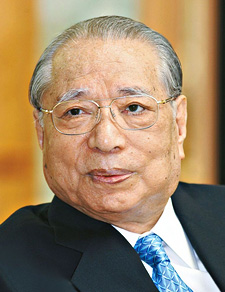
TOKYO, Mar (IPS) – In recent months, the dispute over the nature and intent of the Iranian nuclear development programme has generated increasing tensions throughout the Middle East region. When I consider all that is at stake here, I am reminded of the words of the British historian Arnold Toynbee, who warned that the perils of the nuclear age constituted a “Gordian knot that has to be untied by patient fingers instead of being cut by the sword.”
Amidst growing concerns that these tensions will erupt into armed conflict, I urge the political leaderships in all relevant states to recognize that now is the time to muster the courage of restraint and seek the common ground on which the current impasse can be resolved. Read the rest of this entry »
India uphill or downhill?
By Jonathan Power
When the distinguished foreign policy expert, former US National Security Adviser, Zbigniew Brzezinski, told me a couple of years ago that he worried about the stability of India I thought he was way off track. Living in Calcutta at the time, democracy seemed to be thriving and both the state of West Bengal and most of the country were very clearly developing fast.
But that was before the crises of the last year. One major financial scandal has followed another. Read the rest of this entry »