Archive for the ‘Asia’ Category
TFF PressInfo # 310: Terrorism – small dot in a larger picture
 February 26th, 2015 |
  Author:
 By Jan Oberg
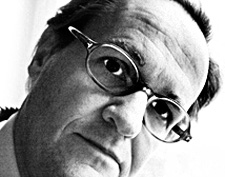
Jan Oberg
What is terrorism? Why do we talk much more about that than other types of deaths? Why is the word misused? What has nuclear weapons – that politicians and media hardly ever talk about – got to do with terror? Why should we all be careful not to exaggerate the phenomenon of terror?
10 x more terrorism than before 9/11
Tell you what: I’ve been critical of the ”war on terror” since September 12, 2001 and particularly since 10/7 when the war on Afghanistan started. If the War on Terror was the answer to 9/11, the U.S. and its friends asked the wrong questions.
Because, what has been the result?
According to U.S. statistics at the time, in the years up to the horrific crime in New York, about 1,000-1,500 people were hit by terror per year worldwide; 1/3 of whom died, the rest were wounded. Most of it happened in South America, some in Europe; small groups such as Baader-Meinhof.
Almost 3,000 were killed on 9/11, many nationalities, far from only American citizens. (About 30,000 die annually from shooting each other).
Today? About 18,000 were killed in terror in 2013.
Although data may not be directly comparable or definitions be the same, the difference between 1,500 and 18,000 cannot be explained by methodological and other variations. Read the rest of this entry »
 Posted in Abolition, Afghanistan, Armament, Democracy - local & global, Denmark, Future perspectives, General issues, India-Pakistan, Jan Oberg, Media perspectives, Middle East, Nuclear weapons, Psychology - war & peace, Russia, Sweden, Terrorism, TFF PressInfo, Theories and concepts, Ukraine, US Empire, Violence-prevention, World order/governance |
  1 Comment »
North Korea’s nuclear bomb once again
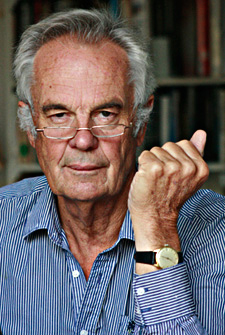
By Jonathan Power
17th February 2015
If there is such a thing as a “frozen conflict” the best place to look is not in Eastern Europe but in Korea where after years of merciless war that ended in 1953 there was an armistice, a line was drawn across the Korean peninsular and its two halves went their separate ways- one, the south, to fast capitalist development and the other, the north, to stultifying dictatorship that seemed to do only one thing competently – build nuclear bombs. Today there is no war on the Korean peninsular but there is no peace.
Presidents Bill Clinton, George W. Bush and Barack Obama have all tried to negotiate an end to North Korea’s nuclear bomb program and to bring to a close the military stand-off between north and south. All their attempts have come to naught, not just because of North Korean stubbornness but also because of Republican majorities in Congress which have constantly undermined what seemed to be breakthroughs in negotiations.
Now Obama has summoned up the strength to return to the ring. The two countries’ nuclear envoys have been discussing the idea of “talks about talks”. A majority of long time observers are doubtful that after two decades of on/off negotiations that real progress can be made.
But they forget the major progress made by Clinton Read the rest of this entry »
TFF PressInfo # 305: A theory of China
By Johan Galtung
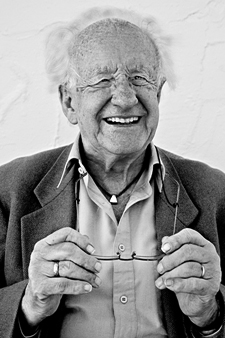
Johan Galtung
2 February 2015 at the Penang Institute, Penang
A theory serves comprehension, prediction and identification of conditions for change. Seven such historical-cultural pointers will be indicated for China; using the West in general, and the USA in particular, for comparisons. The presentation draws on countless dialogues in China over 40 years, since 1973.
* China: in time, as dynasties; West: in space as empires.
Look at a histomap combining world history and geography, time and space: China shows up through 4,000 years as relatively coherent dynasties with complex transitions – and the West as empires–birth-growth-peaking-decline-fall, like the Roman, UK and now US empires – duration vs bubbles that burst; as China-centric vs hegemonic. Read the rest of this entry »
Memoir sketch: Championing lost causes
By Richard Falk
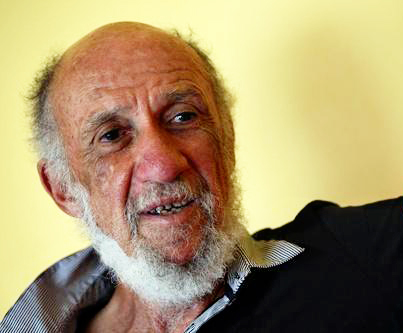
Richard Falk
By chance I was reading César Vallejo’s poem, “Black Stone on a White Stone,” in a translation by Geoffrey Brock, and was struck by the opening stanza:
I’ll die in Paris in the pouring rain
a day I have a memory of already.
I’ll die in Paris—I won’t try to run—
a Thursday perhaps, in Autumn, like today.
Without being literal, I was reminded that I could appraise my death while alive, and not leave a final reckoning to some solemn memorial event in which speakers are challenged to find humorous anecdotes to lighten the occasion, otherwise uttering honorific platitudes quite unrelated to the experiential core of my being.
I had been thinking quite a bit recently about ‘lost causes.’
Recently I gave a lecture at Columbia University on this theme, inspired by Edward Said’s seminal late essay “On Lost Causes” (1997) in which he ties together the ‘nobility of failure’ as portrayed in literature with his own unswerving dedication to the Palestinian struggle for a just peace. On that occasion, Read the rest of this entry »
Posted in Abolition, Academia and science policies, Asia, Culture & religion, Ethics and values, Human rights and justice, International law, Israel/Palestine, Middle East, Nonviolence, Nuclear weapons, Poetry, Pro-peace & proposals, Psychology - war & peace, Reconciliation & forgiveness, Reflections, essays & more, Richard Falk, US Empire |  Tags: Edward Said, life commitment, Lost causes, memoires, memories, peace work, thnking about death, Vallejo, Vietnam War |
No Comments »
Tags: Edward Said, life commitment, Lost causes, memoires, memories, peace work, thnking about death, Vallejo, Vietnam War |
No Comments »
TFF PressInfo # 299: 2014 no good! May all good forces unite in 2015!
By Johan Galtung
Johan Galtung
Here is a list of 15 current conflicts-violence relations, avoiding identifying conflicts with violent conflict arenas:
USA-Japan-South Korea vs North Korea vs China
USA-ASEAN vs China-Taiwan and Japan vs Korea over China Sea islands
USA-NATO-Japan vs China-Russia-SCO over encircling
USA-EU vs Russia over Ukraine-Georgia membership in NATO-EU
USA-led coalition/NATO vs Many, diverse parties in Afghanistan
USA-led coalition/NATO vs Many, diverse parties in Iraq
USA-Shia-Iran(?) vs Arabia-Sunni-caliphate/ISIS-Turkey(?)
Kurds vs Turkey-Syria-Iraq-Iran over autonomy
Israel vs Palestine over The Holy Land/Cana’an
USA-Israel vs Arab-Muslim countries over Israel vs Palestine
USA vs 134 states over terrorism using state torture-sniping-droning
USA-UK-Canada-Australia-New Zealand (“Five eyes”) vs the World, spying
USA vs China (USA-EU vs Eurasia) over the shape of geopolitics
USA-UK-France-Italy-Norway vs Libya-Mali-Sudan-Somalia etc. in Africa
USA vs Latin America/Caribbean over equality of the Americas
The most striking feature is, indeed, the presence of one country, USA, in almost all of them. Why? Read the rest of this entry »
Posted in Afghanistan, Asia, BRICS, Culture & religion, Democracy - local & global, European Union, Future perspectives, Global trends & events, Johan Galtung, Media perspectives, Middle East, Pro-peace & proposals, Russia, Sweden, Terrorism, TFF PressInfo, Theories and concepts, USA, Violence-prevention |
No Comments »
An Octagon world: Conflict or cooperation. What can we learn from each other?
By Johan Galtung
Johan Galtung
“They can choose to focus on the worst in others, criticizing, building on paranoia and worst case analysis, “security”. Or choose to focus on the best, with cooperation as dominant mode, conflict as recessive. They can cooperate for mutual and equal benefit like in good trade, exploring each others’ comparative political-cultural advantages. They can do it.”
Posted in Africa, Asia, BRICS, Buddhism, Culture, Democracy - local & global, EU politics, European Union, Future perspectives, Global economics, Global trends & events, India, Johan Galtung, Middle East, Military - technology, Nonviolence, Pro-peace & proposals, Reflections, essays & more, Theories and concepts, US Empire, USA, World order/governance |
No Comments »
A quick glance at Indonesia-Malaysia
By Johan Galtung
Johan Galtung
Muhammadiyah University – Yogyakarta, Indonesia
Coming from Malaysia, the two neighbors are incredibly different. Indonesia, richer in ancient cultures, larger in territory, an archipelago of thousands of islands, has GDP/capita 3,500 and Malaysia 11,500; three times+ more. Products of brutal Western colonialism, Dutch for Indonesia, English for Malaya, which became Malaysia. Exploited, robbed, impoverished. Both hoped that World War II, fought for democracy-human rights, would end that in 1945, but got wars to keep colonialism instead–till 1949 and 1957, respectively.
Both had been occupied for 3 1/2 years by Japan going south to beat the US-imposed boycott, heading for oil resources in Indonesia (Malaysian oil not yet discovered). There was a difference: Indonesia’s future leader, Soekarno and his no. 2 Mohammad Hatta had lived in Japan, made friends and met the Dutch returning to “their” colony fighting as a free country – no such freedom in Malaya.
So, why the difference? It is almost like a social experiment.
The key is the local Chinese minority, in Malaysia used by the English against the Malay majority, as exploited workers in the tin mines, and as capitalists with their gangs in Penang and Singapore; in Indonesia also in the army and in the PKI, Indonesian Communist Party, the largest outside the Soviet bloc. Hard working, well organized, clever with money, they attracted much of the same hatred and violence as Jews in Germany and Armenians in Turkey – both ending with genocides.
So also in Indonesia, the massacre of 1965-66; planned by US think tanks and the CIA with the Indonesian government. Standard CIA tactic: rumors of imminent coup from the left, perhaps organizing some–the coup against Gorbachev 1991–and then a massive, well prepared, coup from the right. Half a million or so killed, General Suharto in power for three decades, giving USA the free access to the economy they wanted. Pillaging started and lasted; like under Yeltsin in Russia.
Riots came in 1969 to Malaysia, but the reaction was totally different: the New Economic Policy. Forty percent of Muslim Malays lived in misery, 35 percent of the economy was in English, and 20 percent in local Chinese hands. Majority Chinese from Singapore had left in 1965 and now Malaysia has a GDP/cap 55,200 by far no. 1 in ASEAN – some are still in the 1,000s.
The Malaysian government did not turn on the Chinese but lifted the bottom Malays up by positive discrimination – like across race and gender faultlines elsewhere. Read the rest of this entry »
Posted in Asia, BRICS, Buddhism, Culture, Democracy - local & global, Johan Galtung, US Empire |
Tags: British colonialism, colonialism, death penalty, death row, Indonesia, Islam, Malay, Malaysia, New Economic Policy, positive discrimination, sultanates, terrorism, uplifting the poorest |
No Comments »
Remembering Yoshikazu Sakamoto 1927-2014 – also former TFF Associate
By Richard Falk
Richard Falk
TFF wants to express its gratitude to Yoshikazu Sakamoto who served for many years as TFF Associate.
Prefatory Note
This post is dedicated to my remembrance of Yoshi Sakamoto who died recently. Yoshi was a deeply valued friend and an important public intellectual in Japan who exerted a strong influence on the post-war generation. His political orientation, rejecting extremes of right and left, while questioning the militarist premises of the Cold War and Japan’s willingness to become America’s Asian poodle, gave him a distinctive political profile.
I am sharing these words of appreciation, and hope that anyone from Japan who comes across this text will contact me, especially if they have a way of putting me in touch with either Yoshi’s family or Japanese media. I would like to believe that ‘an American appreciation’ of Professor Sakamoto would be of interest to those who knew and admired him.
I first met Yoshi in the mid-1960s when he came to visit me at Princeton, expressing his concern about the Vietnam War and knowing of my anti-war activism. We bonded quickly and marched in a peaceful demonstration in New York City a few days later, and somehow managed to keep in fairly consistent contact until Yoshi’s death on October 2nd.
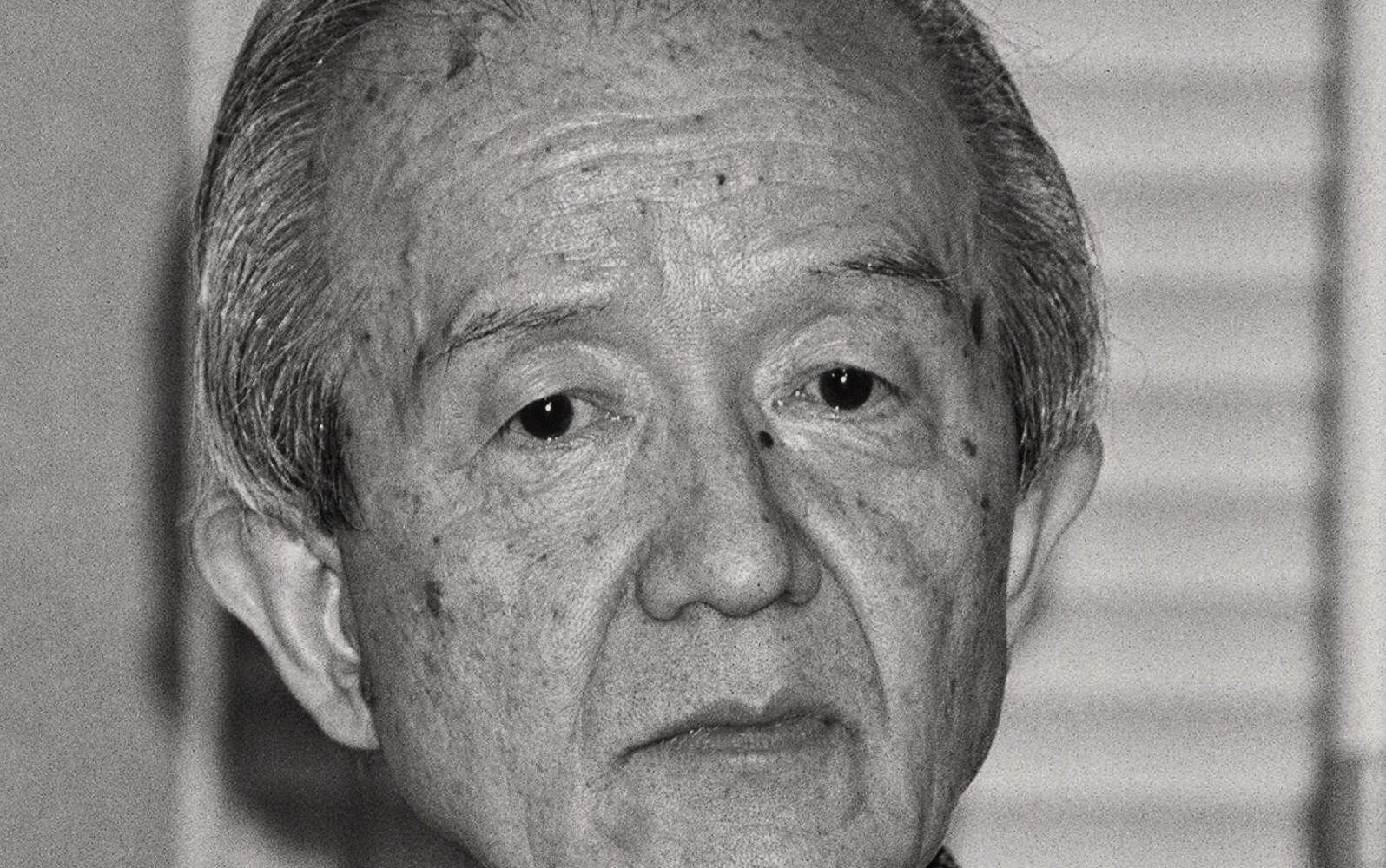
Yoshikazu Sakamoto 1927 - 2014
Posted in Academia and science policies, Asia, Culture, Disarmament, Ethics and values, From our own world, Human rights and justice, International law, Nepal, Nonviolence, Nuclear weapons, Richard Falk, US Empire, Violence-prevention, World order/governance |
Tags: Yoshikazu Sakamoto |
No Comments »
Neigbours ditch India, bat for China
By Shastri Ramachandaran
Prime Minister Narendra Modi may have been the toast at the high tables from BRICS and ASEAN to G-20 and the East Asia Summit, but nearer home, in the neighbourhood, few are impressed by his 56-inch chest. The stark truth that India does not draw much water in the region was driven home unmistakably during the 18th SAARC Summit in Kathmandu.
Why foreign military intervention usually fails in the 21st century
By Richard Falk
Richard Falk
When Nehru was taking a train on his return to India after studying abroad he read of the Japanese victory over Russia in the 1904-05 Russo Japanese War. At that moment he had an epiphany, realizing the hitherto unthinkable, that the British Empire was vulnerable to Indian nationalism. An earlier understanding of the colonial reality by native peoples generally subscribed to the postulates of hard power primacy making it futile or worse to challenge a colonial master, although throughout history there were always pockets of resistance.
This soft power attribute of colonial hard power by way of intimidation and a façade of invincibility is what made colonialism efficient and profitable for so long at the great expense of colonized peoples.
A traditional colonial occupation assumes that the foreign domineering presence, while oppressive and exploitative, refrains from ethnic cleansing or genocide in relation to the indigenous population.
When settler versions of colonialism emerged in relation to the Western Hemisphere and regions occupied by traditional peoples that were without either population density or some kind of industrial capability, the occupier managed to achieve enduring control Read the rest of this entry »