Archive for the ‘Asia’ Category
Malaysian Territories: Security and Sovereignty
 November 27th, 2014 |
  Author:
 By Johan Galtung
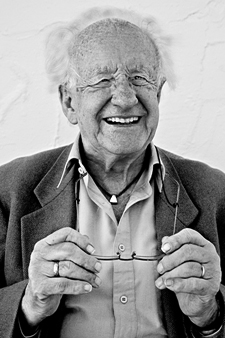
Johan Galtung
Kuala Lumpur
Malaysia has recently experienced maximum insecurity for two extra-territorial sovereign territories: Malaysian Airlines flights MH370 to Beijing and MH17 from Amsterdam. Flights are subject to air traffic rules, but sovereignty was deeply insulted for MH17–possibly also for MH370–and so was the security of the close to 600 on board: dead, possibly killed. The finding so far is that MH17 was hit by “numerous high energy objects”, which–looking at the photos of the cabin wall–aka “machine gun fire”; rather than “hit by a BUK rocket”. MH370: a race to locate the wreckage, by submarines, surface vessels; between China to find, and Australia to destroy, any evidence of crimes?
Intentional destruction of planes entails identification of the perpetrators whoever they are; arraigning them into court and if found guilty punishing them for mass murder. Taking place in international space both should be international, like the International Civil Aviation Organization and the ICC-International Criminal Court. For MH17 Malaysia used Netherlands for the investigation and may prefer Malaysia for the adjudication; two unfortunate decisions. We are dealing with one, possibly two, cases of aggression on civilian planes, themselves incapable of aggression; hence no case for self-defense. The cases are clearly criminal.
So much for space. Conventional borders are on land, sea (EEZ-Exclusive Economic Zone aka Economic Exclusion Zone, between EEZs) and in the air; traditionally defended by land, sea, air military forces against insults by other states, and by police for insults by individuals such as smuggling, drugs, kidnapping, illegal immigration and fishing. The borders are territorial, and the military is focused on national territory. Check out: are there problems anywhere, even conflicts, disputed claims? How will they evolve? Diagnosis, prognosis, and if needed, therapy; standard peace research approaches. Read the rest of this entry »
 Posted in Asia, China, Future perspectives, Johan Galtung, Peace, Pro-peace & proposals, Thailand, Theories and concepts, US Empire, World order/governance |
  Tags: Mahatir, Malaysia, MH17, MH370 |
  No Comments »
TFF PressInfo # 292: Brisbane – A show of Western weakness
By Jan Oberg

Jan Oberg
No matter what you may think of Putin and Russia this is simply not the way international politics should be conducted, particularly not at the personal level. If it wasn’t an offence to children, one would aptly characterise it as childish behaviour.
Western leaders ignored a brilliant opportunity to meet face-to-face with Vladimir Putin and move forward towards mutual understanding instead of signalling that they want a new Cold War.
Western leaders tell us that Russia is a ”threat to the world”. That obviously serves other purposes because you don’t bully someone you genuinely fear.
The G20 Brisbane should be remembered for its show of Western leaders’ personal display of weakness and conflict illiteracy.
Pummelled Putin punching bag
CNN reports that, during the meeting, Putin took ”pummelling” and was treated as a ”punching bag” by Western leaders from he set foot on Australian soil where his Australian host had sent a deputy minister of defence to receive him.
The Guardian reports that the Russian president approached Canadian Prime Minister Harper with his hand outstretched. Harper reluctantly shook it, then said “Well I guess I’ll shake your hand, but I only have one thing to say to you: you need to get out of Ukraine.” ”Bold words” – media called it.
Footage shows Putin sitting alone at a lunch table – like a naughty school boy put in the corner as by his teachers.
President Obama said that we are ”opposing Russia’s aggression in Ukraine which is a threat to the world as we saw in the appalling shoot down in the MH-17”. Read the rest of this entry »
Posted in Academia and science policies, Africa, Alternatives - peace, Asia, BRICS, Culture & religion, Ex Yugoslavia, Ex-Yugoslavia/Balkans, Future perspectives, Global economics, Global trends & events, International law, Iran, Iraq, Israel/Palestine, Jan Oberg, Kosovo/a, Libya, Media & conflict, Media perspectives, Middle East, Negotiations, Nonviolence, Peace, Pro-peace & proposals, Psychology - war & peace, Russia, Sanctions, Security and defence, Syria, TFF PressInfo, Theories and concepts, Ukraine, Uncategorized, US Empire, USA, World order/governance |
Tags: Austrlia's prime minister, Brisbane Summit, G20, New cold war, Obama, Putin at Brisbane |
No Comments »
The Sunni-Shia conflict: Any solution?
By Johan Galtung
Kuala Lumpur
Johan Galtung
Islam, Christianity and Buddhism are religious cultural powers, deep, defining the ends and means of human lives. All three promise life after death – eternal salvation in paradise, eternal dissolution in nirvana – if rules are observed. Unlike Judaism and Hinduism, all three are universal, for all humans at all times. So, they caught on across faultlines, way beyond Arabia, Palestine, Nepal-India into other, even enemy, economic-political-military realities.
Arabia was Muslim; Islam expanded from Iberia to Delhi by 1192. Palestine became Muslim-Jewish; Christianity became the religion of the Roman Empire in 313; from 395 divided into Orthodox East and Catholic West, from around 1500 divided into Catholic South and Protestant North. Casteless Buddhism was evicted from Hindu Nepal-India to neighbors; a thousand years later it is rooted all over East Asia.
Three religions became three civilizations of three vast regions. Three successes? Yes, but at a price. The price was schisms inside all three, faultlines with hatred, violence, wars. What went wrong? Read the rest of this entry »
Out of Afghanistan
By Jonathan Power
October 21st, 2014
The Soviet Army invaded Afghanistan in December, 1979 and withdrew, exhausted and demoralised, 10 years later. In Moscow a joke had long circulated: “Why are we still in Afghanistan?” Answer: “ We are still looking for the people who invited us.”
The same is true for the Americans and NATO who are now moving through the exit door. They came to obliterate Al Qaeda after 9/11, 2001.
There was certainly no invitation issued by the Afghan government, then controlled by the militant Taliban. The US was angry that Afghanistan sheltered Al Qaeda and didn’t have the time of day to discuss an invitation.
After an air and ground campaign it savaged Al Qaeda. Its rump, including its leader, Osama bin Laden, fled to the barely accessible mountains of Pakistan. Ordinary Afghans had never really liked al-Qaeda and they certainly never equated their home-grown Islamist movement, the Taliban, with the Arab-led extremists.
Yet the US and its allies were not prepared to declare victory and leave. They changed the goalposts Read the rest of this entry »
Posted in Afghanistan, Development, India-Pakistan, Jonathan Power, Russia, US Empire |
No Comments »
ISIS – Negotiations, not bombing
By Johan Galtung
Johan Galtung
More senseless bombing of Muslims, more defeats for USA-West, more ISIS-type movements, more West-Islam polarization. Any way out?
“ISIS, Islamic State in Iraq-Syria, appeals to a Longing for the Caliphate” writes TFF Associate Farhang Jahanpour in an IPS column. For the Ottoman Caliphate with the Sultan as Caliph – the Shadow of God on Earth – after the 1516-17 victories all over till the collapse of both Empire and Caliphate in 1922, at the hands of the allies England-France-Russia.
Imagine the collapse of the Vatican, not Catholic Christianity, at the hands of somebody, Protestant or Orthodox Christians, meaning Anglo-Americans or Russians, or Muslims. A center in this world for the transition to the next, headed by a Pope, the apostolic successor to The Holy Spirit, an emanation of God in Heaven. Imagine it gone.
And imagine that they who had brought about the collapse had a tendency to bomb, invade, conquer, dominate Catholic countries, one after the other, like after 2 Bush wars in Afghanistan-Iraq, 5 Obama wars in Pakistan-Yemen-Somalia-Libya-Syria, and “special operations”.
Would we not predict [1] a longing for the Vatican, and [2] an extreme hatred of the perpetrators? Fortunately, it did not happen.
But it happened in the Middle East: leaving a trauma fueled by killing hundreds of thousands.
The Sykes-Picot England-France agreement of 16 May 1916 led to Read the rest of this entry »
Posted in China, Conflict and war, Culture & religion, Ethics and values, EU politics, Iraq, Israel/Palestine, Johan Galtung, Libya, Middle East, Norway, Peace, Pro-peace & proposals, Psychology - war & peace, Reconciliation & forgiveness, Security and defence, Syria, Terrorism, Theories and concepts, Turkey, US Empire, Violence-prevention, World order/governance |
No Comments »
Blame the British for Hong Kong’s democratic deficit
By Jonathan Power
September 9th 2014
When 17 years ago the British lowered the Union Jack on their last remaining important colony, Hong Kong, Chris Patten, the governor, buried his face in his hands for the entire world to see and felt the profoundest sentiment a proud and ambitious politician could experience – failure.
It was indeed a personal failure to be added to his other great misfortune, the timing of elections back home in Britain that made it impossible for him to become prime minister. But on that damp evening it was the people of Hong Kong, those who knew him well could tell, that pierced his conscience. The British had let them down. They were giving up a colony having unaccountably failed not to leave it a functioning democracy. Read the rest of this entry »
Hong Kong and beyond
By Johan Galtung
Johan Galtung
Beijing should listen to its own excellent mantra: “One Country, Two Systems”. A part of that other system is democracy. England never practiced that during 150 years of conquest and colonialism – also fearing Hong Kong might vote themselves into independence from UK – but that low standard is no excuse.
And democracy today rides on an expanding agenda, much more than periodic fair and free multi-party national elections which China does not practice, for its own reasons.
China experiments with local democracy and Hong Kong is local. Democracy today moves in favor of direct election of the Chief Executive; in the Hong Kong case governor, in 2017. That means having a choice among candidates with different visions, not a governor appointed, be that by Beijing or by the governing council of Hong Kong. Read the rest of this entry »
At last the sword of justice has fallen in Cambodia
By Jonathan Power
Finally, finally the over-long, seven year trial of the leaders of the murderous Khmer Rouge leadership of Cambodia, is over. The two defendants, Nuon Chea and Khieu Samphan, were each given a life sentence.
Of the other three that were tried, one, the ex-foreign minister, Ieng Sary died in 2013, one, Ieng Thirith, the wife of Ieng Sary, was too ill with Alzheimer’s to appear and one, Kaing Guek Eav (“Duch”), voluntarily confessed three years ago and was sent to jail for 35 years. Read the rest of this entry »
BRIC(K)S for a New World Economic Order!
By Johan Galtung
28 Jul 2014 – Kuala Lumpur
Johan Galtung
They made it, with constructive alternatives – the New Development Bank and the Contingency Reserve Agreement–to the US-dominated World Bank and International Monetary Fund. Those two parts of Bretton Woods were basic pillars in the economic infra-structure of the US Empire in the hands of the US Congress. Loans were disbursed in return for “structural adjustment” –privatization, budget cuts, devaluation, repatriation of profit, also against BRICS countries. US companies were commissioned for huge jobs serving local elites. Untold damage was done in spite of some recent changes in rhetoric.
The USA used them to export the US economic–and with it the social, political, cultural, military–order through loans, grafting it upon social bodies that after some time rejected the implants as foreign and incompatible. Even a decaying order however brilliant it may have looked to the untrained eye as late as the 1990s.
What remains today of that US “order” is the military part Read the rest of this entry »
What was history about? Look at the Histomap
By Johan Galtung
Johan Galtung
John B. Sparks made a histomap in 1931—updated in 2010 (Metro Books) – a long, vertical chart covering “peoples and nations for 4,000 years”.
Time, history, is on the vertical axis, listing when of events and where in the space of peoples and nations. The chart starts with the Chinese, the Indians, Amorites (Babylon), Aegeans (Minoans and Mycenaeans), Hittites (Anatolia), Iranians and Greeks, goes on to the Romans, the British, the Huns (Mongols) and ends with Latin America, Europeans West and East (the EU is absent), the Middle East, sub-Sahara Africa, Russians and Americans, Asia as India, China and Japan; each part proportionate to their significance at the time. Debatable.
But let us focus on something crucial: the shape of the “peoples-nations” bubbles in world history, from a beginning to an end?
By and large exactly like that: a birth somewhere in this Einsteinian timespace, and a death. Two points, and between them: growth-maturity/flourishing-decline and fall. Expansion to a maximum, and contraction to a minimum. The law of anything organic? Given that they often thought they were forever, gifted with eternal life, history is about great expectations, glories–and great traumas. Read the rest of this entry »
Posted in Buddhism, China, Conflict and war, Culture, Culture & religion, Democracy - local & global, Development, European Union, Future perspectives, Global trends & events, India, India, Japan, Johan Galtung, Middle East, Political, Theories and concepts, Turkey, US Empire, World order/governance |
No Comments »