Archive for the ‘Human rights and justice’ Category
Two forms of lethal polarization: Egypt and Turkey
 November 19th, 2013 |
  Author:
 By Richard Falk
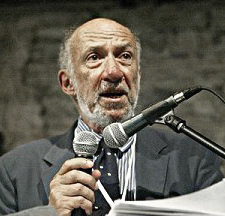
There is a temptation to suggest that political life in Turkey and Egypt are both being victimized by a similar deepening of polarization between Islamic and secular orientations, and to some extent this is true, but it is also misleading. Turkey continues to be victimized by such a polarization, especially during the eleven years that the Justice & Development Party (AKP) has governed the country, and arguably more so in the last period.
In Egypt, so describing the polarization is far less descriptive of the far more lethal form of unfolding that its political cleavage has taken. It has become an overt struggle for the control of the political destiny of the country being waged between the Egyptian armed forces and the Muslim Brotherhood, the two organized political forces capable of projecting their influence throughout the entire country, including rural areas. This bitter struggle in Egypt engages religious orientations on both sides, and even the military leadership and upper echelons of the armed forces are observant Muslims, and in some cases extremely devout adherents of Salafi belief and practice.
In effect, at this point, there is not a distinctly secular side that can be associated with post-coup Egyptian leadership under the caretaker aegis of the armed forces, although clearly most of the liberal secular urban elite and many of the left activists sided with the military moves, at least initially. Recent reports suggest more and more defections, although the price for making such a change of heart public can be high. Read the rest of this entry »
 Posted in Arab Spring, Development, Egypt, Human rights and justice, International law, Iran, Middle East, Richard Falk, Turkey, US Empire |
  No Comments »
Peace at last in the Congo – black Africa’s largest state ?
By Jonathan Power
It is not so long ago that Susan Rice, then the US’s Ambassador to the United Nations, was talking about the Congo as the site of “Africa’s First World War”. Has the UN at long last really pacified this country, the largest in black Africa, that has been continuously in a state of unrest since the Belgian colonisers, after effectively looting the country dry, fled in 1960, turning the country over to a hastily improvised African government led by Patrice Lumumba?
Reports coming in today indicate that the last rebel group, the M23, formally supported by Rwanda, has been defeated by Congolese and UN troops working together.
Perhaps yes, the fighting that has consumed the Congo is over. But, given the history of the most turbulent of all African countries, we should say, let’s wait and see. Nevertheless, it is encouraging to know that the UN’s largest peacekeeping operation ever has met with this degree of success. (One other plus: China sent peacekeepers to the UN force.)
This second UN intervention in the Congo appears to be more successful than the first, back in 1960 when, fearful of the US and the Soviet Union competing to gain a foothold in Africa, Secretary-General Dag Hammarskjold, pushed for UN intervention, as the country’s post-independence civil war appeared to spin out of control. The UN did pacify the country to some degree- at the cost of claiming Hammarskjold’s life in a supposed accident of his plane- but it left with its tail between its legs, handing the country over to 32 years of decadent and cruel rule by the masterful dictator, Mobutu Sese Seko. Read the rest of this entry »
The great European refugee crisis
By Jonathan Power
Europeans really shouldn’t be worrying about the number of refugees trying to gatecrash Europe by travelling in rickety boats across the Mediterranean. The recent tragedies have the effect of inflating in our minds the numbers. In truth the numbers are not overwhelming.
The present almighty flap was triggered when, on October 3rd, 360 refugees died when their boat sank off the coast of the Italian island of Lampedusa.
Over the last two decades 20,000 migrants are estimated to have died attempting to cross the Mediterranean. That’s only 200 a year. In Italy that’s less people than drown in the whole country. Most come on safer land routes.
In 2011 there were 300,000 applicants for asylum in the EU. Last year it grew, as Syria erupted, to 333,000. If every one of the 28 EU countries did its bit by taking in a few it would only amount to 12,000 each. In fact the bigger countries could easily take double that and the smaller ones could take half.
Sweden has just announced that it is giving asylum to 17,000 Syrians. Moreover, it is issuing them with permanent residency papers straight away which means they can go out and look for a job. That is the way to go. Read the rest of this entry »
Malala and Eartha Kitt: Words that matter
By Richard Falk
There are two ways of responding to an invitation from an American president. I recall that when Amory Lovins, the guru of market-oriented environmentalism, was asked about what was his main goal when invited to the White House to meet the president he responded self-assuredly: ‘To be invited back.” That is, be sure to say nothing that might so disturb the high and mighty to an extent that might jeopardize future invitations.
A positive reading of such an approach would point out that Lovins was just being realistic. If he hoped to have any influence at all in the future he needed to confine his present advice to an areas situated well within the president’s comfort zone. A less charitable interpretation would assume that what mattered to Lovins was the thrill of access to such an august portal of power.
Never receiving such an invitation, I had a lesser experience, but experienced similar temptations, being invited by a kind of institutional miscalculation to be the banquet speaker at West Point at the end of an international week at this elite military academy in which the cadets and representatives from a couple of hundred colleges had been fed the government line by top officials at the Pentagon and State Department.
The officer tasked with arranging the program decided that it might be more interesting to have for once a speaker who had a more critical outlook on the U.S. role in the world. I was invited, and accepted with mixed feelings of being both co-opted and challenged. It turns out that the seductive part of the occasion was to find myself housed in a suite normally reserved for the president or Secretary of Defense; it was luxurious and so spacious that it took me some time to locate the bedroom, although I did almost immediately find the fridge stocked with beer and food. First things first. Anyway, Read the rest of this entry »
Saudi Arabia withdraws from UN Security Council
By Jonathan Power
Diplomats at the UN were amazed last week when Saudi Arabia did the unthinkable and turned down the seat it had just won on the Security Council.
The ten rotating seats – that join those of the Permanent Five (the US, UK, France, Russia and China) – are regarded as the most prestigious spots in international diplomacy.
Saudi Arabia had badly wanted that seat. But the moment it got the votes that handed it to it, it stepped back. The BBC reported that this created “shock and confusion”. The Russian Foreign Ministry called it “bewildering”. No state has done this before.
Saudi Arabia accused the UN of “double standards”. It pointed to the Security Council’s failure “to find a solution to the Palestinian cause for 65 years”. It also criticised the UN for its “failure” to rid the Middle East of weapons of mass destruction, including Israel’s nuclear weapons. Strangely, in the light of a joint Russian-US accord on how to get rid of Syria’s chemical weapons that won the endorsement of the Security Council, Saudi Arabia accused the UN of allowing the Syrian government “to kill its own people with chemical weapons….without confronting it or imposing any deterrent sanctions.”
But in the next two years there will be many other issues Read the rest of this entry »
The Chomsky/Vltchek worldview
By Richard Falk
Recently I read On Western Terrorism: from Hiroshima to Drone Warfare, published in 2013 by Pluto Press here in London, and consisting of a series of conversations between Chomsky and the Czech filmmaker, journalist, and author, Andre Vltchek, who is now a naturalized American citizen.
Vltchek in an illuminating Preface describes his long and close friendship with Chomsky, and explains that these fascinating conversations took place over the course of two days, and was filmed with the intention of producing a documentary. The book is engaging throughout, with my only big complaint being about the misdirection of the title—there is virtually nothing said about either Hiroshima or drone warfare, but almost everything else politically imaginable!
Vltchek, previously unknown to me, consistently and calmly held his own during the conversations, speaking with comparable authority and knowledge about an extraordinary assortment of topics that embraced the entire global scene, something few of us would have the nerve to attempt, much less manage with such verve, insight, and empathy. After finishing the book my immediate reaction was that ‘Chomsky knows everything’ and ‘Vltchek has been everywhere and done everything.’
Omniscience and omnipresence are not often encountered, being primary attributes commonly attributed by theologians to a monotheistic god! Leaving aside this hyperbole, one is stunned throughout by the quality of the deep knowledge and compassion exhibited by these two public intellectuals, and even more by their deeply felt sympathy for all those being victimized as a result of the way in which the world is organized and Western hard power has been and is being deployed.
The book left me with a sense of how much that even those of us who try to be progressive and informed leave untouched, huge happenings taking place in domains beyond the borders of our consciousness. It suggests that almost all of us are ignoring massive injustices because they receive such scant attention from mainstream media and our access to alternative sources is too restricted. And, maybe also, the capacity for the intake of severe injustice is limited for most of us.
The book is well worth reading just to grasp this gap between what we care about and what is actually worth caring about. Read the rest of this entry »
Posted in China, Democracy - local & global, Development, Environmental concerns, Ethics and values, Future perspectives, Global trends & events, Human rights and justice, India, India, New books, Richard Falk, Security and defence, South America, Uncategorized, US Empire, World order/governance |
No Comments »
Israel’s politics of fragmentation
By Richard Falk
Background
If the politics of deflection exhibit the outward reach of Israel’s grand strategy of territorial expansionism and regional hegemony, the politics of fragmentation serves Israel’s inward moves designed to weaken Palestinian resistance, induce despair, and de facto surrender. In fundamental respects deflection is an unwitting enabler of fragmentation, but it is also its twin or complement.
The British were particularly adept in facilitating their colonial project all over the world by a variety of divide and rule tactics, which almost everywhere haunted anti-colonial movements, frequently producing lethal forms of post-colonial partition as in India, Cyprus, Ireland, Malaya, and of course, Palestine, and deadly ethnic strife elsewhere as in Nigeria, Kenya, Myanmar, Rwanda. Each of these national partitions and post-colonial traumas has produced severe tension and long lasting hostility and struggle, although each takes a distinctive form due to variations from country to country of power, vision, geography, resources, history, geopolitics, leadership.
An additional British colonial practice and legacy was embodied in a series of vicious settler colonial movements that succeeded in effectively eliminating or marginalizing resistance by indigenous populations as in Australia, Canada, the United States, and somewhat less so in New Zealand, and eventually failing politically in South Africa and Namibia, but only after decades of barbarous racism.
In Palestine the key move was the Balfour Declaration, Read the rest of this entry »
Why doesn’t the US implement its treaties?
By Jonathan Power
The US Senate – usually the Republican members – reject multilateral treaties as if it were a sport. Others it rejects through inaction – the Law of the Sea Treaty, for example, negotiated under President Jimmy Carter and fruitlessly pushed for ratification by every president since. Republicans justify their blocking tactics by arguing that such treaties are a threat to sovereignty.
However, after almighty struggles – it takes only one third of the Senate to block a treaty – the important nuclear arms’ treaties with the Soviet Union and Russia – were ratified. So was the Convention against Torture which Republican president, Ronald Reagan, successfully fought for but which President George Bush junior illegally ignored, without a word of protest from Congress or the press. His vice-president, Dick Cheney, became torturer-in-chief and should have been arrested by the incoming Obama Administration. But Obama, wanting a peaceful life with Congress for the sake of future legislation, decided not to prosecute the torturers.
On Monday this week Syria joined the Chemical Weapons Treaty that the US has long been a party to. Read the rest of this entry »
Criminalize war!
By Johan Galtung
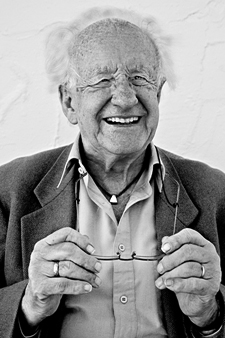
Nobody has brought this simple message to the world like the Perdana Global Peace Foundation in Kuala Lumpur, Malaysia. As the leader, Mahathir Mohammad, Malaysia’s fourth prime minister says:
“Peace for us simply means the absence of war. We must never be deflected from this simple objective”.
So they organize compelling exhibitions and conferences to highlight the atrocities and horrors of war, starting with World War I, often in cooperation with Muhammadiyah Yogyakarta University in Indonesia. A very clear message from the Southeastern part of the world to the Northwestern part: Stop It! All your rules of war add up to its legitimation; wars get ever worse as measured by the percentage of non-combatant, civilian casualties; from about 10 percent in World War I to 90 percent in the Vietnam and other wars at the end of the 20th century. They dare refer to crimes as “unintended consequences”, “collateral damage”.
Take Norway, a “peace nation”, as example; not the USA an Israel with their gods, the idea of being chosen, and exceptionalism. See what Norway does against the spirit of UNSC-United Nations Security Council Resolution 1973 to protect civilians, promote cease-fire and mediate a political solution in Libya. And against the UN Charter Article 2 outlawing war.
According to testimony by pilots on the Norwegian Broadcasting Corporation “Brennpunkt” (In Focus), 25 percent of the bombing was planned with goals selected in advance. Read the rest of this entry »