Archive for the ‘Nuclear weapons’ Category
Get the law and politics right in Iran now!
 March 27th, 2012 |
  Author:
 By Richard Falk
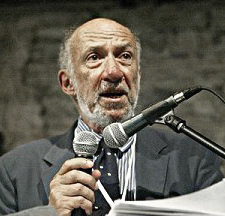
In his important article in the New York Times, March 17, 2012, James Risen summarized the consensus of the intelligence community as concluding that Iran abandoned its program to develop nuclear weapons in 2003, and that no persuasive evidence exists that it has departed from this decision.
It might have been expected that such news based on the best evidence that billions spent to get the most reliable possible assessments of such sensitive security issues would produce a huge sigh of relief in Washington, but on the contrary it has been totally ignored, including by the highest officers in the government. Read the rest of this entry »
Iran, Israel and the USA
How to prevent the war that is becoming more likely?
By Gunnar Westberg
TFF Board member who has visited Iran a number of times the last few years
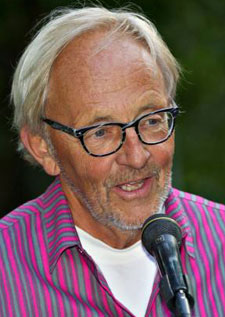
The threat of a war involving Iran, Israel and USA is discussed with increasing intensity. At this time an attack by Israel is seen as the most likely risk.
Do I, decidedly not an expert, have the right to say that most contributions are lacking in depth and there is little attempt to understand the other parties? I say so, and I hope to be proven wrong. Read the rest of this entry »
 Posted in General issues, Gunnar Westberg, Iran, Nuclear Free Zones, US Empire, Violence-prevention |
  4 Comments »
Ban the Bomb!
By Jonathan Power
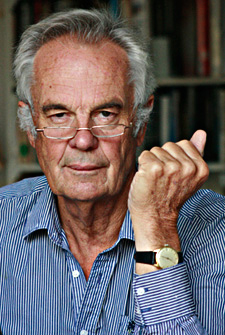
If in 2012 and 2013 the big nuclear weapons powers and UN Security Council permanent members – the U.S., Russia, China, Britain and France – don’t make significant reductions with their nuclear weapons then an important opportunity will be lost.
Presidents Barack Obama and Dmitri Medvedev appear to be of a mind on this.
One has to go back to the presidencies of John F. Kennedy and Lyndon Johnson to get the full picture on the dismal progress on nuclear disarmament. Their Defence Secretary, Robert McNamara, told both presidents nuclear weapons were unusable. Read the rest of this entry »
Israel-USA vs Iran: Talk Peace!
By Johan Galtung
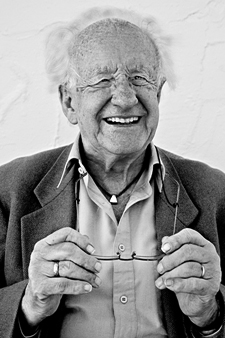
The state system at its worst: trading insults and threats, sanctions, readiness to use extreme violence, forward deployment of US troops in Israel as hostages to guarantee US involvement, disregard for common people and the effects of warfare in the Middle East and the world. The options are harder sanctions, or war. The far better option, sitting down, with mediators, talking and searching for solutions, is absent. Polarization, escalation, the material of which wars are made fill the media. What a shame. Read the rest of this entry »
The Menace of Present & Future Drone Warfare
By Richard Falk
After the atomic bombs were dropped on Hiroshima and Nagasaki, and the colossal scale of devastation disclosed, there was a momentary embrace of sanity and rationality by world leaders and cultural commentators. There was a realization that living with such weaponry was at best a precarious journey into the future, and far more likely, an appointment with unprecedented human catastrophe if not apocalypse.
What to learn from the ongoing existence of nuclear weaponry
This dark mood of foreboding did produce some gestures toward nuclear disarmament tabled initially by the U.S. Government, but in a form that reasonably struck others at the time, especially the Soviet Union, as a bad bargain — the U.S. was proposing getting rid of the weapons for the present, but retaining the materials, the technology, and the experience needed to win handily any nuclear rearmament race. Read the rest of this entry »
Iran, the EU and what we should have learned by now*
By Jan Oberg
On Monday the 23rd of January 2012, the EU’s 27 members unanimously decided to stop their oil import from Iran on July 1 this year. That sort of policy is considered benign in comparison with warfare. It won’t be when seen in the long run.
Sanctions usually have the opposite consequences of those “intended”. Secondly, as we know from the Iraq case, they are part and parcel of a build-up to war and will have, in the longer run, devastating, cruel consequences for innocent civilians whose lives are already hard.
How come EU leaders seem not to see the counterproductivity of their decisions? Do they not know that they contribute to a build up to a war that will be much more catastrophic than that on Iraq both for the region, for themselves and for the economy they otherwise try to keep from even deeper crisis?
Virtually everyone speaking on behalf of their country or the EU as a whole point out the risks of escalating the conflict; it may eventually lead to a spiral, one or more counter measures by Iran and a tit-for-tat dynamics that could – could – go out of hand. The next they therefore say, as if to soothe their own fears, is that war must be avoided and that, rather, sanctions and other types of pressures serve only one purpose: to get the Iranians to the negotiation table.
Don’t they know the basics of psychology?
This is pathetic and militates against everything one knows about psychology. Read the rest of this entry »
Nuclear-free Middle East: Desirable, necessary and impossible
By Richard Falk
Finally, there is some argumentation in the West supportive of a nuclear free zone for the Middle East. Such thinking is still treated as politically marginal, and hardly audible above the beat of the war drums. It also tends to be defensively and pragmatically phrased as in the NY Times article by Shibley Telhami and Steven Kull (January 15, 2012) with full disclosure title, “Preventing a Nuclear Iran, Peacefully.” Read the rest of this entry »
2012 Peace Proposal: Human Security and Sustainability: Sharing reverence for the dignity of life
By Daisaku Ikeda
President of Soka Gakkai International (SGI)
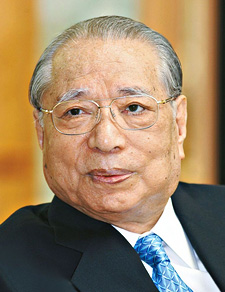
Every year Dr. Ikeda publishes his thoughts on what must be done to secure a better future for us all. He is a true contributor to the TFF pro-peace orientation that emphasizes how important it is to “imagine a better world”.
We are proud to have had this wise, visionary leader of what is probably the world’s largest peace movement, as TFF Associate over many years.
Much more about him here.
The economist Amartya Sen, a renowned advocate of the methods and approaches of human security, has emphasized “the dangers of sudden deprivation.” Such unanticipated threats can take the form of natural disaster and conflict, and can also arise from economic crises and rapid environmental degradation brought about by climate change. It is crucial that we respond vigorously to such threats, which can grievously undermine people’s lives, livelihoods and dignity. Read the rest of this entry »
A conversation about trust and nuclear weapons
By Scilla Elworthy who speaks with Archbishop Desmond Tutu
A TalkWorks Films Special www.talkworks.info
Two peace prize laureates in conversation for TalkWorks about the question of nuclear weapons, disarmament and peace.
St John’s College, Oxford, Saturday May 9 2010
Posted in Culture & religion, Ethics and values, Nuclear weapons, Scilla Elworthy, Videos |
No Comments »
A nuclear nightmare in the making
NATO, Missile Defense and Russian Insecurity. And what if you look at it from their side now?
By David Krieger and Steven Starr
In the aftermath of the Cold War, the North Atlantic Treaty Organization (NATO), has become increasingly powerful. It was created in 1949 as an alliance of Western military forces to protect against the perceived military threat posed by the Soviet Union and the Eastern bloc countries.
With the breakup of the Soviet Union and the Warsaw Pact, NATO has expanded by adding former Soviet bloc countries, moving to the borders of Russia. It has also engaged in military actions, notably in the former Yugoslavia, Afghanistan and Libya.
For the past several years, the US and NATO have been pursuing the deployment of an integrated missile defense system in Western, Eastern and Southeastern Europe, as well as in surrounding waters. The Russians have protested vigorously that the planned system will undermine its nuclear retaliatory potential and thereby its security. Read the rest of this entry »