Archive for the ‘Reconciliation & forgiveness’ Category
The politics and benefits of equality
 May 9th, 2012 |
  Author:
 By Johan Galtung
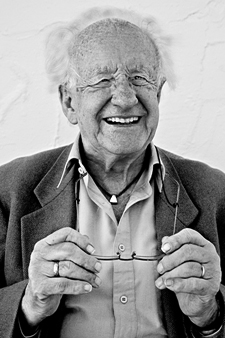
US politics has for a long time, since the 1970s, been the politics of inequality. Not only have the indicators of inequality, like the ratio in average income between the top and the bottom 20%, or the salary ratio between a CEO and the average employee in a corporation, increased (from 50 to 1100). But the top 10 or 1 or 0.1 percent, has acquired wealth so far unheard of. And the bottom 90, or 99 or 99.1 percent see the average family income in real terms decreasing; for the lowest down below the poverty line, way down into misery like worrying about where the next meal comes from (from the soup kitchen for very many). Read the rest of this entry »
 Posted in
Memories – conscious and subconscious
By Johan Galtung
Gernika-Basque Country, Spain, 28 April 2012
75 years ago Germany-Italy bombed this sacred Basque-Spanish town, adding state terrorism to the destruction of arms factories. Picasso made the atrocity enter world collective memory forever. As a testimony to the power of art, and memory, the painting was ordered covered when USA tried to make the case that Iraq was producing mass destruction weapons for the UN Security Council.
Two kinds of memories serve politics: glories and traumas. Read the rest of this entry »
If it bleeds it leads!
By Jonathan Power
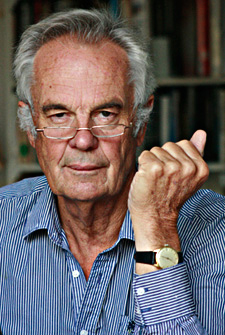
If it bleeds it leads! The mantra of many a newsroom. In their new book, “Pax Ethnica” two great journalists, Karl Meyer and Shareen Brysac, argue that day in and day out ethnic conflict and tension along religious and cultural lines makes for reliable, if dispiriting, headlines.
Journalists regularly play plenty of attention to failed states, sectarian violence and societies at the breaking point. But what about those unsung exceptions, the communities of the world where diverse groups live together in harmony? Read the rest of this entry »
North Korea – an opportunity not to be missed
By Gunnar Westberg, TFF Board
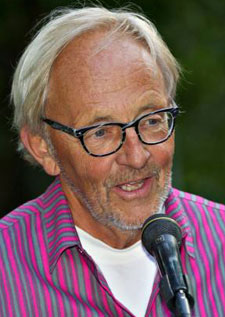
The changes felt in North Korea during my visit there in October 2011 are sensed by others. In a recent issue of Science (Vol. 334, Dec 23 2011, p 1624-1625,
Armenia: Healing the wounds
By Richard Falk and Hilal Elver
Seeking closure for the 1915 Armenian massacres
Recently the National Assembly, France’s lower legislative chamber, voted to criminalize the denial of the Armenian genocide in 1915, imposing a potential prison sentence of up to one year as well as a maximum fine of 45,000 Euros. The timing of this controversial initiative seemed to represent a rather blatant Sarkozy bid for the votes of the 500,000 French citizens of Armenian descent in the upcoming presidential election. Read the rest of this entry »
Kim Jong-Il has died – Isn’t that an excellent opportunity for new policies?
By Jan Oberg
Most media focus on the nervous reactions, that this event may trigger instability and perhaps foreign-directed “provocations” as ambassador Donald Gregg is saying here. Well, it’s hard to know.
But while there could be a kind of successor problem or even a military takeover, one could also see Kim Jong-il’s death as an opportunity for improving relations both regonally and with the West. Read the rest of this entry »