Archive for the ‘Asia’ Category
TFF PressInfo: GCC Military Command or a More Open Society
 May 7th, 2014 |
  Author:
 By Farhang Jahanpour*
Short e-mail PressInfo version here.
Saudi Military exercises
On 30th April 2014, Saudi Arabia staged its largest-ever military exercises codenamed “Abdullah’s Shield” after the kingdom’s 91-year old ruler and coinciding with the ninth anniversary of his ascension to the throne. The exercises involved 130,000 Saudi troops and showcased some of the latest weapons purchased by the kingdom from the United States and China, including the Chinese CSS-2 intermediate-range ballistic missiles with a range of 2,650 kilometers (1,646 miles) which are capable of carrying nuclear warheads. The Chinese version of these missiles is already equipped with nuclear warheads. This was the first time that these missiles had been seen in public in Saudi Arabia.
Crown Prince Salman presided over the exercises, which were also watched by a number of prominent foreign guests, including King Hamad of Bahrain and more pointedly by Gen. Raheel Sharif, the Pakistani chief of the army Staff. There have been persistent rumors over many decades that in return for Saudi funding of the Pakistani nuclear weapons’ program, Pakistan had committed to provide nuclear warheads for CSS-2 missiles, should Saudi Arabia decide to have them. Earlier in the year when Prince Salman visited Pakistan, he personally invited Gen. Sharif to be his guest at the exercises. Pakistani media stressed the point that Gen. Sharif had gone to Jeddah “on the invitation of Crown Prince Salman bin Abdulaziz al Saud to witness the military exercise…” (1)
With the exception of Bahrain’s ruler, none of the other GCC rulers watched the exercises. The guests included the crown prince of the UAE, the prime minister of Jordan and military commanders from some GCC states, but Qatar pointedly did not send any representatives. This was yet another sign of a growing rift between Saudi Arabia and Qatar.
A unified GCC Command and Monetary Union
At the GCC summit held in Kuwait in December 2013, the Saudis called for a unified GCC military command to have 100,000 forces, half of which would be contributed by the Saudis. (2) However, other GCC members opposed the idea as they saw it as a way of consolidating Saudi domination of other GCC states and affirming Saudi Arabia’s position as the big brother. Many smaller GCC states value their independence, and while they would like to cooperate with other GCC members, they do not wish to be absorbed into a unified military alliance as junior partners. Oman openly expressed its opposition to the proposal and Qatar and Kuwait also followed suit. Read the rest of this entry »
 Posted in Arab Spring, Armament, China, Egypt, Farhang Jahanpour, Future perspectives, India-Pakistan, International law, Iran, Iraq, Israel/Palestine, Lebanon, Libya, Middle East, Military - technology, Nuclear weapons, Syria, TFF PressInfo, US Empire, US politics & security, USA, World order/governance |
  Tags: Bahrein, Doha, Emirates, Expediency Council, GCC, Golf Cooperation Council, Kuwait, Muslim Brotherhood, New armies - Saudi, Obama, Peninsula Shield Force, Persian Gulf, Qatar, Saudi Arabia, Shiite, Sunni, U.S. Central Command |
  1 Comment »
University cooperation for equity and empathy
By Johan Galtung
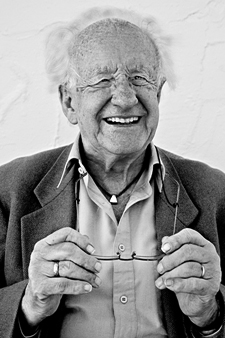
China Three Gorges University, Yichang, 23 Apr 2014
A great honor to open the 11th university cooperation conference of N.E.W.S–North-East-West-South—founded in 1993 at the Freie Universität, Berlin by S.P. Park.
Classical university cooperation across borders has professors teaching in one country students from other countries. Thus, when Copenhagen ruled Denmark-Norway 1397-1814 Norwegians studied at the University of Copenhagen, founded in 1479. The University in Oslo came in 1811, but the asymmetry continued; some of it necessary and useful, but not ideal. Missing was equity, “I learn from you, you from me”; missing was empathy, “You learn about me, I about you”. The teaching country is superior in power, shaping the minds in the learning country. But the learning country learns about the deeper features of the teaching country, not vice versa.
A colonial relation. The colonialist leader, England – also in Scotland-Wales-Ireland – imports raw students for processing at huge fees, and exports English as patented commodity with no processing rights. Major industries both; but learning nothing about the world. Of course old knowledge must flow from those with more to those with less, even if professors often exaggerate their own importance: students may learn more together and by self-study–maybe 10%-40%-50%. But professors monopolize exams and diplomas, so better absorb well. Read the rest of this entry »
East-South China Seas, Islands – Solutions?
By Johan Galtung
Nanjing University Conference
A Chinese proverb: better than giving a starving person a fish is teaching her to fish. So, not only solutions but how to solve conflicts: in the East China Sea between China and Japan over Diaoyu-Senkaku and between Korea and Japan over Dockdo-Takeshima; and in the South China Sea between China-Taiwan and Philippines-Vietnam-Malaysia-Brunei over the Nansha-Spratly islands. However, China-Taiwan can here be seen as one party with the same claims, and China has agreed to deal with ASEAN-Association of Southeast Asian Nations collectively, not with only four of the ten member states bilaterally. In short: China vs ASEAN.
The goals in these bilateral conflicts–conflict=incompatible goals! – is state sovereign rights not over mainlands but is-lands – essentially over their EEZs, exclusive economic zones 200 nautical miles from the coast base–to exploit live and non-live resources; fish, hydrocarbons, minerals. And sovereignty over a 12-mile zone–with air space–excluding others, their shipping lanes and flights. Read the rest of this entry »
This Indian government has done well
By Jonathan Power
E.M. Forster, the English novelist, wrote in his “Passage to India” of India “swelling here, shrinking there, like some low, indestructible, form of life”.
But the India of today is a totally different place from 1920. Economic growth was tiny in British times (even though a large network of railways and schools were built). Since independence in 1947 infant mortality has dropped to one fourth of what it used to be and longevity has more than doubled. Economic growth has increased since the 1960s from around 3% a year – the so-called “Hindu growth rate” – to a high of 10% – the peak achievement of the present Congress government of Prime Minister Manmohan Singh and party president, Sonia Gandhi.
Why then is the opposition leader of the BJP, Narendra Modi, who has a repugnant reputation when it comes to dealing with India’s Muslims, set for victory? Admittedly, as chief minister, he has industrialised Gujarat but the state, growing at 10%, has done less well than four other states in its poverty reduction and improved education and health services.
It’s because the government has taken one bad knock after another. Read the rest of this entry »
Japan and the world community
By Johan Galtung
From Osaka, Kyoto
Japan could have been a leading world power today.
Not a 19th century colonial-imperial-military power, but a peace power like Switzerland, only much bigger. If its political leaders had embraced the peace constitution with Article 9 – finally nominated for the Nobel Peace Prize – depriving Japan of the right to war with the same enthusiasm of its population. A recent public opinion poll showed 2/3, 63%-64% opposing collective defense as well as revision of A9.
It is not that A9 – which is against war, not for peace – is perfect. Betrayed by politicians “interpreting” and used as a comfortable sleeping pillow by the peace movement people, two solid pillars should have been added, like defensive defense and positive peace. Read the rest of this entry »
Bringing together China and America
By Jonathan Power
Beijing, April 8th 2014
The widespread perception that China is or will become soon an aggressive, expansionist power is simply wrong. It is propaganda, rather than fact, a kind of right-wing agitprop.
Far from being an aggressive power, China is a defensive one, and has long been so. It is the one who has been attacked and invaded – by Britain, France, the US and Japan. These days China is too integrated into the world economy and too much in hock to its massive savings invested in the bonds of America and Europe to be anything but defensive.
That doesn’t mean it doesn’t have an urge to bring Taiwan into the mainland’s fold or that it will not protect itself against territorial losses – including Tibet, Xinjiang and a number of islands in the South China and East China seas. Some Western politicos may quarrel with China about this (apart from Xinjiang), but China has a case for each. (But on the sea issue it should go along with the Philippines’ request for arbitration by the judges of the court established by the Law of the Sea Treaty.)
China feels that the large deployment of the US navy close its waters plus the Obama Administration’s “tilt” towards Asia, plus the US’s defence relationships with China’s neighbours are a challenge to its security and sovereignty. It rightly feels encircled. Read the rest of this entry »
China and the US compete at sea
By Jonathan Power
Beijing, April 1st 2014
Both Russia and China feel themselves under threat from the US – and their people are clearly behind their governments on this.
Not without reason. Nato has pushed itself up to Russia’s borders. China feels encircled by US naval deployments armed with nuclear weapons in the East China and South China seas together with the US’s wide network of defence relationships with China’s neighbours. If it came to war the US could incinerate many Chinese cities before China realized it was under attack and could launch its own modest armoury of nuclear missiles.
China may be a capitalist state now but many of its views are still hostage to old time Marxist views which leads many to think that the West seeks to exploit the rest of the world. This leads them to conclude that as China rises the US will feel compelled to resist- ironically a conclusion which many conservative Western analysts share.
The balance of power is beginning to shift in China’s favour. It has been able to redeploy forces, once in the north aimed at Russia, to other parts of China. It is increasing its defence budget rapidly, albeit from a low base. However, it spends only 2% of its national income on defence as against the US’s 4.7% and its spending is only one fifth of America’s. Read the rest of this entry »
Is human rights observance in China evolving?
By Jonathan Power
Dateline: Beijing.
Date: March 18th 2014.
In 1913, following the overthrow of the last emperor, citizens walked, pedalled or rickshawed to the polling stations- although opium smokers, Buddhists and policemen were forbidden from voting. In the annals of the 2,500 years of Chinese civilization it is the one and only time the Chinese have voted in a national election.
Under Mao Zedong, the communist leader who overthrew this Nationalist government, any pretence of voting was given short shrift. Politics was outlawed and would-be dissidents severely punished. Only at the top level of Chinese politics – in the ruling politburo – were votes taken. Indeed, on some occasions, Mao was outvoted.
But once he was dead some of the leadership of the communist party did want to see a loosening up. There was what Bao Tong, personal aide of deposed Communist Party chief, Zhao Ziyang, called a “freedom faction”. For example, in 1995 politburo member, Tian Jiyun, called for direct elections for government officials. Politburo standing committee (the top organ of the party) member, Li Ruihuan, called for partial media privatization. There were others.
Deng Xiaoping, an outcast under Mao, who became the dominant leader shortly after Mao’s death, warned in 1980 of the dangers of “bureaucracy, over-concentration of power, patriarchal methods, life tenure in leading posts and various privileges”. Voting, albeit very tightly controlled, was introduced within the party. Read the rest of this entry »
Posted in China, Human rights and justice, International law, Jonathan Power, Sweden |
No Comments »
Pakistan – What Now?
By Johan Galtung
Islamabad, Ministry of Foreign Affairs, 28 Feb 2014
Your Excellencies,
The basic point is that Pakistan will not get that commodity called “peace” in Kashmir, Afghanistan and Central Asia by pursuing the ends and means of Washington and some local elites only. For peace to blossom the goals of other parties also have to be considered; and they are many. The logic of the political games pursued today presupposes some kind of victory or domination of “our side”: neither feasible nor desirable for peace. Hence, the need for some visions for peace politics is Kashmir, Afghanistan and Central Asia for tomorrow or the day after, with the hope that they can be useful when you have come to the end of the road with current policies. Nothing of this is easy; and without visions even impossible.
The fairly detailed, non-dogmatic vision appended (below) was my acceptance speech of the 2011 Abdul Ghaffar Khan International Peace-Builder Award by the Pakistan-American Muslim Association.
However, why do present policies so often seem to be non-starters?
The British empire drew three lines with disastrous effects for Pakistan: the Durand line in 1893, a 1,600-mile wound defining the border with Afghanistan, dividing the Pashtun nation – the biggest nation in the world without a state – into two parts; the McMahon line of 1914 defining the border with China in ways unacceptable to the Chinese; and the Mountbatten line of 1947 leading to the catastrophic violence of the partition. These lines have to be negated, liberating Pakistan from that past. Read the rest of this entry »
Posted in Abolition, Afghanistan, Asia, Conflict and war, Democracy - local & global, Development, Disarmament, Human rights and justice, India, India-Pakistan, International law, Johan Galtung, Nonviolence, Nuclear weapons, Pro-peace & proposals, US Empire, Violence-prevention, World order/governance |
No Comments »
How to win the Indian election
By Jonathan Power
The drum beats are already sounding for the soon-to-be-held general election in the world’s largest democracy, India- the country that shows China how it should be done.
There is a sense in the country that the ruling Congress Party and the influential Gandhi/Nehru core of it is on its way out after 10 years of a government that has hit the high points and the lows. To my mind, if the inexperienced Rahul Gandhi steps back from offering his own candidacy for prime minister and his mother, Sonia Gandhi, president of the party, pushes to the fore the very clever finance minister, Palaniappan Chidambaram, Congress is still in with a chance.
If not, the BNP candidate, Narendra Modi, looks like romping home, despite the cloud hanging over him as chief minister of the state of Gujarat at the time of Hindu-Moslem riots in 2002 when, it is said, he didn’t use his authority to halt the rampaging Hindus who slaughtered Muslims. The Supreme Court later absolved him and now the US has lifted its refusal to give him an American visa. Many say he now has a clear run. Read the rest of this entry »