Archive for the ‘Democracy – local & global’ Category
TFF PressInfo: Psyko-politik i tiden för imperiets nedgång
 May 26th, 2014 |
  Author:
 Av Jan Öberg
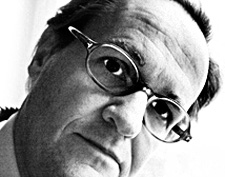
Lund , Sverige – 23 maj 2014
Tiden för rationell politik, om begreppet någonsin funnits, är över .
”Realpolitik” har blivit en blandning av marknadsförda ord, propaganda och ledare som gör uttalanden som gränsar till absurd teater. Tunnare och tunnare länkar till Realiteten.
Detta är vad som händer när man förnekar nedgången.
Alla imperier går ner. Det amerikanska imperiet är på nedgång. Makrohistoriker (se t.ex. British Arnold Toynbee’s 12–volymarbete 1934-1961) berättar att det finns många skäl till att imperier faller:
• militarism med konstant krigföring;
• överutvidgning – försöka kontrollera mer än vad du kan hantera;
• förlust av legitimitet i andras ögon;
• strukturella ekonomiska kriser;
• moraliskt förfall;
• förlust av intellektuell och teknisk innovation;
• andra maktstrukturer ökar i styrka över tid och göra saker på nya, kreativa sätt .
Efter 1945 ansågs USA vara starkt på en rad olika maktdimensioner: militär, ekonomi, politik, legitimitet, kultur, innovation. Idag är de bara nummer ett på den militära dimensionen. När alla andra indikationer går ner, blir militären en stor börda som bara accelererar nedgången.
USA är på tillbakagång och i förnekelse. Så är även de flesta av dess allierade och sympatisörer .
Deras utrikes politiska beslutsfattare verkar tro att allt är bra och de kan ändå leda och forma världen enligt deras intresse och världsbild. Det är fortfarande i grunden en missionär .
Här är några delar av vad den består av: Read the rest of this entry »
 Posted in Academia and science policies, Conflict and war, Culture, Democracy - local & global, Development, Ethics and values, Future perspectives, Global trends & events, Jan Oberg, Media perspectives, Military - technology, Nonviolence, NORDIC - NORDISKA artiklar, Nuclear weapons, Pro-peace & proposals, Psychology - war & peace, Reflections, essays & more, Security and defence, TFF PressInfo, US Empire, US politics & security, USA, Violence-prevention, World order/governance |
  No Comments »
TFF PressInfo: Psycho politics in the age of imperial decline
By Jan Oberg
Lund, Sweden – May 23, 2014
The time of rational politics, if it ever existed, is over.
”Realpolitik” has become a mixture of marketing soundbites, propaganda and leaders making statement that borders on the Theatre of the Absurd. Thinner and thinner links to Real-ity.
This is what happens when decline in being denied.
All empires go down. The U.S. empire is in decline. Macro historians (see e.g. British Arnold Toynbee’s 12-volume work 1934-61) tell that there are many reasons when empires fall:
• militarism with constant warfare;
• overextension – trying to control more than you can manage;
• loss of legitimacy in the eyes of others;
• structural economic crisis;
• moral decay;
• loss of intellectual and technological innovation and
• simply other powers gaining strength over time and doing things in new, creative ways.
After 1945 the U.S. was considered strong on many power dimensions: military, economics, politics, legitimacy, culture, innovation. Today, it is only clearly Number One on the military dimension. When all the other indicators go down, the military becomes a huge burden and only accelerates the decline.
The U.S. is in decline and denial. So are most of its allies and sympathizers.
Its foreign policy-makers seem to assume that everything is fine and they can still lead and shape the world according to their interest and worldview. It remains fundamentally a missionary.
Here is some elements of what it consists of: Read the rest of this entry »
Citizens versus subjects in a democratic society: The American case
By Richard Falk
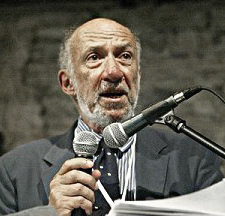
“Have we agreed to so many wars that we can’t
Escape from silence?…”
Robert Bly, “Call and Answer”
In my understanding silence is passivity as a way of being. Silence can be much more than the avoidance of speech and utterance, and is most poignantly expressed through evasions of body, heart, and soul. Despite the frustrations and defeats of the period, America was different during the years of the Vietnam War and the civil rights movement.
It was then that alienated gun-wielders assassinated those among us who were sounding the clearest calls for justice and sending messages of hope. In a perverse reaction, Washington’s custodians of our insecurity went to work, and the sad result is this deafening silence!
I have long felt that most American ‘citizens’ increasingly behave as ‘subjects,’ blithely acting as if a love of country is exhibited more by obedience than conscience.
In my view the opportunity to be a citizen is a precious reality, a byproduct of past struggles. Genuine citizenship remains possible in the United States, but has become marginal, and is not much in evidence these days. I am identifying the citizen as an ethically sensitive and responsible member of a political community, most significantly of a sovereign state. In contrast, the subject conceives of upright standing in a political community by the willingness to go along with the group and to obey the directives of government and those exercising formal authority.
The moral substance at the core of genuine citizenship only exists if the political structure allows opposition without imposing a severe punishment. If citizenship is possible, then it automatically gives rise to responsibility to act accordingly, that is, by honoring the imperatives of conscience. Read the rest of this entry »
Marshallöarna utmanar kärnvapenstaterna
Av Gunnar Westberg
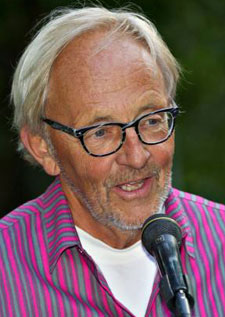
Marshallöarnas utrikesminister Tony de Brum berättade vid den pågående förberedelsekommitténs möte (Prep Com) i FNs-högkvarter i New York, den 28 april till 9 maj 2014 om avtalet mot kärnvapen, NPT, i New York, om sina upplevelser av kärnvapenprov:
Jag har varit vittne till kärnvapenexplosioner och mina minnen från Lipiep-atollen i norra Marshallöarna är starka. Jag bodde där som pojke under de 12 åren som kärnvapenproven pågick. Jag minns det bländande vita ljuset från Bravo-sprängningen på Bikini-atollen år 1954, tusen gånger starkare än den över Hiroshima.
Marshallöarna utsattes för 67 kärnvapenprov mellan 1946 och 1958, motsvarande 1,6 Hiroshima-sprängningar varje dag I tolv år. Följderna finns kvar hos oss som en börda som ingen nation, ingen befolkning, skulle behöva bära.
Marshallöarna förvaltades vid tiden för kärnvapensprängningarna av USA under FN-mandat. Nu är landet självständigt med namnet Republiken Marshallöarna, som omfattar ett stort antal öar med en befolkning av totalt endast 60 000 personer. Landet ar ett avtal med USA som bl a innebär att USA står för försvar och vissa sociala tjänster.
Marshallöarna tar nu strid för att inget land i världen skall utsättas för kärnvapen, inte testsprängningar men framför allt inte kärnvapenkrig. Read the rest of this entry »
Posted in Abolition, Democracy - local & global, Disarmament, Foreign and security politics, Future perspectives, General issues, Gunnar Westberg, Human rights and justice, International law, Nonviolence, NORDIC - NORDISKA artiklar, Nuclear Free Zones, Nuclear weapons, Pro-peace & proposals, Sweden, US Empire, USA, World order/governance |  Tags: Bravo, Hague, Marshall Islands, NPT |
No Comments »
Tags: Bravo, Hague, Marshall Islands, NPT |
No Comments »
Homage to International New York Times
By Johan Galtung
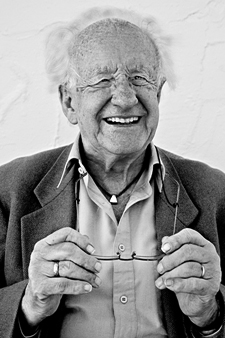
On the table are some old clippings mainly from that remarkable paper; in my mind the International Herald Tribune, IHT, from 1857 and a part of my reality for about fifty years. Maybe an addiction? Hard to live without. The recent name change to International New York Times was understandable but too specific geographically, not global. The Honolulu papers, well located, are often more global.
Why homage? Not for the news coverage; usually the news “fit to print”. The news that do not contradict too openly the world views carried by US and Israeli foreign policies, even if this has improved considerably recently. Nor for the editorials, they are usually on the same line and also, sorry, frankly, often boring.
No, the homage is for the articles, essays even, at a very high level in what is after all a newspaper, a paper with news. Those essays often carry discourses that are wide ranging, way back into the past, far into the future. We are not talking about agree-disagree but about broadness, openness, even globally.
Take William Safire 30 September, 1991 Read the rest of this entry »
TFF PressInfo: Sverige – inte längre aktör för en bättre värld
Av Jan Öberg
Dr.hc., direktör för TFF
4 maj 2014
Eliten i Sverige är mer lojal mot Nato, USA och EU än mot sitt folk
• Under de senaste 25-30 åren har Sveriges militära, säkerhets- och utrikespolitiska elit vridit Sveriges politik 180 grader.
• Dessa grundläggande förändringar inleddes av den socialdemokratiska regeringen under Göran Persson och utrikesminister Anna Lindh och har genomförts praktiskt taget utan offentlig debatt.
• Omsvängningen till interventionism, militarism och USA/Nato på alla områden har planerats gradvis, i smyg och ohederligt – kort sagt på ett sätt som är ovärdigt en demokrati.
• Denna elit är mer lojal mot Bryssel och Washington än mot svenskarna.
• Om din bild av Sverige är att det är ett progressivt, förnyande och fredsfrämjande land med global inställning som försvarar folkrätten så är den – tråkigt nog – föråldrad.
Hur Sverige har förändrats
Sverige är inte längre neutralt och det är bara formellt alliansfritt; det finns ingen mer närstående bundsförvant än USA/Nato. Landet har upphört att utveckla en egen politik och positionerar istället sig inom ramen för EU och Nato. Landet bidrar inte längre med betydelsefullt nytt tänkande – det sista var Olof Palmes kommission om gemensam säkerhet (1982). Read the rest of this entry »
Posted in Abolition, Academia and science policies, Alternatives - peace, Conflict and war, Democracy - local & global, Disarmament, Ethics and values, Ex Yugoslavia, Foreign and security politics, Future perspectives, Georgia, International law, Iraq, Jan Oberg, Libya, Media & conflict, Media perspectives, Nonviolence, Norden as region, NORDIC - NORDISKA artiklar, Nuclear weapons, Peace, Psychology - war & peace, Russia, Sanctions, Security and defence, Sweden, Syria, TFF PressInfo, Ukraine, UN matters, US Empire, USA, World order/governance |
Tags: Anna Lindh, Carl Bildt, common security, disarmament ambassador, gemensam säkerhet, Göran Persson, interventionism, NATO, neutrality, Olof Palme, Prtnership for Peace, Sweden cruise missiles |
No Comments »
Nonviolent Geopolitics: Law, Politics, and 21st Century Security*
By Richard Falk
In this short essay, my attempt will be to articulate a conception of a world order premised on nonviolent geopolitics, as well as to consider some obstacles to its realization. By focusing on the interplay of “law” and “geopolitics” the intention is to consider the role played both by normative traditions of law and morality and the “geopolitical” orientation that continue to guide dominant political actors on the global stage.
Such an approach challenges the major premise of realism that security, leadership, stability, and influence in the 21st century continue to rest primarily on military power, or what is sometimes described as “hard power” capabilities. [1]
From such a perspective international law plays a marginal role, useful for challenging the behavior of adversaries, but not to be relied upon in calculating the national interest of one’s own country. As such, the principal contribution of international law, aside from its utility in facilitating cooperation in situations where national interests converge, is to provide rhetoric that rationalizes controversial foreign policy initiatives undertaken by one’s own country and to demonize comparable behavior by an enemy state. This discursive role is not to be minimized, but neither should it be confused with exerting norms of restraint in a consistent and fair manner.
My intention is to do three things:
• to show the degree to which the victors in World War II crafted via the UN Charter essentially a world order, which if behaviorally implemented, would have marginalized war, and encoded by indirection a system of nonviolent geopolitics; in other words, the constitutional and institutional foundations already exist, but inert form;
• to provide a critique of the realist paradigm that never relinquished its hold over the imagination of dominant political elites, and an approach has not acknowledged the obsolescence and dangers associated with the war system;
• and, finally, to consider some trends in international life that make it rational to work toward the embodiment of nonviolent geopolitics in practice and belief, as well as in the formalities of international law. Read the rest of this entry »
Posted in Abolition, Academia and science policies, Afghanistan, Armament, Conflict and war, Democracy - local & global, Development, Disarmament, Ethics and values, Future perspectives, General issues, Global trends & events, Human rights and justice, International law, Nonviolence, Nuclear Free Zones, Nuclear weapons, Peace, Pro-peace & proposals, Psychology - war & peace, Reflections, essays & more, Richard Falk, Theories and concepts, Uncategorized, US Empire, US politics & security, USA, Violence-prevention, World order/governance |
No Comments »
Peace Economics: Making Money Doesn’t Need to Hurt
By Jelena Mair

Business and Peace are not mutually exclusive. Business does play a crucial role in society. More so, business impacts and depends upon its surrounding. It impacts the
social well-being of people and planet, whether intentionally or unintentionally, both locally and globally through the chosen ways of operation and production.
Equally, does business play a key role in contributing to economic development, peace and stability in the areas where it operates. Business provides jobs and revenue to local markets; sets examples of sustainable business practices and can provide support for various social programs through strategic social investment.
In short, business is an inherent aspect of our society, and therefore, if we are striving for a more peaceful and sustainable world, for-profit private enterprises are the most crucial actors in achieving this goal. Read the rest of this entry »
Posted in Academia and science policies, Culture, Democracy - local & global, Development, Economics, Environmental concerns, Ethics and values, Future perspectives, Global economics, Global trends & events, Human rights and justice, Jelena Mair, Military - technology, Nonviolence, Peace, Pro-peace & proposals, Security and defence, Uncategorized, USA, Violence-prevention, World order/governance |
No Comments »
This Indian government has done well
By Jonathan Power
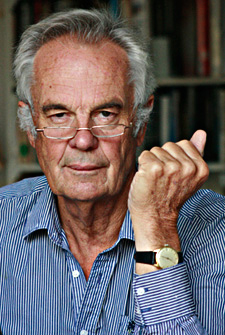
E.M. Forster, the English novelist, wrote in his “Passage to India” of India “swelling here, shrinking there, like some low, indestructible, form of life”.
But the India of today is a totally different place from 1920. Economic growth was tiny in British times (even though a large network of railways and schools were built). Since independence in 1947 infant mortality has dropped to one fourth of what it used to be and longevity has more than doubled. Economic growth has increased since the 1960s from around 3% a year – the so-called “Hindu growth rate” – to a high of 10% – the peak achievement of the present Congress government of Prime Minister Manmohan Singh and party president, Sonia Gandhi.
Why then is the opposition leader of the BJP, Narendra Modi, who has a repugnant reputation when it comes to dealing with India’s Muslims, set for victory? Admittedly, as chief minister, he has industrialised Gujarat but the state, growing at 10%, has done less well than four other states in its poverty reduction and improved education and health services.
It’s because the government has taken one bad knock after another. Read the rest of this entry »
The New World Order?
By Richard Falk
There is no more reliable guardian of entrenched conventional wisdom than The Economist. And so when its cover proclaims ‘the new world order,’ and removes any ambiguity from its intentions, by its portrayal of Putin as a shirtless tank commander with menacing features.
No such iconography accompanied the last notable invocation of the phrase ‘new world order’ by George H. W. Bush in mobilizing support for a forcible response to the Iraqi invasion and annexation of Kuwait in 1990, the dirty work of Saddam Hussein. Read the rest of this entry »
Posted in Abolition, Afghanistan, Democracy - local & global, Disarmament, Ex-Yugoslavia/Balkans, Future perspectives, International law, Iran, Iraq, Kosovo/a, Libya, Media & conflict, Media perspectives, Middle East, Nuclear weapons, Richard Falk, Russia, Sanctions, Security and defence, UN matters, US Empire, US politics & security, USA, Violence-prevention, World order/governance |
No Comments »