Archive for the ‘Democracy – local & global’ Category
Worse world or better world?
 June 24th, 2014 |
  Author:
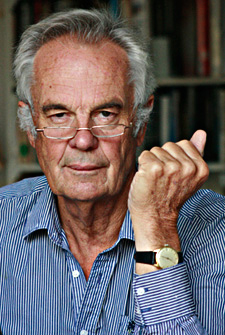
 By Jonathan Power
War is all over the place. It seems. Not just Syria and Iraq but now inside Pakistan. Not to mention Somalia and Sudan. Yet paradoxically there has never been less war.
Sweden’s Uppsala University Conflict Data program is about to publish its results for 2013. It reports that the number of conflicts in the world increased by one between 2012 and 2013 – pace all the press and TV coverage which sometimes gives the impression that half the world is going up in smoke.
Since the Cold War ended the number of conflicts claiming more than 1,000 deaths has declined by 50%. There were 15 conflicts of this size in the early 1990s. Today there are only seven.
In 2013 six peace agreements were signed – which is two more than the year before.
The number of democratic countries was 69 at the end of the Cold War. Today there are around 120. The number of autocracies has declined in that time from 62 to 48.
The American foreign policy elite appears unaware of these trends. Read the rest of this entry »
 Posted in Democracy - local & global, Development, Disarmament, Environmental concerns, Future perspectives, Global trends & events, Jonathan Power, Media perspectives, Nuclear weapons, Pro-peace & proposals, Russia, Security and defence, UN matters, US Empire, World order/governance |
  No Comments »
Spain 2050 – Ten predictions
By Johan Galtung
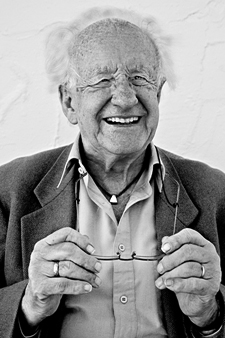
Alfaz; History group, Municipio, Spain
Can we know the future? Rhetorical answer: can we know the past?
We rewrite history all the time, not because facts become dubious and new facts appear, but because our angle, perspective, changes. Say, from a series of kings, presidents etc. and their exercise of military and political power to economic and cultural changes in the life of common people, in their wellbeing and identity. Quite some change.
Will we arrive at that single, true, objective perspective?
No, objectivity may be multi-subjective, not inter-subjective. This is why Al Jazeera is so much better for knowing the present than CNN, which presents the US angle, and if there are other angles a US “expert” will give the final interpretation. Al Jazeera presents many angles of many parties and leaves final interpretations to the viewer.
How can we shed some light into the future? Basically there are two approaches: the Cartesian based on extending trends, and daoism based on holism and dialectics. They do not exclude each other.
Thus, there are three world trends that certainly affect Spain… Read the rest of this entry »
Do Russia and China threaten the West?
By Jonathan Power
In recent months the scare-mongers have been at it again – Russia’s foray into Ukraine and China’s behaviour in the South China Sea have set their alarm bells ringing. But why?
Big power politics is not back. Indeed in the round it is rather subdued. Take the Russian-EU-US fracas over Ukraine at the moment. Does this compare with the Cold War when the West prepared itself for a Russian invasion of Europe, nuclear missiles were targeted on each other, and when the Soviet Union along with the US stirred up proxy civil wars in Central America and Africa?
Do the US and NATO fear such threats as these today? Of course not. Critics of President Barack Obama and denigrators of President Vladimir Putin badly need a sense of perspective. Read the rest of this entry »
Good, innovative governance – what is that?
By Johan Galtung
Pretoria, South Africa, Keynote
Governance is politics, power–political-economic-military-cultural; decisions-carrots-sticks-ideas. Politics is about problems of realizing one goal; about conflicts realizing incompatible goals. Contradiction = danger+opportunity; the art of the impossible.
Answer: Good Governance GG = CC Creative Conflict-transformation.
This includes diagnosis, who are the parties, their goals and the incompatibilities; prognosis, from frustration to aggression/apathy, from prejudice-discrimination to hatred-violence; therapy, conflict solution-transformation, proposing creative visions of a new reality where the goals are compatible and new conflicts more easily handled.
Two examples of creative, good governance from Norway and Europe: Read the rest of this entry »
TFF PressInfo: Democracy’s crisis – 10 points
By Jan Oberg
Democracy is a core feature of Western society, normally understood as representative parliament – i.e. in free elections citizens vote for people to represent their interests for a parliament consisting of parties of which some form the government and some the opposition.
It’s not always included in the definitions that democracy requires a reasonable level of knowledge and information, freely available. For instance, one often hears that India is the world’s biggest democracy but 26% of the people are still illiterate (287 million people).
So the ”world’s largest democracy” also has the world’s largest population who can’t read and write. In comparison, China illiterate citizens make up about 3% and is regularly called a dictatorship.
Also, in a society where the persons running for office are – or have to be – extremely wealthy to pay for their campaign and where large corporations make multi-million dollar contributions to certain candidates (presumably not out of altruism), falls outside a reasonable definition of democracy – even though they may also not be dictatorships; there are many stations in-between the two.
Are young people giving up parliamentary democracy?
When I was in my high-school years – a few decades ago – and wanted to contribute to changing society for the better, the most natural thing to do – and the finest – was to join a political party. Not so today. My students in peace studies around the world often ask me at the end of a course and it is time to say goodbye whether I can help them somehow in making their career. Their career dreams may be to work for the UN, for human rights, the environment or starting their own NGO with a peace profile or set up their own consultancy firm for a better world.
Significantly, over all these years, only one single student asked me what I thought about contributing to peace and development by becoming a politician.
As is well-known, people today engage in social issues mainly through civil society and the use of social media as their primary tool. This is good from most perspectives and holds fascinating prospects for de facto global citizenship and action, but it does something to the old type of representative democracy.
When we talk about global crisis, people think much more of the environment, identity issues or warfare than of democracy being in crisis. I think it is in fundamental crisis for the the following reasons. Read the rest of this entry »
Posted in China, Democracy - local & global, Ethics and values, EU politics, European Union, Future perspectives, Global trends & events, India, India, Jan Oberg, Media perspectives, Nonviolence, Political, Pro-peace & proposals, Reflections, essays & more, TFF PressInfo, US politics & security, World order/governance |
No Comments »
TFF PressInfo: EU elections – To perform rather than live democracy
By Jan Oberg
Lund, Sweden, June 3, 2014
Fears has been expressed in Europe about the recent EU parliament voting pattern. Instead of the fear and denouncing the winners we should ask: What causes such an outcome?
My short answer is this: Democracy itself is in deep crisis. It has become performance or ritual rather than something genuinely lived.
Two things stand out – one, the increase in votes going to nationalist, populist, right-wing and anti-Muslim parties as well as Euro-skeptics – particularly in Denmark, France, Greece and Britain.
Secondly, the voter turnout has fallen from 62 per cent in 1979 to 43% in 2009 and this year it increased only 0.09% in spite of the EU Commission’s attempt to increase it.
So while people struggle around the world for democracy, only 43% of the EU citizens find it meaningful to go and vote every 4th year. How tragic for an EU that tries to promote democracy everywhere, even by military force.
It is understandable that the two mentioned factors is a combination that make many in Europe – the seat of two world wars, NATO and some of the most armed and two nuclear-weapons states – concerned. Perhaps the rest of the world should be at least as concerned? Other countries such as Hungary and Spain have, on different dimensions, moved in a worrying authoritarian political direction. Read the rest of this entry »
Keeping Africa going up
By Jonathan Power
Black Africa long went deeply down. Now it is rushing headlong up. But “up” brings problems of its own. A country’s policy makers have to work as hard in successful, speedy, times as they did when they moved painfully from the first rung of the ladder to the second and third.
Take today’s news – according to the Financial Times, Kenya, one of the poster boys of the African revival, is now financially strong enough to make its debut on the sovereign bond market in a deal worth $2 billion. But it has become entangled in a decade-old corruption scandal that cost Kenya $770 million. The government has decided to take on the responsibility for paying off the $770 million in order to get the $2 billion (and future bond market loans).
In Mozambique last week Christine Lagarde, the managing director of the International Monetary Fund, warned that the planned issuing this year of a total of $11 billion worth of sovereign bonds around Africa could overload economies with too much debt. (This is up from $6 billion a year ago and $1 billion in 2000.) Read the rest of this entry »
TFF PressInfo – Why Obama’s speech should make us think
By Jan Oberg
Lund, Sweden – May 29, 2014
In a speech by the President of the United States of America – read by millions in all corners of our world in minutes – rest assured that every single word has been weighed with utmost care.
With this in mind, Obama’s speech can be analysed as both offending to the rest of us and – exceptionally – weak.
It caused no enthusiasm among the future army officers he spoke to and no enthusiasm among leading Western media.
I will argue that
• Intellectually and morally the speech doesn’t have the basics – full of contradictions and imbued with unbearable self-praise.
• While there is a recognition of ”mistakes” such as ”our” war in Iraq and a potential step-back from interventionism, there is neither an adequate analysis of the past nor of what the future may need in terms of leadership.
• Little had I anticipated that my analysis in the TFF PressInfo on ”Psycho politics in the age of imperial decline” just a few days ago would be confirmed so quickly and so strongly. Read the rest of this entry »
Pope Francis visit to Palestine
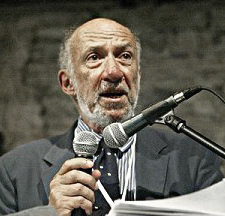
By Richard Falk
Pope Francis’ visit to the Holy Land raises one overwhelming question: What is the nature of religious power in our world of the 21st century? Can it have transformative effects’?
Media pundits and most liberal voices from the secular realm approve of this effort by Francis to seek peace through the encouragement of reconciliation, while dutifully reminding us that his impact is only ‘ceremonial’ and ‘symbolic’ and will not, and presumably should not, have any political consequences beyond a temporary cleansing of the political atmosphere.
The June 6th prospect of Mahmoud Abbas and Shimon Peres praying together in the Vatican as a step toward a peaceful end of the long struggle is, I fear, an ambiguous sideshow. For one thing, Peres as President of Israel is about to leave the office, and in any event, his position exerts no discernible influence on the head of state, Benjamin Netanyahu, or the approach taken by Israel in addressing Palestinian concerns.
It has long been appreciated that Peres is less than he seems, and beneath his velvet globe is a steel fist. Also, Abbas, although the formal leader of the Palestinian Authority and Chair of the PLO, is a weak and controversial leader who has yet to establish a unity government that includes Hamas, and finally provides political representation for the long suffering population of the Gaza Strip within global venues.
Yet it would be a mistake to ignore the significance, symbolically and materially, of what Pope Francis’ visit to Palestine heralds. Read the rest of this entry »
Posted in Culture, Culture & religion, Democracy - local & global, Ethics and values, Israel/Palestine, Middle East, Nonviolence, Reconciliation & forgiveness, Reflections, essays & more, Richard Falk |  Tags: apartheid, John Kerry, legitimacy war, Mahmoud Abbas, Palestine, PLO, Pope Francis, Shimon Peres, the Vatican |
No Comments »
Tags: apartheid, John Kerry, legitimacy war, Mahmoud Abbas, Palestine, PLO, Pope Francis, Shimon Peres, the Vatican |
No Comments »
Citizenship in the 21st century – reforms versus radical structural change
By Richard Falk
[ This post was previously published online at the website of the Global Transition Initiative, which is dedicated to promoting “Transformative Vision and Praxis.” It responds to an essay on global citizenship written by Professor Robert Paehlke, who cogently advocates the formation of a Global Citizens Movement, including indicating how it might become effective.
What seems important about such dialogue is the recognition that given the realities of this historical period, it is increasingly necessary for political thought and action to proceed by reference to human interests as well as being responsive to national, local, ethnic, and religious interests and values. A feature of modernity that is being rightly questioned from many angles is the presumed radical autonomy of human interests, especially the modernist illusion that the co-evolutionary dependence on nature and the environment was being superseded by the marvels of technological innovation.
One way back to the future is to rethink political community – its boundaries and essential features – from the perspectives of participants, with citizenship being the secular signature of belonging and engagement, and ultimately, the sustainability not just of the community, but of the species. ]
Reading Robert Paehlke’s carefully crafted essay on global citizenship provides the occasion both for an appreciation of his approach and some doubts about its degree of responsiveness to the urgencies of the present or more specifically its adequacy in relation to the call for ‘transformative vision and praxis’ that lies at the heart of the ‘Great Transition Initiative.’
Paehlke is on strong ground when he ventures the opinion that the planetization of citizenship is an indispensable precondition for the establishment of global governance in forms that are both effective and fair. His insistence that global governance to be legitimate must address ethical issues as well as functional ones associated with sustainability is certainly welcome. He is also persuasive in advocating the formation of a global citizens movement (GCM) that takes advantage of the networking and mobilizing potential of the Internet, combining an initial focus on local challenges while nurturing a global perspective.
His deepest sympathies clearly lie with a pluralistic and decentralized GCM that operates, at least for the foreseeable future, without leaders or a common program of action, and as such is likely in his words to be “less threatening” to the established order (p.3). But here is where my analysis and prescriptive horizons departs from his: if a transformative global movement is to emerge from current ferment, then it seems strategic to become more threatening, not less. Flying below the radar is not the kind of praxis that will awaken the human species from its long and increasingly dangerous world order slumber. Read the rest of this entry »
Posted in Academia and science policies, Conflict and war, Democracy - local & global, Development, Economics, Environmental concerns, Ethics and values, Future perspectives, Global economics, Global trends & events, Nonviolence, Nuclear weapons, Peace, Political, Pro-peace & proposals, Reflections, essays & more, Richard Falk, UN matters, World order/governance |
No Comments »