Archive for the ‘US Empire’ Category
Sover du gott efter detta, Bildt?
 January 5th, 2013 |
  Author:
 Av Sören Sommelius
De svenska stridsflygplan som sattes in i Libyen borde användas till att också angripa mål på marken i offensiv krigföring. Det tyckte Folkpartiets militante ledare Jan Björklund, när den svenska insatsen i Libyen diskuterades i mars 2011.
Så blev det dessbättre inte. Men Sverige deltog, med brett parlamentariskt stöd, i ett krig som efteråt alltför lite har ifrågasatts. Sverige svarade för en fjärdedel av flygspaningen för att lokalisera bombmål.
Kriget kallades ”humanitär intervention” och genomfördes av Nato med stöd av FN-resolution nummer 1 973.
Men i själva verket var det inget annat än ett traditionellt kolonialkrig, sammanfattar den norske fredsforskaren Ola Tunander i sin bok Libyenkrigets geopolitik, som är en svidande genomgång av krigets förutsättningar och konsekvenser. Det här är en bok som politiker som Björklund och Bildt borde läsa. Om de gör det tvivlar jag på att de kommer att sova gott efteråt. Read the rest of this entry »
To an Unknown Iraqi
2013 is the year that accountability and Justice for Iraq should be high on the agenda of the International Human Rights Community. Hans C. von Sponeck, member of the BRussells Tribunal, who resigned as Humanitarian Coordinator for Iraq in 2000, wrote a moving apology letter to the Iraqi people in June 2003. We republish this letter again today.
By Hans von Sponeck

What we have done to you in the name of freedom and democracy has no parallel in history. We have trampled the truth concerning your suffering, we endeavoured to solicit allies through bribery and ruthlessly marginalized those who objected to our imperial intentions. Brute force became the substitute for the promise of 1945 “to save future generations from the scourge of war”. It was you who paid the price.
Will you ever forgive us?
The torture of dictatorship was terrible for you; we added the sword of sanctions. The curse of double punishment for something you had not done was the verdict against you. Two million of you died during those years, perhaps more. The figure does not really matter. None should have died because of us; everyone had the right to live, as we do, in peace. Let us not forget the many who are still alive may never live again, maimed and traumatized forever, reduced to empty human shells. We never really wanted to share with you the dream of freedom and democracy. All we were willing to pass on to you was naked hypocrisy. Read the rest of this entry »
What to do instead of bombing Iran?
By Jan Oberg
– A lecture at the World Peace Academy in Basel, Switzerland with words and photographs from his recent visit to Iran
 Posted in Iran, Jan Oberg, Nonviolence, Nuclear weapons, Pro-peace & proposals, US Empire, Videos, Violence-prevention |
  No Comments »
The last opportunity for peace in Afghanistan
By Jonathan Power
In Afghanistan the coalition of Western armed forces has lost 3,000 soldiers during its 10 years of war. In comparison the Soviet Union lost 15,000 during its 9 year long war between 1979 and 89. The Soviet Union politically had not much to show for it and it is a safe bet to say that the US and their NATO allies, unless they pull their finger out, will not have much on the political front to show for it by the time they complete in 2014 the withdrawal that has already begun.
As did the Soviet Union the US and NATO will leave behind better roads, schools, health clinics and the rest. In fact the last few years there has been a remarkable increase in Afghanistan’s growth rate with infant mortality falling fast and the number of children being educated rising rapidly but politics has a habit in Afghanistan of short-changing humanitarian gains.
But does this have to be so? Read the rest of this entry »
U.S. encirclement of China
By Jonathan Power
Not since early Cold War days when the US and NATO effectively
encircled the Soviet Union, feeding Stalin’s paranoia, has America
moved to be so profoundly counterproductive. It is now beginning to
encircle China- at least that is how China is seeing it.
Of course “encircling” is a bit of an exaggerated notion since the
Soviet Union was too large ever to be totally encircled. Likewise
today China is content with the state of affairs on its long Russian,
Mongolian and North Korean borders. But “encircling” does suggest a
process.
Why of all people is President Barack Obama initiating this? We may
not know the answer to that but we do know what he is doing. Read the rest of this entry »
Can U.S. Citizens End Israel’s Legal Impunity?
By Stephen Zunes
Each time international law has attempted to censure Israel for its recent violations of human rights, the United States has stepped in to stop the process. If anyone is in a position to do something about this, it’s the U.S. public.
The great wish of the early Zionist leader Theodor Herzl was that Israel would be treated like “any other state.” Were that the case, there might be more rational and productive discourse regarding the Israeli-Palestinian conflict, which is particularly critical in light of Israel launching yet another devastating attack against civilian-populated areas of nearby Arab lands.
What we are witnessing from the Obama administration, however is the unfair phenomenon of exempting Israel from criticism.
There are certainly those who do unfairly single out Israel, the world’s only predominantly Jewish state, for criticism. There is a tendency by some to minimize Israel’s legitimate security concerns and place inordinate attention on the Israeli government’s transgressions, relative to other governments that abuse human rights. There are also those who, in light of the five-year siege of the Gaza Strip and the enormous suffering of the Palestinian people, try to rationalize terrorism and other crimes by Hamas, the reactionary Islamist group currently in control there.
What we are witnessing from the Obama administration, however—as Hamas rains rockets into Israel and Israel rains bombs, missiles, and mortars into the crowded and besieged Gaza Strip—is the similarly unfair phenomenon of exempting Israel from criticism. While most of the international community has criticized both Hamas and Israel for their attacks on areas populated by civilians, the Obama administration has restricted its condemnation to the Palestinian side. Read the rest of this entry »
Posted in International law, Israel/Palestine, Middle East, Stephen Zunes, US Empire |
No Comments »
Abetting murder in Gaza
By Stephen Zunes
The November 22 ceasefire between Israeli and Hamas forces is a huge relief for the civilian population on both sides—the primary victims of the conflict. But the Obama administration’s unconscionable decision the previous week to block a ceasefire effort by the UN Security Council not only resulted in additional civilian deaths but also serves as an indication that, despite the president owing his re-election to the hard work of his progressive base, his foreign policy will continue to lean to the right.
The draft resolution blocked by the United States explicitly condemned all acts of terrorism and violence towards civilians, reaffirmed the right of all states to live in peace within secure and recognized borders, and called for an immediate and durable ceasefire. It reiterated that the Israeli-Palestinian conflict could only be resolved through peaceful means and called for an immediate resumption of a substantive bilateral negotiating process between Israel and the Palestinian Authority. Read the rest of this entry »
Posted in International law, Israel/Palestine, Middle East, Stephen Zunes, US Empire |
No Comments »
The Gaza ceasefire: An early assessment
By Richard Falk
The Gaza Ceasefire, unlike a similar ceasefire achieved after Operation Cast Lead four years ago, is an event that has a likely significance far beyond ending the violence after eight days of murderous attacks. It is just possible that it will be looked back upon as a turning point in the long struggle between Israel and Palestine. Many have talked about ‘the fog of war,’ but it pales besides the ‘the fog of truce making,’ and in our media-infected air, the outcomes along with conjectures about the future are already being spun in all possible directions.
Supporters of every position give their own spin, and then proclaim ‘victory.’ But as with the violent phases of the conflict, it is clarifying to distinguish the more persuasive contentions and interpretations from those that are less persuasive. What follows is one such attempt at such clarification. Read the rest of this entry »
Cultivating peace, preventing violence
By Johan Galtung
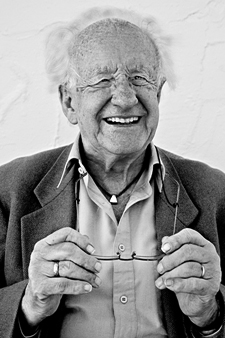
… was the title of the Symposium at Virginia Tech in Blacksburg, Virginia-USA 17-19 Nov 2012. An example of the blossoming wave of peace studies all over the US; inter-disciplinary and international. Most papers were given by very promising students on most aspects of peace studies. It is inconceivable that this will not have a major impact on US foreign policy in a generation or so, particularly with the demographic shift from the WASP (White Anglo-Saxon Protestant) males voting Romney to the negations of all of that, including Blacks, Latins and women voting Obama. And with that shift the idea of a Chosen People with a Promised Land and a Covenant with the Almighty making them exceptional and indispensable, above the law of ordinary states, will slowly die. Read the rest of this entry »
A change in Washington ? (1)
By Johan Galtung
From Washington, DC on Election Night
One of them won, of course, even if the real winners as usual were the non-voters, for whatever reason: men more than women. About 23:15 Obama passed the magic 50 percent mark, not of popular votes but of electoral colleges, with 302-206, well above 270; it turned into a landslide. Net result: status quo, no change.
The media did their best to make the presidential election look important, being the pinnacle, the altar on which democracy is built. Some democracy. Bad enough with a Supreme Court washing the process in six billion dollars as one more freedom of expression like talking words; any kind of words, libelous, often neither true nor relevant. Stupid TV spots. But many issues were somehow articulated, there were real disagreements, there was some kind of rhetorical left-right. Read the rest of this entry »