Archive for the ‘US Empire’ Category
Obama, Romney, and the foreign policy debate
 October 24th, 2012 |
  Author:
 By Stephen Zunes
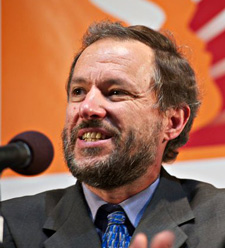
Perhaps the most disturbing aspect of the third and final presidential debate of the 2012 campaign was the similarity between the two candidates on many basic foreign policy issues. Part of the reason is that, as he did in the first two debates, GOP candidate Mitt Romney reversed himself on a number of extreme right-wing positions he had taken earlier in a desperate effort to depict himself as a moderate. At the same time, Obama’s hawkish stances served as yet another reminder of just how far to the right Obama has evolved since running as an anti-war candidate just four years ago.
Indeed, Romney’s perceived need to lie about Obama’s record and his reluctance to provide much in the way of specific policy alternatives is indicative of how little difference there actually is between the two when it comes to the U.S. role in the world.
Both candidates agree on American exceptionalism, as exemplified by Obama’s insistence that “America remains the one indispensable nation.” Read the rest of this entry »
Obama is a great success
By Jonathan Power
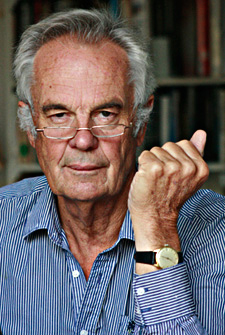
Bar Martin Luther King, Barack Obama is the finest political orator in America’s living memory. His supporters are dumbstruck that in his debate with his challenger for the November 6th vote for the presidency his performance was so weak. He didn’t even mention Mitt Romney’s absurd statement that he has written off 47% of Americans because they depend on some sort of government handouts.
Hopefully Obama can recover this lost ground in the next two debates, one on domestic policy, the other on foreign affairs. Read the rest of this entry »
Sociocide, Palestine and Israel
By Johan Galtung
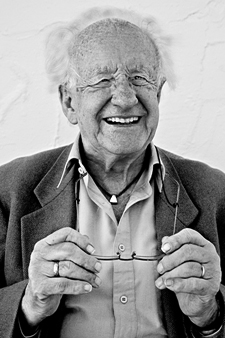
Testimony for Russell Tribunal on Palestine – New York City, 7 Oct 2012
Honorable Members of the Jury!
Sociocide is a new concept that has not found its place in positive international law. But Genocide, the unspeakable crime of massive killing of members of a genus, a nation, for no other reason than membership, has. And Ecocide, the unspeakable crime of killing Mother Earth who nourishes us all, is finding its place via the constitutions of some countries in Latin America.
Sociocide, the killing of a society’s capacity to survive and to reproduce itself, should become equally and prominently a crime against humanity. Read the rest of this entry »
Reflections on the Cuban Missile Crisis at fifty
By David Krieger
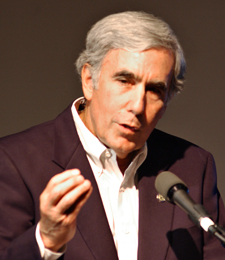
Fifty years ago this month, the world teetered on the precipice of a nuclear war between the US and Soviet Union during the 13-day Cuban Missile Crisis. We were fortunate to have survived that crisis, thanks largely to the restraint shown by President Kennedy and Premier Khrushchev.
Now, fifty years later, there is no immediate crisis such as that in 1962 over Soviet nuclear-armed missiles being placed in Cuba. There are, however, still some 19,000 nuclear weapons in the arsenals of nine nuclear-armed nations: the US, Russia, UK, France, China, Israel, India, Pakistan and North Korea. Approximately 95 percent of these weapons are in the arsenals of the US and Russia. Some 2,000 of them are kept in a state of high alert, ready to be immediately launched upon an order to do so at any moment of any day or night. Read the rest of this entry »
Notes from three weeks in China
By Richard Falk
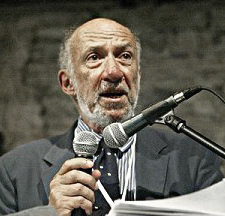
After three weeks in China I have returned to the United States yesterday before departing for Turkey and Rhodes later today. I mention this to explain my failure to post during this period or to comment or monitor comments on the blog.
This failure was not due to a lack of access to the Internet or even finding time during a busy travel schedule. It was due to my lack of skill in circumventing what is known as ‘The Great Firewall of China’ that blocks entry to most blogs, Facebook, Youtube, Twitter, as well as assorted other sites. Sophisticated Chinese know how to circumvent, and the authorities do not seem to mind, as the blockade is apparently intended to limit access on the part of ordinary Chinese. This is true of the Chinese media generally, which is highly regulated, especially TV, giving only official views, although the English language dailies, which are quite informative are more objective, and do not read as propaganda. Read the rest of this entry »
 Posted in China, Development, Media & conflict, Richard Falk, US Empire, World order/governance |
  No Comments »
A day of peace for the Americas
By Johan Galtung
From Puebla, México – Universidad de las Americas, 21 Sep 2012
Today is the 2012 day of peace as resolved by the UN General Assembly (Resolution 55/282, 2001; following resolution 56/37, 1981). A day of cease-fire and nonviolence, but open to all peace themes.
And that brings us straight to the key problem in the theory and practice of peace:
Are we thinking of the negative peace of cease-fire and no violence (as distinct from nonviolence), or are we thinking of the positive peace of cooperation for mutual and equal benefit, empathy for emotional harmony, reconciliation of past traumas, and resolution capacity for endless agenda of future conflicts? Read the rest of this entry »
Embassy protests and Middle East unrest in a context
By Stephen Zunes
It seems bizarre that right-wing pundits would be so desperate to use the recent anti-American protests in the Middle East—in most cases numbering only a few hundred people and (except for a peaceful Hezbollah-organized rally in Lebanon) in no cases numbering more than two or three thousand—as somehow indicative of why the United States should oppose greater democracy in the Middle East. Even more strangely, some media pundits are criticizing Arabs as being “ungrateful” for U.S. support of pro-democracy movements when, in reality, the United States initially opposed the popular movements that deposed Western-backed despots in Tunisia, Egypt, and Yemen, and remains a preeminent backer of dictatorships in the region today.
Meanwhile, Mitt Romney falsely accused President Obama Read the rest of this entry »
Posted in Arab Spring, Middle East, Stephen Zunes, US Empire, US politics & security |
No Comments »
The case against war: Ten years later
By Stephen Zunes
Ten years ago, I wrote a series of articles for the Foreign Policy in Focus website in which I put forth a series of arguments against the Bush administration’s push for a U.S. invasion of Iraq prior to the fateful congressional vote authorizing the illegal, unnecessary, and ultimately disastrous war. At the request of the editors of The Nation – the oldest continually published weekly magazine in the United States – I wrote a version entitled “The Case Against War,” which appeared on their website September 12, 2002 and as the cover story of the September 30 issue. It became one of the most widely circulated articles in the magazine’s 147-year old history. Every congressional office received multiple copies. Read the rest of this entry »
Attacking Iran: Disaster for the region and the whole world
By Johan Galtung
The Israeli attack seems imminent. Richard Silverstein circulates a leaked “shock and awe” strategy of Benjamin Netanyahu / Ehud Barak hard zionism to decapitate, paralyze Iran; and Alon Ben‑Meir (an expert on Middle East politics specializing in peace negotiations between Israel and Arab states) says Israel is not bluffing. Israel may prefer an attack with the USA (Romney? Obama after elections?), but may go alone. Some people believe the nuclear bomb story, others believe that the purpose is Israel as a Jewish state from the Nile to the Euphrates, also promoted by Netanyahu’s late father. The two stories do not exclude each other.
Iran is a Shanghai Cooperation Organization-SCO observer. An attack will trigger responses from the Russia‑China core. What Israel may gain in Saudi Sunni support they may lose in more important parts of the world, in diplomatic and economic relations. The SCO is huge.
There is also the real danger of a world war of NATO against SCO, with nuclear powers divided 4‑4; USA‑Israel being indivisible as they came into being in the same way: by taking somebody else’s land.
Iranian devastating responses will come before decapitation. Read the rest of this entry »
U.S. shares responsibility for Rachel Corrie’s death
By Stephen Zunes
On August 28, an Israeli court rejected a civil lawsuit against Israeli occupation forces for the 2003 murder of Rachel Corrie, a 23-year old American peace activist killed in the Gaza Strip, upholding a severely flawed internal Israeli military investigation.
Amnesty International strongly condemned the decision, noting how “the verdict continues the pattern of impunity for Israeli military violations against civilians and human rights defenders in the Occupied Palestinian Territories (OPT). The verdict shields Israeli military personnel from accountability and ignores deep flaws in the Israeli military’s internal investigation of Corrie’s death.” Read the rest of this entry »