Archive for the ‘US Empire’ Category
Guatemala’s murderous past and this month’s belated justice
 August 31st, 2012 |
  Author:
 By Jonathan Power
Guatemala’s claim to fame, apart from the ruins of the highly sophisticated Mayan civilization which present generations had nothing to do with, is that it is the country with the worst human rights record in the twentieth century among all the countries in the western hemisphere.
I recall once going to interview the then secretary-general of Amnesty International, Thomas Hammarberg, and asking him the country I should visit that had the worst human rights record in the world. He said “Guatemala”. I then asked how many political prisoners did it have. (Amnesty has a well tried and successful system of adopting political prisoners and then showering the authorities with demands they be released.) He replied “There are no political prisoners only political killings”. Read the rest of this entry »
 Posted in Human rights and justice, Jonathan Power, South America, Terrorism, US Empire |
  No Comments »
Toward a new geopolitics?
By Richard Falk
During the Cold War the main geopolitical optic relied upon by policymakers and diplomats was associated with a bipolar structure of hard power. There were supposedly two superpowers with overwhelming military capabilities compared to all other sovereign states, and each controlled an alliance of subordinate states that staked their survival on global crisis management and territorial containment skills of either the United States or the Soviet Union.
This framework was an extreme version of the balance of power system that had sustained global order in the West with mixed results during prior centuries. The Cold War nuclear version of the balance of power was frighteningly vulnerable to accident or miscalculation creating a lingering illusion that the current possession of nuclear weaponry on the part of nine sovereign states is a tolerable and stable situation in global affairs. Read the rest of this entry »
The Hexagon map of the multipolar world
By Johan Galtung
How do we come to grips, intellectually, with today’s world?
Some time ago the geopolitical map was based on the direct East-West conflict, the two superpowers USA/USSR with alliances, and the neutral-nonaligned treated as a residual category. The world was Bipolar. The implosion of the USSR made it Unipolar, “the only surviving superpower”, 2-1 = 1. Or so we were told.
Today we have four huge states: the three largest in population, China-India-USA, and the largest in area, Russia. And the EU, a region with five middle-range states: UK-France-Germany-Italy-Spain.
But there is one more pole on the geopolitical map: Islam. Read the rest of this entry »
Humanitarian military intervention in Syria – and who is behind the atrocities?
By Michel Chossudovsky, TFF Associate
August 8, 2012
We choose in this case to publish just the link to Chossudovsky’s article in which there are plenty of notes to valuable sources; we want to ensure that you can get the benefit of them all.
Jan Oberg
TFF Blog Editor
The politics of the economic crisis – class warfare
By Johan Galtung
From Jondal, Norway
Writes Eduardo Porter on The New York Times:
“Perhaps the most surprising aspect of the Libor scandal is how familiar it seems. Sure, for some of the world’s leading banks to try to manipulate one of the most important interest rates in contemporary finance is clearly egregious. But is that worse than packaging billions of dollars worth of dubious mortgages into a bond and having it stamped with a Triple-A rating to sell to some dupe down the road while betting against it? Or how about forging documents on an industrial scale to foreclose fraudulently on countless homeowners?”
A useful summary of the situation as of today. But, a summary of what? What is this?
We have been through many answers starting with credit squeeze, then a real estate bubble that burst, toxic assets, credit swaps, hedge funds, derivatives – bets with the money of other people, yours and mine – all finance and banking. A psychologism was added at an early stage; greed. Read the rest of this entry »
A brief further comment on Syria
By Richard Falk
Some of the sharpest critics of my posts contend that I focus too much attention on Israel while exempting the far worse Syrian regime from any sort of harsh condemnation. In fact, I did write a post devoted to the Syrian situation on May 31, 2012 in which I referred to the criminal character of the Assad regime and pointed to such bloody deeds (Crimes Against Humanity) as the Houla massacre that had occurred a few days before. In my mind, there is no doubt that the behavior of the ruling clique in Damascus is genocidal, and should be condemned and appropriate international action undertaken to protect the people of Syria.
But what is appropriate in such a situation is far from self-evident. Read the rest of this entry »
Towards a Gandhian geopolitics: A feasible utopia?
By Richard Falk
There has been serious confusion associated with the widespread embrace of ‘soft power’ as a preferred form of diplomacy for the 21st century. Joseph Nye introduced and popularized the concept, and later it was adopted and applied in a myriad of settings that are often contradictory from the perspective of international law and morality.
I write in the belief that soft power as a force multiplier for imperial geopolitics is to be viewed with the greatest suspicion, but as an alternative to militarism and violence is to be valued and adopted as a potential political project that could turn out to be the first feasible utopia of the 21st century. Read the rest of this entry »
Posted in Conflict and war, Nonviolence, Peace, Political, Richard Falk, US Empire, World order/governance |
No Comments »
Pakistan’s schizophrenia
By Jonathan Power
Pakistan is a country that seems sometimes to be on the verge of collapse- a scenario that frightens the US, Europe, India, Russia, China and the countries of the Middle East. All fear that Pakistan’s nuclear arsenal might fall into the hands of Taliban militants.
Pakistan’s political and religious problems are rather like a Russian doll. You open one doll and there is another inside and so it goes on until the smallest doll is revealed six dolls later. Moreover, in Pakistan each doll has its complications and contradictions. Sometimes this makes the country’s policies hard to read.
Self-interest is usually the aim of every state. Yet Pakistan seems to be continuously shooting itself in the foot. Read the rest of this entry »
NATO nukes forever! Or?
By Gunnar Westberg, TFF Board member
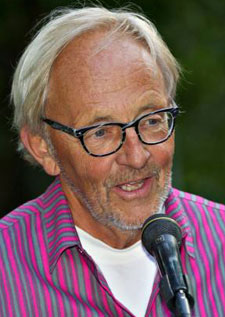
In 1984 we, a group from IPPNW Sweden, met with the Norwegian general Tönne Huitfeldt, at that time Chief of the military Staff of NATO. He was a man with great confidence in himself and in the military system. “General Huitfeldt”, we asked, “when you work with your scenarios in the NATO Headquarters, with the destruction of the world through a nuclear world war looming as the outcome, are you not scared?”. “Oh no, never”, he said. “the Russians are as rational as we are. They will never let it go too far. I am never scared”.
Well, we were. And are. Read the rest of this entry »
U.S. military suicides and Palestinian hunger strikes
By Richard Falk
There is some awareness in the United States that suicides among American military personnel are at the highest level since the years of the Vietnam War. It is no wonder.
The sense of guilt and alienation associated with taking part in the Afghanistan War, especially multiple postings to a menacing war zone for a combat mission that is increasingly hard to justify and almost impossible to carry out successfully, seems sufficient to explain such a disturbing phenomenon.
These tragic losses of life, now outnumbering battlefield deaths, about one per day since the start of 2012, are not hidden from the American public but nor do they provoke an appropriate sense of concern, or better, outrage. Read the rest of this entry »