Archive for the ‘Nuclear weapons’ Category
TFF PressInfo: “The human price of the war on Iraq” Hearing Statement
 July 10th, 2014 |
  Author:
 Comments by Hans-C. von Sponeck
Former UN Assistant Secretary General, UN Humanitarian Coordinator for Iraq & TFF Associate
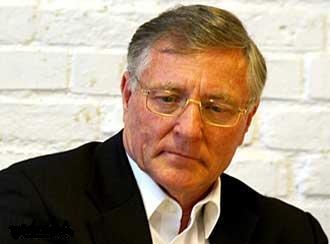
Hearing at the UK House of Commons, London June 10, 2014
Intro
1. HoC/HoL have repeatedly held Iraq hearings as have British NGOs such as CASI (Campaign Against Sanctions on Iraq) and Stop the War Coalition/UK. In Europe these are considered models for responsible public action.
2. My contribution at this hearing is not about the crimes of dictatorship or the details of Iraqi suffering. For both well researched data is available. The objective of my participation is to make two detailed observations about externally-driven Iraq politics during the period 1990-2014.
Observation 1
3. Today’s tragic Iraq reality can only be understood if the additive impact of the years before and the years following the US/UK Governments’ illegal invasion and occupation is fully taken into account. Read the rest of this entry »
 Posted in Culture, Culture & religion, Democracy - local & global, Development, Ethics and values, Hans von Sponeck, Human rights and justice, International law, Iraq, Media perspectives, Middle East, Nuclear weapons, Peace, Psychology - war & peace, Sanctions, Terrorism, TFF PressInfo, UN matters, US Empire, Violence-prevention, World order/governance |
  Tags: Abu Ghraib, Dato Agam Hasmy, Denis Haliday, destruction in Iraq, Geneva Conventions, humanitarian program, illiteracy in Iraq, Iraq compensation, Iraq poverty, Iraq sanctions, Kuala Lumpur War Crimes Commission (KLWCC), Kurdish-Arab divide, Oil for Food, Sir John Chilcot, Tony Blair, UN Compensation Committee, UN Security Council, UNICEF, US/UK war on Iraq, war criminals, Western war criminals, World Bank |
  No Comments »
Worse world or better world?
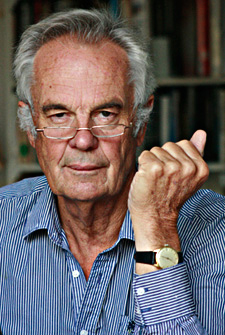
By Jonathan Power
War is all over the place. It seems. Not just Syria and Iraq but now inside Pakistan. Not to mention Somalia and Sudan. Yet paradoxically there has never been less war.
Sweden’s Uppsala University Conflict Data program is about to publish its results for 2013. It reports that the number of conflicts in the world increased by one between 2012 and 2013 – pace all the press and TV coverage which sometimes gives the impression that half the world is going up in smoke.
Since the Cold War ended the number of conflicts claiming more than 1,000 deaths has declined by 50%. There were 15 conflicts of this size in the early 1990s. Today there are only seven.
In 2013 six peace agreements were signed – which is two more than the year before.
The number of democratic countries was 69 at the end of the Cold War. Today there are around 120. The number of autocracies has declined in that time from 62 to 48.
The American foreign policy elite appears unaware of these trends. Read the rest of this entry »
Posted in Democracy - local & global, Development, Disarmament, Environmental concerns, Future perspectives, Global trends & events, Jonathan Power, Media perspectives, Nuclear weapons, Pro-peace & proposals, Russia, Security and defence, UN matters, US Empire, World order/governance |
No Comments »
Do Russia and China threaten the West?
By Jonathan Power
In recent months the scare-mongers have been at it again – Russia’s foray into Ukraine and China’s behaviour in the South China Sea have set their alarm bells ringing. But why?
Big power politics is not back. Indeed in the round it is rather subdued. Take the Russian-EU-US fracas over Ukraine at the moment. Does this compare with the Cold War when the West prepared itself for a Russian invasion of Europe, nuclear missiles were targeted on each other, and when the Soviet Union along with the US stirred up proxy civil wars in Central America and Africa?
Do the US and NATO fear such threats as these today? Of course not. Critics of President Barack Obama and denigrators of President Vladimir Putin badly need a sense of perspective. Read the rest of this entry »
Citizenship in the 21st century – reforms versus radical structural change
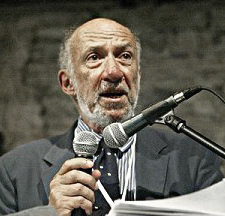
By Richard Falk
[ This post was previously published online at the website of the Global Transition Initiative, which is dedicated to promoting “Transformative Vision and Praxis.” It responds to an essay on global citizenship written by Professor Robert Paehlke, who cogently advocates the formation of a Global Citizens Movement, including indicating how it might become effective.
What seems important about such dialogue is the recognition that given the realities of this historical period, it is increasingly necessary for political thought and action to proceed by reference to human interests as well as being responsive to national, local, ethnic, and religious interests and values. A feature of modernity that is being rightly questioned from many angles is the presumed radical autonomy of human interests, especially the modernist illusion that the co-evolutionary dependence on nature and the environment was being superseded by the marvels of technological innovation.
One way back to the future is to rethink political community – its boundaries and essential features – from the perspectives of participants, with citizenship being the secular signature of belonging and engagement, and ultimately, the sustainability not just of the community, but of the species. ]
Reading Robert Paehlke’s carefully crafted essay on global citizenship provides the occasion both for an appreciation of his approach and some doubts about its degree of responsiveness to the urgencies of the present or more specifically its adequacy in relation to the call for ‘transformative vision and praxis’ that lies at the heart of the ‘Great Transition Initiative.’
Paehlke is on strong ground when he ventures the opinion that the planetization of citizenship is an indispensable precondition for the establishment of global governance in forms that are both effective and fair. His insistence that global governance to be legitimate must address ethical issues as well as functional ones associated with sustainability is certainly welcome. He is also persuasive in advocating the formation of a global citizens movement (GCM) that takes advantage of the networking and mobilizing potential of the Internet, combining an initial focus on local challenges while nurturing a global perspective.
His deepest sympathies clearly lie with a pluralistic and decentralized GCM that operates, at least for the foreseeable future, without leaders or a common program of action, and as such is likely in his words to be “less threatening” to the established order (p.3). But here is where my analysis and prescriptive horizons departs from his: if a transformative global movement is to emerge from current ferment, then it seems strategic to become more threatening, not less. Flying below the radar is not the kind of praxis that will awaken the human species from its long and increasingly dangerous world order slumber. Read the rest of this entry »
Posted in Academia and science policies, Conflict and war, Democracy - local & global, Development, Economics, Environmental concerns, Ethics and values, Future perspectives, Global economics, Global trends & events, Nonviolence, Nuclear weapons, Peace, Political, Pro-peace & proposals, Reflections, essays & more, Richard Falk, UN matters, World order/governance |
No Comments »
TFF PressInfo: Psyko-politik i tiden för imperiets nedgång
Av Jan Öberg
Lund , Sverige – 23 maj 2014
Tiden för rationell politik, om begreppet någonsin funnits, är över .
”Realpolitik” har blivit en blandning av marknadsförda ord, propaganda och ledare som gör uttalanden som gränsar till absurd teater. Tunnare och tunnare länkar till Realiteten.
Detta är vad som händer när man förnekar nedgången.
Alla imperier går ner. Det amerikanska imperiet är på nedgång. Makrohistoriker (se t.ex. British Arnold Toynbee’s 12–volymarbete 1934-1961) berättar att det finns många skäl till att imperier faller:
• militarism med konstant krigföring;
• överutvidgning – försöka kontrollera mer än vad du kan hantera;
• förlust av legitimitet i andras ögon;
• strukturella ekonomiska kriser;
• moraliskt förfall;
• förlust av intellektuell och teknisk innovation;
• andra maktstrukturer ökar i styrka över tid och göra saker på nya, kreativa sätt .
Efter 1945 ansågs USA vara starkt på en rad olika maktdimensioner: militär, ekonomi, politik, legitimitet, kultur, innovation. Idag är de bara nummer ett på den militära dimensionen. När alla andra indikationer går ner, blir militären en stor börda som bara accelererar nedgången.
USA är på tillbakagång och i förnekelse. Så är även de flesta av dess allierade och sympatisörer .
Deras utrikes politiska beslutsfattare verkar tro att allt är bra och de kan ändå leda och forma världen enligt deras intresse och världsbild. Det är fortfarande i grunden en missionär .
Här är några delar av vad den består av: Read the rest of this entry »
Posted in Academia and science policies, Conflict and war, Culture, Democracy - local & global, Development, Ethics and values, Future perspectives, Global trends & events, Jan Oberg, Media perspectives, Military - technology, Nonviolence, NORDIC - NORDISKA artiklar, Nuclear weapons, Pro-peace & proposals, Psychology - war & peace, Reflections, essays & more, Security and defence, TFF PressInfo, US Empire, US politics & security, USA, Violence-prevention, World order/governance |
No Comments »
The mouse that roared
By Gunnar Westberg
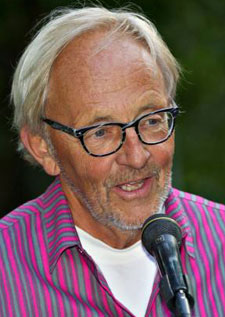
The Mouse that roared was a much acclaimed movie comedy from 1955 in which a small European Duchy tried in vain to get the attention of the USA for a trade conflict. To get the attention of the mighty superpower the Duchy finally declared war on the USA. And to its surprise, won!
The story to be told below is less funny.
The Minister of Foreign Affairs for the Marshall Islands, Mr. Tony de Brum, spoke at the recent conference on the treaty against nuclear weapons, NPT, in New York. He remembered his experience of nuclear weapon tests in his childhood:
– “I have witnessed nuclear weapon explosions and my memories from the Lipiep atoll in Northern Marshall Islands are strong. I lived there as a boy during the 12 years of nuclear testing. I remember the blinding white light from the Bravo test on the Bikini atoll in 1954, a thousand times stronger than that over Hiroshima.
The Marshall Islands was used for 67 nuclear tests between 1946 and 1958, with an explosive yield corresponding to 1.6 Hiroshima bombs every day for twelve years. The consequences are still with us as a burden which no nation, no population, should be forced to bear.” Read the rest of this entry »
Marshallöarna utmanar kärnvapenstaterna
Av Gunnar Westberg
Marshallöarnas utrikesminister Tony de Brum berättade vid den pågående förberedelsekommitténs möte (Prep Com) i FNs-högkvarter i New York, den 28 april till 9 maj 2014 om avtalet mot kärnvapen, NPT, i New York, om sina upplevelser av kärnvapenprov:
Jag har varit vittne till kärnvapenexplosioner och mina minnen från Lipiep-atollen i norra Marshallöarna är starka. Jag bodde där som pojke under de 12 åren som kärnvapenproven pågick. Jag minns det bländande vita ljuset från Bravo-sprängningen på Bikini-atollen år 1954, tusen gånger starkare än den över Hiroshima.
Marshallöarna utsattes för 67 kärnvapenprov mellan 1946 och 1958, motsvarande 1,6 Hiroshima-sprängningar varje dag I tolv år. Följderna finns kvar hos oss som en börda som ingen nation, ingen befolkning, skulle behöva bära.
Marshallöarna förvaltades vid tiden för kärnvapensprängningarna av USA under FN-mandat. Nu är landet självständigt med namnet Republiken Marshallöarna, som omfattar ett stort antal öar med en befolkning av totalt endast 60 000 personer. Landet ar ett avtal med USA som bl a innebär att USA står för försvar och vissa sociala tjänster.
Marshallöarna tar nu strid för att inget land i världen skall utsättas för kärnvapen, inte testsprängningar men framför allt inte kärnvapenkrig. Read the rest of this entry »
Posted in Abolition, Democracy - local & global, Disarmament, Foreign and security politics, Future perspectives, General issues, Gunnar Westberg, Human rights and justice, International law, Nonviolence, NORDIC - NORDISKA artiklar, Nuclear Free Zones, Nuclear weapons, Pro-peace & proposals, Sweden, US Empire, USA, World order/governance |
Tags: Bravo, Hague, Marshall Islands, NPT |
No Comments »
TFF PressInfo: GCC Military Command or a More Open Society
By Farhang Jahanpour*
Short e-mail PressInfo version here.
Saudi Military exercises
On 30th April 2014, Saudi Arabia staged its largest-ever military exercises codenamed “Abdullah’s Shield” after the kingdom’s 91-year old ruler and coinciding with the ninth anniversary of his ascension to the throne. The exercises involved 130,000 Saudi troops and showcased some of the latest weapons purchased by the kingdom from the United States and China, including the Chinese CSS-2 intermediate-range ballistic missiles with a range of 2,650 kilometers (1,646 miles) which are capable of carrying nuclear warheads. The Chinese version of these missiles is already equipped with nuclear warheads. This was the first time that these missiles had been seen in public in Saudi Arabia.
Crown Prince Salman presided over the exercises, which were also watched by a number of prominent foreign guests, including King Hamad of Bahrain and more pointedly by Gen. Raheel Sharif, the Pakistani chief of the army Staff. There have been persistent rumors over many decades that in return for Saudi funding of the Pakistani nuclear weapons’ program, Pakistan had committed to provide nuclear warheads for CSS-2 missiles, should Saudi Arabia decide to have them. Earlier in the year when Prince Salman visited Pakistan, he personally invited Gen. Sharif to be his guest at the exercises. Pakistani media stressed the point that Gen. Sharif had gone to Jeddah “on the invitation of Crown Prince Salman bin Abdulaziz al Saud to witness the military exercise…” (1)
With the exception of Bahrain’s ruler, none of the other GCC rulers watched the exercises. The guests included the crown prince of the UAE, the prime minister of Jordan and military commanders from some GCC states, but Qatar pointedly did not send any representatives. This was yet another sign of a growing rift between Saudi Arabia and Qatar.
A unified GCC Command and Monetary Union
At the GCC summit held in Kuwait in December 2013, the Saudis called for a unified GCC military command to have 100,000 forces, half of which would be contributed by the Saudis. (2) However, other GCC members opposed the idea as they saw it as a way of consolidating Saudi domination of other GCC states and affirming Saudi Arabia’s position as the big brother. Many smaller GCC states value their independence, and while they would like to cooperate with other GCC members, they do not wish to be absorbed into a unified military alliance as junior partners. Oman openly expressed its opposition to the proposal and Qatar and Kuwait also followed suit. Read the rest of this entry »
Posted in Arab Spring, Armament, China, Egypt, Farhang Jahanpour, Future perspectives, India-Pakistan, International law, Iran, Iraq, Israel/Palestine, Lebanon, Libya, Middle East, Military - technology, Nuclear weapons, Syria, TFF PressInfo, US Empire, US politics & security, USA, World order/governance |
Tags: Bahrein, Doha, Emirates, Expediency Council, GCC, Golf Cooperation Council, Kuwait, Muslim Brotherhood, New armies - Saudi, Obama, Peninsula Shield Force, Persian Gulf, Qatar, Saudi Arabia, Shiite, Sunni, U.S. Central Command |
1 Comment »
TFF PressInfo: Sverige – inte längre aktör för en bättre värld
Av Jan Öberg
Dr.hc., direktör för TFF
4 maj 2014
Eliten i Sverige är mer lojal mot Nato, USA och EU än mot sitt folk
• Under de senaste 25-30 åren har Sveriges militära, säkerhets- och utrikespolitiska elit vridit Sveriges politik 180 grader.
• Dessa grundläggande förändringar inleddes av den socialdemokratiska regeringen under Göran Persson och utrikesminister Anna Lindh och har genomförts praktiskt taget utan offentlig debatt.
• Omsvängningen till interventionism, militarism och USA/Nato på alla områden har planerats gradvis, i smyg och ohederligt – kort sagt på ett sätt som är ovärdigt en demokrati.
• Denna elit är mer lojal mot Bryssel och Washington än mot svenskarna.
• Om din bild av Sverige är att det är ett progressivt, förnyande och fredsfrämjande land med global inställning som försvarar folkrätten så är den – tråkigt nog – föråldrad.
Hur Sverige har förändrats
Sverige är inte längre neutralt och det är bara formellt alliansfritt; det finns ingen mer närstående bundsförvant än USA/Nato. Landet har upphört att utveckla en egen politik och positionerar istället sig inom ramen för EU och Nato. Landet bidrar inte längre med betydelsefullt nytt tänkande – det sista var Olof Palmes kommission om gemensam säkerhet (1982). Read the rest of this entry »
Posted in Abolition, Academia and science policies, Alternatives - peace, Conflict and war, Democracy - local & global, Disarmament, Ethics and values, Ex Yugoslavia, Foreign and security politics, Future perspectives, Georgia, International law, Iraq, Jan Oberg, Libya, Media & conflict, Media perspectives, Nonviolence, Norden as region, NORDIC - NORDISKA artiklar, Nuclear weapons, Peace, Psychology - war & peace, Russia, Sanctions, Security and defence, Sweden, Syria, TFF PressInfo, Ukraine, UN matters, US Empire, USA, World order/governance |
Tags: Anna Lindh, Carl Bildt, common security, disarmament ambassador, gemensam säkerhet, Göran Persson, interventionism, NATO, neutrality, Olof Palme, Prtnership for Peace, Sweden cruise missiles |
No Comments »
Nonviolent Geopolitics: Law, Politics, and 21st Century Security*
By Richard Falk
In this short essay, my attempt will be to articulate a conception of a world order premised on nonviolent geopolitics, as well as to consider some obstacles to its realization. By focusing on the interplay of “law” and “geopolitics” the intention is to consider the role played both by normative traditions of law and morality and the “geopolitical” orientation that continue to guide dominant political actors on the global stage.
Such an approach challenges the major premise of realism that security, leadership, stability, and influence in the 21st century continue to rest primarily on military power, or what is sometimes described as “hard power” capabilities. [1]
From such a perspective international law plays a marginal role, useful for challenging the behavior of adversaries, but not to be relied upon in calculating the national interest of one’s own country. As such, the principal contribution of international law, aside from its utility in facilitating cooperation in situations where national interests converge, is to provide rhetoric that rationalizes controversial foreign policy initiatives undertaken by one’s own country and to demonize comparable behavior by an enemy state. This discursive role is not to be minimized, but neither should it be confused with exerting norms of restraint in a consistent and fair manner.
My intention is to do three things:
• to show the degree to which the victors in World War II crafted via the UN Charter essentially a world order, which if behaviorally implemented, would have marginalized war, and encoded by indirection a system of nonviolent geopolitics; in other words, the constitutional and institutional foundations already exist, but inert form;
• to provide a critique of the realist paradigm that never relinquished its hold over the imagination of dominant political elites, and an approach has not acknowledged the obsolescence and dangers associated with the war system;
• and, finally, to consider some trends in international life that make it rational to work toward the embodiment of nonviolent geopolitics in practice and belief, as well as in the formalities of international law. Read the rest of this entry »
Posted in Abolition, Academia and science policies, Afghanistan, Armament, Conflict and war, Democracy - local & global, Development, Disarmament, Ethics and values, Future perspectives, General issues, Global trends & events, Human rights and justice, International law, Nonviolence, Nuclear Free Zones, Nuclear weapons, Peace, Pro-peace & proposals, Psychology - war & peace, Reflections, essays & more, Richard Falk, Theories and concepts, Uncategorized, US Empire, US politics & security, USA, Violence-prevention, World order/governance |
No Comments »