Archive for the ‘European Union’ Category
TFF PressInfo: Use Malaysia’s MH17 to make peace instead
 July 21st, 2014 |
  Author:
 By Jan Oberg, TFF director
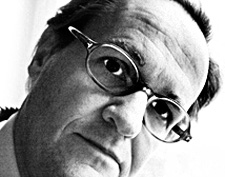
Jan Oberg
Tragic misuse of a tragedy
The government of Ukraine as well as the separatists, NATO/U.S. and very many leading Western mainstream media seem all to know who has caused the tragedy. Putin believes it was caused indirectly by the West.
Given the fact that very few, if any, people or institutions can know who did it with enough details, data and precision to accuse anyone, the MH17 tragedy has been misused to an extent that can itself only be termed tragic.
The misuse is tragic because it is a catastrophe for close to 300 people, their relatives and friends. Silence – of both verbal and military weapons – and empathy would have been appropriate.
Anyone pointing fingers and calling it a terrorist act at this point is irresponsibly or should present convincing evidence.
Secondly, the blame game makes the necessary road to peace and security even more difficult.
An All Party Peace Process should come out of MH17 and the civil war
It would have been so much more civilised to use the MH 17 tragedy to say: Read the rest of this entry »
What was history about? Look at the Histomap
By Johan Galtung
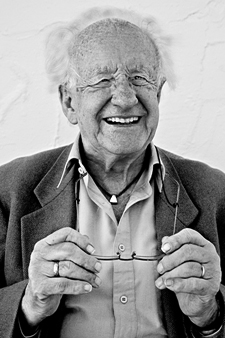
Johan Galtung
John B. Sparks made a histomap in 1931—updated in 2010 (Metro Books) – a long, vertical chart covering “peoples and nations for 4,000 years”.
Time, history, is on the vertical axis, listing when of events and where in the space of peoples and nations. The chart starts with the Chinese, the Indians, Amorites (Babylon), Aegeans (Minoans and Mycenaeans), Hittites (Anatolia), Iranians and Greeks, goes on to the Romans, the British, the Huns (Mongols) and ends with Latin America, Europeans West and East (the EU is absent), the Middle East, sub-Sahara Africa, Russians and Americans, Asia as India, China and Japan; each part proportionate to their significance at the time. Debatable.
But let us focus on something crucial: the shape of the “peoples-nations” bubbles in world history, from a beginning to an end?
By and large exactly like that: a birth somewhere in this Einsteinian timespace, and a death. Two points, and between them: growth-maturity/flourishing-decline and fall. Expansion to a maximum, and contraction to a minimum. The law of anything organic? Given that they often thought they were forever, gifted with eternal life, history is about great expectations, glories–and great traumas. Read the rest of this entry »
 Posted in Buddhism, China, Conflict and war, Culture, Culture & religion, Democracy - local & global, Development, European Union, Future perspectives, Global trends & events, India, India, Japan, Johan Galtung, Middle East, Political, Theories and concepts, Turkey, US Empire, World order/governance |
  No Comments »
Aage Bertelsen (1901 – 1980) – Danish educator for peace
By Jan Oberg & Johan Galtung*
Lund and Kuala Lumpur, July 2014
Introduction
He was a tall man and a great man, a visionary, pacifist, civil resister, educator and philosopher. He took life more seriously than most and he could be playful and fun like a child. His life’s guiding principle was ”Engage in your time!” and while he wrote and talked a lot he also did it. His name was Aage Bertelsen, he was born in Denmark in 1901 and died on August 15, 1980.
Bertelsen’s imprint on history is two-fold. First, with his wife Gerda he was a prime mover of one of the groups, the Lyngby Group, which organised the rescue of altogether 7.220 Danish Jews into safety in Sweden in October 1943 during the German occupation of Denmark – more here. The Lyngby Group – Lyngby is north of Copenhagen – got about 1.000 of these in safety by organising their nightly transport onboard small fisher boats over the Sound between Denmark and Sweden.
In this he deserves a place in international contemporary history for its humanity, civil courage and as an example of non-violent struggle against occupation.
Secondly, Bertelsen was an educator of and for peace. His life work educational efforts included his family and friends, his pupils over 22 years at the Aarhus Cathedral School in Aarhus, Denmark, the general public as well as national and international leaders.
He lived in pre-Internet times and very little is publicly available today about this renaissance man. From two rather different, but compatible, perspectives we’ve taken it upon us to remind the world about him – friends and colleagues of his as we happen to be.

Headmaster Aage Bertelsen in 1961 Photo: Elfeldt, Copenhagen
Why now, over 30 years after his death? Read the rest of this entry »
Posted in Abolition, Conflict and war, Culture, Culture & religion, Democracy - local & global, Denmark, Ethics and values, European Union, Foreign and security politics, General issues, Human rights and justice, Immigration & integration, Israel/Palestine, Jan Oberg, Johan Galtung, Migration and refugees, Military - technology, New books, Nobel Peace Prize, Nonviolence, Norden as region, Norway, Nuclear weapons, Peace, Political, Pro-peace & proposals, Psychology - war & peace, Reconciliation & forgiveness, Reflections, essays & more, Russia, Security and defence, Sweden, Terrorism, Theories and concepts, UN matters, Uncategorized, US Empire, USA, Violence-prevention, World order/governance |  Tags: Aage Bertelsen, Aarhus, Aarhus Cathedral School, Aarhus Katedralskole, Albert Einstein, Albert Schweitzer, Aldermaston, alternative defence, anti-atom weapons march, anti-semitism, Arne næss, Beit Uri, Berlin Wall, Bertrand Russell, Carl Nielsen, Chaim Weizmann, Claude Etherly, Cold War, Common Market, Congree Party in India, Cuban Missile crisis, dansk åndshistorie, danske pacifister, den Russiske linje på Aarhus Katedralskole, development assistance, Edgar Schieldrop, education for peace, elever på Aarhus Katedralskole, Erik Fromm, Eu, extermination of Jews, fredspolitisk folkeparti, Gaia hypothesis, Gandhi in the nuclear Age, Gandhis politiske etikk, Georg Borgström, Gerda Bertelsen, Gestapo in Denmark, globalisation, globalist, Günter Ander, Hans hedtoft, Hans Jonas, Hans Peter Bertelsen, Henry Heerup and Sven Engelund., Her er dit våben, Herman Kahn, ikke-vold, ikkevold, Inger Bentsen, internationalist, Israel, Israel as Jewish state, Israeli occupied territories, Jan Øberg, Jawarharlal Nehru, Jean-Paul Sartre, Jewish Theological Seminary, Jews in Denmark, Johan Galtung, Kresten Helveg Petersen, Lennart Bergfeldt, Lyngby group, Mahatma Gandhi, Martin Buber, modstandsbevægelsen, modstandsbevægelsen i Danmark, Mohandas K Gandhi, NATO, Nazi Germany, Netanyahu, Niels Bohr, Nobel Peace Prize, non-violence, nonviolence, Nordahl Grieg, North-South development, occupation of Denmark, October 43, Oktober 43, Oktober 43 Fonden, Olivia Holm-Møller, pacifisme, pacifisme i Danmark, peace education, persecution of Jews, Pierre Galois, pogroms, pro-Russia, pro-Soviet, public education, Rektor Aage Bertelsen, Rescue of Jews to Sweden, Resenbro, resistance to occupation, reverence for life, Richard Falk, Richard Mortensen, Romain Rolland, Russell Tribunal, Russian line at Aarhus Cathedral School, self-hating Jews, Sepoy Mutiny, Silkeborg, Soviet Union, Stephen King-Hall, stikker, swaraj, TFF, Th Langs skole, The imperative of responsibility, the nuclear age, Thomas af Strängnäs, traitor, Transcend conflict, Transnational Foundation for Peace and Future Research, UN protection, UNESCO-linjen, Unesco-linjen på Aarhus Katedralskole, Warsaw Pact, World War II |
No Comments »
Tags: Aage Bertelsen, Aarhus, Aarhus Cathedral School, Aarhus Katedralskole, Albert Einstein, Albert Schweitzer, Aldermaston, alternative defence, anti-atom weapons march, anti-semitism, Arne næss, Beit Uri, Berlin Wall, Bertrand Russell, Carl Nielsen, Chaim Weizmann, Claude Etherly, Cold War, Common Market, Congree Party in India, Cuban Missile crisis, dansk åndshistorie, danske pacifister, den Russiske linje på Aarhus Katedralskole, development assistance, Edgar Schieldrop, education for peace, elever på Aarhus Katedralskole, Erik Fromm, Eu, extermination of Jews, fredspolitisk folkeparti, Gaia hypothesis, Gandhi in the nuclear Age, Gandhis politiske etikk, Georg Borgström, Gerda Bertelsen, Gestapo in Denmark, globalisation, globalist, Günter Ander, Hans hedtoft, Hans Jonas, Hans Peter Bertelsen, Henry Heerup and Sven Engelund., Her er dit våben, Herman Kahn, ikke-vold, ikkevold, Inger Bentsen, internationalist, Israel, Israel as Jewish state, Israeli occupied territories, Jan Øberg, Jawarharlal Nehru, Jean-Paul Sartre, Jewish Theological Seminary, Jews in Denmark, Johan Galtung, Kresten Helveg Petersen, Lennart Bergfeldt, Lyngby group, Mahatma Gandhi, Martin Buber, modstandsbevægelsen, modstandsbevægelsen i Danmark, Mohandas K Gandhi, NATO, Nazi Germany, Netanyahu, Niels Bohr, Nobel Peace Prize, non-violence, nonviolence, Nordahl Grieg, North-South development, occupation of Denmark, October 43, Oktober 43, Oktober 43 Fonden, Olivia Holm-Møller, pacifisme, pacifisme i Danmark, peace education, persecution of Jews, Pierre Galois, pogroms, pro-Russia, pro-Soviet, public education, Rektor Aage Bertelsen, Rescue of Jews to Sweden, Resenbro, resistance to occupation, reverence for life, Richard Falk, Richard Mortensen, Romain Rolland, Russell Tribunal, Russian line at Aarhus Cathedral School, self-hating Jews, Sepoy Mutiny, Silkeborg, Soviet Union, Stephen King-Hall, stikker, swaraj, TFF, Th Langs skole, The imperative of responsibility, the nuclear age, Thomas af Strängnäs, traitor, Transcend conflict, Transnational Foundation for Peace and Future Research, UN protection, UNESCO-linjen, Unesco-linjen på Aarhus Katedralskole, Warsaw Pact, World War II |
No Comments »
Five Palestinian futures
By Richard Falk
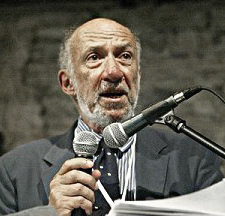
For years, perhaps going back as far as the Madrid Peace Conference of 1991, influential international debate on the future of Palestine has almost exclusively considered variations on the theme of a two-state solution. The American Secretary of State, John Kerry, stampeded the Palestinian Authority and Israel into negotiations that ‘failed’ even before they started a year ago. At least Kerry was prudent enough to warn both sides that this was their do or die moment for resolving the conflict.
It was presumed without dissent in high places anywhere that this two-state outcome was the one and only solution that could bring peace. Besides the parties themselves, the EU, the Arab League, the UN all wagered that a resolution of the conflict required the establishment of a Palestinian state. Even Benjamin Netanyahu became a reluctant subscriber to this mantra in his 2009 speech at Bar-Ilan University, although always in a halfhearted spirit. Read the rest of this entry »
Posted in Ethics and values, European Union, Human rights and justice, International law, Israel/Palestine, Middle East, Migration and refugees, Negotiations, Nonviolence, Pro-peace & proposals, Psychology - war & peace, Reconciliation & forgiveness, Richard Falk, Security and defence, Violence-prevention, World order/governance |
No Comments »
Doing Business with Israel: Increasingly Problematic
By Richard Falk
Note
Published below is a letter prepared by the European Coordination of Committee and Associations for Palestine (ECCP) and endorsed by John Dugard, Michael Mansfield, Eric David, and myself; it urges adherence to guidelines relating to corporate and financial activity with unlawful economic activities in Israel and occupied Palestine, and is guided by principles similar to the BDS campaign; it is notable that today the Presbyterian Church by a close vote (310-303) voted to divest itself of shares in three corporations engaged in legally and morally objectionable activities in Israel. There is a growing momentum associated with this new nonviolent militancy associated with the global solidarity movement supportive of the Palestinian struggle to gain a just peace, including realization of rights under international law.
European Coordination of Committees and Associations for Palestine (ECCP)
On 24-26 June, 37 European companies from 11 EU Member States will travel to Israel as a part of an EU led “Mission for growth” project that aims to “promote partnerships between Israeli and European companies active in sectors identified as leading and developing industries in Israel.”
Among Israeli companies participating in the “Mission for growth” are those deeply complicit in Israel’s occupation and apartheid policy. The previous delegation of “Mission for growth” took place on 22-23 October last year in Israel, where 97 european companies from 23 EU Member States meet with 215 Israeli companies from the different industrial sectors.
In this open letter supported by Richard Falk, John Dugard, Michael Mansfield and Eric David, ECCP member organisations call on the European companies to abandon their plans to be involved in the project. Read the rest of this entry »
Israel-Palestine: Beyond the liberal imaginary
By Richard Falk
Prefatory Note:
What follows is a letter to the NY Times responding to their editorial of June 6, 2014, which was not accepted for publication. I publish it here as a post because I believe it identifies some of the continuing ways in which public opinion on the relationship between Israel and Palestine continues to be distorted on Israel’s behalf in American media sources that have the undeserved reputation of being objective and trustworthy. The New York Times has long ranked high on this list, if not at its top!
This letter is particularly concerned with the misleading characterizations of Hamas, and the failure to pass judgment on the Netanyahu leadership as ‘extremist.’
*****************
To the Editor, New York Time
Re “Israeli-Palestinian Collision Course” (editorial, June 6, text reproduced below):
You are correct that this is an opportune time to take account of Israel-Palestine peace prospects in light of failed direct negotiations and subsequent developments. It is misleading, however, to equate Israel’s accelerated expansion of settlements with the formation of the Fatah-Hamas unity government. Israeli action continues a pattern of flagrant violation of the 4th Geneva Convention while the Palestinian action is a constructive move that could finally make diplomacy on behalf of all Palestinians legitimate and effective. Read the rest of this entry »
The world right now: A Mid-Year Report
By Johan Galtung
Time to take stock. The shot in Sarajevo 100 years ago inspires narratives of 19-year old Gavrilo Princip killing the successor to the throne of an empire and his pregnant wife as the event unleashing mutual mass murder (INYT, FAZ 28-29 June 2014). Not the empire annexing Bosnia-Herzegovina on October 6, 1908 (Art. 25 of the 1878 Berlin Congress of “great powers”).
Maybe the inhabitants did not like it?
Moral of that stock-taking: watch out for terrorism, not for empires and occupation-colonialism; and protect leaders, not people.
ISIS (Islamic State of Iraq and the Levant, alternatively translated as Islamic State of Iraq and Syria and Islamic State of Iraq and al-Sham) comes up. TIME 30 June: The End of Iraq. Maybe Iraq – that highly artificial English colonial entity encasing Shia Arabs, Sunni Arabs and Sunni Kurds–never started?
Like its French colonial neighbor Syria – adding Alawite Arabs, Christians, Jews and others? Ever heard about Sykes-Picot and their czarist Russian allies?
Can such crimes just pass, with no counter-forces?
Watch out, a key point about ISIS – now comprising a major part of IS – is as a bridge over the English-French colonial divide, in favor of a Sunni Arab caliphate. Like it or not, these are very strong forces from the past in the daylight of the present. Read the rest of this entry »
Posted in Africa, Asia, Buddhism, China, Conflict and war, Culture & religion, Development, EU politics, European Union, Ex Yugoslavia, Ex-Yugoslavia/Balkans, Future perspectives, Global trends & events, Iran, Iraq, Israel/Palestine, Japan, Johan Galtung, Media perspectives, North and South Korea, Pro-peace & proposals, Russia, South America, Syria, Thailand, US Empire, World order/governance |
No Comments »
TFF PressInfo: If militarism continues, humankind is doomed
By Jan Oberg
Both NATO and the EU has just announced that their members will now invest more in the military. It’s indicative of the lack of creativity in both organisations, it is self-defeating and counter-productive.
But have you seen it put on top of any agenda and debated? You haven’t, it is so normal – and the argument is that we are threatened. That’s called fearology: Making tax payers pay even more by making them scared.
The military sector is a parasite on society
The military sector produces much less employment than the civilian per invested dollar. It’s a huge burden on the economy because it swallows creativity, research and development badly needed to solve humankind’s real problems.
Weapons don’t belong to a market, there is no competition – the state is the only buyer – and thus tax payers must cover the systematic cost overruns.
We are told that there is economic crisis and we must cut down on hospitals, schools and human care everywhere. But this we can afford?
But what if the military did solve our problems? Read the rest of this entry »
Spain 2050 – Ten predictions
By Johan Galtung
Alfaz; History group, Municipio, Spain
Can we know the future? Rhetorical answer: can we know the past?
We rewrite history all the time, not because facts become dubious and new facts appear, but because our angle, perspective, changes. Say, from a series of kings, presidents etc. and their exercise of military and political power to economic and cultural changes in the life of common people, in their wellbeing and identity. Quite some change.
Will we arrive at that single, true, objective perspective?
No, objectivity may be multi-subjective, not inter-subjective. This is why Al Jazeera is so much better for knowing the present than CNN, which presents the US angle, and if there are other angles a US “expert” will give the final interpretation. Al Jazeera presents many angles of many parties and leaves final interpretations to the viewer.
How can we shed some light into the future? Basically there are two approaches: the Cartesian based on extending trends, and daoism based on holism and dialectics. They do not exclude each other.
Thus, there are three world trends that certainly affect Spain… Read the rest of this entry »
TFF PressInfo: Democracy’s crisis – 10 points
By Jan Oberg
Democracy is a core feature of Western society, normally understood as representative parliament – i.e. in free elections citizens vote for people to represent their interests for a parliament consisting of parties of which some form the government and some the opposition.
It’s not always included in the definitions that democracy requires a reasonable level of knowledge and information, freely available. For instance, one often hears that India is the world’s biggest democracy but 26% of the people are still illiterate (287 million people).
So the ”world’s largest democracy” also has the world’s largest population who can’t read and write. In comparison, China illiterate citizens make up about 3% and is regularly called a dictatorship.
Also, in a society where the persons running for office are – or have to be – extremely wealthy to pay for their campaign and where large corporations make multi-million dollar contributions to certain candidates (presumably not out of altruism), falls outside a reasonable definition of democracy – even though they may also not be dictatorships; there are many stations in-between the two.
Are young people giving up parliamentary democracy?
When I was in my high-school years – a few decades ago – and wanted to contribute to changing society for the better, the most natural thing to do – and the finest – was to join a political party. Not so today. My students in peace studies around the world often ask me at the end of a course and it is time to say goodbye whether I can help them somehow in making their career. Their career dreams may be to work for the UN, for human rights, the environment or starting their own NGO with a peace profile or set up their own consultancy firm for a better world.
Significantly, over all these years, only one single student asked me what I thought about contributing to peace and development by becoming a politician.
As is well-known, people today engage in social issues mainly through civil society and the use of social media as their primary tool. This is good from most perspectives and holds fascinating prospects for de facto global citizenship and action, but it does something to the old type of representative democracy.
When we talk about global crisis, people think much more of the environment, identity issues or warfare than of democracy being in crisis. I think it is in fundamental crisis for the the following reasons. Read the rest of this entry »
Posted in China, Democracy - local & global, Ethics and values, EU politics, European Union, Future perspectives, Global trends & events, India, India, Jan Oberg, Media perspectives, Nonviolence, Political, Pro-peace & proposals, Reflections, essays & more, TFF PressInfo, US politics & security, World order/governance |
No Comments »