Archive for the ‘Migration and refugees’ Category
“Je ne suis pas Charlie.”
 January 20th, 2015 |
  Author:
 By Chaiwat Satha-Anand*

The Paris march for unity on Sunday, January 11, 2015 attracted more than a million people and world leaders including Germany’s Merkel, Britain’s Cameron, Turkey’s Davutoglu, Israel’s Netanyahu, and Palestine’s Abbas, among others. This extraordinary action by leaders and citizens is in response to perhaps the bloodiest week in the last half of a century in France with 17 dead.
It began with the killing of 12 people at a previously little known satirical magazine “Charlie Hebdo.” French President Francois Hollande warned that the threats facing France is not over even after the three perpetrators were dead.
The threat is real, however, not only because of information gathered by various intelligence agencies, but also because the violence and what has followed indicates a rift in the way Europe, and in fact the world, is moving in the context of fierce contestation of different ethics/values people are willing to die and for some – to kill for.
This article is an attempt to argue that the motto “Je suis Charlie”, while commendable in terms of solidarity with victims of senseless violence, transform the killing into politics of identity with potentials for further deadly conflict in the present context if certain existing signs are properly understood.
Signs
Arguably in response to the killing in Paris, there are reports of Muslims becoming targets of more frequent attacks: women’s veils have been pulled at, pork thrown at mosques Read the rest of this entry »
 Posted in Anti-semitism, Chaiwat Satha-Anand, Culture, Culture & religion, Democracy - local & global, Discrimination, Ethics and values, Freedom of expression, Human rights and justice, Islamophobia, Middle East, Migration and refugees, Nonviolence, Psychology - war & peace, Reconciliation & forgiveness, Violence-prevention |
  Tags: Charlie Hebdo, freedom of expressioon, Paris January 2015, terrorism, terrorist |
  No Comments »
Blowback of the foreign jihadists?
By Jonathan Power
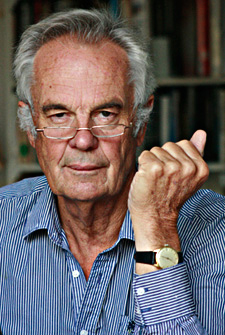
Over 15,000 foreign jihadists from 80 countries are believed to be fighting alongside militants in Syria, the CIA says. The Syrian war is estimated to have mobilized more European Islamists than all the foreign wars of the last 20 years combined.
What to do when the jihadists try to return home?
Many of them might be trained to wage jihad against their home countries. The danger is, as Daniel Byman and Jeremy Shapiro write in the current issue of Foreign Affairs, “the returned fighter seasoned by battle acquires a new authority among his old friends and followers on social media – a street cred that allows him to recruit and radicalize others and send them into the fray.”
On the other hand because of the use of social media where the returnee sometimes brags about his exploits and adventures it becomes easy for the intelligence services both to track him down and know who he is trying to reach.
The threat posed by returning jihadists is too often hyped by both Western politicians and the media. Read the rest of this entry »
Obama’s report card
By Jonathan Power
Will the real Barack Obama be allowed to stand up? The New York Times’ columnist and Nobel Prize winner for economics, Paul Krugman, writes in “Rolling Stone, “Obama has emerged as one of the most consequential presidents in American history”.
You wouldn’t know this if you observed the swing towards the Republicans in the recent Congressional elections – the same Republican Party that has implemented a scorched-earth policy against many of Obama’s initiatives.
The truth is he’s made more of a go of it than much of the media has reported.
He came into power inheriting the worst financial crisis since the Great Depression of the 1930s. He has emerged as the only full-bloodied Keynesian Read the rest of this entry »
ISIS, militarism and the violent imagination
By Richard Falk
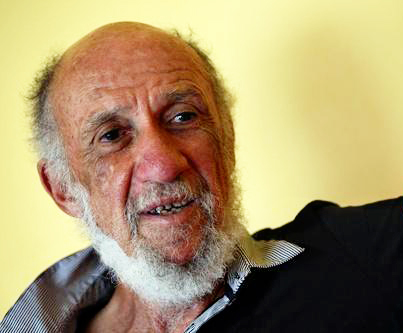
Richard Falk
Before ISIS
The beheading of American and British journalists who were being held hostage by ISIS creates a truly horrifying spectacle, and quite understandably mobilizes the political will to destroy the political actor who so shocks and frightens the Western sensibility, which is far from being free from responsibility for such lurid incidents.
Never in modern times has there been a clearer example of violence begetting violence.
And we need to ask ‘to what end?’ Political leaders in the West are remarkably silent and dishonest about what it is that they wish to achieve in this region beset since 2011 by a quite terrifying outbreak of political extremism, whether from above as in the cases of Syria, Egypt, and Israel or from below as with ISIS and al-Nusra.
It is difficult to recall that at the start of 2011, just three years ago, progressive voices around the world were inspired by the Arab upheavals, especially in Egypt and Tunisia, that burst upon the political scene unexpectedly.
These extraordinary events appeared to repudiate the prevailing patterns of authoritarian, exploitative, and corrupt collaboration between oppressive domestic elites, neoliberal economic forces, and the regional imperial juggernaut that had kept this humanly disastrous reality stable for so long. Yet even during that time of optimism about the Arab future, a closer scrutiny of what was happening disclosed many reasons to be worried. It is helpful to look to this recent past to have some comprehension of the perplexing present.
A Revolutionary Spirit Without Revolutionary Action
The goals of these upheavals were far too ambitious to be realized by such limited challenges directed at the established order. These movements were essentially confined to getting rid of a hated ruler. Read the rest of this entry »
Posted in Afghanistan, Arab Spring, Conflict and war, Democracy - local & global, Development, Egypt, Future perspectives, Global trends & events, Human rights and justice, International law, Iran, Iraq, Israel/Palestine, Libya, Media perspectives, Middle East, Migration and refugees, Military - technology, Nonviolence, Political, Psychology - war & peace, Reflections, essays & more, Richard Falk, Syria, Terrorism, Theories and concepts, US Empire, Violence-prevention, World order/governance |
No Comments »
No exit from Gaza: A new war crime?
By Richard Falk
Richard Falk
Prefatory Note July 17, 2014 written before the ground invasion
This is a modified version of a post published online, July 15, 2014, at the recently established very informative website, Middle East Eye; as the casualty totals continue to mount while the world looks on in stupefied inaction, the attacks go on.
At the very least, from a humanitarian perspective, there should be a global outcry demanding that children, mothers, and those sick and disabled be allowed to leave the Gaza Strip until current hostilities end. Yet this is a gap in international humanitarian law, refugee law, and the moral sensibilities of the combatant states.
• As the hideous Israeli assault on Gaza, named Operation Protective Edge, by the IDF enters its second week, overdue international appeals for a ceasefire fall on deaf ears. The short lived July 15th ceasefire arranged by Sisi’s Egypt had many accompanying signs of bad faith from its inception, including the failure to allow Hamas to participate in the process, insultingly conveying the proposed terms of the ceasefire through public media.
The vague terms depicted, alongside the failure to take any account of Hamas’ previously announced conditions, suggest that this initiative was not a serious effort to end the violence, but rather a clever ploy to regain moral credibility for Israel thereby facilitating the continuation and even intensification of its violent military campaign that was never defensive in conception or execution.
Rather than being a real effort to end the violence, such a ‘ceasefire’ seems best understood as a sophisticated for form of escalation produced by a descent into the lower depths of Israeli hasbara. Such an Israeli tactic was facilitated by the active complicity of the Egyptian government that shares with Israel an undisguised wish to destroy Hamas.
Cairo regards Hamas as an offshoot of the Egyptian Muslim Brotherhood, an organization that has been criminalized and viciously repressed, and has collaborated with Tel Aviv ever since Sisi took over control of the Egyptian government.
Throughout Protective Edge Bibi Netanyahu has been telling the world Read the rest of this entry »
Aage Bertelsen (1901 – 1980) – Danish educator for peace
By Jan Oberg & Johan Galtung*
Lund and Kuala Lumpur, July 2014
Introduction
He was a tall man and a great man, a visionary, pacifist, civil resister, educator and philosopher. He took life more seriously than most and he could be playful and fun like a child. His life’s guiding principle was ”Engage in your time!” and while he wrote and talked a lot he also did it. His name was Aage Bertelsen, he was born in Denmark in 1901 and died on August 15, 1980.
Bertelsen’s imprint on history is two-fold. First, with his wife Gerda he was a prime mover of one of the groups, the Lyngby Group, which organised the rescue of altogether 7.220 Danish Jews into safety in Sweden in October 1943 during the German occupation of Denmark – more here. The Lyngby Group – Lyngby is north of Copenhagen – got about 1.000 of these in safety by organising their nightly transport onboard small fisher boats over the Sound between Denmark and Sweden.
In this he deserves a place in international contemporary history for its humanity, civil courage and as an example of non-violent struggle against occupation.
Secondly, Bertelsen was an educator of and for peace. His life work educational efforts included his family and friends, his pupils over 22 years at the Aarhus Cathedral School in Aarhus, Denmark, the general public as well as national and international leaders.
He lived in pre-Internet times and very little is publicly available today about this renaissance man. From two rather different, but compatible, perspectives we’ve taken it upon us to remind the world about him – friends and colleagues of his as we happen to be.

Headmaster Aage Bertelsen in 1961 Photo: Elfeldt, Copenhagen
Why now, over 30 years after his death? Read the rest of this entry »
Posted in Abolition, Conflict and war, Culture, Culture & religion, Democracy - local & global, Denmark, Ethics and values, European Union, Foreign and security politics, General issues, Human rights and justice, Immigration & integration, Israel/Palestine, Jan Oberg, Johan Galtung, Migration and refugees, Military - technology, New books, Nobel Peace Prize, Nonviolence, Norden as region, Norway, Nuclear weapons, Peace, Political, Pro-peace & proposals, Psychology - war & peace, Reconciliation & forgiveness, Reflections, essays & more, Russia, Security and defence, Sweden, Terrorism, Theories and concepts, UN matters, Uncategorized, US Empire, USA, Violence-prevention, World order/governance |
Tags: Aage Bertelsen, Aarhus, Aarhus Cathedral School, Aarhus Katedralskole, Albert Einstein, Albert Schweitzer, Aldermaston, alternative defence, anti-atom weapons march, anti-semitism, Arne næss, Beit Uri, Berlin Wall, Bertrand Russell, Carl Nielsen, Chaim Weizmann, Claude Etherly, Cold War, Common Market, Congree Party in India, Cuban Missile crisis, dansk åndshistorie, danske pacifister, den Russiske linje på Aarhus Katedralskole, development assistance, Edgar Schieldrop, education for peace, elever på Aarhus Katedralskole, Erik Fromm, Eu, extermination of Jews, fredspolitisk folkeparti, Gaia hypothesis, Gandhi in the nuclear Age, Gandhis politiske etikk, Georg Borgström, Gerda Bertelsen, Gestapo in Denmark, globalisation, globalist, Günter Ander, Hans hedtoft, Hans Jonas, Hans Peter Bertelsen, Henry Heerup and Sven Engelund., Her er dit våben, Herman Kahn, ikke-vold, ikkevold, Inger Bentsen, internationalist, Israel, Israel as Jewish state, Israeli occupied territories, Jan Øberg, Jawarharlal Nehru, Jean-Paul Sartre, Jewish Theological Seminary, Jews in Denmark, Johan Galtung, Kresten Helveg Petersen, Lennart Bergfeldt, Lyngby group, Mahatma Gandhi, Martin Buber, modstandsbevægelsen, modstandsbevægelsen i Danmark, Mohandas K Gandhi, NATO, Nazi Germany, Netanyahu, Niels Bohr, Nobel Peace Prize, non-violence, nonviolence, Nordahl Grieg, North-South development, occupation of Denmark, October 43, Oktober 43, Oktober 43 Fonden, Olivia Holm-Møller, pacifisme, pacifisme i Danmark, peace education, persecution of Jews, Pierre Galois, pogroms, pro-Russia, pro-Soviet, public education, Rektor Aage Bertelsen, Rescue of Jews to Sweden, Resenbro, resistance to occupation, reverence for life, Richard Falk, Richard Mortensen, Romain Rolland, Russell Tribunal, Russian line at Aarhus Cathedral School, self-hating Jews, Sepoy Mutiny, Silkeborg, Soviet Union, Stephen King-Hall, stikker, swaraj, TFF, Th Langs skole, The imperative of responsibility, the nuclear age, Thomas af Strängnäs, traitor, Transcend conflict, Transnational Foundation for Peace and Future Research, UN protection, UNESCO-linjen, Unesco-linjen på Aarhus Katedralskole, Warsaw Pact, World War II |
No Comments »
Five Palestinian futures
By Richard Falk
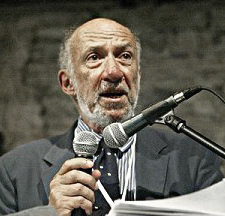
For years, perhaps going back as far as the Madrid Peace Conference of 1991, influential international debate on the future of Palestine has almost exclusively considered variations on the theme of a two-state solution. The American Secretary of State, John Kerry, stampeded the Palestinian Authority and Israel into negotiations that ‘failed’ even before they started a year ago. At least Kerry was prudent enough to warn both sides that this was their do or die moment for resolving the conflict.
It was presumed without dissent in high places anywhere that this two-state outcome was the one and only solution that could bring peace. Besides the parties themselves, the EU, the Arab League, the UN all wagered that a resolution of the conflict required the establishment of a Palestinian state. Even Benjamin Netanyahu became a reluctant subscriber to this mantra in his 2009 speech at Bar-Ilan University, although always in a halfhearted spirit. Read the rest of this entry »
Posted in Ethics and values, European Union, Human rights and justice, International law, Israel/Palestine, Middle East, Migration and refugees, Negotiations, Nonviolence, Pro-peace & proposals, Psychology - war & peace, Reconciliation & forgiveness, Richard Falk, Security and defence, Violence-prevention, World order/governance |
No Comments »
Nigeria’s oil has cons and pros – and Boko Haram
By Jonathan Power
Oil provides 70 % of booming Nigeria’s government revenues and without that, since tax collection is so poor, Nigeria would be a country without much in the way of education, health facilities, infrastructure building and urban renewal.
People talk suggestively about a corrupt elite creaming off oil money. Although true it is only the cream. The milk itself goes to the state, hence the government’s preoccupation with oil theft which is now on an enormous scale, organised by corrupt businessmen, officials and politicians. (Before that it was the insurgency in the Niger delta where youthful, well-armed, guerrillas sabotaged the pipelines for well over a decade until a peace agreement (a buy out) was negotiated by the underestimated president, Umar Yar A’dua, President Goodluck Jonathan’s predecessor who died on the job.)
The proportion of the economy that oil makes up is now found to be much less than thought. Nigeria has just revised its national income figures. (The International Monetary Fund supports this.) It has handsomely overtaken South Africa to become the continent’s largest economy. The economy of Lagos is one and a half times the whole of Kenya’s. Nigeria has become the 16th largest economy in the world. Some say within ten years it could be in the top five. However, the statistical revision shows that the share of the oil and gas industry in the economy is not 32% but 14%. Nigeria has diversified much more than was ever guessed at. Read the rest of this entry »
Beholding 2014
By Richard Falk
Written on December 31, 2013
2013 was not a happy year in the chronicles of human history, yet there were a few moves in the directions of peace and justice.
What follows are some notes that respond to the mingling of light and shadows that are flickering on the global stage, with a spotlight placed on the main war zone of the 21st century – the Middle East, recalling that Europe had this negative honor for most of the modern era except for the long 19th century, and that the several killing fields of sub-Saharan Africa are located at the periphery of political vision, and thus their reality remains blurred for distant observers. Read the rest of this entry »
Posted in Afghanistan, Armament, China, Democracy - local & global, Environmental concerns, European Union, Future perspectives, Global economics, Global trends & events, Human rights and justice, Iran, Israel/Palestine, Japan, Libya, Middle East, Migration and refugees, Richard Falk, Syria, Turkey, World order/governance |
No Comments »
Syria – how surprising!
By Jan Oberg
This Sunday morning, I stumble upon this article on BBC’s homepage – the French foreign minister is “pessimistic” about the negotiations to be held in January in Montreaux, Switzerland about Syria. This is a slightly expanded version on what I jotted down on TFF Facebook:
• Look: First you simplify the conflict beyond recognition, the usual two parties: one side with all the good people and one side with all the bad people – the type of conflict analysis that has proved to never work anywhere (but you learnt nothing from Somalia, Yugoslavia, Afghanistan, Iraq, or Libya).
• You set up the Friends of Syria – but with such friends, who need an enemy?
• You act as if you have noble motives but never recognize that the French, British and other interventionist and war history in Syria and surroundings is a main reason behind today’s terrible situation. And of course you never mention the words oil and gas.
• You say you can’t talk with the President, a main party to the conflict.
• Then you support some bad guys against some other bad guys and ignore civil society.
• Then you pour in weapons to have the maximum number of people killed and fleeing.
• Then you undermine the only realistic peace effort, that of Kofi Annan, forcing him to resign.
• Then you act surprised that Al-Qaeda & Co. appears on the scene.
• You consistently antagonize Russia which does have an influence on Assad and keep Iran out as a relevant mediator.
• Next, you threaten war on the country but – oh shoot – only France (France, look at this link, is Mr. Fabius an idiot?) and Denmark think it is a good idea.
• Then you get it wrong with the chemical attack, blaming Assad before anyone had investigated it.
• Next you arrange negotiations that ignore 95% of the Syrian people (civil society).
• Next you forget that you should have a cease-fire and some monitoring or ceasefire-keeping mechanism on the ground.
• And you ignore the basic role of thumb that negotiations is the last stage, the result of, comprehensive consultations and dialogues with numerous parties before you go to Montreux.
And then You are surprised and pessimistic that perhaps these negotiations won’t be a success !!
Is that because you really always wanted peace so much? Or are you just systematically behaving as conflict illiterates, doing more harm than good?