Archive for the ‘Future perspectives’ Category
Breaking free: Choosing a better human future
 March 9th, 2014 |
  Author:
 By Richard Falk
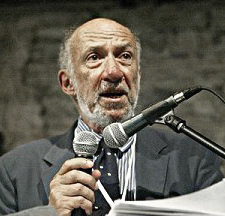
I have long believed that prospects for a hopeful human future depend on radical and visionary feelings, thought, and action. Such an outlook reflects my view that the major challenges of our time cannot be met by thinking within the box, or implementing the realist agenda of doing what it is feasible while disregarding what is necessary and desirable. For instance, with respect to climate change such a conventional approach avoids asking what needs to be done to give future generations positive life prospects, but seeks, at best, to do what seems politically feasible at the moment, that is, far too little.
This means not putting a cap on energy or water use, not limiting carbon emissions or prohibiting fracking, continuing to encourage economic growth, and refusing to question consumerism. In effect, this conventional approach does not meet challenges, but at most seeks to defer and mitigate harmful effects to the extent possible. In effect, it opts for a worse human future, and remains in bondage to the deformities wrought by clearly deficient neoliberal prescriptions for human fulfillment.
Against this background, it was a personal breakthrough to meet Jeff Wilson who is, Read the rest of this entry »
Criminalizing aggressive war
By Johan Galtung
Kuala Lumpur, February 24, 2014
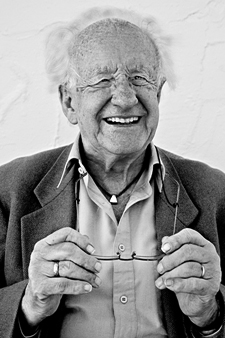
Few, if anybody, today argue this so forcefully as Mahathir Mohammad, Malaysia’s fourth prime minister, for 22 years. He compares what we do when one person kills another to all we do not do when millions kill millions in aggressive wars. We have clear laws, we apprehend the suspect, weigh the evidence for or against in court, and, if found guilty, the murderer is punished. There may even be a system of compensation for the bereaved.
But in wars among states the murderers get medals and honors, and if victorious relish a post-glory exuberance disorder, nourishing a new aggression. And the bereaved are left with their grief and a post trauma stress disorder, nourishing the idea of revenge. Madness, irrationality, a social evil of top rank, to be abolished. As Mahathir says: “Peace for us simply means the absence of war. We must never be deflected from this simple objective”. An important reminder for all who broaden the concepts of violence and peace: remember the essence!
One approach is criminalization. For that clear laws are needed, meaning without loopholes. The UN Charter is an effort (Articles 1.1 and 2.4) prohibiting war and the threat of war among (member) states. Read the rest of this entry »
Failure of US leadership wrecking bilateral relationship
By Shastri Ramachandaran
 By Shastri Ramachandaran
With India-US ties hitting a nadir, Shastri Ramachandaran takes a look at what went wrong in big power diplomacy
The world’s two largest democracies may have much in common. But far from common interests prevailing over contentious issues, India-US relations are in for an uncommon spell of stresses and strains. These are unlikely to ease any time soon in an election year, regardless of Washington’s about-turn in cosying up to Narendra Modi.
Political changes in India cannot banish overnight the causes and conditions in the US responsible for the souring of what was, until recently, toasted as the “defining relationship” of the 21st century.
Devyani Khobragade’s arrest and strip-search drove India-US relationship to its lowest point in 15 years. Not since the 1998 nuclear test, when the US-led “international community” imposed sanctions, has the relationship between the two been so bad. Read the rest of this entry »
Saddam, Osama, Gaddafi, Chavez – and Obama
By Johan Galtung
Contemporary reality, but what is real? Two of the above were killed under Obama’s watch; Osama executed by Obama extra-judicially, in cold blood, the other two by proxies (Chávez: we do not quite know). Two of them were dictators; Osama had no state, Chávez had, but won elections apparently not more rigged than Florida 2004, Ohio 2008.
What were the problems, how might they have been solved? Read the rest of this entry »
TFF PressInfo: Institute a course for all on what confront humanity in the 21st century
Open Letter to College and University Presidents Re: Global Security 101
By David Krieger
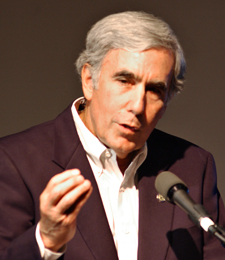
You are in a unique position of leadership to influence today’s youth to achieve a better tomorrow for America and the world. I am writing to enlist your help in educating young people to understand the survival challenges that face humanity in the 21st century.
Education is driven by values. Young people must learn to live with reverence for life, as did Albert Schweitzer, and to support equitable and nonviolent solutions to social problems, as did Gandhi and Martin Luther King, Jr. Young people must be imbued with compassion, commitment and courage. They must learn to use their imaginations to find creative and cooperative solutions to the great issues of our time. And they must find joy in the process and take time to celebrate the miracle of living on the only planet we know of in the universe that supports life. Continue here…
Iran’s elections matter
By Farhang Jahanpour
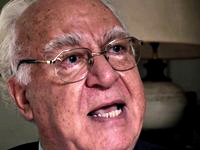
In a radio broadcast in October 1939, Winston Churchill described communist Russia as “a riddle, wrapped in a mystery, inside an enigma.” Many people in the West today have the same feeling about Iran under the ayatollahs. One hears many pundits refer to Iranian politics as mysterious, inscrutable, baffling and unpredictable. Churchill continued his sentence by adding, “but perhaps there is a key. That key is Russian national interest.” I believe that if we apply the same key to Iran it becomes much easier to understand Iranian policies and actions.
Although the Islamic revolution of 1978-79 brought about many political changes, yet many facts about Iran have remained the same. They include the main elements of Iranian culture, an attachment to Iran’s long history, and a desire for a better life. The main slogans chanted by the people on the eve of the revolution were “freedom, independence and social justice”. The first referred to freedom from domestic tyranny, the second to independence from foreign meddling, and the third to a fairer distribution of wealth. Read the rest of this entry »
An American idol: The U.S. should ‘govern’ the world?
By Richard Falk
Prefatory Note:
This post consists of a much expanded text of an opinion piece that was published by AJE on January 18, 2014; it seeks to discredit imperial and neoliberal claims that the United States is a benevolent hegemon, providing global public goods to the world as a whole, including supposed geopolitical and ideological rivals.
It might not have seemed necessary in the 21st century to ask or answer such a ridiculous question. After all, in the last half of the prior century European colonialism collapsed politically, morally, and even legally, its pretensions and cruelties thoroughly exposed and totally discredited. As well, the Soviet empire fell apart.
And yet there are those who muster the temerity to insist that even now it is only the global governing authority of the United States that underpins the degree of security and prosperity that currently exists in the world. Without such a role played by the United States, this reasoning alleges, there would be widespread chaos, economic stagnancy, and far more frequent international warfare.
Not surprisingly, the proponents of this conception of world order as dependent on U.S. military, economic, diplomatic, and ideological capabilities are themselves exclusively American. It is even less surprising that the most articulate celebrants of this new variant of a self-serving imperial approach to global security and prosperity are situated either in mainstream academic institutions or in supposedly liberal media outlets.
I consider Michael Mandelbaum to be the most unabashed and articulate advocate of this American ‘global domination project’ that he felicitously calls ‘the world’s de facto government.’ Read the rest of this entry »
The West contracting to “Middle Ages”? Fine!
By Johan Galtung
Alfaz, Spain
An optimistic prediction held by some; but what does it mean?
Let us define that “middle” as thousand years, 250-1250, from the start of the West Roman Empire declining (completed in 476 – 500), to the rise of the Hanseatic League transalpina as another Europe (completed around 1500 with protestantisms, Luther-Zwingli-Calvin; Anglicans).
Apart from the Crusades, 1095-1291, an early introduction to the “Modern Period”, this was a peaceful time in Europe due to the integrative forces of the “Holy Roman Empire of the German Nation” – not Holy, not Roman, not German they say – and the Vatican – Holy? – hm; Roman? Yes. 217 of the 266 popes Italian, so far; No. 2: 16 French.
The Kings ruled by intermarriages, and the Popes by theocracy, in harmony till the 11th century investiture conflict: who appoints the bishops!? The war on Islam, the Crusades 1095-1291 (Pope Urban II) was also used to unify Church and State; and also against Orthodox Christians after the schism in Christianity in 1054 (Pope Leo IX).
Europe contracting into about 500 smaller entities, duchies etc., self-centered, self-reliant, self-sufficient, living lives centered on Afterlives through salvation. “Middle”, between what and what? Read the rest of this entry »
 Posted in Buddhism, Culture, Culture & religion, Democracy - local & global, Development, Disarmament, European Union, Future perspectives, Global economics, Johan Galtung, Pro-peace & proposals, Reflections, essays & more, Terrorism, US Empire, USA, Violence-prevention, World order/governance |
  No Comments »
Ten conflicts, solutions and conciliation
By Johan Galtung
2014: there are conflicts old and new crying for solution and conciliation, not violence; with reasonable, realistic ways out.
Take the South Sudan conflict between the Nuer and the Dinka. We know the story of the borders drawn by the colonial powers, confirmed in Berlin in 1884. Change a border by splitting a country – referendum or not – and what do you expect opening Pandora’s Box? More Pandora.
There is a solution: not drawing borders, making them irrelevant. The former Sudan could have become a federation with much autonomy, keeping some apart and others together in confederations-communities, also across borders. Much to learn from Switzerland, EU and ASEAN. Read the rest of this entry »
Beholding 2014
By Richard Falk
Written on December 31, 2013
2013 was not a happy year in the chronicles of human history, yet there were a few moves in the directions of peace and justice.
What follows are some notes that respond to the mingling of light and shadows that are flickering on the global stage, with a spotlight placed on the main war zone of the 21st century – the Middle East, recalling that Europe had this negative honor for most of the modern era except for the long 19th century, and that the several killing fields of sub-Saharan Africa are located at the periphery of political vision, and thus their reality remains blurred for distant observers. Read the rest of this entry »
Posted in Afghanistan, Armament, China, Democracy - local & global, Environmental concerns, European Union, Future perspectives, Global economics, Global trends & events, Human rights and justice, Iran, Israel/Palestine, Japan, Libya, Middle East, Migration and refugees, Richard Falk, Syria, Turkey, World order/governance |
No Comments »