Archive for the ‘International law’ Category
TFF PressInfo – The West’s hypocrisy in Ukraine
 April 29th, 2014 |
  Author:
 By Jonathan Power
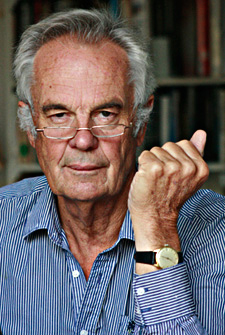
April 29th 2014
When it comes to Ukraine the US and the EU are adopting a holier than thou attitude which, unfortunately, leads them not to worship at the alter of truth.
Take the issue of the fuss made over alleged soldiers wearing Russian uniforms. They are not dressed in the smart fatigues of the unmarked Russian soldiers in Crimea, about which President Vladimir Putin has acknowledged he misled us. What these soldiers, leading the Russian-speaking revolt, are wearing can be bought in any army surplus store. As for the photos Western intelligence has persuaded much of the media to use as evidence, they are hazy and would not be admissible in a court of law.
The Ukranian Security Agency announced that it captured 20 of its Russian counterparts. But then it reduced the number to 10 and then to 3. But the last figure received much less highlighting from Western governments and media than the first.
How all this “Russian interference” compares with the post Cold War expansion by Nato forces up to Russia’s borders, senior Western politicians’ (including the US ambassador) provocative support for a revolutionary movement that included a healthy contingent of neo-fascists who now have seats in the Ukrainian cabinet, and the funding of opposition forces and NGOs, is to be wondered at. (I’ve long been surprised at the tolerance for Western NGOs based in Russia and China. Imagine the reverse.) Read the rest of this entry »
Nonviolent Geopolitics: Law, Politics, and 21st Century Security*
By Richard Falk
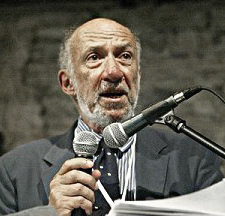
In this short essay, my attempt will be to articulate a conception of a world order premised on nonviolent geopolitics, as well as to consider some obstacles to its realization. By focusing on the interplay of “law” and “geopolitics” the intention is to consider the role played both by normative traditions of law and morality and the “geopolitical” orientation that continue to guide dominant political actors on the global stage.
Such an approach challenges the major premise of realism that security, leadership, stability, and influence in the 21st century continue to rest primarily on military power, or what is sometimes described as “hard power” capabilities. [1]
From such a perspective international law plays a marginal role, useful for challenging the behavior of adversaries, but not to be relied upon in calculating the national interest of one’s own country. As such, the principal contribution of international law, aside from its utility in facilitating cooperation in situations where national interests converge, is to provide rhetoric that rationalizes controversial foreign policy initiatives undertaken by one’s own country and to demonize comparable behavior by an enemy state. This discursive role is not to be minimized, but neither should it be confused with exerting norms of restraint in a consistent and fair manner.
My intention is to do three things:
• to show the degree to which the victors in World War II crafted via the UN Charter essentially a world order, which if behaviorally implemented, would have marginalized war, and encoded by indirection a system of nonviolent geopolitics; in other words, the constitutional and institutional foundations already exist, but inert form;
• to provide a critique of the realist paradigm that never relinquished its hold over the imagination of dominant political elites, and an approach has not acknowledged the obsolescence and dangers associated with the war system;
• and, finally, to consider some trends in international life that make it rational to work toward the embodiment of nonviolent geopolitics in practice and belief, as well as in the formalities of international law. Read the rest of this entry »
 Posted in Abolition, Academia and science policies, Afghanistan, Armament, Conflict and war, Democracy - local & global, Development, Disarmament, Ethics and values, Future perspectives, General issues, Global trends & events, Human rights and justice, International law, Nonviolence, Nuclear Free Zones, Nuclear weapons, Peace, Pro-peace & proposals, Psychology - war & peace, Reflections, essays & more, Richard Falk, Theories and concepts, Uncategorized, US Empire, US politics & security, USA, Violence-prevention, World order/governance |
  No Comments »
The New World Order?
By Richard Falk
There is no more reliable guardian of entrenched conventional wisdom than The Economist. And so when its cover proclaims ‘the new world order,’ and removes any ambiguity from its intentions, by its portrayal of Putin as a shirtless tank commander with menacing features.
No such iconography accompanied the last notable invocation of the phrase ‘new world order’ by George H. W. Bush in mobilizing support for a forcible response to the Iraqi invasion and annexation of Kuwait in 1990, the dirty work of Saddam Hussein. Read the rest of this entry »
Posted in Abolition, Afghanistan, Democracy - local & global, Disarmament, Ex-Yugoslavia/Balkans, Future perspectives, International law, Iran, Iraq, Kosovo/a, Libya, Media & conflict, Media perspectives, Middle East, Nuclear weapons, Richard Falk, Russia, Sanctions, Security and defence, UN matters, US Empire, US politics & security, USA, Violence-prevention, World order/governance |
No Comments »
Moratorium on comments addressing the Israel/Palestine struggle
By Richard Falk
It has always been my intention to make the tiny fragment of the blogosphere that I inhabit a site for civil discourse on a wide spectrum of concerns, issue oriented interpretations of what is transpiring in the world.
Recently the comments sections has narrowed from this perspective into a dialogue between adversaries, several of whom seem preoccupied with, if not obsessed by, Israel, the Jewish experience, Zionism, and the Palestinian/Arab narrative and counter-narrative. Some of the contributions have been learned and sensitive to the reality that there are many diverse voices that need to be heard on this inflamed subject-matter, yet others have been intolerant, launched repeated personal attacks questioning motives and motivations, and have created a polemical aura at the site that has inhibited participation by those with other interests, concerns, and style.
For these reasons, I have decided to have a moratorium on all comments relating to this subject-matter until May 1, 2014.
I expect this might be troublesome for several faithful readers of my posts. Please bear with me, and understand this to be an effort to encourage more varied and less antagonistic exchanges.
I am suspending this portion of the comments section at a moment that coincides with the ending of my six-year term as Special Rapporteur on Palestine for the UN Human Rights Commission.
Let me add that I will continue to do my best to remain engaged in the struggle to find a just and sustainable peace for both peoples premised upon their equality.
The obsolescence of ideology: Debating Syria and Ukraine
By Richard Falk
I have been struck by the unhelpfulness of ideology to my own efforts to think through the complexities of recommended or preferred policy in relation to Syria, and more recently, the Ukraine. There is no obvious posture to be struck by referencing a ‘left’ or ‘right’ identity. A convincing policy proposal depends on sensitivity to context and the particulars of the conflict.
To insist that the left/right distinction obscures more than it reveals is not the end of the story. To contend that ideology is unhelpful as a guide for action is not the same as saying that it is irrelevant to the public debate. In the American context, to be on the left generally implies an anti-interventionist stance, while being on the right is usually associated with being pro-interventionist. Yet, these first approximations can be misleading, even ideologically. Liberals, who are deliberately and consigned to the left by the mainstream media, often favor intervention if the rationale for military force is primarily humanitarian.
Likewise, the neocon right is often opposed to intervention if it is not persuasively justified on the basis of strategic interests, which could include promoting ideological affinities. The neocon leitmotif is global leadership via military strength, force projection, friends and enemies, and the assertion and enforcement of red lines. When Obama failed to bomb Syria in 2013 after earlier declaring that the use of chemical weapons by the Assad regime was for him a red line this supposedly undermined the credibility of American power.
My point is that ideology remains a helpful predictor of how people line up with respect to controversial uses of force, although relying on ideology is a lazy way to think if the purpose is to decide on the best course of action to take, which requires a sensitivity to the concrete realities of a particular situation. Such an analysis depends on context, and may include acknowledging the difficulties of intervention, and the moral unacceptability of nonintervention. Read the rest of this entry »
Posted in Conflict and war, Ethics and values, Ex Yugoslavia, Ex-Yugoslavia/Balkans, Global trends & events, Human rights and justice, International law, Iran, Iraq, Israel/Palestine, Kosovo/a, Nuclear weapons, Political, Richard Falk, Russia, Sanctions, Security and defence, Syria, Ukraine, UN matters, US Empire, US politics & security, USA, Violence-prevention, World order/governance |
No Comments »
TFF PressInfo: Kosovo 15 years later, a personal memory and a word about free research
By Jan Oberg
Lund, Sweden March 24, 2014
Media with a pro-Western bias usually remind us of 9/11 based on a victim narrative. We just passed 3/20 – the 11th Anniversay of the war on Iraq. Every year they forget 10/7 (Afghanistan) and 3/24, the destruction of Serbia-Kosovo in 1999.
What to do when NATO’s raison d’etre – the Warsaw Pact – had dissolved? Answer: Turn NATO into a humanitarian bombing organisation which in – fake – Gandhian style could say: We are bombing for a higher ethical humanitarian purpose to save lives and on this exceptionalist moral high ground we ignore international law.
Kosovo 15 years later
Kosovo remains a unique result of propaganda and mass killings to produce and independent state without a UN Security Council mandate – which doesn’t prevent Western politicians from teaching Russia international law these very days.
If Kosovo, why not Tibet, Taiwan, the Basque country, Korsica, Kurdistan, Palestine, or Crimea? The answer is: Kosovo was exceptional. But why? Oil and gas, perhaps, see later… Read the rest of this entry »
Far from good enough, Mr. Putin !
By Johan Galtung
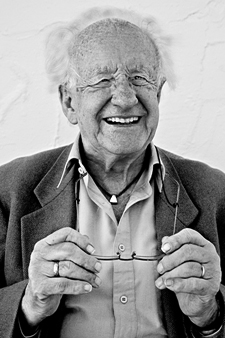
History matters, not only law; like how Crimea and Abkhazia-South Ossetia–basically Russian-Orthodox–became Ukrainian-Georgian. Two Soviet dictators, Khrushchev and Stalin, attached to Ukraine and Georgia, so decided, by dictate. The local people were not asked, nor were Hawaiians when the USA annexed their Kingdom in 1898–by dictate.
The first referendum in Crimea was held last Sunday, 16 March 2014: an overwhelming No to Ukraine and Yes to the Russian federation.
Khrushchev’s 1954 transfer of Crimea was within the Soviet Union, and under Red Army control. But the Soviet Union collapsed and the Red Army became the Russian army; the conditions were no longer valid. George W. Bush wanted Ukraine and Georgia to become NATO members, moving the Russian minorities two steps away from Russia. Nothing similar applies to the other Russian minorities in the former Soviet republics. They are people living on somebody else’s land, not people living on their own land.
What happened to Crimea was a correction of what had become a basic mistake. Although Russia moving into eastern Ukraine could be–as the West says–invasion-occupation-annexation. But highly unlikely.
Unless civil war breaks out between Ukraine West and East and the Russian minority in the East–Donetsk–is in danger. Russia will not stand by watching, just as NATO would not if something similar happened close to the Polish border in Lvov.
This simply must not happen; nevertheless it is getting close. Read the rest of this entry »
Putin and his Crimea speech
By Jonathan Power
March 25th 2014
President Vladimir Putin’s speech to both houses of the Russian parliament last week got bad notices. Anne Applebaum, the experienced Russian-watcher, wrote in her column in the Washington Post that it was “an imperial rant” and went on to say that “Nato should moves its forces from Germany to the alliance’s eastern borders”. Most Western governments also gave their own misleading interpretations of Putin’s speech.
In this column I’m not going to defend Putin up and down the hill. I profoundly reject the way the absorption of Crimea into Russia was carried out. One can’t mount a referendum on an issue as important as this with two weeks’ notice – the Scots have been discussing their planned referendum, set for later this year, for years.
Moreover, this referendum only had two questions: whether the voters wanted to go back to Russia or whether they wanted increased autonomy. It didn’t ask if voters wanted to remain part of Ukraine. Read the rest of this entry »
TFF PressInfo: Crimea – The referendum, the mote and the beam
By Jan Oberg
Lund, Sweden March 16, 2014
Of course it is illegal and of course it will be rigged, that referendum in Crimea today. And of course it is a ploy and comes only in the wake of Russia’s (read Putin’s) unprovoked aggression, used as a pretext to build a new Greater Russia.
That is, if you browse the mainstream Western media the last week and on this Sunday morning.
Referendum means referring an issue back to the people. It is – or should be – an important instrument in democracies. And it’s a much better instrument than war and other violence to settle complex conflicts.
Generally, citizens-decided conflict-resolution is likely to last longer and help healing wounds of the past than any type of solution imposed by outside actors.
In Switzerland citizens go and vote on all kinds of issues on many a Sunday throughout the year. Sweden has used it to decide about nuclear energy, Denmark about EU membership and – in 1920 – to solve the conflicts in Schleswig-Holstein and define the future border between Germany and Denmark. Referendums, binding as well as non-binding, are an accepted instrument in many countries.
Why did the West not use referendums?
The West likes to pride itself of its type of democracy whenever and wherever it can. But it doesn’t use the referendum instrument that often. Read the rest of this entry »
Posted in Conflict and war, Democracy - local & global, European Union, Ex Yugoslavia, Human rights and justice, International law, Jan Oberg, Media perspectives, Peace, Political, Russia, Sanctions, TFF PressInfo, Theories and concepts, Ukraine, UN matters, US Empire, USA, Violence-prevention |
No Comments »
TFF PressInfo: The manufactured story about Iran’s nuclear program
By Farhang Jahanpour
As Iran and the world powers resume nuclear talks in Vienna with the hope of reaching a comprehensive agreement over Iran’s nuclear program by mid-July, the Israelis and their lobbyists in Washington are intensifying their efforts to scuttle the talks. In addition to all the efforts in the US Congress to impose additional sanctions on Iran, thus bringing the talks to a premature end, there are indications that Israel and her friends are continuing with various acts of sabotage against Iranian nuclear facilities.
In 2010, the so-called Stuxnet virus temporarily disrupted the operation of thousands of Iranian centrifuges. At least five Iranian nuclear scientists have been assassinated. Iran has also said that it has discovered tiny timed explosives planted on centrifuges but has disabled them before they could go off. On Monday 17 March 2014, Iran said that an alleged attempt to sabotage one of its nuclear facilities had involved foreign intelligence agencies that had tampered with imported pumps. However, in addition to all those acts of sabotage, there seems to be an intensive effort to manufacture a crisis by means of false intelligence.
Prior to the devastating Iraq war that destroyed the country and killed upwards of half a million people, not to say anything of thousands of Coalition forces who were killed and the two trillion dollars that was spent, a number of neocons bent on the invasion of Iraq manufactured various false reports in order to mislead the public and pave the way for the war.
On September 8, 2002, Michael R. Gordon and Judith Miller published a story in the New York Times that openly alleged that Saddam Hussein had intensified his quest for a nuclear bomb. They wrote: “In the last 14 months, Iraq has sought to buy thousands of specially designed aluminum tubes, which American officials believe were intended as components of centrifuges to enrich uranium… Bush administration officials say the quest for thousands of high-strength aluminum tubes is one of several signs that Mr. Hussein is seeking to revamp and accelerate Iraq’s nuclear weapons program.”
The unsuspecting public was misled by that false intelligence and the result was one of the longest and most disastrous wars in US history.
How the manufactured crisis was manufactured
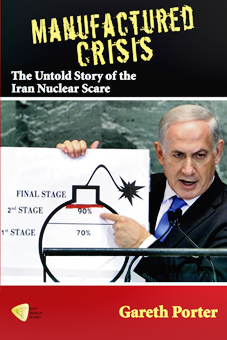
In his latest groundbreaking book, entitled A Manufactured Crisis: The Untold Story of Iran Nuclear Scare, the historian and investigative journalist Gareth Porter catalogs a long list of false reports manufactured by Israeli intelligence agencies in order to mislead the public and pave the way for a war against Iran. (1)
Posted in Abolition, Democracy - local & global, Egypt, European Union, Farhang Jahanpour, General issues, Human rights and justice, International law, Iran, Iraq, Israel/Palestine, Middle East, Military - technology, Negotiations, New books, Nuclear weapons, Security and defence, Syria, TFF PressInfo, Uncategorized, US Empire, US politics & security, USA |  Tags: A Manufactured Crisis, antiwar.com, Bandar Abbas, BBC, BND, deal with Iran, Dodgy Dossier, Douglas Feith, Gaza, German intelligence, Hassan Rouhani, IAEA, Iran's nuclear program, Jim Lobe, Judith Miller, Karsten Voigt, Katrine A, Lobe Blog, Mohammad Javad Zarif, Mojahedin-e Khalq, Paul Wolfowitz, Peter Jenkins, Port Sudan, ship to gaza, Sinai, Stuxnet, The Real News, U.N. Security Council, Yasser Arafat |
No Comments »
Tags: A Manufactured Crisis, antiwar.com, Bandar Abbas, BBC, BND, deal with Iran, Dodgy Dossier, Douglas Feith, Gaza, German intelligence, Hassan Rouhani, IAEA, Iran's nuclear program, Jim Lobe, Judith Miller, Karsten Voigt, Katrine A, Lobe Blog, Mohammad Javad Zarif, Mojahedin-e Khalq, Paul Wolfowitz, Peter Jenkins, Port Sudan, ship to gaza, Sinai, Stuxnet, The Real News, U.N. Security Council, Yasser Arafat |
No Comments »