Archive for the ‘International law’ Category
On Syria: What to do in 2013
 January 22nd, 2013 |
  Author:
 By Richard Falk
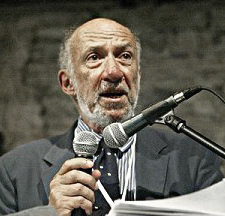
I took part last week in an illuminating conference on Syria sponsored by the new Center of Middle East Studies that is part of the Josef Korbel School of International Studies at the University of Denver. This Center has been recently established, and operates under the excellent leadership of Nader Hashemi and Danny Postel, who previously together edited the best collection of readings on the Green Revolution in Iran published under the title The People Reloaded.
The conference brought together a mixture of Syrian specialists, Syrian activists, and several of us with a more general concern about conflict in the region, as well as with human rights and as participants in the heated debates of recent years about the virtues and vices of ‘humanitarian intervention’, what is now being called ‘Responsibility to Protect’ of ‘R2P’ in UN circles and among liberals.
I came to the gathering with a rather strong disposition to present myself as a confirmed R2P skeptic, regarding it as a cynical geopolitical euphemism for what Noam Chomsky labeled as ‘military humanism’ in the context of the controversial NATO Kosovo War of 1999. Ever since the Vietnam War I have viewed all Western claims to use force in the post-colonial non-West with suspicion. Read the rest of this entry »
Japan and China’s fight over islands
By Jonathan Power
At last someone has done something sensible in the increasingly bitter fight between Japan and China over the Senkaku/Diaoyu islands – and that is China. China announced at the weekend that it is taking the issue to the UN. China has never done anything like this before.
It can only have been decided at the highest level by the new president himself, Xi Jinping, who in the months before he was promoted leader worked to get the various conflicting parts of the Chinese bureaucracy and the armed forces to pull in the same direction on the issue of maritime disputes. Read the rest of this entry »
Visit to Gaza – UN Press release
By Richard Falk
I recently completed a mission to the Gaza Strip, entering by way of Egypt at the Rafah Crossing; as I am now in Doha attending the final days of the UN Climate Change negotiations, I have had no chance to write a post describing the moving and difficult circumstances that confront the people of Gaza, and the hopes and disappointments that followed the ceasefire that followed the Israeli onslaught; there are concerns about whether it will be fully implemented in accordance with expectations, and if not, whether events will move toward renewed cross-border violence. There are new hopes and complexities on two further fronts: the aftermath of Palestinian success in being confirmed as a non-member state by the General Assembly on November 29, and the new priority being accorded to reconciliation between the Palestinian Authority and Hamas. More than ever since Hamas assumed governing authority in June 2007, foreign leaders have been visiting Gaza, according Hamas an upgraded diplomatic status
Observing the International Day of Solidarity with the Palestinian People in Cairo
By Richard Falk
Text of my remarks delivered in Cairo at joint UN/Arab League ceremony marking the observance of the 2012 International Day of Solidarity with the Palestinian People, 29 Nov 2012, some 10 hours prior to the historic vote in the UN General Assembly.
Your Excellency, Dr. Nabil Elaraby, Secretary General of the League of Arab States, H.E. Barakat Al Fara, H.E. Amre Dou Al Atta, Dr. Mohammad Gimi’a, Bishop Macos – Excellencies, Distinguished Guests, Ladies and Gentlemen:
It is an exceptional honor and challenge to speak on such an occasion. We meet at a tense historical moment with heavy potential consequences for the Palestinian people and for the peoples and governments of the region. I along with many others throughout the world share Nelson Mandela’s view that the denial of Palestinian rights remains the “the greatest moral issue of our time.” This 2012 International Day of Solidarity with the People of Palestine possesses a special significance. A ceasefire ending the latest orgy of violence afflicting the two societies, but especially affecting the people of Gaza, has been agreed upon just over a week ago, and appears to be holding. And in a few hours the Chairman of the Palestinian Liberation Organization and President of the Palestinian Authority, Mahmoud Abbas, is scheduled to ask the UN General Assembly to recognize Palestine as a non-member observer State within the UN, a status similar to that of the Vatican. When this initiative is approved later today it means an upgraded status for Palestine within the UN System, including probable access to other organs of the UN.
Meeting here in Cairo on this occasion has an added resonance. It was the Egyptian government that played such an instrumental role in producing the ceasefire in Gaza, and it is the democratization of Egypt that has done more to improve Palestinian prospects than any other recent regional or international development. It also raises expectations that Egypt will in the future exert its influence to bring this conflict that has lingered far too long to a just end by working toward a peaceful solution based on the recognition of Palestinian rights under international law. Nothing would better convey to the world that the Arab Spring represents a regional declaration of independence from the dominion of external influence. In doing so it would enlarge upon the earlier historic achievement of unexpectedly bringing about the downfall of a series of dictatorial regimes reigning throughout the Middle East. Read the rest of this entry »
Can U.S. Citizens End Israel’s Legal Impunity?
By Stephen Zunes
Each time international law has attempted to censure Israel for its recent violations of human rights, the United States has stepped in to stop the process. If anyone is in a position to do something about this, it’s the U.S. public.
The great wish of the early Zionist leader Theodor Herzl was that Israel would be treated like “any other state.” Were that the case, there might be more rational and productive discourse regarding the Israeli-Palestinian conflict, which is particularly critical in light of Israel launching yet another devastating attack against civilian-populated areas of nearby Arab lands.
What we are witnessing from the Obama administration, however is the unfair phenomenon of exempting Israel from criticism.
There are certainly those who do unfairly single out Israel, the world’s only predominantly Jewish state, for criticism. There is a tendency by some to minimize Israel’s legitimate security concerns and place inordinate attention on the Israeli government’s transgressions, relative to other governments that abuse human rights. There are also those who, in light of the five-year siege of the Gaza Strip and the enormous suffering of the Palestinian people, try to rationalize terrorism and other crimes by Hamas, the reactionary Islamist group currently in control there.
What we are witnessing from the Obama administration, however—as Hamas rains rockets into Israel and Israel rains bombs, missiles, and mortars into the crowded and besieged Gaza Strip—is the similarly unfair phenomenon of exempting Israel from criticism. While most of the international community has criticized both Hamas and Israel for their attacks on areas populated by civilians, the Obama administration has restricted its condemnation to the Palestinian side. Read the rest of this entry »
 Posted in International law, Israel/Palestine, Middle East, Stephen Zunes, US Empire |
  No Comments »
Abetting murder in Gaza
By Stephen Zunes
The November 22 ceasefire between Israeli and Hamas forces is a huge relief for the civilian population on both sides—the primary victims of the conflict. But the Obama administration’s unconscionable decision the previous week to block a ceasefire effort by the UN Security Council not only resulted in additional civilian deaths but also serves as an indication that, despite the president owing his re-election to the hard work of his progressive base, his foreign policy will continue to lean to the right.
The draft resolution blocked by the United States explicitly condemned all acts of terrorism and violence towards civilians, reaffirmed the right of all states to live in peace within secure and recognized borders, and called for an immediate and durable ceasefire. It reiterated that the Israeli-Palestinian conflict could only be resolved through peaceful means and called for an immediate resumption of a substantive bilateral negotiating process between Israel and the Palestinian Authority. Read the rest of this entry »
Posted in International law, Israel/Palestine, Middle East, Stephen Zunes, US Empire |
No Comments »
Video: Richard Falk on Israel’s attack on Gaza
Democracy Now! interview
November19, 2012
Sustaining peace after war
By Jonathan Power
When it comes to creating a peace in Afghanistan sufficient for the US and NATO to pull their troops out with some degree of confidence in the country’s future stability history offers conflicting lessons.
The mantra is that war-shattered states must be guided into a liberal democracy and a market-orientated economic system.
Yet there is much evidence that the process of political and economic liberalization can sometimes do more harm than good in states that have just emerged from civil war. Liberalization doesn’t always foster peace. Both democracy and capitalism are built on a paradox – the notion that societal competition can limit inter-communal competition and dampen conflict. Read the rest of this entry »
U.S. shares responsibility for Rachel Corrie’s death
By Stephen Zunes
On August 28, an Israeli court rejected a civil lawsuit against Israeli occupation forces for the 2003 murder of Rachel Corrie, a 23-year old American peace activist killed in the Gaza Strip, upholding a severely flawed internal Israeli military investigation.
Amnesty International strongly condemned the decision, noting how “the verdict continues the pattern of impunity for Israeli military violations against civilians and human rights defenders in the Occupied Palestinian Territories (OPT). The verdict shields Israeli military personnel from accountability and ignores deep flaws in the Israeli military’s internal investigation of Corrie’s death.” Read the rest of this entry »
Hunting down the war criminals
By Jonathan Power
There can be no question that if President Bashar al-Assad of Syria falls the International Criminal Court will want to put him on trial for war crimes. The long arm of international law will reach him wherever he flees to. The ICC has an unblemished record in bringing to The Hague, the Court’s headquarters, the people they want. As the great heavyweight boxer, Joe Louis, once said, “You can run but you can’t hide”.
This week a new term begins for the justices. Read the rest of this entry »