Archive for the ‘Middle East’ Category
Hope, wisdom, law, ethics, and spirituality in relation to killing and dying: Persisting Syrian dilemmas
 November 22nd, 2012 |
  Author:
 By Richard Falk
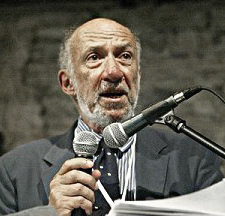
In appraising political developments most of us rely on trusted sources, our overall political orientation, what we have learned from past experience, and our personal hierarchy of hopes and fears. No matter how careful, and judicious, we are still reaching conclusions in settings of radical uncertainty, which incline our judgments to reflect a priori and interpretative biases.
As militarists tends to favor reliance on force to resolve disputes among and within sovereign states, so war weary and pacifist citizens will seek to resolve even the most extreme dire conflict situations by insisting on the potentialities of non-violent diplomacy.
In the end, even in liberal democracies most of us are far too dependent on rather untrustworthy and manipulated media assessments to form our judgments about unfolding world events. How then should we understand the terrible ongoing ordeal of violence in Syria? Read the rest of this entry »
Lebanon’s red lines, bared
By Sharmine Narwani

What a difference a week can make in the Middle East.
On October 19, when a car bomb tore through the upscale Christian neighborhood of Achrafiyeh in Beirut killing a major security official, Lebanon shuddered in fear that the era of political assassinations was back.
Politicians and commentators didn’t miss a beat. The murder of Internal Security Forces (ISF) Information Branch head Wissam al-Hassan was compared to the killing of his former boss, ex-prime minister Rafiq Hariri in 2005. And the Hariri-allied pro-West, anti-Syria, pro-Saudi “March 14” political coalition lined up to deliver a visceral blow to their opponents, just as they had in 2005 when they ejected Syrian troops from Lebanon.
Hassan’s body was not yet cold before his political allies started pointing their fingers at Syria and whipping up fury in the anti-Syrian Sunni enclaves of Lebanon. Read the rest of this entry »
Israel’s nuclear weapons
By Jonathan Power
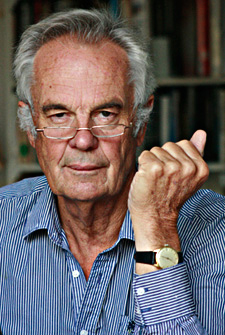
The story of Israel’s nuclear bomb is rarely told. But we hear a lot about the possible Iranian bomb and the dangerous bombs of Pakistan that perhaps militant Islamists could grab – although that is unlikely given that the US has supplied state-of the-art locks to Pakistan. And then there are India’s, Britain’s, France’s, America’s, China’s and Russia’s. There used to be a South African bomb ( Israel worked with Israeli bomb scientists), and attempts by Sweden, Libya, Brazil and Argentina to build a bomb. These latter day five all voluntarily gave up their nuclear weapons plans and the ex-Soviet republics of Ukraine and Kazakhstan gave up their arsenals.
As for the would-be Iranian bomb it is forgotten that the Shah, with US knowledge, was the one who initiated the research that he hoped could lead to a bomb. (There is no proof that Iran today is building one.) Read the rest of this entry »
 Posted in Iran, Israel/Palestine, Jonathan Power, Nuclear weapons, Violence-prevention |
  2 Comments »
Why don’t we make peace when we so easily could?
Jan Oberg lectures at the World Peace Academy in Basel, Switzerland – A one-hour educational video
Turkey: Cyprus, Kurds, Armenia and Syria
By Johan Galtung

There was a time, a century or so ago, when Turkey was the “sick man of Europe”. Times are a-changing. Today Turkey is quite healthy, and much of Europe is sick, suffering from gross institutional and economic problems, including a flagrant inequality within and between countries, between a creditor and a periphery of debtors in bondage.
This in no way means that Turkey is problem-free; no country is. The focus here is on four problems involving other nations: the Greeks, the Kurds, the Armenians and the many nations in Syria. With an explicit foreign policy of zero problems with neighbors great progress has been made, but much remains to be done. Read the rest of this entry »
Was it wrong to support the Iranian Revolution in 1978 – because it turned out badly?
By Richard Falk
I have often reflected upon my own experience of the Iranian Revolution. In the aftermath of the Vietnam War I believed that the United States would face its next major geopolitical challenge in Iran: partly because of its role via CIA in overthrowing the Mohammad Mosaddegh elected constitutional government so as to restore the repressive Shah (Mohammad Reza Pahlavi) to power in 1953, partly because there were 45,000 American troops deployed in Iran along with a network of strategic assets associated with Cold War anti-Soviet priorities, partly because there was a generation of young Iranians, many of whom studied abroad, who had experienced torture and abuse at the hands of the SAVAK, Tehran’s feared intelligence service, partly by the intense anti-regime opposition of an alienated middle class in Iran that was angered by the Shah’s reliance on international capital in implementing the ‘White Revolution,’ and partly because the Shah pursued a regionally unpopular pro-Israel and pro-South Africa (during apartheid) policy.
Against this background, and on the basis of my decade long involvement in opposing the American role in Vietnam, I helped form and chaired a small, unfunded committee devoted to promoting human rights and opposing non-intervention in Iran. I was greatly encouraged to do this by several students who were either Iranian or political activists focused on Iran. Read the rest of this entry »
Sociocide, Palestine and Israel
By Johan Galtung
Testimony for Russell Tribunal on Palestine – New York City, 7 Oct 2012
Honorable Members of the Jury!
Sociocide is a new concept that has not found its place in positive international law. But Genocide, the unspeakable crime of massive killing of members of a genus, a nation, for no other reason than membership, has. And Ecocide, the unspeakable crime of killing Mother Earth who nourishes us all, is finding its place via the constitutions of some countries in Latin America.
Sociocide, the killing of a society’s capacity to survive and to reproduce itself, should become equally and prominently a crime against humanity. Read the rest of this entry »
Mohammad and the wild, marginal men of the Muslim world.
By Jonathan Power
The wild demonstrations that last week burst out in many places in the Middle East, Pakistan, Afghanistan, Sudan and other places will not be the last and neither were they the first to protest Western insults of the prophet Mohammad. Much more serious were the ones that erupted in 1988 following the publication of Salman Rushdie’s novel, “The Satanic Verses”, and seven years ago the protests and threats that followed the publication of satirical cartoons in a Danish paper, mocking Mohammad. Read the rest of this entry »
Embassy protests and Middle East unrest in a context
By Stephen Zunes
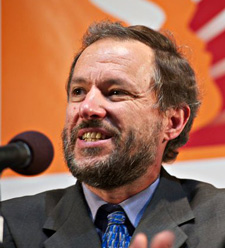
It seems bizarre that right-wing pundits would be so desperate to use the recent anti-American protests in the Middle East—in most cases numbering only a few hundred people and (except for a peaceful Hezbollah-organized rally in Lebanon) in no cases numbering more than two or three thousand—as somehow indicative of why the United States should oppose greater democracy in the Middle East. Even more strangely, some media pundits are criticizing Arabs as being “ungrateful” for U.S. support of pro-democracy movements when, in reality, the United States initially opposed the popular movements that deposed Western-backed despots in Tunisia, Egypt, and Yemen, and remains a preeminent backer of dictatorships in the region today.
Meanwhile, Mitt Romney falsely accused President Obama Read the rest of this entry »
Posted in Arab Spring, Middle East, Stephen Zunes, US Empire, US politics & security |
No Comments »
The case against war: Ten years later
By Stephen Zunes
Ten years ago, I wrote a series of articles for the Foreign Policy in Focus website in which I put forth a series of arguments against the Bush administration’s push for a U.S. invasion of Iraq prior to the fateful congressional vote authorizing the illegal, unnecessary, and ultimately disastrous war. At the request of the editors of The Nation – the oldest continually published weekly magazine in the United States – I wrote a version entitled “The Case Against War,” which appeared on their website September 12, 2002 and as the cover story of the September 30 issue. It became one of the most widely circulated articles in the magazine’s 147-year old history. Every congressional office received multiple copies. Read the rest of this entry »