Archive for the ‘AA ARTICLES BY ASSOCIATES’ Category
On Barack Obama’s re-election
 June 3rd, 2013 |
  Author:
 By Richard Falk
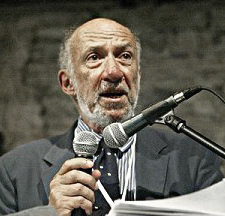
We share with your editorial (Nov. 11, 2012) the view that one of President Obama’s “singular contributions has been his vision of a world without nuclear weapons.” We would go further, and suggest that realizing this vision would ensure Mr. Obama a legacy of honor, not only for American, but for the world. Your editorial adds a caveat that nuclear disarmament “is a lofty goal that would not be achieved in his second term, or maybe for years after this.”
We dissent from this bit of conventional wisdom that almost always accompanies the affirmation of the goal, almost taking back what was so grandly proposed. In our view there has rarely been a better time to initiate a negotiated process of phased nuclear disarmament, and there is no reason that such a process should be stretched out over a long period. Read the rest of this entry »
EU Commission supports manipulative research for post-democracy
By Johan Galtung
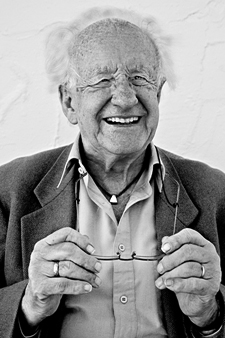
How do the elites of declining empires react? One answer is demoralization. Like 26,000 annual acts of sexual harassment in the US Army leaving little time for killing; and one US soldier on active duty committing suicide every 18 hours–higher than combat deaths–the figures for veterans being one every 80 minutes. Or else, simply giving up empires–like the colonial powers did before and after the official abolition of colonialism (UN Charter Art. 73). Like Moscow outside and inside the Soviet Union, copying England with a Commonwealth of Independent States. Like the USA is partly doing, and partly not, hanging on to the last countries willing to kill for them, like Canada, Norway, Japan, Georgia. And partly not, working on imperial strongholds in Africa and the Pacific; doing the long distance killing themselves.
But what do such dubious elites do with their own peoples? Wise elites wash their hands off imperialism, declare it passé, a mistake, retool their economies for less dependence on resources and markets from and in their peripheries that now process the resources themselves for themselves and others. Read the rest of this entry »
US policy weakens Iran’s pro-democracy movement
By Stephen Zunes
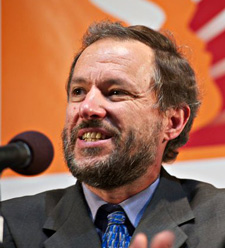
While the outcome of the Iranian elections scheduled for June 14 may be hard to predict, it will make little difference as long as power remains firmly in the hands of Ayatollah Khamenei and other hard-line clerics. Indeed, while there are contending factions vying for the country’s relatively weak presidency, the narrow ideological spectrum within which candidates are allowed to run for public office offers little hope for change — at least through the electoral system.
Following the 2009 election, in which the incumbent right-wing president Mahmoud Ahmadinejad was declared the winner despite his apparent loss to the popular reformist Mir-Hossein Mousavi, the people of Iran rose up in a popular civil insurrection, which was brutally crushed.
While it is hard to guess how soon democracy will come to Iran, the government’s theft of the election and subsequent crackdown — shattering the illusion many Iranians still held that they could work within a rigged political system — may have brought that day closer. Read the rest of this entry »
Ending perpetual war? Endorsing drone warfare?
By Richard Falk
That President Obama chose on 23 May to unveil his second term cautionary approach to counter-terrorism at the National Defense University epitomized the ambiguity of the occasion. The choice of venue was itself a virtual guarantee that nothing would be said or done on that occasion that challenges in any fundamental way the global projection of American military power.
Obama’s skillfully phrased speech was about refining technique in foreign policy, achieving greater efficiency in killing, interrogating the post-9/11 war mentality, and all the while extolling the self-mystifying glories of American exceptionalism. That is, only the United States, and perhaps Israel and NATO, possessed an entitlement to use force at times and places of the actor’s choosing without consulting the UN, respecting the constraints of international law, and heeding the admonition in the Declaration of Independence to show “a decent respect for the opinions of mankind.” Read the rest of this entry »
Yara Abbas in her own words
By Sharmine Narwani

Today I try to honor a young woman who made an impact on me in one meeting long ago. Syrian journalist Yara Abbas’ love for her country and the soldiers who protected her in combat zones humanized these young men for me, when it was altogether so easy to write them off with the rest of the media as killing machines.
I felt during our interview that she was out in the field protecting these boys as much as they were protecting her. And so she made me give them a second look. RIP.
Last week Yara Abbas was killed by a sniper. Here is Sharmine Narwani’s interview with her from last year. Yara was the 38th media casualty in the Syrian conflict…
Destroying Libya and world order
By Francis A. Boyle
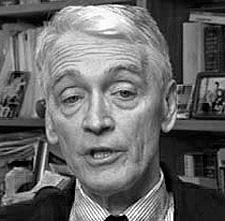
DESTROYING LIBYA AND WORLD ORDER
The Three-Decade U.S. Campaign to Terminate the Qaddafi Revolution
by FRANCIS A. BOYLE
ISBN: 978-0-9853353-7-3
$18.95 / 212 pp. / 2013
It took three decades for the United States government—spanning and working assiduously over five different presidential administrations (Reagan, Bush I, Clinton, Bush II , and Obama)—to terminate the 1969 Qaddafi Revolution, seize control over Libya’s oil fields, and dismantle its Jamahiriya system. This book tells the story of what happened, why it happened, and what was both wrong and illegal with that from the perspective of an international law professor and lawyer who tried for over three decades to stop it. Read the rest of this entry »
 Posted in European Union, Francis A Boyle, Libya, New books, US Empire, World order/governance |
  No Comments »
The Americas: Columbia and the U.S.
By Johan Galtung
A few years ago the two countries were the leaders in mental anxiety in the Americas. Both had good reasons: the longest lasting violence in any contemporary country; in Colombia from 1949 with some interruption, then on again from 1964 with FARC, the famous guerilla. And for the USA the conviction that Evil is around every corner, domestic and global; better have the arms to handle those bad guys.
In both, structural violence as unequal distribution of economic wealth and control of economic assets are among the world’s highest.
There is a difference, though: one country submits its problem to third party mediation, Read the rest of this entry »
It is possible to close Guantanamo
By Jonathan Power
“Guantanamo has become a symbol around the world for an America that flouts the law”. Did you say that? Did I? No. It was the president of the United States of America, Barack Obama, speaking last week.
How come that the most powerful man in the world cannot open the locks of this unlawful prison? How come the prisoners can’t be transferred for trial and, if convicted, imprisoned in the United States itself? The simple answer is that the Republicans joined by some Democrats in Congress have continually blocked Obama. While it is true that his hands were tied during his first term he hasn’t tried again since he was re-elected – until last week, when in a speech he made some remarks on the issue including my opening line. Obama has been prodded to raise the issue again because of a hunger strike by most (about 100) of the 166 inmates.
It is still rather unclear what he proposes to do to break the Republican headlock. Read the rest of this entry »
Responding to the Syrian challenge
By Richard Falk
The issue facing the U.S. Government at this stage is not one of whether or not to intervene, but to what extent, with what objectives, and with what likely effects. More precisely, it is a matter of deciding whether to increase the level and overtness of the intervention, as well as taking account of what others are doing and not doing on the Assad regime side of the conflict. Roughly speaking, there have been interventions by the Turkey, the United States, Qatar, Saudi Arabia, Israel, and the EU on the insurgent side, and by Russia, Iran, Hezbollah on the regime side, with a variety of non-Syrian ‘volunteers’ from all over being part of the lethal mix.
From an international law perspective the issues are blurred and controversial, both factually and jurisprudentially. The Assad government remains the government of Syria from most international perspectives, despite having repeatedly perpetrated the most despicable crimes against humanity. Such behavior has eroded Syria’s status as a sovereign state Read the rest of this entry »
The unstoppable pursuit of crimes against humanity
By Jonathan Power
Good riddance! I wonder what their Maker will conclude? Last week saw the death of one of the world’s worst practitioners of crimes against humanity – Jorge Rafael Videla, aged 87, the former military dictator of Argentina. He died while serving a life sentence.
Last week also saw the conviction of Guatemala’s former head of state, Efrain Rios Montt, aged 86, for genocide – the mass murder of the country’s indigenous people. This was the first time, anywhere in the world, that a former head of state has been put on trial for genocide by a national tribunal in his own country. Regrettably, yesterday, the constitutional court ordered a partial re-trial. His conviction is still likely. Read the rest of this entry »