Archive for the ‘AA ARTICLES BY ASSOCIATES’ Category
Mono-, multi-, inter-, cross-, and transdisciplinary research
 May 24th, 2013 |
  Author:
 By Johan Galtung

Firenze, European University Institute
Five ways of doing research, re-search, for insight, knowledge, solutions. How it is done matters.
The world does not come to us sorted out according to university faculties – natural, human, social sciences – and disciplines, in social sciences from micro (psychology) via meso (sociology, politology, anthropology, economics) to macro-mega, inter-state, -inter-nation, inter-region, inter-civilization studies. Rather, the world comes to us as a set of messy, chaotic problems: some goal we want to obtain like health – or at least absence of disease–functional, be good-looking, having affordable housing, taming nature and making it serve us; or a clash of goals, known as conflicts we want to solve to avoid violence.
So, why are universities not organized according to problems? Read the rest of this entry »
Palestine/Israel: On political precondition
By Richard Falk
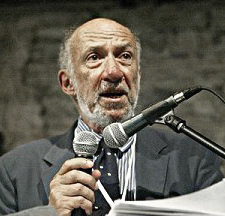
To the extent that diplomacy solves international problems it depends on the satisfaction of the political preconditions that must be met for negotiations between sovereign states to reach sustainable and benevolent results. To clarify the point, in situations where there is a clear winner and loser, political preconditions are irrelevant, as the winner can dictate the terms, either imposing them as was done after World War II in response to the unconditional surrender of Germany and Japan, or offering proposals on a ‘take it or leave it’ basis.
This is what Israel has attempted to do over the course of the twenty years that the Oslo Framework, the Roadmap, and the Quartet, have provided the ground rules for diplomacy with respect to Israel/Palestine negotiations. Read the rest of this entry »
Pakistan’s democracy versus militant Islam
By Jonathan Power
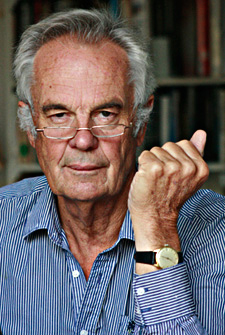
One small step forward for Nawaz Sharif, the new election winner, but one big step forward for Pakistan. The Islamist parties and their militant, sometimes violent, followers have won so few votes they will play no significant role in parliament. The overwhelming majority of Pakistan’s ethnically disparate population has made it clear that they identify with secular politics.
Hussein Haqqani writes in his insightful new book on Pakistan that “Most Pakistanis would probably be quite content with a state that would cater to their social needs, respect and protect their rights to observe religion and would not invoke Islam as its sole source of legitimacy.”
If Pakistan’s democracy were allowed to play a central role -as seems to be happening at the moment- hopefully the Islamist tail will no longer be allowed to wag the Pakistani dog. For years, particularly under military rule, the Islamists, not least the militant, dogmatic part of them, have been allowed to set too much of the agenda. In foreign policy issues, such as the argument with India over the possession of Kashmir and support for the Taliban in Afghanistan, they have long acted outside the rule of law, but with the support of the military’s intelligence service, the notorious ISI.
As in eighteenth century France when the revolution consumed its own children, so have the Pakistani militants become not just the country’s nightmare but the army’s too despite all the support the ISI has given them. When General Pervez Musharraf was president, leading a military government, he narrowly escaped assassination by militants three times.
Musharraf was never able to get on top of the paradox the military over decades had created for itself – supporting the Islamists while being threatened by them. Read the rest of this entry »
Midest backlashes yet to come
By Sharmine Narwani

The Middle East is treading water these days. Two years of rhetoric about ousting dictators, revolution, freedom, honor, dignity, and democracy – without result – has people on edge, their disillusionment now demanding an outlet.
There are no outlets though. Sensing the fast-growing disenchantment with undelivered promises, even the “bright new leaders” are tightening the reins and demanding compliance.
These new heads of state simply can’t deliver the goods for one main reason: they are just as caught up in global and regional power contests as were their predecessors. Nothing has changed with these uprisings. Nothing! Read the rest of this entry »
 Posted in Arab Spring, Egypt, Future perspectives, Iran, Iraq, Israel/Palestine, Lebanon, Middle East, Sharmine Narwani, Syria |
  No Comments »
Meanwhile, Manchester United…
By Johan Galtung
It usually came at the end of BBC broadcasts: now Sir Alex Ferguson is up front, main headline on the International Herald Tribune, first page. Truly impressive, 27 years as Man U coach and manager, sorry CEO; this is now a business enterprise owned by the Glazer family in Florida and the news of his retirement shock its shares at the New York Stock Exchange. Where have all the sports gone?
Up comes the Iron Lady, Margaret Thatcher, with mainstream press harking back to years of greatness centered on strong personalities. She was with Ronald Reagan part of the mid 1980s counter-revolution, breathing short term life in stagnant economies through privatization, busting trade unions, de-industralizing, laying regions of their countries waste, crippling welfare states – ”Rust in Peace” they say. When accused of selling the family silver by privatizing, she said: Yes, back to the family!
Where has all the silver gone?
But she kept the Kingdom United by letting a hunger striking Irish freedom fighter die in prison, and, like Ronald Reagan, Margaret Thatcher showed the colors and sent the army for some islands, Malvinas-Falklands for Thatcher (over Reagan’s mild protest, Monroe territory), Grenada for Reagan.
Where have all the empires gone? Read the rest of this entry »
Rethinking ‘Red lines”
By Richard Falk
There are widespread reports circulating in the media that President Obama had not fully appreciated the political consequences of responding to a question at an August press conference that asked about the consequences of a possible future use of chemical weapons by the Assad regime. Obama replied that such a use, should it occur, would be to cross ‘a red line.’ Such an assertion was widely understood to be a threat by Obama either to launch air strikes or to provide rebel forces with major direct military assistance, including weaponry.
There have been sketchy reports that Syria did make some use chemical weapons, as well as allegations that the reported use was ‘a false flag’ operation, designed to call Obama’s bluff. As the New York Times notes in a front page story on May 7th, Obama “finds himself in a geopolitical box, his credibility at stake with frustratingly few good options.” Such a policy dilemma raised tactical issues for the U.S. Government about how to intervene in the Syrian civil war without risking a costly and uncertain involvement in yet another Middle Eastern war. Not responding also raises delicate questions of presidential leadership in a highly polarized domestic political atmosphere, already shamelessly exploited by belligerent Republican lawmakers backed by a feverish media that always seem to be pushing Obama to pursue a more muscular foreign policy in support of alleged America’s global interests, as if hard power geopolitics still is the key to global security.
What is missing from the debate on Syria, and generally from the challenge to American foreign policy, is a more fundamental red line that the United States at another time and place took the lead in formulating – namely, the unconditional prohibition of the use of international force by states other than in cases of self-defense against a prior armed attack. Read the rest of this entry »
An octogonal world
By Johan Galtung
Let us try a look at the world from above, right now. There is so much drama unfolding. Is there a Big Picture? Of course there is, we all have one, so here is one effort, imgaine it as The Octagon, consisting of these eight big states or regions:
1) USA, 2) Russia, 3) India, 4) China, 5) OIC (the Organization of Islamic Conference, the 57 Muslim countries), 6) EU (27), 7) Africa (AU, African Union, 54 countries) and 8 ) CELAC, Latin America and the Caribbean, 33 countries). We might add Israel and Japan to the USA if the criterion is willingness to go to war with and for the USA – but Israel wants the USA to fight its wars, and Japan, even with Japanese hawks more than willing to join the nuclear club, is still bound by the constitution depriving Japan of the right to war. So they work for a new constitution with an emergency article that could justify a military take-over. Ominous. Hopefully Germany does not follow suit. Read the rest of this entry »
China’s under-reported positive behaviour
By Jonathan Power
China is a sitting duck. Not that long ago, as far as most of the rest of the world was concerned, it was almost a closed, mysterious, society. Now it is wide open. The bad is there for all to see. Last year the New York Times published an in-depth investigative series of long articles on the secret wealth of the family of Prime Minister Wen Jiabao. It proved that it is possible to peel off the layers and look beneath.
China’s new found relative openness has allowed an open season on the shooting range. The targets are legion – corruption, nepotism, nationalism, maladministration, growing inequality, environmental degradation, over assertive foreign policy and the military build up. Western critics enjoy popping off at them.
Much of what the critics say is true. But much is exaggerated. And much is ignored, in particular what is positive. Read the rest of this entry »
Syria: U.S. involvement could make things even worse
By Stephen Zunes
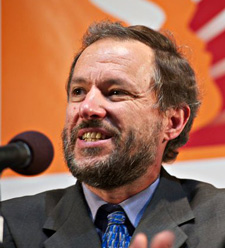
A comprehensive analysis by Zunes of chemical weapons in the Middle East and U.S. policies in this regard can be found here
The worsening violence and repression in Syria has left policymakers scrambling to think of ways our governments could help end the bloodshed and support those seeking to dislodge the Assad regime. The desperate desire to “do something” has led to increasing calls for the United States to provide military aid to armed insurgents or even engage in direct military intervention, especially in light of the possible use of chemical weapons by the Syrian regime.
The question on the mind of almost everyone who has followed the horror as it has unfolded over the past two years is, “What we can do?”
The short answer, unfortunately, is not much.
This is hard for many Americans to accept. Read the rest of this entry »
Is it immigration versus the working class?
By Jonathan Power
Every developed country is importing cheap labour, although much less so during this time of the Great Recession, yet all too rarely are the pro and con arguments discussed with real profundity.
A new, incisive, book “The British Dream” by David Goodhart, the founder of the magazine, “Prospect”, dares to deal with the shibboleths. There are many commonalities in Britain that apply to countries as varied as France, the US, Thailand and Qatar.
Goodhart’s conclusion about immigration is that what we might generalize and call the “working class” point of view is essentially correct: “We have had too much of it, too quickly, and much of it, especially for the least well off, has not produced self-evident economic benefit.”
This viewpoint is anathema to the liberal intelligentsia, businesses and many governments. In Britain, after years of gate-closing under Prime Minister Margaret Thatcher, Tony Blair, a well trodden liberal, opened the gates wide. Businesses could smooth the wheels of the economic motor with workers prepared to work for lower wages, work night shifts, do the unpleasant jobs and thus grease the wheels of the economy. Liberals focused on the argument about giving a helping hand to some of the world’s poor and led to a welcome broadening of the culture with new foods, restaurants and music. Read the rest of this entry »