Archive for the ‘AA ARTICLES BY ASSOCIATES’ Category
Pakistan – What Now?
 March 9th, 2014 |
  Author:
 By Johan Galtung
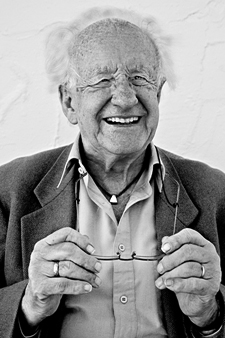
Islamabad, Ministry of Foreign Affairs, 28 Feb 2014
Your Excellencies,
The basic point is that Pakistan will not get that commodity called “peace” in Kashmir, Afghanistan and Central Asia by pursuing the ends and means of Washington and some local elites only. For peace to blossom the goals of other parties also have to be considered; and they are many. The logic of the political games pursued today presupposes some kind of victory or domination of “our side”: neither feasible nor desirable for peace. Hence, the need for some visions for peace politics is Kashmir, Afghanistan and Central Asia for tomorrow or the day after, with the hope that they can be useful when you have come to the end of the road with current policies. Nothing of this is easy; and without visions even impossible.
The fairly detailed, non-dogmatic vision appended (below) was my acceptance speech of the 2011 Abdul Ghaffar Khan International Peace-Builder Award by the Pakistan-American Muslim Association.
However, why do present policies so often seem to be non-starters?
The British empire drew three lines with disastrous effects for Pakistan: the Durand line in 1893, a 1,600-mile wound defining the border with Afghanistan, dividing the Pashtun nation – the biggest nation in the world without a state – into two parts; the McMahon line of 1914 defining the border with China in ways unacceptable to the Chinese; and the Mountbatten line of 1947 leading to the catastrophic violence of the partition. These lines have to be negated, liberating Pakistan from that past. Read the rest of this entry »
 Posted in Abolition, Afghanistan, Asia, Conflict and war, Democracy - local & global, Development, Disarmament, Human rights and justice, India, India-Pakistan, International law, Johan Galtung, Nonviolence, Nuclear weapons, Pro-peace & proposals, US Empire, Violence-prevention, World order/governance |
  No Comments »
60 years of nuclear pain – and not a word in the media
By David Krieger
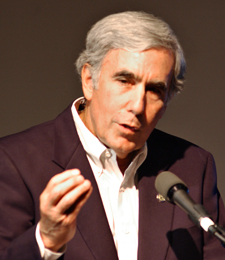
As the trustee of the United Nations Trust Territory of the Pacific Islands, the United States had an obligation to protect the health and welfare of the Marshallese Islanders. Instead, the U.S. conducted 67 nuclear tests in the Marshall Islands between 1946 and 1958. These 67 nuclear tests had an explosive power equivalent to 1.6 Hiroshima bombs daily for 12 years. In short, the U.S. used these islands shamefully, and the Marshallese people continue to suffer today as a result.
Syria: What to do now?
By Richard Falk
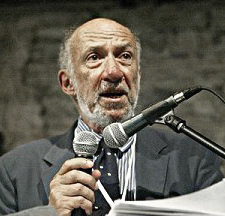
There is a new mood of moral desperation associated with the ongoing strife in Syria that has resulted in at least 135,000 deaths, 9.3 millions Syrians displaced, countless atrocities, Palestinian refugee communities attacked, blockaded, and dispersed, and urban sieges designed to starve civilians perceived to be hostile.
As the second round of negotiations in Geneva-2 ended as fruitlessly as the earlier round, there is a sense that diplomacy is a performance ritual without any serious intent to engage in conflict-resolving negotiations. Expectations couldn’t be lower for the as yet unscheduled, but still planned, third round of this Geneva-2 process.
The Damascus regime wants an end to armed opposition, while the insurgency insists upon setting up a transition process that is independently administered and committed to the election of a new political leadership. The gap between the parties is too big, and getting bigger, especially as the Damascus government correctly perceives the combat tide as turning in its favor, leading the main opposition forces seemingly to seek to achieve politically and diplomatically what they appear unable to do militarily. Also, it is unclear whether the opposition presence in Geneva has the authority to speak on behalf of several opposition groups in the field in Syria.
In light of these frustrations it is not surprising to observe an acrimonious debate unfolding between American interventionists who believe that only force, or at least its threat, can thread the needle of hope. Read the rest of this entry »
Repression, paranoia increases in Egypt
By Stephen Zunes
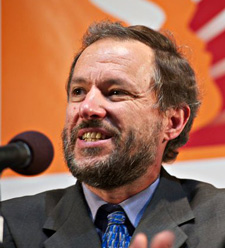
Since the military coup in Egypt against the unpopular but democratically elected government of Mohammed Morsi last July, more than 1,000 regime opponents have been killed, thousands more have been hauled before military courts on political charges, and a repressive anti-protest law has been enacted, severely limiting the right of peaceful assembly. The targets of this crackdown have not just been supporters of the ousted Muslim Brotherhood government, but liberal secular activists whose calls for democracy and social justice have put them at odds with both the Islamists and the military leadership. Continue here…
TFF PressInfo: Ukraine – What Would You Like to Know About It?
By Jan Oberg
I’m no expert on Ukraine, haven’t even visited it. Like millions of other citizens, I rely on media reports to understand at least some of what looks like potentially very serious developments.
Why do I feel so frustrated at what I get? Why do I have so many questions still after weeks of coverage? And how much will fellow-citizens who have just a few minutes per day to acquaint themselves with issues such as this understand (except that Putin is a bad guy)?
It’s a conflict, isn’t it?
I would like to know what are the internal Ukrainian dimensions, the regional East-West European and EU/NATO aspects and what has all this to do with global developments e.g. U.S. foreign policy, NATO’s expansion since the end of the Cold War, strategic interests of Russia and Russia-NATO relations. And where is China and BRICS countries in all this?
Internally, I’d like to learn about the ethnic composition and geography, the role of Russians and – not the least the Jews – and the historic relations between Russia and Ukraine.
In a shorter perspective, when did the West begin to see Ukraine as an interesting country? Why did George Bush Sr. and James Baker promise Mikhail Gorbachev that the West would never expand up to Russia’s border – and anyhow NATO began being an issue in Ukraine in 1995.
It would be great to learn from media about how – as everywhere else – economic mismanagement and overall crisis caused both neo-Nazism, rampant anti-Semitism and general dissatisfaction? And why is it that anti-Semitism is covered so little anywhere in the Western press
How come that important background aspects like these so easily translate into simplifying anti- versus pro-Russian attitudes? Read the rest of this entry »
Posted in EU politics, European Union, Georgia, Jan Oberg, Media & conflict, Media perspectives, Russia, TFF PressInfo, Ukraine, US Empire |
No Comments »
Ukraine’s umbilical cord to Russia
By Jonathan Power
February 25, 2014
Thank heavens for the Sochi Olympics. Russian president, Vladimir Putin, was committed to ensuring they showed Russia in its best light – and they did. Who would have wanted to take the world’s eyes off that to back a president in Ukraine who, to Putin’s annoyance, had made too many bad moves?
This must be a principle explanation for Putin’s public silence on the events in Ukraine.
Added to that, the fact is that Ukraine is not the Georgia of 2008 when Russia invaded, fearful that Georgia was planning to join Nato which, if it happened, would have been a major contribution to the military encirclement of Russia. Ukrainian public opinion, by and large, does not want their country to join Nato.
Ukrainians, both Ukrainian and Russian speaking, have an umbilical cord that ties them to Russia. There is the powerful influence of the Orthodox Church which is the inheritor of the Church of Constantinople which in turn is the true descendent of the original Rome-based Church. The headquarters of the Church was moved to Constantinople by the Roman emperor, Constantine, the first emperor to embrace Christianity. This is the reason Moscow is often referred to as the “Third Rome”. The path to Moscow led through Kiev and this is why the Orthodox in both these religious nations are likely to be intertwined as far as anyone can see ahead.
Besides that, right through the communist era, Moscow was the Mecca for every scientist wanting to do advanced research, for every aspiring ballet dancer, opera singer, writer, academic, surgeon, engineer and a host of politicians, including Soviet premier, Nikita Khrushchev. The Ukrainian Crimea has long been the main base for Russia’s navy. Read the rest of this entry »
Criminalizing aggressive war
By Johan Galtung
Kuala Lumpur, February 24, 2014
Few, if anybody, today argue this so forcefully as Mahathir Mohammad, Malaysia’s fourth prime minister, for 22 years. He compares what we do when one person kills another to all we do not do when millions kill millions in aggressive wars. We have clear laws, we apprehend the suspect, weigh the evidence for or against in court, and, if found guilty, the murderer is punished. There may even be a system of compensation for the bereaved.
But in wars among states the murderers get medals and honors, and if victorious relish a post-glory exuberance disorder, nourishing a new aggression. And the bereaved are left with their grief and a post trauma stress disorder, nourishing the idea of revenge. Madness, irrationality, a social evil of top rank, to be abolished. As Mahathir says: “Peace for us simply means the absence of war. We must never be deflected from this simple objective”. An important reminder for all who broaden the concepts of violence and peace: remember the essence!
One approach is criminalization. For that clear laws are needed, meaning without loopholes. The UN Charter is an effort (Articles 1.1 and 2.4) prohibiting war and the threat of war among (member) states. Read the rest of this entry »
How to win the Indian election
By Jonathan Power
The drum beats are already sounding for the soon-to-be-held general election in the world’s largest democracy, India- the country that shows China how it should be done.
There is a sense in the country that the ruling Congress Party and the influential Gandhi/Nehru core of it is on its way out after 10 years of a government that has hit the high points and the lows. To my mind, if the inexperienced Rahul Gandhi steps back from offering his own candidacy for prime minister and his mother, Sonia Gandhi, president of the party, pushes to the fore the very clever finance minister, Palaniappan Chidambaram, Congress is still in with a chance.
If not, the BNP candidate, Narendra Modi, looks like romping home, despite the cloud hanging over him as chief minister of the state of Gujarat at the time of Hindu-Moslem riots in 2002 when, it is said, he didn’t use his authority to halt the rampaging Hindus who slaughtered Muslims. The Supreme Court later absolved him and now the US has lifted its refusal to give him an American visa. Many say he now has a clear run. Read the rest of this entry »
IPRA – International Peace Research Association – at 50
By Johan Galtung
Known as IPRA, founded in 1964 in London–and this author, 34 at the time, is the only surviving founder. IPRA rotates every two years from one peace research center to the other, and is now in very competent Turkish hands. And what is more natural than having the 50th anniversary for the hub of peace studies in that hub of the world, Istanbul, 10-14 August this year!! Hurry up, register!!!
Today it is hard to believe, but to get IPRA started was as problematic as to launch peace studies in general.
The Western establishments did not like “peace”; their favorite was security, absence of violence against themselves in particular and their elites even more particularly. Security studies became academically institutionalized Western paranoia.
And the peace movement establishments did not like “studies”–what was there to study? Each one knew the one correct answer! Read the rest of this entry »
Failure of US leadership wrecking bilateral relationship
By Shastri Ramachandaran
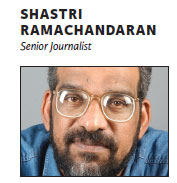 By Shastri Ramachandaran
With India-US ties hitting a nadir, Shastri Ramachandaran takes a look at what went wrong in big power diplomacy
The world’s two largest democracies may have much in common. But far from common interests prevailing over contentious issues, India-US relations are in for an uncommon spell of stresses and strains. These are unlikely to ease any time soon in an election year, regardless of Washington’s about-turn in cosying up to Narendra Modi.
Political changes in India cannot banish overnight the causes and conditions in the US responsible for the souring of what was, until recently, toasted as the “defining relationship” of the 21st century.
Devyani Khobragade’s arrest and strip-search drove India-US relationship to its lowest point in 15 years. Not since the 1998 nuclear test, when the US-led “international community” imposed sanctions, has the relationship between the two been so bad. Read the rest of this entry »