Archive for the ‘AA ARTICLES BY ASSOCIATES’ Category
Q & A with TFF Associate Heela Najibullah
 February 19th, 2014 |
  Author:
 The daughter of Afghanistan’s last communist president reflects on politics and pluralism in the strife-riven state.

Heela Najibullah was only 10-years-old when her father became the president of Afghanistan. To Heela, Mohammad Najibullah was Aba, father, trying to create reconciliation among an Afghan nation divided between communists and Mujhaideen, religious warriors fighting the Soviet occupation.
Though Heela saw her father working towards an inclusive solution to the Afghan conflict, few in the general population could separate Najibullah the communist from Najibullah the president calling for reconciliation.
In the decades since, however, Najibullah’s image has undergone a transformation. Pictures of a man once tied to communism now hang in people’s cars, windows and shops.
In an interview Al Jazeera, Heela Najibullah talks about her father’s changing image 25 years after the Soviet withdrawal. Continue reading the interview here…
Terrorists with nuclear weapons?
By Jonathan Power
US aviation authorities banned the carrying of toothpaste on planes heading to the Sochi Winter Olympics for fear they might contain a deadly explosive. Apparently such is the creativity of the modern terrorist.
Other departments of the US government rather more seriously worry about the transfer of nuclear materials to a terrorist group fit for an improvised “dirty bomb” (where explosives are wrapped with radiological materials) capable of bringing panic to a city, although it would only destroy not more than a block. Some go further and fear a small nuclear bomb could be smuggled in. Read the rest of this entry »
Saddam, Osama, Gaddafi, Chavez – and Obama
By Johan Galtung
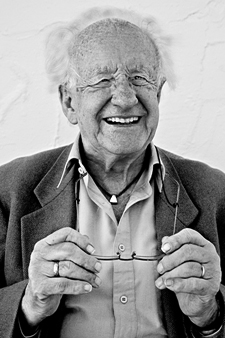
Contemporary reality, but what is real? Two of the above were killed under Obama’s watch; Osama executed by Obama extra-judicially, in cold blood, the other two by proxies (Chávez: we do not quite know). Two of them were dictators; Osama had no state, Chávez had, but won elections apparently not more rigged than Florida 2004, Ohio 2008.
What were the problems, how might they have been solved? Read the rest of this entry »
TFF PressInfo: Institute a course for all on what confront humanity in the 21st century
Open Letter to College and University Presidents Re: Global Security 101
By David Krieger
You are in a unique position of leadership to influence today’s youth to achieve a better tomorrow for America and the world. I am writing to enlist your help in educating young people to understand the survival challenges that face humanity in the 21st century.
Education is driven by values. Young people must learn to live with reverence for life, as did Albert Schweitzer, and to support equitable and nonviolent solutions to social problems, as did Gandhi and Martin Luther King, Jr. Young people must be imbued with compassion, commitment and courage. They must learn to use their imaginations to find creative and cooperative solutions to the great issues of our time. And they must find joy in the process and take time to celebrate the miracle of living on the only planet we know of in the universe that supports life. Continue here…
How the state Assembly tries to limit what I can teach
By Stephen Zunes
In preparing my syllabus for my introductory course on the Middle East this semester, it gives me pause that the California Assembly is still on record declaring that discussing certain well-documented historic incidents in modern Middle Eastern history should “not be tolerated in the classroom.” This unprecedented attack on academic freedom came in the form of a resolution (HR 35), co-sponsored by 66 of the 88 Assembly members, which passed by a voice vote in 2012. Continue reading here….
The resolution purports to be in opposition to anti-Semitic activities on university campuses, yet defines “anti-Semitism” so broadly as to include student activism targeting certain policies of Israel’s right-wing government as well as professors and others who acknowledge certain well-documented war crimes committed by Israeli forces.
The US role in Iraq’s upsurge in violence
By Stephen Zunes
The tragic upsurge of violence in Iraq in recent months, including the temporary takeover of sections of two major Iraqi cities by al-Qaida affiliates, is a direct consequence of the repression of peaceful dissent by the U.S.-backed government in Baghdad and, ultimately, of the 2003 U.S. invasion and occupation. Continue here…
Learning the lesson of Libya
By Jonathan Power
On Saturday Libya beat Ghana to win the African Nations Football Championship. A return to normalcy? To win a team must have a first class pitch and a non-stressed out team. Does this indicate that Libya, two and a half years after the fall of dictator, Muammar Gaddafi, is getting back on its feet?
Alas, the football win is out of the ordinary in Libyan life, made by a team that has found a way to the top by hard practice and severe self-discipline. The rest of Libya is not like that. Its government is wobbly, self-appointed militias still rule in many parts and the rule of law is ignored as often as it’s obeyed. An increasing number of its people yearn for the peace and order of the dictatorial Gaddafi regime where the economy grew, life was improving and even human rights were being more respected.
Inspired by the Arab Spring in neighbouring Tunisia and Egypt, Libyans, so the accepted Western narrative went, rose up in non-violent protests. Gaddafi responded by ordering the protesters to be shot and ordered his troops to fire indiscriminately into residential areas. The protesters turned violent and the civil war began.
In truth, many of the protesters from day one used arms and the government at first responded with only rubber bullets and water cannons. Western television reported that Gaddafi’s forces had used live ammunition, showing a video of this. The BBC the next day, almost alone among news organisations, admitted it had made a reporting mistake. The video had been “uploaded more than a year ago”.
Nonetheless the situation quickly deteriorated and those that chose non-violence were pushed aside. The rebel militias faced the troops head on. The rebels called for the outside world to intervene. Read the rest of this entry »
 Posted in Jonathan Power, Libya, Middle East, Peace, Pro-peace & proposals, US Empire, USA |
  No Comments »
Israel-Palestine: 1-2-6-20
By Johan Galtung
Washington and Tel Aviv make a mistake: the conflict between Israel and Palestine is only a small part of a complex between USA-Israel on one side against more or less all Arab and Muslim states and against the clear majority of UN member states in the UN General Assembly vote recognizing Palestine as a non-member state. A serious approach to peace includes Israel-Palestine negotiations without USA as “broker”; USA-Israel with Israel’s five Arab border states and the states bordering on them; and negotiations in UN regional and UNGA, in a Uniting for Peace setting. Peace calls on all levels.
An image of a reasonable solution with secure-recognized borders:
[1] Palestine fully recognized according to international law, as a UN member state, and bilaterally by an ever increasing number.
[2] A two-state Israel-Palestine nucleus with 1967 borders and some swaps, two Israeli cantons in sacred areas on the West Bank and two Palestinian cantons in Northwest Israel, heavily Palestinian before Naqba, capitals in both Jerusalems; defensive defense for Palestine.
[6] A Middle East Community modeled on the European Community of 1958 with Israel and the five Arab border countries, open borders for goods and people; a council of ministers and a commission for issues like water, return, joint patrolling; rule by consensus.
[20] A Conference, becoming Organization, for Security and Cooperation in the Middle East of the six, the countries bordering on them, and some of the countries bordering on them again (including Turkey, Cyprus, Greece) modeled on the OSCE-Organization for Security and Cooperation for Europe of 1975.
No one-state solution. Jews have a right to democracy with Jewish characteristics, but not to a state only for Jews. No modern state is only for one nation; and states are absorbed into regions anyhow. Read the rest of this entry »
Iran – P5+1 deal: Positive steps but hawks try to derail it
By Farhang Jahanpour
In his State of the Union Address on 28th February, President Barack Obama bluntly pointed out that if the hawks in Congress pushed for a bill to impose new sanctions on Iran he would veto that bill. This brave and almost unprecedented move by President Obama has silenced, at least for the time being, the opposition to the Joint Plan of Action that was agreed by Iran and the P5+1 (the five permanent Security Council members plus Germany) last November. This was a major setback for AIPAC (American Israeli Public Affairs Committee) and other pro-Israeli lobbies that had mobilized all their forces to block the deal.
In fact, some of the Democratic Senators that had sponsored the bill to impose additional sanctions on Iran have already distanced themselves from it. Furthermore, at least seventy Members of Congress are organizing a letter to the President supporting U.S.-Iran diplomacy and opposing new sanctions. (1)
New round of talks
Meanwhile, 20th January marked an historic turn in the Iranian nuclear dispute with the West, when both Iran and the West began to implement the terms of the agreement. The IAEA director general Yukiya Amano has said that he could report that “practical measures are being implemented as planned” by Iran, and that there would be new negotiations over the next phase on 8th February. Iran also has agreed to a new round of negotiations on 18th February with the P5+1. (2)
For his part, Iranian Foreign Minister Mohammad Javad Zarif has said: “What I can promise is that we will go to those negotiations with the political will and good faith to reach an agreement, because it would be foolish for us to only bargain for six months — that would be [a] disaster for everybody.” Read the rest of this entry »
Iran’s elections matter
By Farhang Jahanpour
In a radio broadcast in October 1939, Winston Churchill described communist Russia as “a riddle, wrapped in a mystery, inside an enigma.” Many people in the West today have the same feeling about Iran under the ayatollahs. One hears many pundits refer to Iranian politics as mysterious, inscrutable, baffling and unpredictable. Churchill continued his sentence by adding, “but perhaps there is a key. That key is Russian national interest.” I believe that if we apply the same key to Iran it becomes much easier to understand Iranian policies and actions.
Although the Islamic revolution of 1978-79 brought about many political changes, yet many facts about Iran have remained the same. They include the main elements of Iranian culture, an attachment to Iran’s long history, and a desire for a better life. The main slogans chanted by the people on the eve of the revolution were “freedom, independence and social justice”. The first referred to freedom from domestic tyranny, the second to independence from foreign meddling, and the third to a fairer distribution of wealth. Read the rest of this entry »