Archive for the ‘AA ARTICLES BY ASSOCIATES’ Category
Escaping the abusive state: the Snowden and Lynne Stewart cases
 December 28th, 2013 |
  Author:
 By Richard Falk
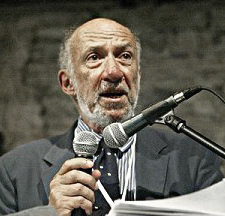
The more contact one has with the modern state, even in those societies that have long constitutional traditions entrenching civil liberties, the more grounds there are for deep and growing concern. I suppose that the most dramatic exhibition of the dangers being posed as 2014 approaches, and we are reminded that this will be 30 years after 1984, are associated with Edward Snowden’s extraordinary disclosures of the global network of surveillance being operated by the National Security Agency in the United States (NSA).
Such a network presupposes that we are all, that is, every inhabitant on the planet to be regarded as worth investigating as potential terrorist threats, and along the way establishing a huge data bank of information that can be used for nefarious purposes at any point to disempower and subvert protest movements or even blackmail anyone seen to be obstructing projects dear to the government or any special interest group that has the government’s ear on matters it cares about.
In important respects more disturbing than the Snowden revelations was the rabid response of the supposedly liberal government presided over by Barack Obama. No stone was left unturned, other than assassination or kidnapping, in the effort to gain physical custody over Snowden evidently with the intention of prosecuting him to the full extent of the law as an odious criminal offender. Foreign governments were badgered to cooperate in the pursuit, a plane carrying the Bolivian president was improperly denied access to the airspace of several European countries and forced to land in Vienna, because it was suspected of carrying Snowden.
Such an enforcement dynamic completely overlooked the political nature of Snowden’s crimes, Read the rest of this entry »
Clashing views of political reality: Chomsky versus Dershowitz
By Richard Falk
My friend and former collaborator, Howard Friel, has written an intriguing book contrasting the worldviews and polemical styles of two Jewish American intellectuals with world class reputations, Noam Chomsky and Alan Dershowitz (Friel, Chomsky and Dershowitz: On Endless War and the End of Civil Liberties, Olive Branch Press, 2014). The book is much more than a comparison of two influential voices, one critical the other apologetic, with respect to the Israel/Palestine struggle and the subordination of private liberties to the purveyors of state-led security at home and abroad. Friel convincingly favors Chomsky’s approach both with respect to the substance of their fundamental disagreements and in relation to sharply contrasting styles of argument.
Chomsky is depicted, accurately I believe, as someone consistently dedicated to evidenced based reasoning reinforced by an abiding respect for the relevance and authority of international law and morality. Chomsky has also been a tireless opponent of American imperialism and military intervention, and of oppressive regimes anywhere on the planet. He is also shown by Friel to be strongly supportive of endowing individuals whether citizens or not with maximal freedom from interference by the state. From such perspectives, the behavior of Israel and the United States are assessed by Chomsky to be betrayals of humane values and of the virtues of a constitutional democracy.
In contrast, Dershowitz is presented, again accurately and on the basis of abundant documentation, as a dirty fighter with a readiness to twist the truth to serve his Zionist predilections, which include support for the post-9/11 drift toward authoritarian governance, and an outrageous willingness to play the anti-Semitic card even against someone of Chomsky’s extraordinary academic achievements in the field of linguistics and of global stature as the world’s leading public intellectual, who has an impeccable lifelong record of moral courage and fidelity to the truth. Dershowitz has devoted his destructive energies to derailing tenure appointments for critics of Israel and for using his leverage to badger publishers to refrain from taking on books, however meritorious, if they present either himself or Israel in what he views to be a negative light.
Friel illustrates the contrast Read the rest of this entry »
Chile beats a path on the murder rate
By Jonathan Power
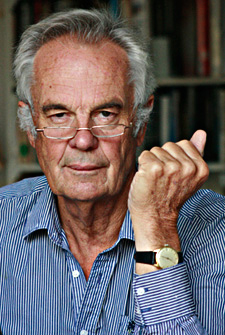
Chile has moved to the left. With Michelle Bachelet’s overwhelming victory in the presidential poll she now has the freedom to legislate as she wants. Poverty reduction, income re-distribution and education are the sharp end of her political program.
But of all Latin American presidents she is perhaps the most fortunate. Despite his draconian suppression of human rights, the dictator, General Augusto Pinochet, who ruled in the 1970s and 80s, not only engineered high economic growth he also kept deep poverty at bay. Read the rest of this entry »
Stop giving the West a bad name!
By Johan Galtung
Milano
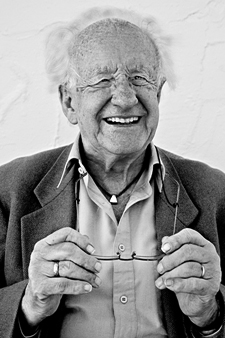
There it is, that fantastic duomo, the fourth in size in the Christian world, honoring their God, exuding self-confidence, and the beauty of the marble stones of the huge façade. Founded six hundred years ago, took five centuries to build, a marvel of engineering and architecture. A major concert with a choir does not manage to fill the inner space of the dome, but of the listeners, yes, with awe.
Conceived in the “dark ages” as those masters of cultural violence, our historians, call them, the “middle ages”, presumably between two “shiny ages”, the Roman Empire and Western colonialism, “modern times”. Will anything built today be visited by people in five hundred years, filling them with awe? Some banks, corporations? Some corrupted national assemblies? Some stadiums, shopping centers sloppily made, collapsing, built with no love, except for money? Some huge missile ramps to sow death and harvest hatred and revenge?
Do they ever think of that, the “leaders” in the most aggressive parts of the West, Anglo-America, UKUSAF–adding F for that center of “enlightenment” and “modernity”, France – do they think of the harm they do to all of us, in the West? To our past, to our legacy?
But soon it is over; they are losing Afghanistan and Iraq, Libya and Mali–no democracy, no economic growth, no human rights arising from the ashes of the most basic human right, to life, insulted. All over even mainstream media are filled with negativism; crying failure. Read the rest of this entry »
Syria – how surprising!
By Jan Oberg
This Sunday morning, I stumble upon this article on BBC’s homepage – the French foreign minister is “pessimistic” about the negotiations to be held in January in Montreaux, Switzerland about Syria. This is a slightly expanded version on what I jotted down on TFF Facebook:
• Look: First you simplify the conflict beyond recognition, the usual two parties: one side with all the good people and one side with all the bad people – the type of conflict analysis that has proved to never work anywhere (but you learnt nothing from Somalia, Yugoslavia, Afghanistan, Iraq, or Libya).
• You set up the Friends of Syria – but with such friends, who need an enemy?
• You act as if you have noble motives but never recognize that the French, British and other interventionist and war history in Syria and surroundings is a main reason behind today’s terrible situation. And of course you never mention the words oil and gas.
• You say you can’t talk with the President, a main party to the conflict.
• Then you support some bad guys against some other bad guys and ignore civil society.
• Then you pour in weapons to have the maximum number of people killed and fleeing.
• Then you undermine the only realistic peace effort, that of Kofi Annan, forcing him to resign.
• Then you act surprised that Al-Qaeda & Co. appears on the scene.
• You consistently antagonize Russia which does have an influence on Assad and keep Iran out as a relevant mediator.
• Next, you threaten war on the country but – oh shoot – only France (France, look at this link, is Mr. Fabius an idiot?) and Denmark think it is a good idea.
• Then you get it wrong with the chemical attack, blaming Assad before anyone had investigated it.
• Next you arrange negotiations that ignore 95% of the Syrian people (civil society).
• Next you forget that you should have a cease-fire and some monitoring or ceasefire-keeping mechanism on the ground.
• And you ignore the basic role of thumb that negotiations is the last stage, the result of, comprehensive consultations and dialogues with numerous parties before you go to Montreux.
And then You are surprised and pessimistic that perhaps these negotiations won’t be a success !!
Is that because you really always wanted peace so much? Or are you just systematically behaving as conflict illiterates, doing more harm than good?
Statement on Nobel’s Peace Prize and TFF receives the People’s Nobel Peace Prize
By Jan Oberg
Here first the important statement by seminar participants (in Swedish below):
The Nobel Peace Prize must not be misused
A Nordic seminar at Orust (Sweden) about the Nobel Peace Prize has analysed the Norwegian Nobel Committee’s selection of awardees over time. Lead by former Prime Minister Torbjørn Jagland, it has awarded the prize to e.g. Wangari Maathai, Al Gore, Shirin Ebadi, Liu Xiabo, Barack Obama and institutions such as the European Union (EU).
The mentioned personalities have undoubtedly contributed in various ways to a better future of the world but they have not met the criteria which Alfred Nobel formulated in his will, namely:
• Active struggle for the abolition or reduction of standing armies
• Contributing to the fraternity among nations
• Creation of negotiations/dialogues aiming at peace and congresses for peace
• Resilience as ”fredsförfäktare” – champions of peace.
This unambiguous anti-militarist mandate is strongly contradicted by the selection of the European Union Read the rest of this entry »
Nelson Mandela’s inspiration
By Richard Falk
Fifteen years ago I had the extraordinary pleasure of meeting Nelson Mandela in Cape Town while he was serving as President of South Africa. It was an odd occasion. I was a member of the International Commission on the Future of the Oceans, which was holding a meeting in South Africa. It happened that one of the vice chairs of the Commission was Kader Asmal, a cherished friend and a member of the first Mandela cabinet who himself played a major role in the writing of the South African Constition. Kader had arranged for Mandela to welcome the Commission to his country, and asked me if I would prepare some remarks on his behalf, which was for me an awesome assignment, but one that I undertook with trepidation, not at all confident that I could find the words to be of some slight help to this great man.
Compounding my personal challenge, the Brazilian Vice Chair of our oceans commission who was supposed to give a response on behalf of the Commission became ill, and I was asked by our chair to respond to Mandela on behalf of the commission. I did have the thrill of hearing 90% of my text delivered by Mandela, which years later I remember much better than my eminently forgettable words of response to the President.
What moved me most, and has led me to make this rather narcissistic introduction, is the conversation after the event. Read the rest of this entry »
The United States of America – Where is it heading?
By Johan Galtung
Washington-DC
In the shorter run, till around 2020, not good; in the longer run, from 2030, not bad at all. Short-run possibilities:
Politically: post-democracy, Congress more accountable to business than to people for election; the top executive power possibly sliding from the president to the supreme court justice, with money steering politics, protected as “freedom of expression”; Snowden-type revelations coming from once a year to once a month, once a week.
Economically: runaway inflation; accelerating inequality; deep misery affecting one third to a half of the population; depression.
Militarily: coup by evangelical fundamentalists to “give us our country back”/”give our, empire, our world”; using war to restore the economy; a temporary strong hand “to get things going”.
Culturally: declining faith in a covenant with a universal God as the Exceptional Chosen People; anomie, absence of compelling norms.
Socially: atomie, lacking social tissue, leading to collective and individual depression; increase in suicide and homicide (some by veterans back from meaningless wars); increasing “accidents” – cars, trains, planes – due to sloppiness, “don’t care”; school etc. massacres from once a year to once a week by suicidals taking others with them; general social malfunctioning; Jews used as scapegoats for the ills with rampant anti-Semitism, seeing Israel increasingly as a liability. Read the rest of this entry »
Mandela and his economics
By Jonathan Power
In the days when Mikhail Gorbachev was president of the Soviet Union, engaged in his policy of glasnost and disarmament, for which he won the Nobel Peace Prize, he used to have a feisty press secretary who, asked about the deteriorating economic situation, replied that his boss didn’t win the Nobel for economics.
Could he have said the same about Nelson Mandela? Yes and no. Yes, when Mandela first came out of jail when he talked of the need for massive nationalisation and forcible wealth re-distribution. No, when president, having learnt a thing or two about what had been going on in Africa, he began to preach another message. He saw that most of black Africa had adapted “African socialism”. This, together with dictatorships and maladministration, had led to decades of rising poverty. Even in Tanzania, where the benign leadership of the sage-like, incorruptible, Julius Nyerere, gave the country a spirited sense of emancipation, the economy eventually lost momentum as Nyerere pushed socialist shibboleths.
Mandela told the African Union that “the fault lay not in our stars but in ourselves”. Read the rest of this entry »
Power scramble in the China seas
By Jonathan Power
In 1978 Deng Xiaoping, architect of China’s economic miracle, said the intractable problems of which country owns what in the East and South China Seas should be left to the next generation. He was right. China should keep kicking that can of worms down the road.
The recent surprise declaration that a huge swathe of international air space above the East China Sea be part of a new Chinese “Air Defence Identification Zone” (ADIZ) is counterproductive. The zone includes the Senaku/Diaoyu islands, claimed by by both China and Japan. The ADIZ demands that any aircraft flying across it must seek permission from China.
What does history say? In 1971 the US post-war occupation regime returned the Senkaku/Diaoyu islands to Japan and China did not object. But, according to Meiji era documents unearthed by Nicholas Kristof of the New York Times, in 1885 Japan acknowledged China as the owner. Read the rest of this entry »
 Posted in Asia, China, International law, Japan, Jonathan Power, Security and defence |
  No Comments »