Archive for the ‘AA ARTICLES BY ASSOCIATES’ Category
Obama overholder ikke principperne for “retfærdig krig”
 September 5th, 2013 |
  Author:
 Af Claus Kold
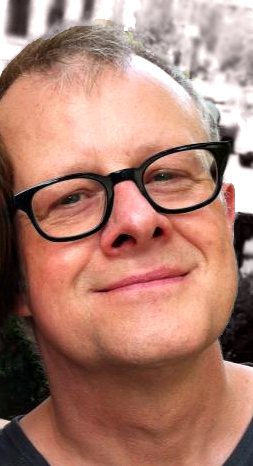
Claus Kold, TFF Associate
Reguleringerne af krigens vold finder man overordnet beskrevet i FN Pagten, Menneskerettighedserklæringerne og mere konkret i den Den Humanitære Folkeret, som består af fire konventioner og tre tillægsprotokoller.
Det er et område, hvor logik, politik og jura flyder sammen om at definere og forstå, hvad der sker på slagmarken. Retssubjektet i krig er ikke mennesker, men stater, der agerer politisk i et vilkårligt horisontalt forhold til andre stater. Stater fortolker omverden og handler på baggrund af forskellige kulturer, religioner, sprog, retstraditioner, økonomier og styreformer. Det kommer der mange misforståelser og konflikter ud af.
Problemet med disse reguleringer er – og det kommer næppe som nogen overraskelse – at de historisk sjældent overholdes. En del af krigens logik er, at hvis en stat er truet på livet, så kæmper den for sin overlevelse med de redskaber og våben, den har. Hvis den og dens ledere nedkæmpes og dør, er der jo alligevel ingen, der kan holde den ansvarlig for begåede grusomheder – ud over Gud, hvis denne da indgår i ligningen.
Der har, så længe krigen har eksisteret, både eksisteret forsøg på at legitimere og at begrænse krigens vold, for spørgsmålene hænger sammen.
Hvad angår legitimeringen af krig blev der især i forbindelse med ridderkorstogene opstillet regler, som skulle opfyldes for at en religiøs (kristen) krig kunne være retfærdig (jus ad bellum).
Just wars bestod af 5 principper, som skulle overholdes, hvis krig skulle være retfærdiggjort. Read the rest of this entry »
Eight arguments against going to war with Syria
By Stephen Zunes
The decision by President Barack Obama to first seek congressional approval of any US military action against Syria is good and important, not only on constitutional grounds but because it gives the American people an opportunity to stop it. It is critically important to convince members of Congress not to grant the president that authority.
Here are some of the top talking points that should be raised before members of Congress as to why authorizing US airstrikes on Syria would be a bad idea.
Continue at TruthOut
Obama’s Syrian imbroglio
By Jonathan Power
President Barack Obama let the chickens out of the cage when foolishly he pronounced that he had drawn a red line across which the Syrian government should not go. Now, after what he says is its second use of chemical weapons, the red line has been crossed and the chickens are coming home to roost. He has announced he plans to strike Syria, albeit it in a limited fashion.
He has made it clear that he won’t go to the UN about it, even to the General Assembly where a Russian veto doesn’t count but where there could be a slim majority in favour. It would give Obama some sort of political cover.
Neither is he prepared to wait for the results of the investigation by the UN team that has just visited the site of the atrocity. Read the rest of this entry »
Britain leads the way
By Farhang Jahanpour
September 1, 2013
In his most statesmanlike statement, a short while ago (31 August 2013) President Barack Obama announced that he would seek Congress’s approval before ordering military action against Syria. After all the hype about an imminent strike, this statement was a breath of fresh air, and it has renewed many people’s faith in President Obama. Not only would any other action have been against international law, it would have even been against the US Constitution that gives Congress the right to declare war, except in emergencies.
That right had been usurped by a number of recent presidents who exceeded their executive prerogative. The Congress will be back in session during the second week of September and this delay provides a breather and an opportunity for cooler heads to prevail, and hopefully the chance to find a comprehensive solution to the Syrian crisis.
However, it is important to give credit where it is due, namely to the British Parliament that led the way in imposing the views of the majority of the electorate on the government that was going to get engaged in a rash action. Read the rest of this entry »
Syria – Obama’s surprising (and confusing) latest moves
By Richard Falk
September 1, 2013
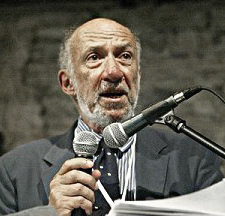
President Obama’s August 31st remarks from the White House Rose Garden will long be remembered for their strangeness, but the final interpretation of their significance will have to await months if not years. There are three dimensions, at least, that are worth pondering:
1) seeking Congressional authorization for a punitive military attack against Syria in support of the treaty prohibition on recourse to chemical weapons in an armed conflict;
2) reconciling any endorsement of an attack by Congress with United States obligations under international law and with respect to the United Nations and its Charter;
3) assessing the degree to which American war making prerogatives continue to operate within an unacceptable domain of American exceptionalism.
In framing the issues at stake Obama set forth the fundamental policy choices in a rather incoherent manner: Read the rest of this entry »
Syria – U.S. war making at the expence of democracy
By Richard Falk
August 31, 2013
The U.S. Government rains drone missiles on civilian human targets anywhere in the world, continues to operate Guantanamo in the face of universal condemnation, whitewashed Abu Ghraib, Bagram, and the torture memos, committed aggression against Iraq and Afghanistan, and invests billions to sustain its unlawful global surveillance capabilities. Still, it has the audacity to lecture the world about ‘norm enforcement’ in the wake of the chemical weapons attack in the Ghouta suburb of Damascus.
Someone should remind President Barack Obama and Secretary of State John Kerry that credibility with respect to international law begins at home and ends at the United Nations. Read the rest of this entry »
Contra Syria attack
By Richard Falk
Informed opinion agrees that the response to the presumed Assad regime’s responsibility for the use on August 21st of chemical weapons in Ghuta, a neighborhood in the eastern surrounding suburbs of Damascus, is intended to be punitive. This is a way of signaling that it is a punishment for the use of chemical weapons that does not have the ambition of altering the course of the internal struggle for power in Syria or to decapitate Bashar el-Assad. Of course, if it achieved some larger goal unexpectedly this would likely be welcomed, although not necessarily, by such interested centers of influence on Syrian policy as Washington, Ankara, Riyadh, and Tel Aviv.
Why not necessarily? Because there is a growing belief in influential Western circles, highlighted in a cynical article by Edward Luttwak published a few days ago in the NY Times, [“In Syria, America Loses if Either Side Wins,” Aug. 24, 2013] that it is better for the United States and Israel if the civil war goes on and on, Read the rest of this entry »
The greatest speech on earth
By Jonathan Power
Fifty years ago Martin Luther King made his earth-shattering “I Have a Dream” speech on the steps of the Lincoln Memorial in Washington DC.
Is there anybody who watches and listens to it on YouTube not moved to the soles of their shoes? I’ve heard it a hundred times and still it stirs me. His dream that one day his children would “not be judged by the colour of their skin but by the content of their character” is one of the greatest lines in all oratory. The south of the US, he said, was “sweltering with the heat of injustice, sweltering with the heat of oppression”.
Within ten years of the end of America’s civil war, fought over the issue of slavery, southern white Democrats had established state constitutions that stripped black citizens of their newly won political rights. Terrorist groups like the Klu Klux Klan destroyed black schools and churches and murdered at will. At the time of Dr King’s speech they were still doing it. Three weeks after his speech Klansman bombed a Baptist Church in Birmingham, Alabama, killing four little girls.
At the time of the March on Washington I was working in Africa. But at the next great event in the civil rights movement in 1965 I was there – in Selma, where Dr King led marchers from the segregated town – where a black couldn’t even sit in the same cafe as a white man to drink a cup of coffee – to the state capital of Montgomery. Read the rest of this entry »
Good peace proposals quite often works!
By Johan Galtung
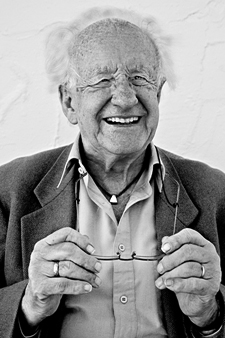
Kuala Lumpur: Perdana Global Peace Foundation, 25 August 2013: “Global Peace Efforts: What Went Wrong & What Next?”
The TRANSCEND NGO Mediation Network just turned 20, and our experience is clear: a good peace proposal quite often works.
To mention some out of 30 positive experiences: we have had a hand in launching peace studies and peace journalism; improving race relations in Charlottesville, VA; in ending the Cold War through bridge-building between Norway and Poland, the idea of a Conference for Security and Cooperation in Europe and nonviolence; in improving North-South relations through South-South cooperation and then relinking with North on a basis of equity–this from the early 1960s.
Later on there have been contributions to peace on the Korean peninsula (first unify the nation, then perhaps the countries), the Kurdish issue (a Kurdistan as a confederation of human rights-based autonomies in the four countries), ending the longest war in Latin America, Ecuador/Peru (a two-state condominium up in the Andes with a natural park, later a joint economic zone); in tripartite peace in the Caucasus; in solutions for bullying in schools; in judicial mediation; in the problem of settlers in Zimbabwe; conciliation Germany/Herero, Turkey/Armenians, Denmark/Islam; and so on and so forth, up till now.
Our conspicuous failures include Read the rest of this entry »
The spreading wings of Islamophobia in Egypt
By Richard Falk
The Orwellian features of the military takeover in Egypt have received attention, although the use of language to evade unwanted truth continues because incentives to do so persist. For this reason, Washington has remained unwilling to call what happened in Egypt on July 3rd as a coup, despite its unmistakable character. The nature of Egypt’s coup has daily become more and more evident.
It is now clear that not only was the takeover properly described as coup, but it has turned out to be a particularly bloody coup that is now being reinforced by a total lockdown of opposition forces and democratic options, including even dissenting opinions. Read the rest of this entry »
 Posted in Culture & religion, Democracy - local & global, Egypt, Richard Falk, Terrorism |
  No Comments »