Archive for the ‘AA ARTICLES BY ASSOCIATES’ Category
Egypt: Polarization and genocide
 August 27th, 2013 |
  Author:
 By Richard Falk
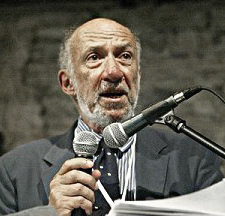
In these morbid days, there are some home truths that are worth reflecting upon.
What Happened to Tahrir Square?
In retrospect, ‘’the January 25th Revolution’ in Egypt is ‘a revolution’ that never was, which has now been superseded by ‘a counter-revolution’ that was never possible. Why? The dislodging of a Mubarak dynasty in 2011 did not even achieve ‘regime change’ much less initiate a transformative political process. There was no revolution to counter. Even more modest hopes for political reform and humane governance were doomed from the start, or at the latest, when Ahmet Shafik, the overtly fulool candidate of the discredited Mubarak regime polled almost 50% of the vote in the presidential election runoff against Mohamed Morsi in June 2012.
What then was Tahrir Square?
Part project (getting rid of Mubarak and sons), part fantasy (hoping that the carnivalistic unity of the moment would evolve into a process of democratic state-building), part delusional experiment (believing that the established order of Mubarak elites and their secular opponents would be willing to rebuild a more legitimate political and economic order even if it meant that they would be transferring significant power and status to the Muslim Brotherhood).
The 2011 turn to ‘democracy’ in Egypt always contained a partially hidden condition: the Muslim Brotherhood was welcome to participate in an electoral process so long as its support was not so great as to give it a majoritarian mandate. Read the rest of this entry »
On Bradley Manning and America
By Richard Falk
I am posting on this blog below two important texts that deserve the widest
public attention and deep reflection in the United States and elsewhere.
I would stress the following:
• the extraordinary disconnect between the impunity of Bush, Cheney,
Rumsfeld, Yoo, and others who authorized and vindicated the practice
of torture, were complicit in crimes against humanity, and supported
aggressive wars against foreign countries and the vindictive rendering
of ‘justice’ via criminal prosecution, harsh treatment, and overseas
hunts for Snowden and Assange, all individuals who acted selflessly out of concern
for justice and the rights of citizens in democratic society to be informed
about governmental behavior depicting incriminating information kept secret to hide
responsibility for the commission of crimes of state and awkward diplomacy.
A perverse justice dimension of the Manning case is well expressed in
the statement below of the Center of Constitutional Rights “It is a travesty
of justice that Manning who helped bring to light the criminality of U.S.
forces in Iraq and Afghanistan, is being punished while the alleged perpetrators
are not even investigated.” And “We fear for the future of our country in
the wake of this case.”
• the vindictive punishment of Bradley Manning, Read the rest of this entry »
Globalizing homeland security – the U.S. drift toward autocracy
By Richard Falk
The drift toward autocracy: It is not just one thing that should worry us about the authoritarian tendencies of the Obama presidency, but one thing after another. The cumulative effect of it all.
The latest sign of the times was the August 19th detention of David Miranda, Glenn Greenwald’s partner, at Heathrow Airport under the British anti-terrorist law for nine hours. His laptop, cell phone, and other electronic devices were also confiscated, and presumably examined. We need to wonder what is so frightening about ‘the Snowden documents’ that it induces these flagrant intrusions on the privacy and confidentiality of journalists, and now even their associates who are not known to be accomplices.
President Obama keeps reassuring Americans, and indeed the world, that he shares a concern for protecting elemental rights, and yet he seems to spare no means to move against disclosures of information that seems awkward for the United States and some allies even when not of particular interest to Al Qaeda and the like. Read the rest of this entry »
Washington and the Egyptian tragedy
By Stephen Zunes
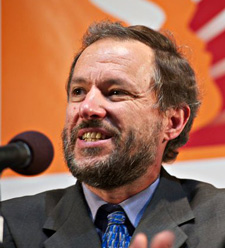
The vast majority of Egyptians killed since the coup have been unarmed protesters struck down with American-made weapons by soldiers transported in American-made vehicles provided by the American taxpayer.
As in El Salvador, Nicaragua, East Timor, Angola, Lebanon, and Gaza in previous years, the massive killing of civilians in Egypt is being done with U.S.-provided weapons by a U.S.-backed government. As a result, the Obama administration and Congress are morally culpable for the unfolding tragedy. While the apparent decision to suspend some military aid to Egypt is certainly welcome, the role the United States has been playing has, on balance, made matters worse.
As with many of these other cases, elements of the Egyptian opposition have contributed to the bloodshed and bear some responsibility. Continue reading at Foreign Policy In Focus
Democracy must quickly be returned to Egypt
By Jonathan Power
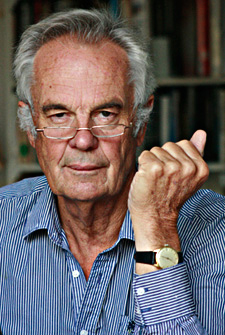
The military’s crackdown in Egypt was foolish. Democracy is not. Without democracy there is no way of arbitrating the clash of interests, the demands and beliefs in this gravely disturbed society.
The military/civilian government, instead of resolving to break the back of the Muslim Brotherhood and thus, counter-productively, drive it underground, should speed ahead with a fast re-write of those clauses of the constitution that offend liberals and secularists – on the role of women and the place of shari’a law – and then immediately call an election open to all.
All this could and should be done within three months at the most. It is highly unlikely that the Brotherhood would win this time but if they did they should be allowed their victory – as long as they promise the present interim government not to use their position to re-create the kind of rule that was the undoing of the deposed president, Muhammad Morsi. Read the rest of this entry »
Why Western media frames civilian areas as “Hezbollah strongholds”
By Sharmine Narwani

Beirut was thrown into turmoil on Thursday evening as a terrorist attack against residents of Dahiyeh – a southern suburb of the Lebanese capital and a predominantly Shia neighborhood – threatened to draw the country into a region wide crisis.
As conflicting news reports began to eke out in the immediate aftermath of the city’s deadliest car bombing in eight years, there was a disconcerting congruity in headlines beaming out from western capitals – and it had nothing to do with facts.
In lock-step, western media was calling the scene of the crime a “Hezbollah stronghold” – Continue reading here.
Restless nation: the real meaning of Iran’s elections
By Stephen Zunes
Will the people of Iran get the reforms they asked for in electing the moderate Hassan Rouhani? The answer depends partly on them, and partly on the United States.
Earlier this month, Iran inaugurated its new president, Hassan Rouhani—clearly the most moderate candidate in the running.
This outcome illustrates the growing desire for change among the people of Iran. The situation resembles Eastern Europe in the 1970s: The people are not yet at a point where they can bring down the regime, but the ideological hegemony that kept the system intact is gone. Continue reading here…
Snowden’s post-asylum relevance
By Richard Falk
Now that Snowden has been given temporary asylum in Russia for a year, attention in the drama has shifted in two directions, although overshadowed at the present by the horrific happenings in Egypt and Syria. The Snowden issues remain important, and it is too soon to turn aside as if the only question was whether the U.S. Government would in the end, through guile and muscle, gain control of Snowden. The issues that should continue to occupy us are as follows:
• interpreting the negative impact on U.S.-Russia relations;
• the claim that if Edward Snowden is a sincere whistle-blower he will now, despite asylum, voluntarily return to the United States to tell his story in open court so as to answer charges that he is guilty of criminal espionage and conversion of government property.
As before, to grasp this post-asylum phase of the Snowden drama a few aspects of the background need to be appreciated:
• right thing, but the structure of power that exist are working to their own ends to extend their capability at the expense of the freedom of all publics.”
• Russia (and China) never had an obligation: legal, moral, and political, to transfer Snowden in response to the extradition request of the United States Government. Even if there had been an extradition treaty, ‘political crimes’ are not subject to extradition for good reasons. In a plural international order, it is highly desirable to provide foreign sanctuary to those who act peacefully in opposition to an established national political order. The United States itself has engaged repeatedly in such practice, shielding even political fugitives who have engaged in terrorist acts, provided only that the target government was viewed as hostile by Washington at the time of the alleged crimes, e.g. Cuba, Nicaragua, Venezuela;
• the rationale for refusing to extradite Snowden is particularly strong given Read the rest of this entry »
The Failure of democracy in the Middle East
By Farhang Jahanpour

The terrible events in Egypt, especially the massacre of thousands of supporters of the Muslim Brotherhood, have not only marked the failure of Arab Uprisings, especially in the most important and the most populous Arab country, they have also revealed the lukewarm attitude and even the hypocrisy of many people in the democratic West towards the whole concept of democracy and representative government.
First of all, it is important to point out that democracy is not the same as majority rule. Many Middle Eastern rulers, including former Egyptian President Mohammad Morsi, the leaders of the Islamic Republic of Iran, the Turkish Prime Minister Recep Tayyip Erdogan, and right-wing Israeli politicians, believe in a winner-take-all philosophy and imagine that just because a group or a party has received the largest number of votes in an election it is entitled to rule the way that it wants and ignore the wishes of many other sections of society.
Iranian rulers often speak of Islamic democracy and argue that as the majority of Iranians are Muslims, the government must be based on Islamic law, the Shari’a, while many right-wing Israeli politicians want Israel to be an exclusively Jewish state. Other governments that have come to power after having won an election believe that achieving a majority in the election entitles them to rule as they wish.
Of course, here we are not dealing with many governments that are in power on the basis of hereditary monarchy, coup d’états or military rule. Majority rule is only one essential element of democracy, but it basically means nothing without a number of other prerequisites. Read the rest of this entry »
 Posted in Arab Spring, Egypt, Farhang Jahanpour, Israel/Palestine, Middle East, US Empire |
  No Comments »
Egypt – it could have been different
By Mariam Abuhaideri
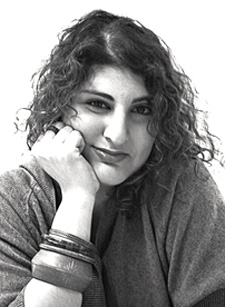
While international envoys failed to broker an end to the political deadlock between Egypt’s Armed Forces and the Muslim Brotherhood, there was still room for diplomatic solutions to the turmoil, as Vice President El Baradei was quoted as saying before he resigned from his post yesterday following the brutal clean-up operation of two of the Bortherhood’s biggest sit-in protests.
Why did mediation fail?
Anyone who has done the rounds of Tahrir and has subscribed to various social networks in Egypt would know- it is not rocket science- Egyptians are against Obama and everything the US stands for. They see the US as a cause of much of this divide in Egyptian society and anti-US rhetoric is omnipresent. Funny thing is that the US would send Republican senators who are so opposed to internationals even within their own country. Some may argue that it was a wise step, as Congress would not accept the analysis of democrat senators. Yet, I knew it wouldn’t work even before it actually failed. The same could be said in varying capacities about the envoys from EU, UAE, and Qatar. They all had stakes or supported one side over the other.
Even a day following the deadliest crack down since the revolution that ousted Hosni Mubarak in 2011, many countries have only gone as far as condemning the killings. Read the rest of this entry »