Archive for the ‘Syria’ Category
What the Syrian death tolls really tell us
 February 15th, 2013 |
  Author:
 By Sharmine Narwani

Unreliable data can incite and escalate a conflict – the latest UN-sponsored figure of 60,000 should not be reported as fact.
Less than two months after the UN announced “shocking” new casualty figures in Syria, its high commissioner for human rights, Navi Pillay estimates that deaths are “probably now approaching 70,000”. But two years into a Syrian conflict marked by daily death tolls, the question arises as to whether these kinds of statistics are helpful in any way? Have they helped save Syrian lives? Have they shamed intransigent foes into seeking a political solution? Or might they have they contributed to the escalation of the crisis by pointing fingers and deepening divisions?
Continue reading in The Guardian, February 15, 2013
On Syria: What to do in 2013
By Richard Falk
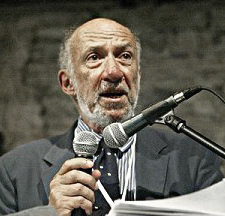
I took part last week in an illuminating conference on Syria sponsored by the new Center of Middle East Studies that is part of the Josef Korbel School of International Studies at the University of Denver. This Center has been recently established, and operates under the excellent leadership of Nader Hashemi and Danny Postel, who previously together edited the best collection of readings on the Green Revolution in Iran published under the title The People Reloaded.
The conference brought together a mixture of Syrian specialists, Syrian activists, and several of us with a more general concern about conflict in the region, as well as with human rights and as participants in the heated debates of recent years about the virtues and vices of ‘humanitarian intervention’, what is now being called ‘Responsibility to Protect’ of ‘R2P’ in UN circles and among liberals.
I came to the gathering with a rather strong disposition to present myself as a confirmed R2P skeptic, regarding it as a cynical geopolitical euphemism for what Noam Chomsky labeled as ‘military humanism’ in the context of the controversial NATO Kosovo War of 1999. Ever since the Vietnam War I have viewed all Western claims to use force in the post-colonial non-West with suspicion. Read the rest of this entry »
Russia and China: Arms around the Middle East
By Sharmine Narwani
Russia and China have drawn a great deal of censure this past year for resisting UN Security Council resolutions to intervene in the domestic affairs of Syria and Iran.
Why, many ask, would this duo leverage their growing global political clout for two Mideast states that have been so actively marginalised by the other UN Security Council permanent members – the US, UK and France?
And do these new Russian and Chinese positions place them on a collision course with Washington – in the Middle East and elsewhere?
Continue reading at The BRICS POST
 Posted in China, Future perspectives, Iran, Middle East, Russia, Sharmine Narwani, Syria, US Empire, World order/governance |
  No Comments »
Against a third world war – constructively
By Johan Galtung
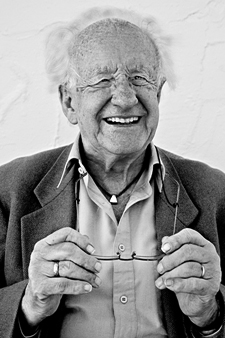
From Grenzach-Wyhlen, Germany
The probability of a devastating Third World War is not zero, but very far away from 100%. Let us explore why.
The worst case scenario is a world war between the West–NATO, USA, EU with Japan-Taiwan-S. Korea–on the one hand, and the East—SCO (Shanghai Cooperation Organization), Russia, China, Central Asia, with the observers India, Pakistan, Iran. With 4 vs 4 nuclear powers, and West vs Islam as a major theme.
In the center is the explosive mix of a divided territory, and a divided capital, by a wall.
We have been there before: the Cold War, Atlantic and Pacific theaters; 3 vs 2 nuclear powers, and West vs Communism as major theme.
In the center was the explosive mix of a divided Germany, and a divided capital, by a wall; and a divided Korea, by a zone.
And yet no direct, hot war, except by proxies; Korea, Viét Nam. Why? Read the rest of this entry »
Hope, wisdom, law, ethics, and spirituality in relation to killing and dying: Persisting Syrian dilemmas
By Richard Falk
In appraising political developments most of us rely on trusted sources, our overall political orientation, what we have learned from past experience, and our personal hierarchy of hopes and fears. No matter how careful, and judicious, we are still reaching conclusions in settings of radical uncertainty, which incline our judgments to reflect a priori and interpretative biases.
As militarists tends to favor reliance on force to resolve disputes among and within sovereign states, so war weary and pacifist citizens will seek to resolve even the most extreme dire conflict situations by insisting on the potentialities of non-violent diplomacy.
In the end, even in liberal democracies most of us are far too dependent on rather untrustworthy and manipulated media assessments to form our judgments about unfolding world events. How then should we understand the terrible ongoing ordeal of violence in Syria? Read the rest of this entry »
Lebanon’s red lines, bared
By Sharmine Narwani
What a difference a week can make in the Middle East.
On October 19, when a car bomb tore through the upscale Christian neighborhood of Achrafiyeh in Beirut killing a major security official, Lebanon shuddered in fear that the era of political assassinations was back.
Politicians and commentators didn’t miss a beat. The murder of Internal Security Forces (ISF) Information Branch head Wissam al-Hassan was compared to the killing of his former boss, ex-prime minister Rafiq Hariri in 2005. And the Hariri-allied pro-West, anti-Syria, pro-Saudi “March 14” political coalition lined up to deliver a visceral blow to their opponents, just as they had in 2005 when they ejected Syrian troops from Lebanon.
Hassan’s body was not yet cold before his political allies started pointing their fingers at Syria and whipping up fury in the anti-Syrian Sunni enclaves of Lebanon. Read the rest of this entry »
Turkey: Cyprus, Kurds, Armenia and Syria
By Johan Galtung
There was a time, a century or so ago, when Turkey was the “sick man of Europe”. Times are a-changing. Today Turkey is quite healthy, and much of Europe is sick, suffering from gross institutional and economic problems, including a flagrant inequality within and between countries, between a creditor and a periphery of debtors in bondage.
This in no way means that Turkey is problem-free; no country is. The focus here is on four problems involving other nations: the Greeks, the Kurds, the Armenians and the many nations in Syria. With an explicit foreign policy of zero problems with neighbors great progress has been made, but much remains to be done. Read the rest of this entry »
Humanitarian military intervention in Syria – and who is behind the atrocities?
By Michel Chossudovsky, TFF Associate
August 8, 2012
We choose in this case to publish just the link to Chossudovsky’s article in which there are plenty of notes to valuable sources; we want to ensure that you can get the benefit of them all.
Jan Oberg
TFF Blog Editor
The dangers of chemical weapons, Syria’s too
By Jonathan Power
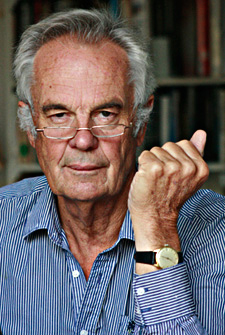
The Syrian government say that, unlike Saddam Hussein, it won’t use its sizeable stocks of chemical weapons on its own population, only on would-be attackers. That’s a comfort of sorts since nobody is going to attack it. Chemical weapons are regarded as weapons of mass destruction along with nuclear and biological weapons. Chemical agents like sarin that destroys the nervous system, VX and mustard gas can kill thousands of people in one blow.
If the UN were mandated to send in troops or the US did so unilaterally their forces could be devastated by a chemical attack. The main worry – as such an invasion is highly improbable unless a dying regime or a new regime asks for help – is that the chemical stockpiles could fall into the wrong hands – the hot-headed thorn in Israel’s flesh, Hezbollah in southern Libya or Al Qaeda which the regime says are part of the opposition. Read the rest of this entry »
A brief further comment on Syria
By Richard Falk
Some of the sharpest critics of my posts contend that I focus too much attention on Israel while exempting the far worse Syrian regime from any sort of harsh condemnation. In fact, I did write a post devoted to the Syrian situation on May 31, 2012 in which I referred to the criminal character of the Assad regime and pointed to such bloody deeds (Crimes Against Humanity) as the Houla massacre that had occurred a few days before. In my mind, there is no doubt that the behavior of the ruling clique in Damascus is genocidal, and should be condemned and appropriate international action undertaken to protect the people of Syria.
But what is appropriate in such a situation is far from self-evident. Read the rest of this entry »