Archive for the ‘AA ARTICLES BY ASSOCIATES’ Category
Alternative defence for states – transarmament
 July 25th, 2013 |
  Author:
 By Johan Galtung
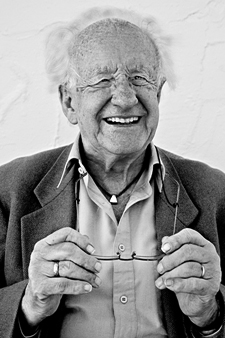 Speech held in the Senate, Rome, July 23, 2013
Your Excellencies, Foreign Affairs, Defense, EU…
SYSTEMS: A Reorientation
[1] Transarmament: States use armies for defense, and for offense, for wars. Si vis pacem, para bellum, peace through security tries to cover both; but offensive military threatens, provokes arms races, even wars. Si vis pacem para pacem, security through peace is not disarmament leaving regions, states and local level defense-less; rather, it identifies conflicts and traumas underlying violence in order to solve them, builds peaceful state relations, and defensive defense “just in case”.
[2] Nonalignment: Solidarity and help to victims of aggression should be based on the merits of the case, not by alliance membership. This implies NATO and EU transarmament to regional defensive defense, and UN world collective defense under representative military command.
[3] Being useful to other countries: having developed positive relations such that others want to enhance, not destroy the country. There are many ways: through mutually beneficial trade, tourism for nature or culture, through support when suffering attacks, or social and natural catastrophes, by serving as experts in peace-building.
[4] Being less vulnerable: political-military decentralization so that aggression against any sector-part does not paralyze the whole country; resistance, and much normal life, can be continued.
Economic self-reliance, especially energy/food–self-sufficiency only as a possibility in emergencies–not to be tempted into attacking others if trade fails, keeping economic sectors–primary, secondary, tertiary, quaternary for reproduction–intact; producing for basic needs at home as much as possible, getting the rest through trade.
Defense against spying by not having secrets; transarmament works openly, to prevent and deter. A more cooperative, less competitive economy (more cooperatives, less companies); inviting others to join.
ALTERNATIVE: Building Peace
[5] Conflict resolution. Read the rest of this entry »
 Posted in
America over the top on threats
By Jonathan Power
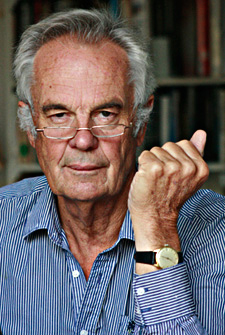
Even taking into account the terrorist bomb attack on the Boston marathon an American has had less chance this year of being killed by a terrorist than killed falling off a ladder. Is it really necessary to monitor the phone calls and e-mails of half the world in order to combat such a small threat (including countries such as Brazil which have never had a terrorist incident)?
Why not monitor the use of ladders? Or find a way of reducing car crashes in the US which claim 33,000 deaths a year to the Swedish level? Or spend the vast budget of the spy program on education and give up hunting down Edward Snowden who has performed the brave task of opening up this debate to media and congressional scrutiny? And just keep a very modest intelligence spying operation for the handful of countries that could produce a terrorist that might do some real damage- Afghanistan, Pakistan, Lebanon, Yemen, Somalia, North Korea……….Can you think of any more? Read the rest of this entry »
Global Big Brother and the Snowden Hollywood chase
By Richard Falk
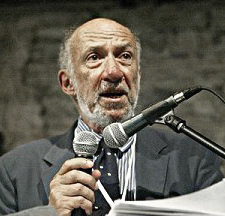
The post below is a major revision of another piece on the Snowden Affair that was published in AlJazeera English recently. I have dwelled on the pursuit of Snowden because it raises such vital issues of principle, but also because so much of the public discourse has proceeded on a mistaken understanding of the applicable international law. Beyond the legal guidelines on extradition and asylum that are applicable, there are considerations of world order: protecting dissent and pluralism in a global setting in which the principal political actors are sovereign states that increasingly rely on secrecy and security rationales to constrain democratic open spaces.
What Snowden did was to expose this dynamic of constraint in relation to secret surveillance programs administered by private, for profit, contractors. Also exposed was the ‘Global Big Brother’ implications of extending surveillance to foreign societies and their governments. It is these questions that should receive our attention, and the Hollywood circus chase of Edward Snowden should cease for humanitarian and political reasons.
***********************
I find the discourse surrounding the Snowden Affair bewildering. The latest reports suggest that the United States is using maximum political leverage, including coercive diplomacy, to discourage small Latin American countries from granting asylum to Edward Snowden. It is also complaining that Russia is giving Snowden ‘a propaganda platform’ and expressing its ‘disappointment’ with China/Hong Kong for its earlier refusal to expel Snowden back to the United States to face charges once his passport was cancelled. Read the rest of this entry »
Is China becoming a democracy?
By Jonathan Power
Last week, plans for constructing a nuclear processing plant in the Guangdong province in China were shelved after demonstrations. The people spoke and the authorities caved in. The demonstrators engaged in nothing more than what the organisers called “an innocent stroll”. Yet they defeated a project that would have provided enough fuel for 50% of China’s atomic energy needs.
Along with the growing power of village democracy in quite a few parts of China is something happening? Unless one is a high profile dissident you can complain all you want on the internet about most of the deficiencies of the time, except the party leadership itself. Many newspapers are staffed in part by liberal journalists who are constantly looking for opportunities to report honestly.
This suggests that what the then Chinese premier, Wen Jiabao, said in London in 2011 has the making of truth: “Tomorrow’s China will be a country that fully achieves democracy, the rule of law, fairness and justice. Without freedom there is no real democracy.” Read the rest of this entry »
Competition and cooperation: Finland’s school system
By Johan Galtung
“The Secrets to Finland’s Success with School—and Everything”, The Atlantic (11-Jul-2013), has many messages to a US readership from that particular welfare state. One of them is a school system which ranks as one of the world’s best with no standard testing or South-/and East!/Asian “cramming”; limiting student testing to a necessary minimum; there is less emphasis on competition. And another, closely related, Finns have an incredible equality and very little poverty; an extremely low child-poverty rate. The two points are related.
The article, written by Olga Khazan, wisely points to smallness and high homogeneity as two factors underlying the “success”, also known to the other Nordic countries. However, as pointed out, there are “sizeable Swedish and Russian-speaking communities – the former ruling the country till 1809, the latter on till the Russian 1917 revolution–took time to even it out. What the article has not picked up is the closeness to that revolution, and its impact on the labor movements: lifting the bottom up for more equality is possible; education and health are basic tools; it is the task of the government; it requires planning; and, what USSR failed to pick up: it works better with democracy. Read the rest of this entry »
The U.S. micro-managing the world
By Johan Galtung
There is a simple way of judging the adequacy of media: the focus is on Snowden’s revelations – PRISM, TEMPORA etc. – or on Snowden himself? He is but one in a great chain of revealers driven by conscience rather than money or oaths; there will be more revelations given the enormity of the US spying machine on the world. But, what does it do?
The issue is not the “freedom of expression” of the revealers, the “whistle-blowers”. If they reveal the systematic subversion – and “superversion” from above – of all civil-political and socio-economic human rights, then the denial of the freedom of expression to machine operators is an obvious and rather small part. The focus is naive.
Nor is the intrusion into the privacy of potentially any human being on earth the issue. Recording all traces, verbal and otherwise, left behind by all of us, putting them together for a more holistic image and filing it for its predictive and interventionist value is certainly an “intrusion”. But the basic problem is, for what? Read the rest of this entry »
Mrs Merkel should read the history of Hitler’s economy
By Jonathan Power
My family is in a bit of a crisis. My earnings are cut by 25%. Writers never did earn a lot and now we have this economic catastrophe. We’ve cut our expenditures severely.
This is what happens to families in financial trouble. Cut. Common sense, eh? But when it comes to our country being in trouble we have to be counter-intuitive. Then a country must spend more. It has to grow faster to produce the wealth that when taxed can pay down the deficit. As the world’s greatest economist, John Maynard Keynes, wrote: “The boom not the slump is the right time for austerity”.
The Germans and the European Union Commission continue to push countries to cut and squeeze. Yet despite the evidence that the patient is not recovering, Chancellor Angela Merkel of Germany seems determined not to allow the Euro-zone members to let up. (The British government is following the same counter-productive policy.)
President Barack Obama has taken a different tack. Keynesian to his finger tips, he has saved the American economy and now growth has returned. Unemployment is falling, housing starts are up and people are spending. He saved the banks from going bust. Also the big auto companies. He won passage of a new health act, “Obamacare”, that will ensure that most of the poor are taken care of. Read the rest of this entry »
The mirage and the oasis
By Mariam Abuhaideri

Writing in Cairo
One moment I was tense about what would unfold after the military issued 48-hour ultimatum would come to an end and the next moment I find myself absorbing the words being spoken by General Abdel Fattah al-Sisi, the defence minister. Yes, he had just fired Morsy from his job and somehow I still couldn’t believe what had just happened. Then there were fireworks and rejoicing.
I was in a middle of a Farsi lesson, but my student and I could not resist our temptation and made our way to Tahrir. On the way we were met with celebrations by very happy Egyptians. There was immense joy in their cheers for people could be seen sitting over cars and popping out of the windows of their vehicles and everywhere imaginable with the Egyptian flag soaring high. They were truly happy, truly relieved.
I joined in and jumped out of the taxi with the Egyptian flag in one hand and my Nikon in the other. One girl didn’t want any trace of Morsy as she tore to bits posters that contained his picture and that read “Arhal- Leave”.
I was living through a chapter our children will read in their history textbooks. But for Egyptians it is more than symbolic.
Continue reading here at Mariam Abuhaideri’s blog from where it happens. There you will also see her photos from the events.
Protecting Edward Snowden
By Richard Falk
Such self-designated ‘wise men’ of our time as David Brooks and Tom Friedman, highly influential opinion and opinionated writers of the NY Times, have been telling their readers that Edward Snowden was decent and intelligent, but overstepped the law by arrogating to himself the disclosure of the ‘total data’ surveillance programs of the National Security Agency of the U.S. Government.
By deliberately releasing abundant evidence of the astonishing breadth and depth of surveillance, Snowden was clearly motivated by the concern that rights of privacy, the quality of democratic life, and respect for the sovereignty of foreign countries and the confidentiality of diplomatic events were being placed in jeopardy. For some, this bold decision to expose American intelligence gathering made Snowden a villain, called ‘a traitor’ by a variety of public officials including John Kerry, the Secretary of State.
There is no doubt that Snowden is guilty of violating espionage laws, which automatically almost constitutes treason for those who possess an ultra-nationalist mentality. Those who think this way believe Snowden deserves to be punished to the limits of the law, and that foreign governments friendly to this country should accede to Washington’s request for his detention and expulsion to the United States to face charges.
Of course for many others Snowden is a hero for our times, actions that should be honored by a Nobel Prize. Read the rest of this entry »
Russia’s power is not weapons, it’s culture
By Jonathan Power
Observers say that what drives President Vladimir Putin is to make Russia respected. But perhaps Putin overestimates how much power Russia already has. He has overlooked which trumpets to blow – it is not his “hang tough” policies in international affairs, especially vis-a-vis the United States. It is Russia’s culture.
These thoughts were prompted by watching the opening of the new, quite beautiful, extension of the Mariinsky theatre in St Petersburg on Mezzo television, the French cable station for classical music. (You can see it on U-Tube.)
The Mariinsky is run by Valery Gergiev and he arranged a show (and conducted it) so rich and of such supreme achievement that it overshadowed in my memory all the great performances I’ve seen, whether in London, New York, Paris or Moscow. Each segment lasted a bare 4 minutes and it alternated between opera, ballet and two solo violinists and one pianist. It went on for two hours or more with the greatest stars of the Russian firmament, plus two or three Western performers.
Putin was in the audience, not in the official box but down in the middle of the stalls. Was he aware of the political power of an event like this? I doubt it. Nor of the power of the rest of Russia’s great inheritance. Read the rest of this entry »