Archive for the ‘AA ARTICLES BY ASSOCIATES’ Category
Humankind 2050: Making peace with our futures
 July 3rd, 2013 |
  Author:
 By Johan Galtung
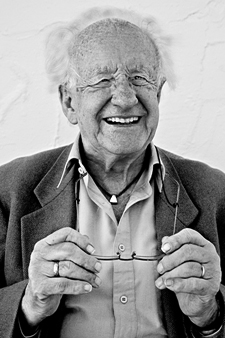
Keynote Speech, World Futures Studies Federation 40th anniversary – Bucuresti, România
Future studies, like peace-development-environment studies, is an inter-disciplinary, inter-national effort to get a grip on key issues; divided into preferred futures–utopias–whose?; predicted futures–forecasting–who does it for whom?; and future practice–scenarios bending the predicted toward the preferred–by and for whom?
The title of Ravi Morey’s Looking Backward: 2050-2013 catches future studies in a nutshell: exploring intermediate stages between a fully democratic world government and our 2013 present. The road may pass through a bankrupt USA bailed out by a democratic China in 2025. Some may argue that is already happening, with China – more democratic than the West knows – being creditor No. 1, and the USA – more bankrupt than the USA admits – debtor No. 1; Nos. 1 and 190 among 190 countries.
Like in 1967, in Oslo, for the predecessor organization Mankind 2000 this keynote is on international futures. Preferred futures: Read the rest of this entry »
Whither Turkey: First thoughts after Gezi Park
By Richard Falk
Written in Turkey, June 30, 2013
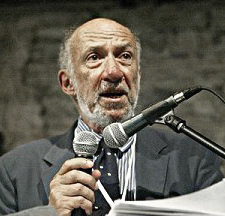
Preliminary Disclaimers
As the dramatic Turkish protests subside, or declare an intermission, this is a time to take stock, but cautiously.
Precisely when political reality explodes in unexpected ways, pundits come along suggesting comparisons, offering hastily constructed explanations, and cite influences and antecedents. Surprise is suppressed by most ‘experts’ who do all that they can to hide these awkward exposures of how little they knew about the explosive forces in society, which erupted without any advance notice. After the explosion these wannabe gurus step forth with undiminished confidence to tell us with learned demeanor why and how it happened, why it was almost inevitable to turn out as it did, and the most arrogant and often most influential even dare tell us what to expect next, and why it is good or bad.
While appreciating this fact of public life, let us take note that even the most wily intelligence agencies, with billions at their disposal, total command over mountains of secret data, running roughshod over the privacy and legal rights of even their own citizens and others to get it right on behalf of their government employers, still invariably miss ‘the jumps’ of change that are the real stuff of history.
Why are the historians of change so bad at anticipating these jumps of history? Partly, for the same reasons that even the most sophisticated vulcanists cannot predict with any accuracy an earthquake or volcano – as in politics, the tipping points in nature and society are rarely anticipated by interpreting scientific trends or through the analysis of incremental changes, but generally disclose themselves with an unforeseeable abruptness.
In reaction, an appropriate level of humility and tentativeness goes a long way, acknowledging these limits of understanding, suggesting hesitantly and explaining as best we can such charismatic events when they occur, taking due account of their distinctiveness and admitting our inability to access deeper meaning that lie beneath the surface of cascades of events.
Another type of difficulty associated with these interpretative ventures is the bias associated with the observer’s gaze. We are habitually trained and experienced to look at politics from above, whether our perspective is that of elites or counter-elites, but revolutionary impulses come, if and when they come, almost invariably from pressures generated from below, that is, from the ‘multitude,’ pressures that materialize by suddenly bursting forth as happenings that startle and reverberate (e.g. Nelson Mandela’s release from prison, the collapse of the Berlin Wall, the velvet revolution, the Jasmine Revolution, Tahrir Square, Occupy Wall Street).
The Gezi Park Protests
Was Gezi Park in Istanbul such a happening, as many here in Turkey hope? Read the rest of this entry »
Political infernos: United States, Turkey and Egypt
By Richard Falk
Written June 28, 2013
Prelude
To begin with, I know of no truly mature political democracy on this, although to be sure some rest on a more stable political base than others. Most importantly, some forces of opposition despair of ever succeeding by democratic procedures, while others pin their hopes on the next election, or the one after that. Some democracies have greater economic stability or can boast of high growth rates, possess a larger private sector and bigger middle class with more to lose, than others. Some states are more vulnerable to foreign interference than others, and some have formidable foreign enemies that seek regime change or something worse.
Perhaps, more victimized than any most modern societies, Germany devastated after World War I was caught in the midst of recovering from a humiliating military defeat accentuated by vindictive victors, a resulting economic depression featuring high unemployment and runaway inflation. Its pathetic enactment of liberal democracy could neither find credible solutions nor adopt principled positions. It should not be surprising that an extreme form of political polarization emerged in response, producing disastrous results not only for Germany but for Europe and the world: Communism versus Fascism. Battles raged between these antagonists in the streets of German cities, and the Nazis emerged triumphant even at the ballot box, helped by the complicity of cartelized big business and the ethos of the Bavarian elites hostile to any hint of democratic politics. The rest is history.
Today, there exist an assortment of deeply worrisome encounters between political extremes brought on by a range of conditioning circumstances. As a first approximation I would mention three disturbing instances, each distinctive, yet each afflicted by destructive polarized politics: Egypt, Turkey, and the United States. Read the rest of this entry »
The U.S.’s Afghan exit depend on a Syrian one
By Sharmine Narwani

Washington’s options in Syria are dwindling – and dwindling fast.
Trumped up chemical weapons charges against the Syrian government this month failed to produce evidence to convince a skeptical global community of any direct linkage. And the US’s follow-up pledge to arm rebels served only to immediately underline the difficulty of such a task, given the fungibility of weapons-flow among increasingly extremist militias.
Yes, for a brief few days, Syrian oppositionists congratulated themselves on this long-awaited American entry into Syria’s bloodied waters. They spoke about “game-changing” weapons that would reverse Syrian army gains and the establishment of a no-fly zone on Syria’s Jordanian border – a la Libya. Eight thousand troops from 19 countries flashed their military hardware in a joint exercise on that border, dangling F-16s and Patriot missiles and “superb cooperation” in a made-for-TV show of force.
But it took only days to realize that Washington’s announcement didn’t really have any legs.
Forget the arguments now slowly dribbling out about why the US won’t/can’t get involved directly. Yes, they all have merit – from the difficulties in selecting militia recipients for their weapons, to the illegalities involved in establishing a no-fly zone, to the fact that more than 70% of Americans don’t support an intervention.
The single most critical reason for why Washington will not risk entering the Syrian military theater – almost entirely ignored by DC policy wonks – may be this: the 2014 US military withdrawal from Afghanistan.
“Help, we can’t get out” Read the rest of this entry »
 Posted in Afghanistan, China, Middle East, Russia, Sharmine Narwani, Syria, Uncategorized, US Empire |
  No Comments »
Inclusivity: Vital for negotiations in Afghanistan
By Heela Najibullah

As a student in peace studies, any initiative to curb violence through peaceful means is a subject of interest for me. But yesterday, the news that the U.S. government has agreed to engage directly in peace talks with the Taliban caught my attention for three reasons in particular:
1) Who are the actors participating in the negotiations – is the U.S. an actor in the peace talks, a negotiator, a mediator or all the above?
2) What are the roles of the Afghan government and the people of Afghanistan in this transition?
3) Why was the U.S.’ willingness to negotiate met with an attack on U.S. soldiers by the Taliban, putting the group’s long awaited objectives to negotiate with the U.S. directly in jeopardy?
While analyzing the current situation surrounding the reconciliation process in Afghanistan and peace talks with the Taliban, instead of feeling optimistic for potential peace in my country, I became highly concerned.
No to US military intervention in Syria
By Jonathan Power
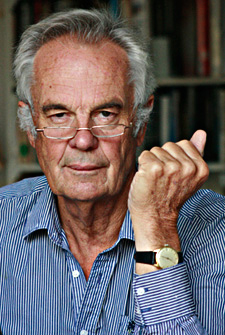
The fog of war in Syria descends. Alliances on the ground come and go. America wobbles. Europe wrings its hands. Russia ups its military commitment, fearful of an arc of Sunni militancy that will make common cause with Russia’s own fundamentalists in Chechnya and Dagestan. Much of the rest of the world looks on with half shut eyes.
The debate swirls. Can the West have any profound impact on the Syrian civil war? Can it help depose the Assad regime? Does it really think it can influence the making of a democratic, multi-ethnic, multi-religious, Syria? Is President Barack Obama, after months of resisting the sirens calling for military support of the rebels, beginning to think it can play a more important part than hitherto? With the direct provision of American (and British and French) arms is he coming to believe that this will tilt the balance in the insurgents’ favour? Read the rest of this entry »
Think and act – locally and globally
By Johan Galtung
Alfaz del Pi, located between Mediterranean beaches and a couple of majestic mountains, Campana-Aitana (Man and Woman) 1500 meters high. Today this small town generously accommodates 21,500; surrounded by fertile soil, orange and olive trees, vines. Benidorm – the famous tourist resort – and Altea, more for artists, are at hand stretching distance; on the Costa Blanca – white seen from the sea – in Spain.
So far nothing special. But that little town is home to close to one hundred different nations; 57% are foreigners. The English and the Norwegians are the most frequent; the Norwegians arriving already some 45 years ago. Close to half a century of peaceful coexistence; and not only absence of violence but also positive, cooperative peace.
We, a Japanese-Norwegian couple, arrived June 1969. First time in Spain was in 1951, hitchhiking to understand fascism better. Franco had evolved from dictadura, dictatorship, after a brutal civil war, to dictablanda, the softer version. But the basic aspect of dictatorship was there like a nightmare draped over the country: fear, fear, fear; so many listening, so few talking. But some said, if you only come for the beach, stay at home. Bring books; we are isolated, not knowing what happens. Franco will not last forever, we must be prepared.
Books were brought. Customs people hardly knew how to read but quickly identifying more copies than one; hence, one of each. Books were handed over, to the right – in this case left – people, for instance at a conference in Madrid in June 1969. And the books were read.
The summer heat was unbearable. We drove to the coast to visit a friend, officer in the Norwegian army, with years of dialogues behind us. They lived in an “urbanización” that looked like a Scandinavian ghetto, making us exclaim: Never for us! In the evening we had made the downpayment for a house. How come? The beach, the mountains, the roof terrace, a depository for books in transit: Yes! Read the rest of this entry »
Blog ethics and politics
By Richard Falk
During this apprentice period as a blogger I have learned and relearned how difficult it is to reconcile my interest in constructive dialogue on highly contested subject-matters with sustaining a tone of civility. Especially with respect to the Palestine/Israel struggle I have periodically failed, angering especially those who feel that their support of Israel is either inappropriately rejected or ignored. This anger is turned in the direction of personal insults directed either at me or at writers of comments, which induces those at the receiving end to reply in kind, and the result is a loss of civility, which alienates many other readers who tire of such futile and mean-spirited arguments.
By way of clarification, let me acknowledge that I regards two types of interaction as satisfying my goal of ‘constructive dialogue’: conversations between like-minded on matters of shared interest; exchange of views between those who adopt antagonistic positions on an array of concerns ranging from cultural assessment to political analysis. To favor conversations with like-minded means favoring those who share my convictions with respect to the themes addressed in posts, and is viewed as ‘bias’ by those who do not share these convictions. I feel unapologetic about this encouragement of conversation among the like-minded.
Some of my harshest critics complain that I am one-sided or stifle the freedom of expression of those whose comments I exclude on grounds of civility, Read the rest of this entry »
Gaza: 7th year of unlawful blockade
By Richard Falk
Prefatory Note: I am posting a press release of yesterday, 14 June 2013, to take note of the start of the seventh year of the Israeli blockade. After the Mavi Marmara incident, 31 May 2010 and the more recent November ceasefire agreement between Israel and the Gaza government there was an undertaking to ease the blockade with respect to the flow back and forth of people and goods, but the situation remains desperate for the civilian population of Gaza that remains essentially locked into the Gaza Strip where economic destitution has reached epidemic extremes and where the water is mostly unfit for human consumption. The international community, and its main leaders, have commented adversely on the blockade, but nothing happens! It is this sense of powerlessness that is undermining the legitimacy and relevance of the United Nations to the suffering of the Palestinian people, and with particular relevance to the extreme ordeal of the civilian population of Gaza.
Special Rapporteur’s report on Occupied Palestine
By Richard Falk
Prefatory Note: What follows below is the text of the report presented on 10 June 2013 to the Human Rights Council. It offers an overview of the situation from the perspective of human rights and international humanitarian law in occupied Palestine. Both Israel and the United States boycotted the session, presumably to express their displeasure with the report and my role as Special Rapporteur. UN Watch distributed a defamatory resolution calling for my dismissal from the position, and the United States delegate, Ambassador Donahue, called for my resignation. No government formally endorsed the UNW resolution, and so it was never acted upon, while I took the occasion of the press conference to confirm my unwillingness to resign, and on the contrary, to continue to do my best to reflect as honestly as possible the realities confronting the Palestinian people from the perspective of international law. In the open debate the European Union represented criticized what was called the inappropriate failure to limit my report to ‘law and facts,’ pointing particularly to what was described as ‘the political’ in paragraph 7. In that paragraph the report offers some comments on the futility of securing the Palestinian right of self-determination by way of resuming direct negotiations; by expressing such skepticism about the diplomatic track, the EU apparently regarded the assessment as political, but to my mind it was an appropriate comment on why the prospects for protecting and realizing Palestinian fundamental rights under international law are likely to remain in total eclipse.
The text below can be read in its formal context by using the link to the actual document to be found on the Human Rights Council website.
Continue…