Archive for the ‘Middle East’ Category
TFF PressInfo 278: September 11 – The War on Terror is a – predictable – fiasco
 September 11th, 2014 |
  Author:
 By Jan Oberg, TFF co-founder
TFF PressInfo 278
Lund, Sweden September 11, 2014
President Obama’s speech last night
This speech is a record low in terms of moral and intellectual analysis: What it boils down to is war – i.e. killing every single ISIS person anywhere, people who he compares to cancer cells.
The war on terror has always been about killing terrorists but you can not kill an ism – terrorism. To do something about the causes that compel people to become terrorists would be much more efficient.
The President has said repeatedly that a lasting solution is political, not military. The speech, however, is exclusively military – not a word of political, psychological or other insights: No, we kill people because we think it is wrong to kill people…
The speech can be seen as a proof of how utterly misguided the U.S. response to 9/11 was – had it been more intelligence and less revenge-oriented, there would neither have been a devastating Iraq war nor an ISIS.
It’s difficult to be Number One in a rank order. You ony teach downward. If you are Number Twenty, there are 19 others to learn from. It seems as if the United States, inside its exceptionalist box, is now unable to learn lessons. Read the rest of this entry »
 Posted in Jan Oberg, Media perspectives, Middle East, Peace, Terrorism, TFF PressInfo, Violence-prevention |
  Tags: IS, ISIL, ISIS, Obama speech on ISIS, September 11, War on Terror |
  2 Comments »
TFF PressInfo 277 – After all this, what?
A couple of messages to NATO’s Summit
By Jan Oberg, TFF co-founder
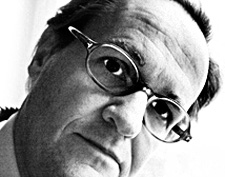
Jan Oberg
Lund, Sweden September 5, 2014.
Yugoslavia then and now
TFF’s first report from Yugoslavia from September 1991 carried the title, After Yugoslavia – What? It is now one of 127 reports and articles in the huge research and policy blog – Yugoslavia – What Should Have Been Done?
It contains the equivalent of 2000 book pages authored by Johan Galtung, Jan Oberg and Hakan Wiberg. All articles are published as they were written at the time. For anyone to see whose analyses stood the test of time.
We opened this blog two days ago – on the 23rd year of TFF’s first of some 70 peace missions into the war zones.
While it is important to analyse the world, it is more important to criticise it and most important to search – and re-search – alternatives to it. Thus the title. You are kindly invited to browse.
Such work is not only of historical interest. It carries a message for the future – as does all good research.
While inner factors were certainly dominant, the West – in its misguided attempt at playing peace maker – Read the rest of this entry »
Posted in Culture, Democracy - local & global, European Union, Ex Yugoslavia, Ex-Yugoslavia/Balkans, Future perspectives, Global trends & events, Iraq, Jan Oberg, Media perspectives, Middle East, Nonviolence, Russia, Security and defence, Syria, TFF PressInfo, Ukraine, UN matters, US Empire, US politics & security, Violence-prevention, World order/governance |
No Comments »
The big crises – NATO and demonstrators both fail
By Jonathan Power
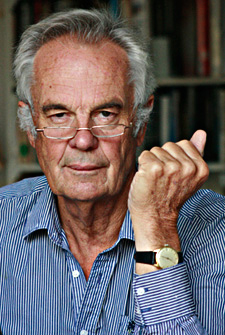
September 2nd 2014
Violence should have had its day. Look at its non-achievements: The US/British/French invasions of Iraq, Afghanistan and Libya. The upheavals of the “Arab Spring”. And now Ukraine.
Will we ever learn its limitations?
In Iraq outsiders’ violence overthrew the dictator Saddam Hussein who for all his faults provided stability, safety on the streets, food, a falling infant mortality rate and universal health services. What did it substitute beside the worthwhile job of killing off Saddam?
Mayhem, tens of thousands of deaths of innocents, fear of the street, shortages of food, upheavals in the health services and schools. And an ongoing instability, not least the opening given to ISIS.
In Libya, Read the rest of this entry »
USA-Israel vs. Arab-Muslim Worlds: What Happens?
By Johan Galtung
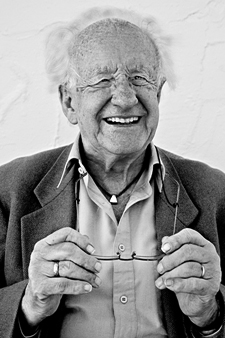
Johan Galtung
Kuala Lumpur, International Islamic University of Malaysia, 19 Aug 2014
Nothing good. But let us have a look at it in the standard peace studies way: Diagnosis – analyzing, Prognosis – forecasting, and Therapy – remedies, even solutions.
“Israel-Palestine” is the discourse Tel Aviv-Washington prefers. They have all the strong cards: overwhelming military power, political veto in the United Nations Security Council, the economic upper hand in interlocking economies – not just oil cash from Saudi Arabia-Qatar–and the idea of working for a solution with Washington as “mediator” – only the U.S. can bring the two together, gently or roughly–toward a sustainable peace.
A great distance from reality is needed to believe in that spin.
USA and Israel are interlocked by a much deeper tie Read the rest of this entry »
Three hard questions for Hamas
By Richard Falk
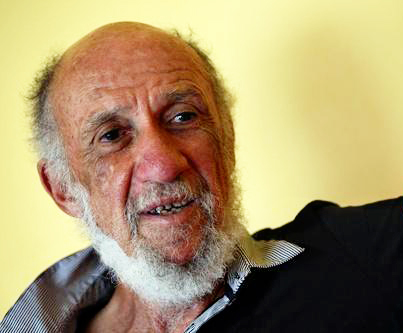
Richard Falk
There is no doubt that Hamas has exhibited extraordinary resilience under the most difficult of conditions that have bedeviled its period of political leadership in the Gaza Strip that started in 2007.
It also seems clear as persuasively argued by Sandy Tolan in a valuable Common Dreams article – “Blown Chances in Gaza: Israel & U.S. Miss Many Chances to Avoid War”, Aug. 13, 2014 that Hamas pursued multiple initiatives starting in 2006 designed to achieve calm and quiet in its relations with Israel, and that these initiatives, including back channel reassurance about peaceful intentions, were rebuffed without even being acknowledged by either Israel or the United States.
It also seems the case that Israel acted to provoke the three most sustained military onslaughts directed at Gaza since 2008, and in each has relied on disproportionate force, inflicted numerous civilian casualties, and acted in a manner defiant of international humanitarian law.
For these reasons Israel deserves to be treated as an ‘outlaw state’ for reasons set forth by Akbar Ganji and I argued in a two-part article appearing in the online pages of AlJazeera English [“The Outlaw State of Israel,” Aug. 20,21, 2014].
And yet Hamas also has some explaining to do if it wishes to be more widely accepted throughout the world as entitled to full respect as a legitimate political actor. Read the rest of this entry »
Posted in Human rights and justice, International law, Israel/Palestine, Middle East, Richard Falk |
Tags: Hamas, Hamas rockets, Israel-Palestine conflict |
No Comments »
Strange regional alignments in the Gaza Massacre
By Richard Falk
Richard Falk
Prefatory Note
My post below, an earlier version of which was published in AlJazeera English as an opinion piece. It was written before I had the opportunity to read an illuminating assessment of the regional and global turmoil that culminated for now in the massacre carried out by Israeli armed forces in Gaza. I highly recommend “The Tragedy of Great Power: The Massacre of Gaza and the Inevitable Failure of the Arab Spring” written by the learned Islamic jurist and scholar, Khaled Abou El Fadl, a distinguished professor at UCLA School of Law, with the link to the article below:
What makes Professor El Fadl profound essay particularly valuable is his ability to fit the regional pieces together in a convincing manner, showing how and why governments that rule in Saudi Arabia and the UAE, encouraged the overthrow of Egypt’s elected government headed by Mohamed Morsi in mid-2013 and more recently encouraged Israel to destroy Hamas.
He also shows that Hamas is not accurately perceived as a byproduct of the Egyptian Muslim Brotherhood, but has its own “very distinct pedagogies, objectives and methodologies.” In depicting the forces of resistance and transformation as opposed to the geopolitics of counterrevolution as constituting the core struggle taking place throughout the region it becomes clear why the alignments in the Middle East are assuming their current configurations.
It is telling and provocative for Professor El Fadl to situate the Palestinian Liberation Organization (and by implication, the Palestinian Authority) as de facto allies of Sisi’s Egypt, Saudi Arabia, and the UAE as well as being existential partners of the United States and Israel in subjugating the region to Western goals.
What has developed further since the end of the Cold War rivalry that long dominated the region should be considered a geopolitical protection racket that gained political salience in the aftermath of the Arab Spring. The upheavals of 2011 shook the foundations of the old order, and led to renewals throughout the region of Faustian Bargains by which various authoritarian regimes receive protection, including help with the destruction of any political actor, whether Islamic or not, that dares to challenge this established order composed of ultra-rich native elites claiming dynastic privileges conferred by colonial powers then seeking native collaborators to manage exploited and oppressed populations.
While these elites appease Israel, the masses in the same political space remain passionately and symbolically dedicated to the Palestinian struggle as became evident in the September 9, 2011 attack by several thousand Egyptians on the Israeli Embassy shortly while the heroic memories of the overthrow of Hosni Mubarak were still fresh.
Of all the complexities surrounding the reaction of the world to the horrifying spectacle of Israel’s severe criminality in Gaza none is more perplexing than the complicity of most governments throughout the Arab world.
What makes their political posture particularly bewildering is the degree of ethnic, religious, cultural, and historical commonality that creates such close ties of identity among the peoples of the region. And no single issue has been as unifying over the decades for these people than has their long intensely felt opposition to the injustice, suffering, and exploitation that the Palestinian people have endured for the past century as a result of the encroachments of the Zionist movement on their lands. Read the rest of this entry »
Posted in Arab Spring, Egypt, Iran, Iraq, Israel/Palestine, Lebanon, Richard Falk, Syria, UN matters, US Empire, World order/governance |
Tags: Al-Sisi, Gaza, Hamas, Israeli genocide, Mubarak, Muslim Brotherhood, Sadat |
No Comments »
TFF PressInfo: All Danish MPs now turn humanitarian aid into a military mission for Iraq
By Jan Oberg, TFF co-founder
Jan Oberg
Lund, Sweden August 25, 2014
Unless something totally unforseen happens, Denmark will begin to participate in the war against ISIS and Co., this week.
But a week ago it was only a humanitarian mission.
There is indeed something rotten in the – rogue – state of Denmark…
Iraq – the worst Danish foreign policy decision since 1945
Denmark’s participation in the Iraq war and as occupying power 2003-2007 is, without a doubt, the worst and most criminal piece of foreign policy since 1945.
It was decided by the government of Anders Fogh Rasmussen who afterwards was rewarded by being appointed to the post of NATO S-G.
Now a military transport for the U.S.
On Wednesday this week, the Danish parliament, Folketinget, will decided to continue this foreign policy blunder by authorising a Danish Hercules military transport aircraft to participate in bringing weapons into the Kurdish areas of Northern Iraq at the request of the U.S.
Humanitarian less than a week ago
Conspicuously, this operation was – less than a week ago – presented to the Danish media and public as an exclusively humanitarian operation.
The chairperson of the Parliament’s Foregin Policy Committee talked with passion about the need to help all the people who suffered, had fled and needed our immediate attention. At the time I thought it was a good idea.
All the political parties, from the extreme right to the extreme left are now behind the military operation. And unless something totally unforseen happens, Denmark will begin to participate in the war against ISIS and Co., this week.
The mission has been changed from humanitarian aid to weapons and is, according the Defence minister, ready to depart even Wednesday. Read the rest of this entry »
Posted in Denmark, International law, Iraq, Jan Oberg, Middle East, Military - technology, Syria, Terrorism, TFF PressInfo, US Empire |
No Comments »
Palestinian Open Letter to UNSG Ban Ki-moon on Gaza
By Richard Falk
Richard Falk
Prefatory Note
Below is the text of an Open Letter to the UN Secretary General Ban Ki-moon alleging his inappropriate responses to the carnage and massacres taking place in Gaza, and by his behavior undermining respect for and the authority of the United Nations and international law.
Given such a performance, the challenge posed to the highest ranking UN official is to revise his past comments on the Israeli attack or to resign his office. The peoples of the world, and not just the Palestinians, have a paramount interest in holding morally, legally, and politically accountable the UN and those who lead and represent the organization in response to such breaches of the peace and acts of aggression in accordance with law and justice, and never more so than when such unlawful behavior is directly responsible for a grave humanitarian catastrophe of the kind that has befallen the civilian population of Gaza since July 8.
Instead of supporting Israel spurious claim of acting in self-defense, Mr. Ban Ki-moon should have been using his office to insist on an immediate ceasefire accompanied by the unconditional lifting of the blockade imposed on Gaza since mid-2007 that has constituted the essence of the collective punishment of the 1.8 million people encaged in the Gaza Strip without even a sanctuary for children, women, the disabled, the elderly, non-militants to escape from the combat zone by crossing the border or finding safety within Gaza itself.
The shelling of UN facilities being used to shelter those desperately seeking safety exemplifies Israeli criminal conduct during this savage military operation.
Please read the text below, prepared by Badil (an NGO devoted to Palestinian refugee rights that enjoys a world reputation for the quality of its work and the dedication of its staff) and endorsed by a large number of Palestinian civil society actors; please disseminate this text as widely as possible, and call independently for a response by the Secretary General, as well as further action if a response is not forthcoming.
Open letter to Mr. Secretary-General, Ban Ki-moon: stand for law and justice or resign!
5 August 2014
For humanity and the little remained credibility of international law:
UN Secretary-General, Ban Ki-moon, stand for law and justice or resign!
Secretary-General Ban Ki-moon,
We, the under signed Palestinian human rights and community-based organizations are extremely disappointed by your performance, notably by your biased statements, your failure to act, and the inappropriate justification of Israel’s violations of IHL, which amount to war crimes.
Until today, you have taken no explicit and tangible measures to address the recent Israeli attacks in the occupied Palestinian territory (oPt) since 13 June. Moreover, your statements have been either misleading, because they endorse and further Israeli false versions of facts, or contrary to the provisions established by international law and to the interests of its defenders, or because your words justify Israel’s violations and crimes.
You have undeniably assumed a biased position toward the current attack on Gaza and Israeli violations in the West Bank by failing to clearly condemn Israeli unlawful actions in the OPT, while, on the other hand, not hesitating to accuse – sometimes mistakenly – Palestinian combatant in Gaza of violations of international law.
This bias can be noted in the following excerpts: Read the rest of this entry »
TFF PressInfo: Leadership change needed in Israel
By Johan Galtung
Johan Galtung
Lund, Sweden August 15, 2014
Like so many, like millions, this author’s heart is bleeding for the killed and bereaved in Gaza – so disturbingly similar to the Warsaw ghetto in 1943 and Warsaw 1944. With Arab and Western governments doing nothing; like the Red Army in 1944.
But the latter was heading for Berlin. And the West uses Ukraine as a distraction, trying to hit Moscow.
Like Rabbi Michael Lerner, my non-Jewish heart is also bleeding for Judaism and the Israel that could have been.
The present regime is a traitor to both, driving into the abyss.
Yet they have parliamentary and democratic, voter, support? Except that parliaments are not infallible, democracies can be wrong; even more so if the people think they have a divine mandate.
England, the mother of parliaments, once thought it had; colonized 25% of the world and is now hanging on to the “united kingdom”.
The USA still feels covenanted to the Lord but is lording over less and less; Japan suffers from similar Sun Goddess delusions.
So does the present Israeli regime, but there is enough sanity left.
By “pathology” it is meant not only the megalomaniac-paranoid component but the deficient sense of reality. Particularly:
Pathology 1: The delusion of victory being feasible. Read the rest of this entry »
Posted in Democracy - local & global, Israel/Palestine, Johan Galtung, Middle East, Nonviolence, Pro-peace & proposals, Psychology - war & peace, Reconciliation & forgiveness, TFF PressInfo, US Empire |
Tags: Antisemitism, Israel's wall, Israeli peace, Jabotinsky, Jewish characteristics, Jewish state, Martin Buber, Netanyahu, Warsaw ghetto, Zionism |
No Comments »
Vesten bør reagere på Irans åbne vindue
Af Birgitte Rahbek
Trykt i Kristeligt Dagblad 11. juli 2014

Birgitte Rahbek
Lige fra den syriske krigs begyndelse har det været et standende emne, om krigen kunne vindes – og dermed standses – ved at sende våben til oprørerne eller ved at gribe ind med flyveforbudszoner eller direkte intervention. På et meget tidligt tidspunkt gjorde NATO det klart, at en intervention ikke kunne komme på tale; det er der megen fornuft i, bortset fra at det måske havde været klogere ikke at sige det højt, for det fremmede ikke just det syriske regimes fredsvilje.
I mellemtiden har den overvejende holdning været, at Vesten hverken kan eller skal gribe ind, og at vejen til en fredelig løsning går gennem forhandlinger. FN har to gange sat erfarne diplomater til at føre forhandlingerne, men uden at de har kunnet komme igennem med en fredsplan, især fordi der blandt vestlige ledere og mellemøstlige autokrater hersker en stærk uvilje mod at forhandle fred med fjenden, som i denne forbindelse – ud over den syriske præsident og hans klan – har været Iran og Rusland. Read the rest of this entry »
Posted in Arab Spring, Birgitte Rahbek, Iran, Israel/Palestine, Middle East, Nuclear weapons, Russia, Syria, US Empire, US politics & security, USA |
No Comments »