Archive for the ‘Violence-prevention’ Category
ISIS – Negotiations, not bombing
 October 14th, 2014 |
  Author:
 By Johan Galtung
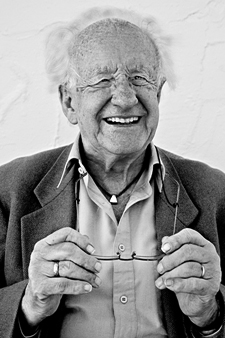
Johan Galtung
More senseless bombing of Muslims, more defeats for USA-West, more ISIS-type movements, more West-Islam polarization. Any way out?
“ISIS, Islamic State in Iraq-Syria, appeals to a Longing for the Caliphate” writes TFF Associate Farhang Jahanpour in an IPS column. For the Ottoman Caliphate with the Sultan as Caliph – the Shadow of God on Earth – after the 1516-17 victories all over till the collapse of both Empire and Caliphate in 1922, at the hands of the allies England-France-Russia.
Imagine the collapse of the Vatican, not Catholic Christianity, at the hands of somebody, Protestant or Orthodox Christians, meaning Anglo-Americans or Russians, or Muslims. A center in this world for the transition to the next, headed by a Pope, the apostolic successor to The Holy Spirit, an emanation of God in Heaven. Imagine it gone.
And imagine that they who had brought about the collapse had a tendency to bomb, invade, conquer, dominate Catholic countries, one after the other, like after 2 Bush wars in Afghanistan-Iraq, 5 Obama wars in Pakistan-Yemen-Somalia-Libya-Syria, and “special operations”.
Would we not predict [1] a longing for the Vatican, and [2] an extreme hatred of the perpetrators? Fortunately, it did not happen.
But it happened in the Middle East: leaving a trauma fueled by killing hundreds of thousands.
The Sykes-Picot England-France agreement of 16 May 1916 led to Read the rest of this entry »
 Posted in China, Conflict and war, Culture & religion, Ethics and values, EU politics, Iraq, Israel/Palestine, Johan Galtung, Libya, Middle East, Norway, Peace, Pro-peace & proposals, Psychology - war & peace, Reconciliation & forgiveness, Security and defence, Syria, Terrorism, Theories and concepts, Turkey, US Empire, Violence-prevention, World order/governance |
  No Comments »
Blame the British for Hong Kong’s democratic deficit
By Jonathan Power
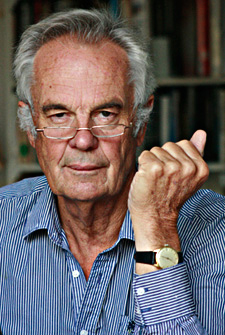
September 9th 2014
When 17 years ago the British lowered the Union Jack on their last remaining important colony, Hong Kong, Chris Patten, the governor, buried his face in his hands for the entire world to see and felt the profoundest sentiment a proud and ambitious politician could experience – failure.
It was indeed a personal failure to be added to his other great misfortune, the timing of elections back home in Britain that made it impossible for him to become prime minister. But on that damp evening it was the people of Hong Kong, those who knew him well could tell, that pierced his conscience. The British had let them down. They were giving up a colony having unaccountably failed not to leave it a functioning democracy. Read the rest of this entry »
 Tags:
Tags: Hong Kong and beyond
By Johan Galtung
Johan Galtung
Beijing should listen to its own excellent mantra: “One Country, Two Systems”. A part of that other system is democracy. England never practiced that during 150 years of conquest and colonialism – also fearing Hong Kong might vote themselves into independence from UK – but that low standard is no excuse.
And democracy today rides on an expanding agenda, much more than periodic fair and free multi-party national elections which China does not practice, for its own reasons.
China experiments with local democracy and Hong Kong is local. Democracy today moves in favor of direct election of the Chief Executive; in the Hong Kong case governor, in 2017. That means having a choice among candidates with different visions, not a governor appointed, be that by Beijing or by the governing council of Hong Kong. Read the rest of this entry »
Ukraine and nuclear weapons – Scrap all nuclear weapons
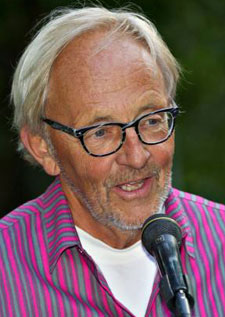
By Gunnar Westberg
”Ukraine is going to make nuclear weapons. You’ll see. There is strong support in the parliament. All the intercontinental missiles in the Soviet Union were made in Ukraine, and there are at least 25 of them left. And we have uranium. And we have the know-how. Just wait, you’ll see!”
So said an officer in the Ukrainian army whom I met about a month ago. This prediction, that Ukraine is going to make nukes, can also be found in some Western news media.
Fortunately, this is not going to happen.
There is no uranium of weapons grade in the country. To produce a sufficient amount of high grade uranium thousands of centrifuges for enrichment are needed. Only Pakistan could sell them, as was done to Iran, but both the USA and Russia will stop this trade. Ukraine could Read the rest of this entry »
Posted in Abolition, General issues, Gunnar Westberg, Nuclear weapons, Ukraine, Violence-prevention |
No Comments »
TFF PressInfo 282: Instead of bombing ISIS – Concrete proposals (Part B)
By Jan Oberg, TFF

Jan Oberg
Lund, Sweden October 7, 2014
Part A – Some principles (yesterday) here
This two-part PressInfo offers a pro-peace perspective on the present war on ISIS in Iraq and Syria.
First some principles to stimulate another discourse, another way of thinking that is not militarist – and then the concrete proposals below – 27 in all for your deliberation, discussion with friends and perhaps to share through your social and other media.
The proposals are not numbered – there is no linearity, some of it can be done simultaneously.
How to make the bombing and wars irrelevant
Stop the financing of ISIS – sadly it is non-democratic allies of the West – Saudi-Arabia, Qatar, UAE etc – that seem to pay its bills. Joe Biden apologised – for being truthful.
Allegedly, ISIS has an income of US$ 3 million per day from oil resources they now control. Oil fields should have been protected at an early stage. Fire your intelligence service leaders if they did not see this coming.
Instead of starting out with war, declare yourself willing to talk with some representatives of ISIS and other conflict parties. Some of them have been trained by the U.S. so they are obviously possible to talk with. And if not, you take it from there.
Recognise – even apologise – for wrong deeds and mistakes and brutalities you have yourself committed. In the case of Iraq this is particularly relevant because the invasion, occupation and 13 years of world history’s most brutal sanctions have killed about 1 million innocent Iraqis and made 4 millions to flee their homes.
Danish poet and philosopher Piet Hein has said it beautifully: ”The nobel art of losing face may one day save the human race and turn into eternal merit what weaker minds would call a disgrace.” Don’t be that weaker mind – because, if so, you will over time become a mirror image of those terrorists you are fighting – a disgrace.
Deploy a robust, impartial, globally composed UN-led force Read the rest of this entry »
Posted in Abolition, Iran, Iraq, Israel/Palestine, Jan Oberg, Middle East, Negotiations, Nonviolence, Nuclear Free Zones, Peace, Pro-peace & proposals, Psychology - war & peace, Reconciliation & forgiveness, Russia, Syria, Terrorism, TFF PressInfo, Theories and concepts, US Empire, Violence-prevention, World order/governance |
No Comments »
TFF PressInfo 281: Instead of bombing IS (Part A)
By Jan Oberg
Jan Oberg
This two-part article offers a pro-peace perspective on the present war on ISIS in Iraq and Syria.
First some principles to stimulate another discourse, another way of thinking that is not militarist – and then some concrete proposals – 27 in all for your deliberation, discussion with friends and perhaps to share through your social and other media.
Neither war nor doing nothing
The principle of ”An eye for an eye will one day make the whole world blind” – said Mohandas K. Gandhi who was born on October 2 145 years ago. Since then, human civilisation has not advanced much when it comes to handling conflict.
Let’s recognise that it is a difficult situation – the Middle East is in a mess and the West is deeply co-responsible if you look at the last roughly 100 years – Sykes-Picot, Balfour, coup d’etats, occupations, bombings, bases, oil greed etc.
So, there are no easy solutions.
However, three simple principles will help us all:
A) Be aware of the West’s co-responsibility,
B) Don’t make everything even worse – and
C) Remember that violence begets hate, wish for revenge and more violence – blowbacks.
Unfortunately, A to C is totally ignored by the bombing nations – the US, France, Britain, Belgium and my native Denmark together with some small Arab states which paradoxically have financed ISIS – Al-Qaeda in Iraq – for years.
It is easy to be for war. Read the rest of this entry »
Posted in Conflict and war, Iran, Iraq, Jan Oberg, Media perspectives, Middle East, Negotiations, Nonviolence, Peace, Pro-peace & proposals, Psychology - war & peace, Reconciliation & forgiveness, Syria, Terrorism, TFF PressInfo, US Empire, US politics & security, Violence-prevention |
No Comments »
Controlling ISIS without bombing
By Jonathan Power
A Western viewpoint (courtesy of Aubrey Bailey): “Some of our friends support our enemies, and some of our enemies are our friends, and some of our enemies are fighting against our other enemies whom we want to lose, but we don’t want our enemies who are fighting our enemies to win.
If the people we want to defeat are defeated they might be replaced by people we like even less. And all this was started by us, the West, invading a country to drive out terrorists who weren’t actually there until we went to drive them out”.
Those are the conundrums that President Barack Obama and his Western and Arab allies are facing in trying to defeat ISIS.
Well, if the saying that “My enemy’s enemy is my friend” is an Arab one then the West has its: “When you are in a hole stop digging”.
The hole digging has been going on since President Jimmy Carter, persuaded by his National Security Advisor, Zbigniew Brzezinski, provided sophisticated armaments to the Mujahidin fighting the invading Soviet army in Afghanistan back in the 1980s. Not surprisingly the arms of the Mujahidin fell into the hands of the resurgent Taliban which protected Al Qaeda. Read the rest of this entry »
After ‘Protective Edge’: What future for Palestine and Israel?
By Richard Falk
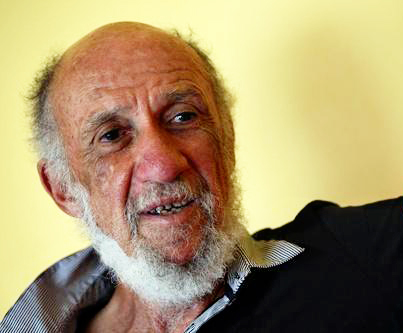
Richard Falk
The 50-day Israeli military operation that killed over 2100 Palestinians, wounded another 11,000, and undoubtedly traumatized the entire Gazan population of 1.7 million also took the lives of 70 Israelis, of which 65 were soldiers. This last violent encounter has ended without a clear victory for either side.
Despite this, Israel and Hamas are each insisting that ‘victory’ was achieved. Israel points to the material results, tunnels and rocket sites destroyed, targeted assassinations completed, and the overall weakening of Hamas capacity to launch an attack. Hamas, for its part, claims political gains, becoming far stronger politically and psychologically in both Gaza and the West Bank than before the fighting began, refusing to give in on the basic Israeli demand of the ‘demilitarization’ of Gaza, as well as further tarnishing Israel’s international reputation.
The UN Human Rights Commission has taken what for it is an exceptional step of appointing a commission of inquiry to investigate allegations of war crimes. The fact that William Schabas, a renowned expert on international criminal law, especially on the crime of genocide, was selected to chair the investigation is of great symbolic significance, and potentially of major relevance to the ongoing legitimacy struggle being successfully waged by the Palestinian people. Read the rest of this entry »
Posted in Israel/Palestine, Middle East, Richard Falk, US Empire, USA, Violence-prevention |
No Comments »
The threat of ISIS should be taken seriously (Part 1)
By Farhang Jahanpour
A shorter version of this article was published by IPS
The Origins
When all of a sudden ISIS (Islamic State in Iraq and Sham) emerged on the scene, and in a matter of days occupied large swathes of mainly Sunni-inhabited parts of Iraq and Syria, including Iraq’s second city Mosul and Saddam Hussein’s birthplace Tikrit and called itself the Islamic State, many people, not least Western politicians and intelligence services, were taken by surprise.
This feeling of shock and repeated reversals in the past has been due to widespread ignorance or the willful neglect of history, and general unwillingness by politicians and pundits to look at the reality as it is or to explore the root causes of the issues in the Middle East from a historical, religious and ethnic point of view.
Most politicians have been afflicted by short-termism and they stumble from one crisis to the next without an overall strategy and without the ability to look beyond their noses. Read the rest of this entry »
Posted in Arab Spring, Conflict and war, Culture & religion, Egypt, Ethics and values, Farhang Jahanpour, Iran, Iraq, Israel/Palestine, Lebanon, Libya, Media perspectives, Middle East, Political, Psychology - war & peace, Reflections, essays & more, Syria, Theories and concepts, Turkey, US Empire, US politics & security, USA, Violence-prevention, World order/governance |
No Comments »
ISIS, militarism and the violent imagination
By Richard Falk
Richard Falk
Before ISIS
The beheading of American and British journalists who were being held hostage by ISIS creates a truly horrifying spectacle, and quite understandably mobilizes the political will to destroy the political actor who so shocks and frightens the Western sensibility, which is far from being free from responsibility for such lurid incidents.
Never in modern times has there been a clearer example of violence begetting violence.
And we need to ask ‘to what end?’ Political leaders in the West are remarkably silent and dishonest about what it is that they wish to achieve in this region beset since 2011 by a quite terrifying outbreak of political extremism, whether from above as in the cases of Syria, Egypt, and Israel or from below as with ISIS and al-Nusra.
It is difficult to recall that at the start of 2011, just three years ago, progressive voices around the world were inspired by the Arab upheavals, especially in Egypt and Tunisia, that burst upon the political scene unexpectedly.
These extraordinary events appeared to repudiate the prevailing patterns of authoritarian, exploitative, and corrupt collaboration between oppressive domestic elites, neoliberal economic forces, and the regional imperial juggernaut that had kept this humanly disastrous reality stable for so long. Yet even during that time of optimism about the Arab future, a closer scrutiny of what was happening disclosed many reasons to be worried. It is helpful to look to this recent past to have some comprehension of the perplexing present.
A Revolutionary Spirit Without Revolutionary Action
The goals of these upheavals were far too ambitious to be realized by such limited challenges directed at the established order. These movements were essentially confined to getting rid of a hated ruler. Read the rest of this entry »
Posted in Afghanistan, Arab Spring, Conflict and war, Democracy - local & global, Development, Egypt, Future perspectives, Global trends & events, Human rights and justice, International law, Iran, Iraq, Israel/Palestine, Libya, Media perspectives, Middle East, Migration and refugees, Military - technology, Nonviolence, Political, Psychology - war & peace, Reflections, essays & more, Richard Falk, Syria, Terrorism, Theories and concepts, US Empire, Violence-prevention, World order/governance |
No Comments »