Archive for the ‘TFF PressInfo’ Category
TFF PressInfo: Wow, Hillary Clinton as moral philosopher
 July 31st, 2014 |
  Author:
 By Jan Oberg, TFF director
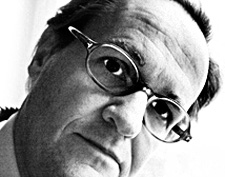
Jan Oberg
Lund, Sweden July 31, 2014
Responsibility for wars and killing
A number of Western/NATO politicians – Hillary Clinton foremost among them – and media people have recently introduced a new ethical principle in international affairs:
When A delivers weapons to B, A is responsible for what B does with these weapons. The former Secretary of State and perhaps future U.S. President presents this new ethical principle here on CNN.
This makes a lot of sense to me. Look at it this way:
Here is a young confused boy who has little to look forward to – and less to lose – because his country is falling apart in nasty civil war. He’s been told by some commander, or by his President, that he must hate the enemy; he gets paid for killing off as many as he can. And so he does.
He believes also in what he’s been promised: Fame as a hero upon return – that is, if he returns – and a comfortable life.
So he kills people, Read the rest of this entry »
 Posted in Armament, Ethics and values, Human rights and justice, International law, Israel/Palestine, Jan Oberg, Russia, Security and defence, TFF PressInfo, US Empire, US politics & security, USA, Violence-prevention |
  Tags: Eastern Ukraine, Hillary Clinton, ICC, MH17, moral philosophy, pro-Russian rebels, Putin, responsibility |
  No Comments »
TFF PressInfo: It’s doable: Peace Israel-Palestine (1)
By Jan Oberg, TFF director
Jan Oberg
Lund, Sweden July 25, 2014
Violence is a dead end
Look at the violence in Gaza today, DR Congo (6 million dead), Iraq, Libya, Afghanistan, Somalia etc: Isn’t it obvious that the world needs a completely new approach to conflicts?
We’ll never rid the world of conflicts, conflicts is part of human and social life. Conflict-prevention is a meaningless term.
But we can rid the world of most of its violence. If we want, if we educate each other and if economic and other interests stopped supporting killing as a tool in conflict-management.
Unrealistic? Hopelessly idealistic? Well, look at the places above and try to find the realism and hope there.
Look at the conflict not at the parties and the violence
It requires almost no intellectual effort to take sides in a conflict between A and B. If both parties use violence, that means endorsement of the violence – the justification both need: “They threaten and kill us, therefore we threaten and kill them.”
Those who support a conflict party who use violence also support violence. As long as violence continues, there will be no process towards peace – only more hate, traumas, suffering, wish for revenge and destruction.
Violence – not the conflict – becomes the main thing and tit-for-tat the rule of the game, with an increase in the violence for each round. Scorpions in a bottle, feeding each other.
Both those who are outside a conflict and debate it – for instance, 99% of the media debates – and the conflicting parties on the ground feed on violence. If A did not use violence against B, how would B justify its own killings?
Gaza today – both parties lose
This is where we are in Gaza today when reports tell that around 800 civilians have been killed without any positive effect, both losing.
It’s not about evil, it’s about desperation coupled with traumas coupled with a lack of insight and education.
This wrong-headed attitude is indicative of conflict and peace illiteracy: among the parties, our media and our decision-makers. Innocent people on both or all sides normally pay the price for it.
The world needs a completely different approach. It’s embedded in the UN Charter and called peace by peaceful means. Read the rest of this entry »
Posted in Culture, Culture & religion, Ethics and values, Israel/Palestine, Jan Oberg, Media perspectives, Nonviolence, Pro-peace & proposals, TFF PressInfo, Violence-prevention |
Tags: Gandhi, Gaza, Hamas, Israel, moratorium on violence, Oeration Protective Edge, terrorism, terrorism defined, terrorists, violence |
No Comments »
TFF PressInfo: Use Malaysia’s MH17 to make peace instead
By Jan Oberg, TFF director
Jan Oberg
Tragic misuse of a tragedy
The government of Ukraine as well as the separatists, NATO/U.S. and very many leading Western mainstream media seem all to know who has caused the tragedy. Putin believes it was caused indirectly by the West.
Given the fact that very few, if any, people or institutions can know who did it with enough details, data and precision to accuse anyone, the MH17 tragedy has been misused to an extent that can itself only be termed tragic.
The misuse is tragic because it is a catastrophe for close to 300 people, their relatives and friends. Silence – of both verbal and military weapons – and empathy would have been appropriate.
Anyone pointing fingers and calling it a terrorist act at this point is irresponsibly or should present convincing evidence.
Secondly, the blame game makes the necessary road to peace and security even more difficult.
An All Party Peace Process should come out of MH17 and the civil war
It would have been so much more civilised to use the MH 17 tragedy to say: Read the rest of this entry »
TFF PressInfo: “The human price of the war on Iraq” Hearing Statement
Comments by Hans-C. von Sponeck
Former UN Assistant Secretary General, UN Humanitarian Coordinator for Iraq & TFF Associate
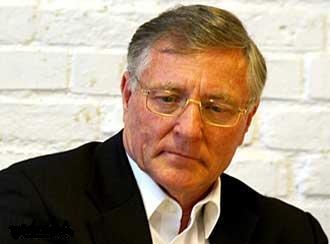
Hearing at the UK House of Commons, London June 10, 2014
Intro
1. HoC/HoL have repeatedly held Iraq hearings as have British NGOs such as CASI (Campaign Against Sanctions on Iraq) and Stop the War Coalition/UK. In Europe these are considered models for responsible public action.
2. My contribution at this hearing is not about the crimes of dictatorship or the details of Iraqi suffering. For both well researched data is available. The objective of my participation is to make two detailed observations about externally-driven Iraq politics during the period 1990-2014.
Observation 1
3. Today’s tragic Iraq reality can only be understood if the additive impact of the years before and the years following the US/UK Governments’ illegal invasion and occupation is fully taken into account. Read the rest of this entry »
Posted in Culture, Culture & religion, Democracy - local & global, Development, Ethics and values, Hans von Sponeck, Human rights and justice, International law, Iraq, Media perspectives, Middle East, Nuclear weapons, Peace, Psychology - war & peace, Sanctions, Terrorism, TFF PressInfo, UN matters, US Empire, Violence-prevention, World order/governance |
Tags: Abu Ghraib, Dato Agam Hasmy, Denis Haliday, destruction in Iraq, Geneva Conventions, humanitarian program, illiteracy in Iraq, Iraq compensation, Iraq poverty, Iraq sanctions, Kuala Lumpur War Crimes Commission (KLWCC), Kurdish-Arab divide, Oil for Food, Sir John Chilcot, Tony Blair, UN Compensation Committee, UN Security Council, UNICEF, US/UK war on Iraq, war criminals, Western war criminals, World Bank |
No Comments »
TFF PressInfo: Violence against children has become an epidemic
By Jonathan Power
Three Israeli teenagers murdered on Palestinian soil. One Palestinian boy burnt to death whilst alive in an apparent retaliation. Over the years of conflict thousands of children have been killed although many more on the Palestinian side than the Israeli.
According to the Old Testament’s Book of Numbers, Moses, when leading the trek to the “Promised Land”, once ordered all the women and children in one hostile tribe in their way, the Midianites, to be killed. Moses is as an important figure to Muslim theologians as he is to Jewish yet I’ve never come across the writings of a major theologian in either religion loudly condemning this mass murder.
The killing of the innocents in the “Promised Land” goes on three thousand years later. Last year eight Palestinian children (six boys and two girls) were killed and 1,265 were injured in the occupied Palestinian territories either by Israeli settlers by Israeli security forces. No Israeli children were killed in 2013.
Four Palestinian boys were killed by Israeli security forces in the Al Jalazun, Jenin and Ayda refugee camps. Incursions into the camps increased by 60 per cent compared with 2012. The 1,235 children injured in the West Bank (155 under the age of 12) are more than double the number injured in 2012 (552). 49 children were injured directly by Israeli settlers. Eight Israeli children were injured in Israeli settlements by Palestinians. Read the rest of this entry »
TFF PressInfo – Somaliland – A Peace and Photo Mission
By Jan Oberg
Lund, Sweden, July 1, 2014
This PressInfo is about place you’ve probably never visited nor know a lot about: Somaliland.
TFF today publishes the report from a mission there in May 2014 – to the capital Hargeisa, the harbour town of Berbera and to Burao.
With the report in photos and texts we seek to alert you to this indeed unique and interesting country.
Somaliland declared itself an independent state out of Somalia in 1991 and is still not recognised by a single government in the world.
But against all odds Somaliland has made considerable progress.

It isn’t easy to develop when you are marginal to the aid and investment sources, have no foreign embassies and can’t be a member of inter-national organisations. Read the rest of this entry »
TFF PressInfo: If militarism continues, humankind is doomed
By Jan Oberg
Both NATO and the EU has just announced that their members will now invest more in the military. It’s indicative of the lack of creativity in both organisations, it is self-defeating and counter-productive.
But have you seen it put on top of any agenda and debated? You haven’t, it is so normal – and the argument is that we are threatened. That’s called fearology: Making tax payers pay even more by making them scared.
The military sector is a parasite on society
The military sector produces much less employment than the civilian per invested dollar. It’s a huge burden on the economy because it swallows creativity, research and development badly needed to solve humankind’s real problems.
Weapons don’t belong to a market, there is no competition – the state is the only buyer – and thus tax payers must cover the systematic cost overruns.
We are told that there is economic crisis and we must cut down on hospitals, schools and human care everywhere. But this we can afford?
But what if the military did solve our problems? Read the rest of this entry »
TFF PressInfo: What to do now in Iraq?
By Jonathan Power
June 17th 2014
Is it “you reap what you sow”? The US electorate that voted twice for President George W. Bush should ask itself the question. The growing strength of ISIS and Jabhat al-Nusra, represents a grave threat to the future of the Middle East and the US has no one to blame but itself.
ISIS (The Islamic State of Iraq and al-Sham), it is being said, could eventually reconfigure the Middle East if it is able to seize significant chunks of Iraq and Syria, the Arab world’s two strategic centrepieces, spanning the Mediterranean to the Persian Gulf.
ISIS has begun setting up a proto-state in parts of Syria and Iraq, with its own courts, police and public services. According to the well-informed Middle East watcher, Robin Wright, “ISIS has become the most aggressive and ambitious extremist movement in the world. It is also the most deadly and the most accomplished, dwarfing its parent, al-Qaeda, in influence and impact”.
US policymakers understand from painful experience that military aid will not simply pressure Iraq’s Shia prime minister, Nurial al-Maliki, with his autocratic sectarianism, to make serious concessions to Iraqi Sunnis, and thus help dry up the waters in which ISIS swims.
But what else can President Barack Obama do? Read the rest of this entry »
TFF PressInfo: Democracy’s crisis – 10 points
By Jan Oberg
Democracy is a core feature of Western society, normally understood as representative parliament – i.e. in free elections citizens vote for people to represent their interests for a parliament consisting of parties of which some form the government and some the opposition.
It’s not always included in the definitions that democracy requires a reasonable level of knowledge and information, freely available. For instance, one often hears that India is the world’s biggest democracy but 26% of the people are still illiterate (287 million people).
So the ”world’s largest democracy” also has the world’s largest population who can’t read and write. In comparison, China illiterate citizens make up about 3% and is regularly called a dictatorship.
Also, in a society where the persons running for office are – or have to be – extremely wealthy to pay for their campaign and where large corporations make multi-million dollar contributions to certain candidates (presumably not out of altruism), falls outside a reasonable definition of democracy – even though they may also not be dictatorships; there are many stations in-between the two.
Are young people giving up parliamentary democracy?
When I was in my high-school years – a few decades ago – and wanted to contribute to changing society for the better, the most natural thing to do – and the finest – was to join a political party. Not so today. My students in peace studies around the world often ask me at the end of a course and it is time to say goodbye whether I can help them somehow in making their career. Their career dreams may be to work for the UN, for human rights, the environment or starting their own NGO with a peace profile or set up their own consultancy firm for a better world.
Significantly, over all these years, only one single student asked me what I thought about contributing to peace and development by becoming a politician.
As is well-known, people today engage in social issues mainly through civil society and the use of social media as their primary tool. This is good from most perspectives and holds fascinating prospects for de facto global citizenship and action, but it does something to the old type of representative democracy.
When we talk about global crisis, people think much more of the environment, identity issues or warfare than of democracy being in crisis. I think it is in fundamental crisis for the the following reasons. Read the rest of this entry »
Posted in China, Democracy - local & global, Ethics and values, EU politics, European Union, Future perspectives, Global trends & events, India, India, Jan Oberg, Media perspectives, Nonviolence, Political, Pro-peace & proposals, Reflections, essays & more, TFF PressInfo, US politics & security, World order/governance |
No Comments »
TFF PressInfo: EU elections – To perform rather than live democracy
By Jan Oberg
Lund, Sweden, June 3, 2014
Fears has been expressed in Europe about the recent EU parliament voting pattern. Instead of the fear and denouncing the winners we should ask: What causes such an outcome?
My short answer is this: Democracy itself is in deep crisis. It has become performance or ritual rather than something genuinely lived.
Two things stand out – one, the increase in votes going to nationalist, populist, right-wing and anti-Muslim parties as well as Euro-skeptics – particularly in Denmark, France, Greece and Britain.
Secondly, the voter turnout has fallen from 62 per cent in 1979 to 43% in 2009 and this year it increased only 0.09% in spite of the EU Commission’s attempt to increase it.
So while people struggle around the world for democracy, only 43% of the EU citizens find it meaningful to go and vote every 4th year. How tragic for an EU that tries to promote democracy everywhere, even by military force.
It is understandable that the two mentioned factors is a combination that make many in Europe – the seat of two world wars, NATO and some of the most armed and two nuclear-weapons states – concerned. Perhaps the rest of the world should be at least as concerned? Other countries such as Hungary and Spain have, on different dimensions, moved in a worrying authoritarian political direction. Read the rest of this entry »