Archive for the ‘AA ARTICLES BY ASSOCIATES’ Category
The West against itself
 April 28th, 2015 |
  Author: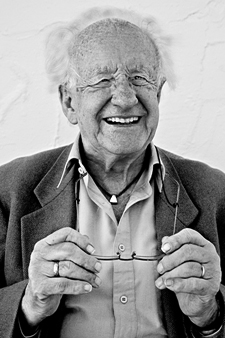
Johan Galtung
By Johan Galtung
Jondal, Bergen, Kristiansund – Norway
The West – North America and Europe to somewhere in Mexico and Ukraine – declines, outcompeted economically, defeated militarily, confronted politically, contested culturally. But still strong on all four, with much to offer in a more egalitarian world. There should be no need to fall further by working against itself.
Take the 70th anniversary demarcation of the victory over nazism, take thousands of Africans drowning in the waters around Lampedusa, Italy, take the Islamic State, take Ukraine – and a country up there in the high North of Europe, Norway. Elections have moved the country from “red-green” to “blue-blue” coloring of the same color blind foreign policy: follow Washington, Our Father, lest Satan should come.
Yes, the Red Army came and liberated Kirkenes 25 October 1944, the northernmost city. Everybody knows Operation Barbarossa, Hitler’s three-pronged attack toward Leningrad (the siege), Moscow (to beat–Napoleon?) and Caucasus (oil); but not the war for the ice-free harbor of Murmask, from Kirkenes. King Haakon VII, a Dane elected king in 1905, made a remarkable speech in London, distributed in leaflets through the air:
“Fear of Russians is not a recent phenomenon. New was the fear of bolshevism, added after the Russian revolution. But up till this date we are missing the slightest proof that Russia has had aggressive designs on Norway.
What we are not missing are the proofs that the fear of Russians and bolshevism is propagated by powers and groups that themselves had aggressive designs on Russia. The proofs are abundant in the political history from 1918 till today.”
Poland lost 20% of its population; the Soviet Union 27.1 million, 16%, with 1,710 cities and 70,000 villages erased; UK 1.1%; USA 0.4%; Norway 0.32%. The Soviet Union may have lost more soldiers close to Kirkenes against Nazism than Norway all over Norway during the war. Read the rest of this entry »
 Posted in Cold War - new, Culture, Culture & religion, Development, EU politics, European Union, Future perspectives, Global trends & events, Human rights and justice, Integration, International law, Islamophobia, Johan Galtung, Media perspectives, Middle East, Migration and refugees, NATO, Nonviolence, Pro-peace & proposals, Racism, Reconciliation & forgiveness, Russia, Security and defence, Ukraine, US Empire, World order/governance |
  No Comments »
TFF PressInfo 317: Yemen – The mainstream narrative is grossly misleading
By Jan Oberg, TFF director
Lund, Sweden, April 24, 2015
Double standards
A coalition led by Saudi-Arabia and supported by Western leaders has been bombing Yemen for about a month; it’s a clearcut international aggression and an extremely a-symmetric conflict.
But we’ve heard no calls for a ‘humanitarian intervention’ by NATO or a no-fly zone to prevent the now more than 1500 bombing raids from contining and hitting also civilian targets.
It’s not that international law is blatantly violated; sadly that has been seen before. It is the roaring absence of a clear condemnation by the UN, EU/NATO countries – usually calling themselves ‘the international community’ – and by the Western mainstream media.
Substance plays a minor role. What is right or wrong depends on who is doing what. This war is OK because the Saudi dictatorship and its coalition members are Western allies and armed by NATO countries.
The convenient but wrong narrative
Furthermore, the narrative has twisted this into a proxy war between Saudi-Arabia and the West on the one side and Iran, alone, on the other side blaming the latter for its alleged support to the Houthis.
It is no wonder that a group of eminent scholars on Yemen have published an open letter in Washington Post in which, among other things, they condemn the Saudi-led war on Yemen. Read the rest of this entry »
Posted in Alternatives - peace, Arab Spring, Armament, Egypt, Farhang Jahanpour, Gareth Porter, International law, Iran, Iraq, Israel/Palestine, Jan Oberg, Libya, Media & conflict, Media perspectives, Middle East, Migration and refugees, Nonviolence, Pakistan, Pro-peace & proposals, Stephen Zunes, Syria, TFF PressInfo, UN matters, US Empire, USA, Violence-prevention, World order/governance, Yemen |
No Comments »
Houthi arms bonanza came from Saleh, not Iran

Gareth Porter
By Gareth Power
As the Saudi bombing campaign against Houthi targets in Yemen continues, notwithstanding a temporary pause, the corporate media narrative about the conflict in Yemen is organised decisively around the idea that it is a proxy war between Iran on one side and the Saudis and United States on the other.
USA Today responded like Pavlov’s dog this week to a leak by Pentagon officials that it was sending the aircraft carrier USS Theodore Roosevelt to the waters off Yemen, supposedly to intercept Iranian vessels carrying weapons to the Houthis. It turned out that the warship was being sent primarily to symbolise US support for the Saudis, and the Pentagon made no mention of Iranian arms when it announced the move. But the story of the US navy intercepting Iranian arms was irresistible, because it fit so neatly into the larger theme of Iran arming and training the Houthis as its proxy military force in Yemen.
News stories on Yemen in recent months have increasingly incorporated a sentence or even a paragraph invoking the accusation that Iran has been arming the Houthis and using them to gain power in the Gulf. The State Department’s principal Deputy Assistant Secretary Gerald Feierstein nourished that narrative in Congressional testimony last week depicting Iran as having provided “financial support, weapons, training and intelligence” to the Houthis. Feierstein acknowledged that the Houthi movement is “not controlled directly by Iran”, but claimed a “significant growth in Iranian engagement” with the Houthis in the past year.
Like most popular myths the dominant narrative of the Houthi movement as Iranian proxy in Yemen is based on a kernel of truth: the Houthis share the Iranians’ dim views of American intentions in the Middle East and have sought to take advantage of the Hezbollah model to enhance their political-military effectiveness. Read the rest of this entry »
Posted in Gareth Porter, Human rights and justice, International law, Iran, Libya, Media perspectives, Syria, TFF PressInfo, US Empire, USA, Yemen |
No Comments »
The World Must Stop the Saudi Massacre of the Yemenis
By Farhang Jahanpour
After four weeks of savage bombing of their impoverished neighbor, Yemen, the Saudis declared “Mission Accomplished”, and promised to halt their aerial bombardment at midnight on 22 April 2015. Yet only three hours later, they resumed their attacks with greater intensity from the sea and the air.
Although the conflict in Yemen has been going on for four years, it was the new 79-year old Saudi King Salman and his young son Muhammad bin Salman (believed to be between 27 and 33 years old) who has been appointed defense minister as well as running the royal court and the newly formed Economic and Development Affairs Council, in addition to being a member of the Political and Security Affairs Council, another key decision-making body, who decided to start the aerial bombing of Yemen.
The Saudis turning Yemen into another Libya or Syria
After having helped the attacks on Libya that resulted in the ouster of Mu’ammar Qadhafi and the mayhem that has followed, after supporting the Sunni insurgents to fight against the Iraqi Shi’a-led government causing tens of thousands of casualties as the result of suicide bombings, organizing and supporting terrorists to oust President Bashar Asad in Syria that have morphed into the terrorist group ISIS that has destabilized both Syria and Iraq and the entire region, and after sending forces to Bahrain to put down the pro-democracy movement in that country, it seems now it is Yemen’s turn to be turned into a failed state.
During the first four weeks of air strikes the Saudis have pummelled 18 of Yemen’s 22 provinces, striking schools, homes, refugee camps, crowded residential areas, power and water infrastructure, dairy factories and humanitarian aid supply, as well as blowing up a large part of Sanaa which is a world heritage site.
According to World Health Organization, at least 944 people were killed and 3,500 wounded in the first four weeks of the air strikes (some put the figures much higher). Hospitals are short of electricity and there is acute shortage of medicine to take care of thousands of wounded Yemenis who are in urgent need of treatment.
Furthermore, the entire country is without power, Read the rest of this entry »
Posted in Arab Spring, Egypt, Farhang Jahanpour, International law, Iran, Iraq, Libya, Media & conflict, Media perspectives, Middle East, Migration and refugees, Pakistan, Pro-peace & proposals, Security and defence, Syria, TFF PressInfo, UN matters, US Empire, USA, World order/governance, Yemen |  Tags: Abd Rabbu Mansur Hadi, Aden, Al Qaeda, Ali Mohsen al-Ahmar, Amran, Arab League and Yemen, casualties in yemen, consequences of the Saudi-led war on Yemen, Egypt, four weeks of Saudi war on Yemen, Gamal Abdel Nasser, Gareth Porter, GCC, Gulf Coopertion Council, Houthi, humanitarian situation in Yemen, Iran and Houthi, Iran and Yemen, ISIS, Muhammad bin Salman, Pakistan on Yemen, President Saleh, Sanaa, Saudi King Salman, the US in Yemen, Turkey, Yemen, Yemen British protectorate, Yemen National Dialogue Conference, Yemen scholars in Washington Post, Yemen's history, Yemenis suffering, Zaidis and Shiite, Zaydis, Zaydis and Shia |
No Comments »
Tags: Abd Rabbu Mansur Hadi, Aden, Al Qaeda, Ali Mohsen al-Ahmar, Amran, Arab League and Yemen, casualties in yemen, consequences of the Saudi-led war on Yemen, Egypt, four weeks of Saudi war on Yemen, Gamal Abdel Nasser, Gareth Porter, GCC, Gulf Coopertion Council, Houthi, humanitarian situation in Yemen, Iran and Houthi, Iran and Yemen, ISIS, Muhammad bin Salman, Pakistan on Yemen, President Saleh, Sanaa, Saudi King Salman, the US in Yemen, Turkey, Yemen, Yemen British protectorate, Yemen National Dialogue Conference, Yemen scholars in Washington Post, Yemen's history, Yemenis suffering, Zaidis and Shiite, Zaydis, Zaydis and Shia |
No Comments »
How the US contributed to Yemen’s crisis
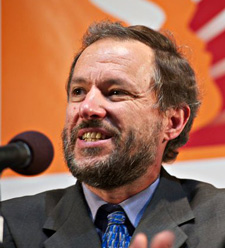
By Stephen Zunes
Washington’s support for Yemen’s former dictatorship — and of Saudi efforts to sideline the country’s nonviolent pro-democracy movement — helped create the current crisis.
As a Saudi-led military coalition continues to pound rebel targets in Yemen, the country is plunging into a humanitarian crisis. Civilian casualties are mounting.
With U.S. logistical support, the Saudis are attempting to re-instate the country’s exiled government — which enjoys the backing of the West and the Sunni Gulf monarchies — in the face of a military offensive by Houthi rebels from northern Yemen.
None of this had to be.
Not long ago — at the height of the Arab Spring in 2011 — a broad-based, nonviolent, pro-democracy movement in Yemen rose up against the U.S.-backed government of dictator Ali Abdullah Saleh. If Washington and Saudi Arabia had allowed this coalition to come to power, the tragic events unfolding in Yemen could have been prevented.
The movement had forged an impressive degree of unity among the various tribal, regional, sectarian, and ideological groups that took part in the pro-democracy protests, which included mass marches, sit-ins, and many other forms of nonviolent civil resistance. Leaders of prominent tribal coalitions — as well as the Houthis now rebelling against the government — publicly supported the popular insurrection, prompting waves of tribesmen to leave their guns at home and head to the capital to take part in the movement.
These tribesmen, along with the hundreds of thousands of city dwellers on the streets, were encouraged to maintain nonviolent discipline, even in the face of government snipers and other provocations that led to the deaths of hundreds of unarmed protesters.
The Obama administration, however, was more concerned about maintaining stability in the face of growing Al-Qaeda influence in rural areas. Secretary of Defense Robert Gates acknowledged that Washington had not planned for an era without Saleh, who had ruled the country for more than three and a half decades. As one former ambassador to Yemen put it in March 2011, “For right now, he’s our guy.”
Posted in Arab Spring, Middle East, Nonviolence, Stephen Zunes, US Empire, Violence-prevention, Yemen |
Tags: Abd Rabbuh Mansur Hadi, Arab Spring, democracy movement, GCC, Hadi, Houthi, Houthis, Middle East & North Africa, Military Intervention, Robert Gates, Saleh, Saudi Arabia, Saudi-Arabia bombing Yemen, Tawakkol Karman, the Yemen revolution, U.S. Ambassador Feierstein, U.S.-backed government of dictator Ali Abdullah Saleh, United States, Yemen, Yemen civil war |
No Comments »
Powerful nonviolent resistance to armed conflict in Yemen
By Stephen Zunes and Noor Al-Haidary
As with the initial uprising against the Saleh regime four years ago, an unarmed civil society movement rises up to challenge the Huthi militia.
While media coverage of the tragic situation unfolding in Yemen in recent months has focused on armed clashes and other violence, there has also been widespread and ongoing nonviolent civil resistance employed by a number of different actors.
In fact, the most significant setbacks to the Huthi militia in their march southward across the country in recent months have come not from the remnants of the Yemeni army or Saudi air strikes, but from massive resistance by unarmed civilians which has thus far prevented their capture of Taiz, the country’s third largest city, and other urban areas. The resistance efforts have also pressed the Houthis to withdraw their forces from a number of previously-held areas, including universities, residential neighborhoods, and even military bases. This kind of nonviolent resistance by ordinary people is remarkable, but it is not new in Yemen.
The “Possible Military Dimensions” Bomb That Could Blow Up the Iran Deal
Gareth Porter
By Gareth Porter
The United States and Iran may have agreed on a vague framework for resolving remaining issues between them, including the lifting of sanctions, but the final stage of the negotiations will bring a diplomatic confrontation over the sequence and timing of lifting sanctions.
And the most difficult issue in the coming talks will be how the “Possible Military Dimensions” or “PMD” – the allegations of Iranian nuclear weapons work that have been at the center of the entire Iran nuclear crisis for several years – is to be linked to lifting certain UN Security Council sanctions.
On that linkage Iran will insist that its cooperation in providing access to the International Atomic Energy Agency must be reciprocated with the lifting of certain sanctions on an agreed-upon timetable, regardless of how long the International Atomic Energy Agency (IAEA) takes to make up its mind and what judgment it renders, according to a source in close contact with the Iranian negotiating team.
The US “fact sheet” on the “parameters” of an agreement says, “All past United Nations Security Council resolutions on the Iran nuclear issue will be lifted simultaneously with the completion by Iran of nuclear related activities addressing all key concerns,” and the list that follows includes “PMD.”
However, nothing was officially agreed on in Lausanne on how Iranian cooperation with the International Atomic Energy Agency (IAEA) on the PMD issue would be linked to sanctions relief, according to the source close to the Iranian negotiators. But the source said that Read the rest of this entry »
Posted in Abolition, Gareth Porter, General issues, Iran, Israel/Palestine, Military - technology, Nuclear weapons, Sanctions |
Tags: Ali Akhbar Salehi, BND, ElBaradei, Fabricated Intelligence and IAEA Investigation, IAEA, Iran deal, Iran nuclear deal, Israel fabricated the story Iran nuclear, John Kerry, Karsten Voigh, Lausanne, Mossad, Obama under heavy pressure, Possible Military Dimension, Robert Kelly, the host of "PBS NewsHour" Judy Woodruff |
No Comments »
Criminalizing war – 20 recommendations
Johan Galtung
By Johan Galtung
Below 20 points that Johan Galtung now presents for discussion at his lectures and seminars:
1. Japanese Constitution Article 9 or something similar for all states: ‘__forever renounce war as a sovereign right of the nation and the threat or use of force as a means of settling international disputes’.
2. Universal Declaration of Human Rights Article 28 criminalizing war: ‘a social and international order in which the rights and freedoms set forth in this declaration can be fully realized’
3. UD Article 3 “Everybody has the right to life, freedom and security of person” should also apply to cross-border aggression of any kind. Read the rest of this entry »
Weakening the UN: The mission of Israeli Quasi-Governmental Organisations
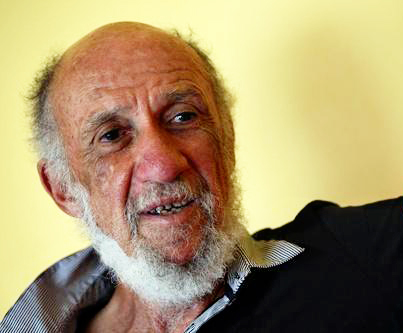
Richard Falk
By Richard Falk
Prefatory Note
This post is the full text of my presentation at an excellent conference “The Israeli Lobby: Is it good for US? Is it Good for Israel?” National Press Club, Washington, D.C., April 10, 2015.
The conference was sponsored and organized by the editorial leadership of the magazine Washington Report, which brings together some of the best writing on the Israel/Palestine struggle. I encourage readers of this blog to look at the full conference either at the YouTube website or the audio recording at http://www.israellobbyus.org Although there were many illuminating presentations during the day, and I would call particular attention to the memorable remarks of two highly informed Israelis, Gideon Levy and – another TFF Associate – Miko Peled.
There are no better texts for assessing the damage done to the role and reputation of the UN by the Israeli Lobby than to consider Secretary of State John Kerry’s recent statements boasting about the U.S. success in protecting Israel from criticisms arising from its non-fulfillment of responsibilities under international law and as a member of the United Nations. It should be understood that the lobby does not act in a vacuum, and its leverage is greatly enhanced in global settings to the considerable extent that its priorities overlap with the strategic and economic interests of the United States in the Middle East.
Despite the tensions with the White House associated with Netanyahu’s March speech to Congress, Kerry proudly informed an ABC TV news boradcast: “We have intervened on Israel’s behalf..a couple of hundred times in over 75 different fora.” [“This Week,” Feb. 28, 2015]. And then when addressing the Human Rights Council Kerry included a statement that could just as well been drafted by AIPAC or Israel’s ambassador to the UN: “It must be said that the HRC’s obsession with Israel actually risks undermining the credibility of the entire organization.”
And further, “we will oppose any effort by any group or participant in the UN system to arbitrarily and regularly delegitimize or isolate Israel, not just in the HRC but wherever it occurs.” [Remarks, Palais des Nations, Geneva, March 2, 2015]
What is striking about these kinds of statements by our highest ranking government officials dealing with foreign policy is the disconnect between these reassurances of unconditional support and Israel’s record of persistent disregard of its obligation under international law and with respect to the authority of the UN. Read the rest of this entry »