Archive for the ‘Libya’ Category
No exit from Gaza: A new war crime?
 July 22nd, 2014 |
  Author:
 By Richard Falk
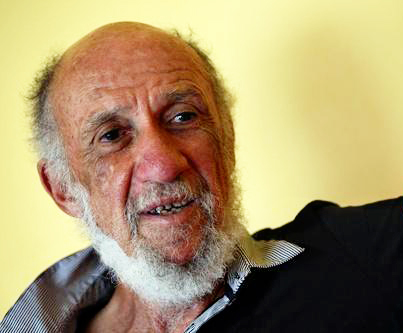
Richard Falk
Prefatory Note July 17, 2014 written before the ground invasion
This is a modified version of a post published online, July 15, 2014, at the recently established very informative website, Middle East Eye; as the casualty totals continue to mount while the world looks on in stupefied inaction, the attacks go on.
At the very least, from a humanitarian perspective, there should be a global outcry demanding that children, mothers, and those sick and disabled be allowed to leave the Gaza Strip until current hostilities end. Yet this is a gap in international humanitarian law, refugee law, and the moral sensibilities of the combatant states.
• As the hideous Israeli assault on Gaza, named Operation Protective Edge, by the IDF enters its second week, overdue international appeals for a ceasefire fall on deaf ears. The short lived July 15th ceasefire arranged by Sisi’s Egypt had many accompanying signs of bad faith from its inception, including the failure to allow Hamas to participate in the process, insultingly conveying the proposed terms of the ceasefire through public media.
The vague terms depicted, alongside the failure to take any account of Hamas’ previously announced conditions, suggest that this initiative was not a serious effort to end the violence, but rather a clever ploy to regain moral credibility for Israel thereby facilitating the continuation and even intensification of its violent military campaign that was never defensive in conception or execution.
Rather than being a real effort to end the violence, such a ‘ceasefire’ seems best understood as a sophisticated for form of escalation produced by a descent into the lower depths of Israeli hasbara. Such an Israeli tactic was facilitated by the active complicity of the Egyptian government that shares with Israel an undisguised wish to destroy Hamas.
Cairo regards Hamas as an offshoot of the Egyptian Muslim Brotherhood, an organization that has been criminalized and viciously repressed, and has collaborated with Tel Aviv ever since Sisi took over control of the Egyptian government.
Throughout Protective Edge Bibi Netanyahu has been telling the world Read the rest of this entry »
Some people are exceptional
By Jan Oberg
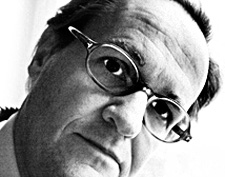
Jan Oberg
July 20, 2014 – 12 days after Israel launched Operation Protective Edge, after Shejaiya and after 400 people on the Palestinian side have been killed.
Some people condemned what they called a planned Serb genocide on Albanians in Kosovo.
Some people were very upset about the siege of Sarajevo. And the massacre at Srebrenica.
Some people believed that the Yugoslav Army occupied Croatia and tried to create a Greater Serbia.
Some people condemned what was then called ethnic cleansing. Read the rest of this entry »
 Posted in Alternatives - peace, Ethics and values, Human rights and justice, International law, Iraq, Israel/Palestine, Jan Oberg, Libya, Media & conflict, Media perspectives, Middle East, Russia, Syria, USA |
  Tags: Croatia, do no harm, ethnic cleansing, Gaza 2014, humanitarian intervention, Iraq, Kosovo, Kuwait, massacre, Netanyahu, Operation Protective Edge, R2P, responsibility to protect, Srebrenica |
  No Comments »
TFF PressInfo: GCC Military Command or a More Open Society
By Farhang Jahanpour*

Short e-mail PressInfo version here.
Saudi Military exercises
On 30th April 2014, Saudi Arabia staged its largest-ever military exercises codenamed “Abdullah’s Shield” after the kingdom’s 91-year old ruler and coinciding with the ninth anniversary of his ascension to the throne. The exercises involved 130,000 Saudi troops and showcased some of the latest weapons purchased by the kingdom from the United States and China, including the Chinese CSS-2 intermediate-range ballistic missiles with a range of 2,650 kilometers (1,646 miles) which are capable of carrying nuclear warheads. The Chinese version of these missiles is already equipped with nuclear warheads. This was the first time that these missiles had been seen in public in Saudi Arabia.
Crown Prince Salman presided over the exercises, which were also watched by a number of prominent foreign guests, including King Hamad of Bahrain and more pointedly by Gen. Raheel Sharif, the Pakistani chief of the army Staff. There have been persistent rumors over many decades that in return for Saudi funding of the Pakistani nuclear weapons’ program, Pakistan had committed to provide nuclear warheads for CSS-2 missiles, should Saudi Arabia decide to have them. Earlier in the year when Prince Salman visited Pakistan, he personally invited Gen. Sharif to be his guest at the exercises. Pakistani media stressed the point that Gen. Sharif had gone to Jeddah “on the invitation of Crown Prince Salman bin Abdulaziz al Saud to witness the military exercise…” (1)
With the exception of Bahrain’s ruler, none of the other GCC rulers watched the exercises. The guests included the crown prince of the UAE, the prime minister of Jordan and military commanders from some GCC states, but Qatar pointedly did not send any representatives. This was yet another sign of a growing rift between Saudi Arabia and Qatar.
A unified GCC Command and Monetary Union
At the GCC summit held in Kuwait in December 2013, the Saudis called for a unified GCC military command to have 100,000 forces, half of which would be contributed by the Saudis. (2) However, other GCC members opposed the idea as they saw it as a way of consolidating Saudi domination of other GCC states and affirming Saudi Arabia’s position as the big brother. Many smaller GCC states value their independence, and while they would like to cooperate with other GCC members, they do not wish to be absorbed into a unified military alliance as junior partners. Oman openly expressed its opposition to the proposal and Qatar and Kuwait also followed suit. Read the rest of this entry »
Posted in Arab Spring, Armament, China, Egypt, Farhang Jahanpour, Future perspectives, India-Pakistan, International law, Iran, Iraq, Israel/Palestine, Lebanon, Libya, Middle East, Military - technology, Nuclear weapons, Syria, TFF PressInfo, US Empire, US politics & security, USA, World order/governance |
Tags: Bahrein, Doha, Emirates, Expediency Council, GCC, Golf Cooperation Council, Kuwait, Muslim Brotherhood, New armies - Saudi, Obama, Peninsula Shield Force, Persian Gulf, Qatar, Saudi Arabia, Shiite, Sunni, U.S. Central Command |
1 Comment »
TFF PressInfo: Sverige – inte längre aktör för en bättre värld
Av Jan Öberg
Dr.hc., direktör för TFF
4 maj 2014
Eliten i Sverige är mer lojal mot Nato, USA och EU än mot sitt folk
• Under de senaste 25-30 åren har Sveriges militära, säkerhets- och utrikespolitiska elit vridit Sveriges politik 180 grader.
• Dessa grundläggande förändringar inleddes av den socialdemokratiska regeringen under Göran Persson och utrikesminister Anna Lindh och har genomförts praktiskt taget utan offentlig debatt.
• Omsvängningen till interventionism, militarism och USA/Nato på alla områden har planerats gradvis, i smyg och ohederligt – kort sagt på ett sätt som är ovärdigt en demokrati.
• Denna elit är mer lojal mot Bryssel och Washington än mot svenskarna.
• Om din bild av Sverige är att det är ett progressivt, förnyande och fredsfrämjande land med global inställning som försvarar folkrätten så är den – tråkigt nog – föråldrad.
Hur Sverige har förändrats
Sverige är inte längre neutralt och det är bara formellt alliansfritt; det finns ingen mer närstående bundsförvant än USA/Nato. Landet har upphört att utveckla en egen politik och positionerar istället sig inom ramen för EU och Nato. Landet bidrar inte längre med betydelsefullt nytt tänkande – det sista var Olof Palmes kommission om gemensam säkerhet (1982). Read the rest of this entry »
Posted in Abolition, Academia and science policies, Alternatives - peace, Conflict and war, Democracy - local & global, Disarmament, Ethics and values, Ex Yugoslavia, Foreign and security politics, Future perspectives, Georgia, International law, Iraq, Jan Oberg, Libya, Media & conflict, Media perspectives, Nonviolence, Norden as region, NORDIC - NORDISKA artiklar, Nuclear weapons, Peace, Psychology - war & peace, Russia, Sanctions, Security and defence, Sweden, Syria, TFF PressInfo, Ukraine, UN matters, US Empire, USA, World order/governance |
Tags: Anna Lindh, Carl Bildt, common security, disarmament ambassador, gemensam säkerhet, Göran Persson, interventionism, NATO, neutrality, Olof Palme, Prtnership for Peace, Sweden cruise missiles |
No Comments »
The New World Order?
By Richard Falk
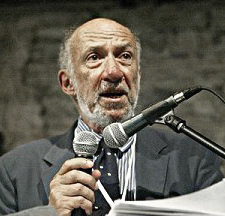
There is no more reliable guardian of entrenched conventional wisdom than The Economist. And so when its cover proclaims ‘the new world order,’ and removes any ambiguity from its intentions, by its portrayal of Putin as a shirtless tank commander with menacing features.
No such iconography accompanied the last notable invocation of the phrase ‘new world order’ by George H. W. Bush in mobilizing support for a forcible response to the Iraqi invasion and annexation of Kuwait in 1990, the dirty work of Saddam Hussein. Read the rest of this entry »
Posted in Abolition, Afghanistan, Democracy - local & global, Disarmament, Ex-Yugoslavia/Balkans, Future perspectives, International law, Iran, Iraq, Kosovo/a, Libya, Media & conflict, Media perspectives, Middle East, Nuclear weapons, Richard Falk, Russia, Sanctions, Security and defence, UN matters, US Empire, US politics & security, USA, Violence-prevention, World order/governance |
No Comments »
Saddam, Osama, Gaddafi, Chavez – and Obama
By Johan Galtung
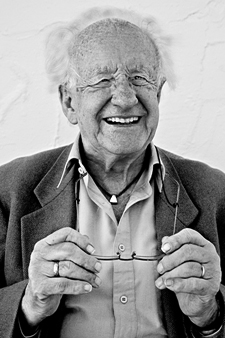
Contemporary reality, but what is real? Two of the above were killed under Obama’s watch; Osama executed by Obama extra-judicially, in cold blood, the other two by proxies (Chávez: we do not quite know). Two of them were dictators; Osama had no state, Chávez had, but won elections apparently not more rigged than Florida 2004, Ohio 2008.
What were the problems, how might they have been solved? Read the rest of this entry »
Learning the lesson of Libya
By Jonathan Power
On Saturday Libya beat Ghana to win the African Nations Football Championship. A return to normalcy? To win a team must have a first class pitch and a non-stressed out team. Does this indicate that Libya, two and a half years after the fall of dictator, Muammar Gaddafi, is getting back on its feet?
Alas, the football win is out of the ordinary in Libyan life, made by a team that has found a way to the top by hard practice and severe self-discipline. The rest of Libya is not like that. Its government is wobbly, self-appointed militias still rule in many parts and the rule of law is ignored as often as it’s obeyed. An increasing number of its people yearn for the peace and order of the dictatorial Gaddafi regime where the economy grew, life was improving and even human rights were being more respected.
Inspired by the Arab Spring in neighbouring Tunisia and Egypt, Libyans, so the accepted Western narrative went, rose up in non-violent protests. Gaddafi responded by ordering the protesters to be shot and ordered his troops to fire indiscriminately into residential areas. The protesters turned violent and the civil war began.
In truth, many of the protesters from day one used arms and the government at first responded with only rubber bullets and water cannons. Western television reported that Gaddafi’s forces had used live ammunition, showing a video of this. The BBC the next day, almost alone among news organisations, admitted it had made a reporting mistake. The video had been “uploaded more than a year ago”.
Nonetheless the situation quickly deteriorated and those that chose non-violence were pushed aside. The rebel militias faced the troops head on. The rebels called for the outside world to intervene. Read the rest of this entry »
Posted in Jonathan Power, Libya, Middle East, Peace, Pro-peace & proposals, US Empire, USA |
No Comments »
Beholding 2014
By Richard Falk
Written on December 31, 2013
2013 was not a happy year in the chronicles of human history, yet there were a few moves in the directions of peace and justice.
What follows are some notes that respond to the mingling of light and shadows that are flickering on the global stage, with a spotlight placed on the main war zone of the 21st century – the Middle East, recalling that Europe had this negative honor for most of the modern era except for the long 19th century, and that the several killing fields of sub-Saharan Africa are located at the periphery of political vision, and thus their reality remains blurred for distant observers. Read the rest of this entry »
Posted in Afghanistan, Armament, China, Democracy - local & global, Environmental concerns, European Union, Future perspectives, Global economics, Global trends & events, Human rights and justice, Iran, Israel/Palestine, Japan, Libya, Middle East, Migration and refugees, Richard Falk, Syria, Turkey, World order/governance |
No Comments »
The Middle East – heading where?
By Johan Galtung
Washington DC
It’s anybody’s guess. But something is going on.
Look at the two strongest actors: Israel and the USA. Israel autistically locked into becoming the region’s military champion, not only by its overwhelming military destructive power but by cutting all neighbors down to a size commensurable with Israel, and divided by their own conflicts. With the help of their instrument, US military might, Israel has had success of sorts with Iraq, Libya, maybe Syria; and Egypt back to normal as military dictatorship benefiting from most of the Camp David rewards. Goodbye, Arab Spring.
What is left is Iran, too big to exist, also too big to fail; with Israel doing its best to make the Geneva conference fail. No worry about Syria peace; the Islamists have announced they will not participate in peace talks. They go for a win, amply armed by the USA, with Israel backup.
Israel’s goal: to eliminate any threat, singly or combined, from Arab-Muslim neighbors–far beyond the wrongly termed “Israel-Palestine conflict”–and to expand. Next Eastern border: the Jordan River, by annexation, the goal of a key Likud group (Washington Post, 6 Nov 13). Next: the old mandate, the Jordan-Iraq border? Genesis 15:18, Nile-Euphrates? For legitimation and theory: see Isaiah 2:4-5. Read the rest of this entry »
Posted in Arab Spring, Egypt, Iran, Iraq, Israel/Palestine, Johan Galtung, Lebanon, Libya, Middle East, Syria, US Empire |
No Comments »
Time for new beginnings in the Middle East
By Farhang Jahanpour
Momentous changes are afoot in the Middle East. The Arab uprisings have not yet run their course, the Egyptian revolution has not yet ended, terrorist atrocities in Iraq have intensified, the carnage in Syria still continues, and there seems to be no end to the Arab-Israeli conflict.
Yet, in the midst of all these scenes of doom and gloom there are some positive developments that may change the face of the Middle East for many decades to come. President Obama’s opening to Iran and the election of a moderate Iranian president who wants to reciprocate the American gesture of goodwill provides a glimmer of hope that after 34 years of estrangement, the two countries may reconcile their differences and open a new chapter in their relations.
However, just the slim prospect of a US-Iranian rapprochement has created a backlash among many people who are stuck in the past and who look at any change with dread. There are many powerful voices both in the United States and Iran that are trying to prevent better relations between the two countries.
In addition to domestic opposition in Iran and the United States, many countries in the Middle East have also reacted with alarm to the possible end of a hostile Iran that they can demonize as a boogeyman. Israel and her powerful friends in the Congress and in US think tanks and the media have launched a massive campaign to prevent any possible end to hostilities. The leaders from the powerful pro-Israeli lobbies, from the Conference of Presidents of Major Jewish Organizations, AIPAC, the Anti Defamation League and the American Jewish Committee, took part in an extraordinary White House meeting on Tuesday 28 October to warn the president against rapprochement with Iran. Read the rest of this entry »