Archive for the ‘Culture’ Category
Marx and Freud, Daoism and Gandhi
 August 14th, 2014 |
  Author:
 By Johan Galtung
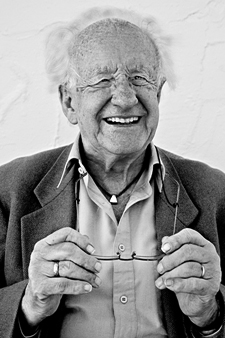
Johan Galtung
The two giants did something unusual for Western thinkers: they were very holistic. Nothing less than the whole society and the world, and much more than the economy, for Marx; nothing less than the whole body-mind complex, with excursions into culture, for Freud.
Equally unusual: they were very dialectical. There were forces and counter-forces. Means vs modes of production for Marx, simplified to Capital vs Labor; Super-ego vs Id, values from the outside vs drives from the inside for Freud. For Marx the dialectic was inside Structure–of Culture and Nature there was little–for Freud between Culture and Nature–of Structure there was little.
Holism and dialectics are the pillars of daoist thought, giving rise to a dynamic theory of organic systems like societies and humans. Calling the forces yin and yang, over time they will both be vexing and, waning, the dominant will recede and the dominated will grow. In this process there may be some balance point, but it is not stable. Nothing is stable in this perspective, nor is anything–Nazi Germany, Soviet Union, USA–monolithic with only one force. There is yin/yang everywhere, also inside yin and yang, and new dialectics emerging.
Here the great Westerners show their limitations. Marx was an optimist seeing conscious and organized Labor break the shackles of Capital, moving on to socialism and communism; Freud was a pessimist seeing “reality” (his word for structure?) as unchanging, impeding compromises between Super-Ego and Id. They used only the dialectic of their primary contradictions; beyond that they became deterministic.
Moreover, with two forces there are five outcomes: one or the other prevails, neither-nor–like in social or individual death–a compromise is identified–social capitalism, capi-communism, Freud’s maturity–and both-and, transcending, beyond the compromise. They, however, saw only one outcome, the triumph of Labor, or the compromise.
Whatever happens it will be unstable. For stability a stabilizer is needed, but even so any equilibrium is unstable. The State is the social stabilizer freezing the dialectic in favor of Capital, Labor, neither, a compromise or both; but where is the individual stabilizer? Read the rest of this entry »
TFF PressInfo: It’s doable: Peace Israel-Palestine (1)
By Jan Oberg, TFF director
Jan Oberg
Lund, Sweden July 25, 2014
Violence is a dead end
Look at the violence in Gaza today, DR Congo (6 million dead), Iraq, Libya, Afghanistan, Somalia etc: Isn’t it obvious that the world needs a completely new approach to conflicts?
We’ll never rid the world of conflicts, conflicts is part of human and social life. Conflict-prevention is a meaningless term.
But we can rid the world of most of its violence. If we want, if we educate each other and if economic and other interests stopped supporting killing as a tool in conflict-management.
Unrealistic? Hopelessly idealistic? Well, look at the places above and try to find the realism and hope there.
Look at the conflict not at the parties and the violence
It requires almost no intellectual effort to take sides in a conflict between A and B. If both parties use violence, that means endorsement of the violence – the justification both need: “They threaten and kill us, therefore we threaten and kill them.”
Those who support a conflict party who use violence also support violence. As long as violence continues, there will be no process towards peace – only more hate, traumas, suffering, wish for revenge and destruction.
Violence – not the conflict – becomes the main thing and tit-for-tat the rule of the game, with an increase in the violence for each round. Scorpions in a bottle, feeding each other.
Both those who are outside a conflict and debate it – for instance, 99% of the media debates – and the conflicting parties on the ground feed on violence. If A did not use violence against B, how would B justify its own killings?
Gaza today – both parties lose
This is where we are in Gaza today when reports tell that around 800 civilians have been killed without any positive effect, both losing.
It’s not about evil, it’s about desperation coupled with traumas coupled with a lack of insight and education.
This wrong-headed attitude is indicative of conflict and peace illiteracy: among the parties, our media and our decision-makers. Innocent people on both or all sides normally pay the price for it.
The world needs a completely different approach. It’s embedded in the UN Charter and called peace by peaceful means. Read the rest of this entry »
 Posted in Culture, Culture & religion, Ethics and values, Israel/Palestine, Jan Oberg, Media perspectives, Nonviolence, Pro-peace & proposals, TFF PressInfo, Violence-prevention |
  Tags: Gandhi, Gaza, Hamas, Israel, moratorium on violence, Oeration Protective Edge, terrorism, terrorism defined, terrorists, violence |
  No Comments »
What was history about? Look at the Histomap
By Johan Galtung
Johan Galtung
John B. Sparks made a histomap in 1931—updated in 2010 (Metro Books) – a long, vertical chart covering “peoples and nations for 4,000 years”.
Time, history, is on the vertical axis, listing when of events and where in the space of peoples and nations. The chart starts with the Chinese, the Indians, Amorites (Babylon), Aegeans (Minoans and Mycenaeans), Hittites (Anatolia), Iranians and Greeks, goes on to the Romans, the British, the Huns (Mongols) and ends with Latin America, Europeans West and East (the EU is absent), the Middle East, sub-Sahara Africa, Russians and Americans, Asia as India, China and Japan; each part proportionate to their significance at the time. Debatable.
But let us focus on something crucial: the shape of the “peoples-nations” bubbles in world history, from a beginning to an end?
By and large exactly like that: a birth somewhere in this Einsteinian timespace, and a death. Two points, and between them: growth-maturity/flourishing-decline and fall. Expansion to a maximum, and contraction to a minimum. The law of anything organic? Given that they often thought they were forever, gifted with eternal life, history is about great expectations, glories–and great traumas. Read the rest of this entry »
Posted in Buddhism, China, Conflict and war, Culture, Culture & religion, Democracy - local & global, Development, European Union, Future perspectives, Global trends & events, India, India, Japan, Johan Galtung, Middle East, Political, Theories and concepts, Turkey, US Empire, World order/governance |
No Comments »
Aage Bertelsen (1901 – 1980) – Danish educator for peace
By Jan Oberg & Johan Galtung*
Lund and Kuala Lumpur, July 2014
Introduction
He was a tall man and a great man, a visionary, pacifist, civil resister, educator and philosopher. He took life more seriously than most and he could be playful and fun like a child. His life’s guiding principle was ”Engage in your time!” and while he wrote and talked a lot he also did it. His name was Aage Bertelsen, he was born in Denmark in 1901 and died on August 15, 1980.
Bertelsen’s imprint on history is two-fold. First, with his wife Gerda he was a prime mover of one of the groups, the Lyngby Group, which organised the rescue of altogether 7.220 Danish Jews into safety in Sweden in October 1943 during the German occupation of Denmark – more here. The Lyngby Group – Lyngby is north of Copenhagen – got about 1.000 of these in safety by organising their nightly transport onboard small fisher boats over the Sound between Denmark and Sweden.
In this he deserves a place in international contemporary history for its humanity, civil courage and as an example of non-violent struggle against occupation.
Secondly, Bertelsen was an educator of and for peace. His life work educational efforts included his family and friends, his pupils over 22 years at the Aarhus Cathedral School in Aarhus, Denmark, the general public as well as national and international leaders.
He lived in pre-Internet times and very little is publicly available today about this renaissance man. From two rather different, but compatible, perspectives we’ve taken it upon us to remind the world about him – friends and colleagues of his as we happen to be.

Headmaster Aage Bertelsen in 1961 Photo: Elfeldt, Copenhagen
Why now, over 30 years after his death? Read the rest of this entry »
Posted in Abolition, Conflict and war, Culture, Culture & religion, Democracy - local & global, Denmark, Ethics and values, European Union, Foreign and security politics, General issues, Human rights and justice, Immigration & integration, Israel/Palestine, Jan Oberg, Johan Galtung, Migration and refugees, Military - technology, New books, Nobel Peace Prize, Nonviolence, Norden as region, Norway, Nuclear weapons, Peace, Political, Pro-peace & proposals, Psychology - war & peace, Reconciliation & forgiveness, Reflections, essays & more, Russia, Security and defence, Sweden, Terrorism, Theories and concepts, UN matters, Uncategorized, US Empire, USA, Violence-prevention, World order/governance |
Tags: Aage Bertelsen, Aarhus, Aarhus Cathedral School, Aarhus Katedralskole, Albert Einstein, Albert Schweitzer, Aldermaston, alternative defence, anti-atom weapons march, anti-semitism, Arne næss, Beit Uri, Berlin Wall, Bertrand Russell, Carl Nielsen, Chaim Weizmann, Claude Etherly, Cold War, Common Market, Congree Party in India, Cuban Missile crisis, dansk åndshistorie, danske pacifister, den Russiske linje på Aarhus Katedralskole, development assistance, Edgar Schieldrop, education for peace, elever på Aarhus Katedralskole, Erik Fromm, Eu, extermination of Jews, fredspolitisk folkeparti, Gaia hypothesis, Gandhi in the nuclear Age, Gandhis politiske etikk, Georg Borgström, Gerda Bertelsen, Gestapo in Denmark, globalisation, globalist, Günter Ander, Hans hedtoft, Hans Jonas, Hans Peter Bertelsen, Henry Heerup and Sven Engelund., Her er dit våben, Herman Kahn, ikke-vold, ikkevold, Inger Bentsen, internationalist, Israel, Israel as Jewish state, Israeli occupied territories, Jan Øberg, Jawarharlal Nehru, Jean-Paul Sartre, Jewish Theological Seminary, Jews in Denmark, Johan Galtung, Kresten Helveg Petersen, Lennart Bergfeldt, Lyngby group, Mahatma Gandhi, Martin Buber, modstandsbevægelsen, modstandsbevægelsen i Danmark, Mohandas K Gandhi, NATO, Nazi Germany, Netanyahu, Niels Bohr, Nobel Peace Prize, non-violence, nonviolence, Nordahl Grieg, North-South development, occupation of Denmark, October 43, Oktober 43, Oktober 43 Fonden, Olivia Holm-Møller, pacifisme, pacifisme i Danmark, peace education, persecution of Jews, Pierre Galois, pogroms, pro-Russia, pro-Soviet, public education, Rektor Aage Bertelsen, Rescue of Jews to Sweden, Resenbro, resistance to occupation, reverence for life, Richard Falk, Richard Mortensen, Romain Rolland, Russell Tribunal, Russian line at Aarhus Cathedral School, self-hating Jews, Sepoy Mutiny, Silkeborg, Soviet Union, Stephen King-Hall, stikker, swaraj, TFF, Th Langs skole, The imperative of responsibility, the nuclear age, Thomas af Strängnäs, traitor, Transcend conflict, Transnational Foundation for Peace and Future Research, UN protection, UNESCO-linjen, Unesco-linjen på Aarhus Katedralskole, Warsaw Pact, World War II |
No Comments »
TFF PressInfo: “The human price of the war on Iraq” Hearing Statement
Comments by Hans-C. von Sponeck
Former UN Assistant Secretary General, UN Humanitarian Coordinator for Iraq & TFF Associate
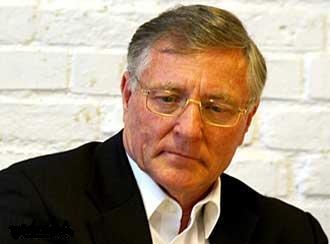
Hearing at the UK House of Commons, London June 10, 2014
Intro
1. HoC/HoL have repeatedly held Iraq hearings as have British NGOs such as CASI (Campaign Against Sanctions on Iraq) and Stop the War Coalition/UK. In Europe these are considered models for responsible public action.
2. My contribution at this hearing is not about the crimes of dictatorship or the details of Iraqi suffering. For both well researched data is available. The objective of my participation is to make two detailed observations about externally-driven Iraq politics during the period 1990-2014.
Observation 1
3. Today’s tragic Iraq reality can only be understood if the additive impact of the years before and the years following the US/UK Governments’ illegal invasion and occupation is fully taken into account. Read the rest of this entry »
Posted in Culture, Culture & religion, Democracy - local & global, Development, Ethics and values, Hans von Sponeck, Human rights and justice, International law, Iraq, Media perspectives, Middle East, Nuclear weapons, Peace, Psychology - war & peace, Sanctions, Terrorism, TFF PressInfo, UN matters, US Empire, Violence-prevention, World order/governance |
Tags: Abu Ghraib, Dato Agam Hasmy, Denis Haliday, destruction in Iraq, Geneva Conventions, humanitarian program, illiteracy in Iraq, Iraq compensation, Iraq poverty, Iraq sanctions, Kuala Lumpur War Crimes Commission (KLWCC), Kurdish-Arab divide, Oil for Food, Sir John Chilcot, Tony Blair, UN Compensation Committee, UN Security Council, UNICEF, US/UK war on Iraq, war criminals, Western war criminals, World Bank |
No Comments »
Seven Roads to Happiness
By Johan Galtung
… Would be the title in English of a book this author just published in Norwegian, Syv veier til lykke (Oslo: Kolofon 2014); with excellent photos by Aase Marie Faldalen. And, very befitting for a book with that title: the book quickly made it to the Top 10 on a best-seller list, of course as No. 7. There will be translations but have a peek here and now.
Why does a peace researcher, concerned with peace theory and practice, write a “how-to” book about happiness, well-being? Read the rest of this entry »
TFF PressInfo – Somaliland – A Peace and Photo Mission
By Jan Oberg
Lund, Sweden, July 1, 2014
This PressInfo is about place you’ve probably never visited nor know a lot about: Somaliland.
TFF today publishes the report from a mission there in May 2014 – to the capital Hargeisa, the harbour town of Berbera and to Burao.
With the report in photos and texts we seek to alert you to this indeed unique and interesting country.
Somaliland declared itself an independent state out of Somalia in 1991 and is still not recognised by a single government in the world.
But against all odds Somaliland has made considerable progress.

It isn’t easy to develop when you are marginal to the aid and investment sources, have no foreign embassies and can’t be a member of inter-national organisations. Read the rest of this entry »
Spain 2050 – Ten predictions
By Johan Galtung
Alfaz; History group, Municipio, Spain
Can we know the future? Rhetorical answer: can we know the past?
We rewrite history all the time, not because facts become dubious and new facts appear, but because our angle, perspective, changes. Say, from a series of kings, presidents etc. and their exercise of military and political power to economic and cultural changes in the life of common people, in their wellbeing and identity. Quite some change.
Will we arrive at that single, true, objective perspective?
No, objectivity may be multi-subjective, not inter-subjective. This is why Al Jazeera is so much better for knowing the present than CNN, which presents the US angle, and if there are other angles a US “expert” will give the final interpretation. Al Jazeera presents many angles of many parties and leaves final interpretations to the viewer.
How can we shed some light into the future? Basically there are two approaches: the Cartesian based on extending trends, and daoism based on holism and dialectics. They do not exclude each other.
Thus, there are three world trends that certainly affect Spain… Read the rest of this entry »
TFF PressInfo – Why Obama’s speech should make us think
By Jan Oberg
Lund, Sweden – May 29, 2014
In a speech by the President of the United States of America – read by millions in all corners of our world in minutes – rest assured that every single word has been weighed with utmost care.
With this in mind, Obama’s speech can be analysed as both offending to the rest of us and – exceptionally – weak.
It caused no enthusiasm among the future army officers he spoke to and no enthusiasm among leading Western media.
I will argue that
• Intellectually and morally the speech doesn’t have the basics – full of contradictions and imbued with unbearable self-praise.
• While there is a recognition of ”mistakes” such as ”our” war in Iraq and a potential step-back from interventionism, there is neither an adequate analysis of the past nor of what the future may need in terms of leadership.
• Little had I anticipated that my analysis in the TFF PressInfo on ”Psycho politics in the age of imperial decline” just a few days ago would be confirmed so quickly and so strongly. Read the rest of this entry »
Pope Francis visit to Palestine
By Richard Falk
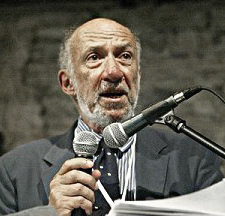
Pope Francis’ visit to the Holy Land raises one overwhelming question: What is the nature of religious power in our world of the 21st century? Can it have transformative effects’?
Media pundits and most liberal voices from the secular realm approve of this effort by Francis to seek peace through the encouragement of reconciliation, while dutifully reminding us that his impact is only ‘ceremonial’ and ‘symbolic’ and will not, and presumably should not, have any political consequences beyond a temporary cleansing of the political atmosphere.
The June 6th prospect of Mahmoud Abbas and Shimon Peres praying together in the Vatican as a step toward a peaceful end of the long struggle is, I fear, an ambiguous sideshow. For one thing, Peres as President of Israel is about to leave the office, and in any event, his position exerts no discernible influence on the head of state, Benjamin Netanyahu, or the approach taken by Israel in addressing Palestinian concerns.
It has long been appreciated that Peres is less than he seems, and beneath his velvet globe is a steel fist. Also, Abbas, although the formal leader of the Palestinian Authority and Chair of the PLO, is a weak and controversial leader who has yet to establish a unity government that includes Hamas, and finally provides political representation for the long suffering population of the Gaza Strip within global venues.
Yet it would be a mistake to ignore the significance, symbolically and materially, of what Pope Francis’ visit to Palestine heralds. Read the rest of this entry »
Posted in Culture, Culture & religion, Democracy - local & global, Ethics and values, Israel/Palestine, Middle East, Nonviolence, Reconciliation & forgiveness, Reflections, essays & more, Richard Falk |
Tags: apartheid, John Kerry, legitimacy war, Mahmoud Abbas, Palestine, PLO, Pope Francis, Shimon Peres, the Vatican |
No Comments »